
BuddhistCatholicContemplativeEvangelicalGeneral ChristianHinduJewishLatter-day SaintMuslimNew VisionsProgressive Christian
Beliefs
- Buddhist
- Catholic
- Contemplative
- Evangelical
- General Christian
- Hindu
- Jewish
- Latter-day Saint
- More Voices
- Muslim
- New Visions
- Pagan
- Progressive Christian
Topics
- Religion News
- Food and Religion
- Sports and Religion
- Religious Art
- Religious Music and Entertainment
- Religious Events
- History and Religion
- Style and Religion
- Politics and Religion
- Women in Religion
- Recreation Outdoors and Religion
- Business Finance and Religion
- Careers Workplace and Religion
- Education and Religion
- Family Parenting and Religion
- Health Fitness and Religion
- Home and Religion
- Relationships and Religion
- Technology and Religion
- Travel and Religion
Columnists
- Buddhist Columnists
- Business Finance and Religion Columnists
- Careers Workplace and Religion Columnists
- Catholic Columnists
- Contemplative Columnists
- Education and Religion Columnists
- Evangelists Columnists
- Family Parenting and Religion Columnists
- General Christian Columnists
- Health Fitness and Religion Columnists
- Hindu Columnists
- History and Religion Columnists
- Home and Religion Columnists
- Jewish Columnists
- More Voices Columnists
- Latter Day Columnists
- Muslim Columnists
- New Visions Columnists
- Nonreligious Columnists
- Pagan Columnists
- Politics and Religion Columnists
- Progressive Columnists
- Recreation Outdoors and Religion Columnists
- Relationships and Religion Columnists
- Religion News Columnists
- Religious Art Columnists
- Religious Events Columnists
- Religious Music and Entertainment Columnists
- Sports and Religion Columnists
- Style and Religion Columnists
- Technology and Religion Columnists
- Travel and Religion Columnists
- Women in Religion Columnists
Resource Library
- 2026 Calendar
- Library of World Religions
- The 100 Most Holy Places on Earth
- Patheos Answers
- Podcasts
- Videos
- Faith Leaders Database
- Anglican Episcopalian
- Bahai
- Baptist
- Buddhism
- Christianity
- Confucianism
- Eastern Orthodoxy
- Hinduism
- Holiness and Pentecostal
- ISKCON
- Islam
- Judaism
- Lutheran
- Methodist
- The Church of Jesus Christ of Latter-day Saints
- New Age
- Paganism
- Presbytarian and Reformed
- Protestantism
- Religion Behind the Scenes
- Roman Catholic
- Scientology
- Shia Islam
- Sikhism
- Sufism
- Sunni Islam
- Taoism
- Zen
- See all religions
Research Tools
 Ad-Free & Subscriber Log-In Subscription Support
Ad-Free & Subscriber Log-In Subscription Support
Follow Patheos 

- Trending:
- Forgiveness
- |
- Marriage
- |
- Consciousness
- |
- Death Penalty
- |
- Election
- |
- Halloween
 Teaching Nonviolent Atonement
- Home
- Progressive Christian
- Following Jesus: Emigrating from Violence into Love
Following Jesus: Emigrating from Violence into Love
Last updated on: March 26, 2018 at 9:54 am by Lindsey Paris-Lopez
Following Jesus: Emigrating from Violence into Love 2018-03-26T09:54:00-05:00 Lindsey Paris-Lopez
Patheos Explore the world's faith through different perspectives on religion and spirituality! Patheos has the views of the prevalent religions and spiritualities of the world.
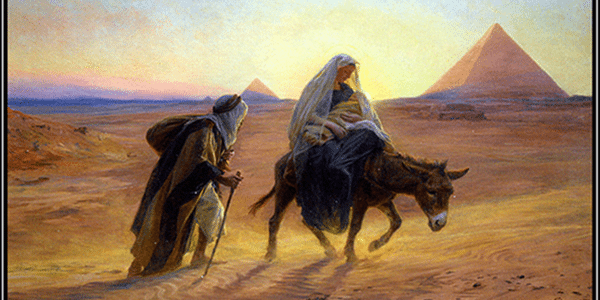
This Lenten season, as we follow Jesus on his journey to the cross and ultimately into new life, my church has held weekly services for learning about and praying for immigrants and refugees. We consider their journeys from their homelands and the precarious situations in which they find themselves in a nation that is forgetting its immigrant roots and treating immigrants with increasing hostility. As our administration seeks to end existing protections for immigrants and build walls to exclude them, we are called to remember that Jesus walks with those who we cast out, for we cast him out. Thus every time ICE arrests and detains an immigrant, we are called to remember Jesus’s arrest. Every time an immigrant is treated brutally, we are called to remember the whip on Jesus’s body and the crown of thorns on his head. Every time an immigrant is deported, we are called to remember how we expelled Jesus from our world on the cross.
When God walked among us in human flesh, he came as an immigrant and became a refugee. He emigrated from his heavenly kingdom to the earth he created for us as a home. As a child, he fled the wrath of Herod; as a man, the wrath of humanity crucified him. The Incarnation thus reveals to us that God has always stood with immigrants, even becoming one. And we, made in God’s image and called to follow Christ, must ourselves become emigrants, journeying out from our culture of violence and exclusion, out of our culture of judgment and hypocrisy and fear. Our souls must journey into the Way of Everlasting Life, which is perfect, unconditional Love. In that journey, following Christ, we dissolve the walls around our hearts, the artificial barriers that separate us from “them.” There is no “them” when we recognize that we are all members of one body of Love.
God takes human form and goes to the cross to show that, from the foundation of the world, humans have pushed God aside. The Incarnation reveals that the expulsion from the Garden of Eden was the rejection of God by humanity, not the other way around. What Genesis tells us is God’s punishment to Adam and Eve for disobedience is revealed through the trajectory of scripture to be the consequence of a spirit of accusation that slithered into human hearts with the temptation to be “like God.” Rather than receive their identities as reflections of Love, this story tells us first humans sought to carve out their identities as rivals of God. Blinded by desire for power, they pushed Love aside and turned paradise into suffering. Without taking the story of Adam and Eve literally, one may discern that humanity’s desire to assert ourselves over and against one another, to mis-recognize each other as rivals and cast others out, began with casting out God. As John’s Gospel tells us, “The true light that gives light to everyone was coming into the world. He was in the world, and though the world was made through him, the world did not recognize him. He came to that which was his own, but his own did not receive him.”
Thus, God from the beginning has walked with those displaced, for God was first displaced by human misjudgment and violence. And our poor judgment continues to push God aside as we fail to recognize God’s image in others. Poor human judgment is written in blood in wars and lynchings, in pogroms and deportations. We projected our own violence onto our image of God and thus have distorted ourselves as God’s living images. When we blasphemously invoke the name of God to dehumanize others, we lose our own humanity.
To follow the Truly Human One is to become an emigrant, for it is to follow Jesus out of our cultural violence, out of our distrust of others, out of the limited distortion of love we invoke when we believe that care for some must necessarily mean judgment against others. Jesus, who wraps his arms around those who seek refuge from war or poverty or hate, Jesus, who consoles those forced away from their loved ones, Jesus, who walks with emigrants on their journey – this Jesus leads us all on a path to a new life. Even as he comforts the immigrants in their new lands, he pulls others from their comfort zones of exclusion into a space where all are welcome. Some feel uncomfortable welcoming in the stranger, the immigrant, the outsider, but if we belong to the Body of Christ, we cannot define ourselves over and against them. There is no outsider, and the place of welcome is not ours to claim, it is Christ’s. Exclusion, borders, and walls, to which so many of us cling for safety, for a boundary to define who we are against others, has no place in the Body of Christ.
We follow Christ out of our narrow way of knowing ourselves against others and into the fullness of Love, the fullness of who we are meant to be in relationship with God and with all of humanity. When we recognize that the immigrants in our lands and their families beyond our borders are a part of ourselves, when we recognize the women and men and children across the world who flee our bombs and missiles are a part of ourselves, when we recognize that those we now call our enemies are a part of ourselves — because we are incomplete without every other person living on this earth – then we will know we are making progress on our journey.
In one week, we will observe Christ’s crucifixion. Christ’s final hour was the culmination of all of humanity’s violence, fear, hatred, and judgment. The greed, violence, and dehumanization that drives many people from their homes or keeps the world from being a home to those who seek refuge, all of this is encapsulated in Jesus’s death. All the pain and grief and isolation endured by those who must leave their homes or be separated from their families because of war, violence or poverty only to be rejected by a cruel and fearful world was condensed into Jesus’s dying body. Thus, Christ fully embodies solidarity with the immigrants and refugees of the world, and they embody solidarity with him.
In one week, congregations throughout the world will reenact the trial of Jesus and re-create the violent human judgment that cast Love enfleshed from our world. May those of us who claim ownership of the land we inhabit, who deem others “illegal” for crossing an artificial border created by violence and greed, hear the echoes of “Build that wall!” as we shout “Crucify him!” For Good Friday is about recognizing our own spirit of judgment and exclusion, a spirit of self-righteousness over and against others that culminated in casting the One who created the world for us from the world we distorted with our violence. When we re-inact the mob that demanded death, we recognize and claim the sins that crucified Jesus as we fix our eyes on the cross. We look upon our violent origins and acknowledge our journey, and the distance yet ahead of us, as we follow Jesus out of the culture of violence that pushed first pushed him aside.
In looking upon Jesus, we are called to recognize the humanity of all whom we have dehumanized. In recognizing our violence and the humanity of those we violate, we journey into the forgiveness that the Truly Human one pours out from the cross, immigrating into a restored humanity where all are forever embraced in Love.
Image: “Jesus was a refugee” by Politica11y Unmotivated via Flickr. Creative Commons Attribution-ShareAlike 2.0 Generic license.
Next Post

March 26, 2018 Palm Sunday: Marching for Our Lives
Browse Our Archives
Select a Category Atonement and Current Events Curriculum Faith and Families Interviews Jesus the Forgiving Victim Lent Montessori politics Reviews The Bible Explained Uncategorized Valentine's Day Wednesday Sermon Who is God?
Select a Month July 2020 November 2019 October 2019 September 2019 August 2019 July 2019 June 2019 May 2019 April 2019 March 2019 February 2019 January 2019 December 2018 November 2018 October 2018 September 2018 August 2018 July 2018 June 2018 May 2018 April 2018 March 2018 February 2018 January 2018 December 2017 November 2017 October 2017 September 2017 August 2017 July 2017 June 2017 May 2017 April 2017 March 2017 February 2017 January 2017 December 2016 November 2016 October 2016 September 2016 August 2016 June 2016 May 2016 April 2016 March 2016 February 2016 January 2016 December 2015 November 2015 October 2015 September 2015 August 2015 July 2015 June 2015 May 2015 April 2015 March 2015 February 2015 January 2015 December 2014 November 2014 October 2014 September 2014 August 2014 July 2014 June 2014 May 2014 April 2014 March 2014 January 2014 December 2013 September 2013 August 2013 July 2013
Follow Us!
TAKE THE
Religious Wisdom Quiz
How old was Abraham when he died?
Select your answer to see how you score.
150 years 200 years 175 years 125 years
Related posts from Teaching Nonviolent Atonement

Forgiveness in the Time of COVID-19 by Julia...

Reflections on Indigenous Wisdom For Healing A Wounded...

How Forgiveness Can Transform Our Violence and Build...

Jesus Unmasked: God's Economy and How to Cheat...
TRENDING AT PATHEOS Progressive Christian

What Being a Modern-Day Apostle Means to Me
In my last column, I discussed the ins and outs of modern-day...

Did Ancient China Once Worship the God of...
Across human history, a common thread weaves through the origins of the...

Love Your Neighbor – Including Earth-Kin: Lev. 19,...
God’s command to love your neighbor means acting in an ethical and...

Lead a Church Study of “Jesus and Lao...
Guest writer Jack Thomas (The Irreverent Reverend) reflects on leading his church...

Pastoral Wisdom for Responding to Sermon Pushback
Getting sermon pushback on your social justice sermon? Learn practical, Proverbs-based strategies...

Principles for Understanding the Apostolic Ministry Today
Whenever people discover that my formal ministry title is "apostle," as in...
view all Progressive Christian blogs
Ad-Free & Subscriber Log-In Subscription Support
- About Us
- 2026 Calendar
- Videos
- Podcasts
- Library of World Religions
- Faith In Media Tracker
- Advertise With Us
- Write for Us
- Privacy Policy
- Terms of Service
- Do Not Sell My Data
- Contact Us
- Radiant Digital
- Manage Newsletter Subscriptions
- Unsubscribe From Notifications
- Sitemap
Copyright 2008-2026, Patheos. All rights reserved.
Subscription Support Ad-Free & Subscriber Log-In
Follow Patheos