
BuddhistCatholicContemplativeEvangelicalGeneral ChristianHinduJewishLatter-day SaintMuslimNew VisionsProgressive Christian
Beliefs
- Buddhist
- Catholic
- Contemplative
- Evangelical
- General Christian
- Hindu
- Jewish
- Latter-day Saint
- More Voices
- Muslim
- New Visions
- Pagan
- Progressive Christian
Topics
- Religion News
- Food and Religion
- Sports and Religion
- Religious Art
- Religious Music and Entertainment
- Religious Events
- History and Religion
- Style and Religion
- Politics and Religion
- Women in Religion
- Recreation Outdoors and Religion
- Business Finance and Religion
- Careers Workplace and Religion
- Education and Religion
- Family Parenting and Religion
- Health Fitness and Religion
- Home and Religion
- Relationships and Religion
- Technology and Religion
- Travel and Religion
Columnists
- Buddhist Columnists
- Business Finance and Religion Columnists
- Careers Workplace and Religion Columnists
- Catholic Columnists
- Contemplative Columnists
- Education and Religion Columnists
- Evangelists Columnists
- Family Parenting and Religion Columnists
- General Christian Columnists
- Health Fitness and Religion Columnists
- Hindu Columnists
- History and Religion Columnists
- Home and Religion Columnists
- Jewish Columnists
- More Voices Columnists
- Latter Day Columnists
- Muslim Columnists
- New Visions Columnists
- Nonreligious Columnists
- Pagan Columnists
- Politics and Religion Columnists
- Progressive Columnists
- Recreation Outdoors and Religion Columnists
- Relationships and Religion Columnists
- Religion News Columnists
- Religious Art Columnists
- Religious Events Columnists
- Religious Music and Entertainment Columnists
- Sports and Religion Columnists
- Style and Religion Columnists
- Technology and Religion Columnists
- Travel and Religion Columnists
- Women in Religion Columnists
Resource Library
- 2026 Calendar
- Library of World Religions
- The 100 Most Holy Places on Earth
- Patheos Answers
- Podcasts
- Videos
- Faith Leaders Database
- Anglican Episcopalian
- Bahai
- Baptist
- Buddhism
- Christianity
- Confucianism
- Eastern Orthodoxy
- Hinduism
- Holiness and Pentecostal
- ISKCON
- Islam
- Judaism
- Lutheran
- Methodist
- The Church of Jesus Christ of Latter-day Saints
- New Age
- Paganism
- Presbytarian and Reformed
- Protestantism
- Religion Behind the Scenes
- Roman Catholic
- Scientology
- Shia Islam
- Sikhism
- Sufism
- Sunni Islam
- Taoism
- Zen
- See all religions
Research Tools
 Ad-Free & Subscriber Log-In Subscription Support
Ad-Free & Subscriber Log-In Subscription Support
Follow Patheos 

- Trending:
- Forgiveness
- |
- Marriage
- |
- Consciousness
- |
- Death Penalty
- |
- Election
- |
- Halloween
 Teaching Nonviolent Atonement
- Home
- Progressive Christian
- Why Richard Dawkins Needs Sunday School
Why Richard Dawkins Needs Sunday School
Last updated on: November 10, 2017 at 8:28 am by Adam Ericksen
Why Richard Dawkins Needs Sunday School 2017-11-10T08:28:01-05:00 Adam Ericksen
Patheos Explore the world's faith through different perspectives on religion and spirituality! Patheos has the views of the prevalent religions and spiritualities of the world.
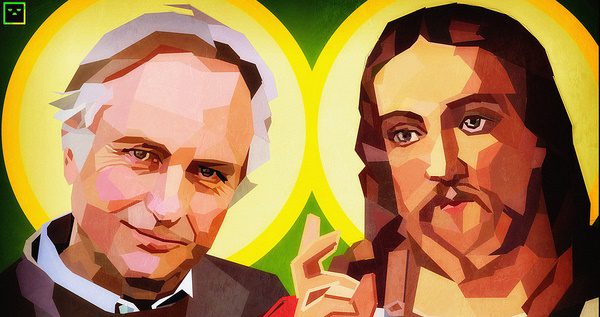
Richard Dawkins made big waves years ago with his book The God Delusion. This quote in particular struck a chord with many people,
The God of the Old Testament is arguably the most unpleasant character in all fiction: jealous and proud of it; a petty, unjust, unforgiving control-freak; a vindictive, bloodthirsty ethnic cleanser; a misogynistic, homophobic, racist, infanticidal, genocidal, filicidal, pestilential, megalomaniacal, sadomasochistic, capriciously malevolent bully.
Dawkins arranges all of those words in a way that is very compelling, but they are compelling because they are simplistic. It’s easy to critique Dawkins’ biblical scholarship. In fact, when it comes to the Bible, Dawkins is no scholar. He’s a living example of the adage, “A little knowledge is a dangerous thing.”
And that’s okay. He just hasn’t been taught. I get that because I’m ignorant about many things, too. I’m completely ignorant about medicine, which is why I have a great doctor whom I trust.
Dawkins’ ignorance about the Hebrew Bible leads him to proclaim a partial truth as the whole truth, and that’s a dangerous thing.
For example, is the God of the Hebrew Bible genocidal? It sure seems that way in the book of Joshua. Joshua tells the story of the Israelites entering the promised land. But there’s a problem. Other people live in the land. So God makes a second promise to drive out the Canaanites, Hittites, Hivites, Perizzites, Girgashites, Amorites, and Jebusites.
God promises to be with the Israelites by being against the people already in the land. God calls Joshua to lead the Israelites in a holy war against them. God acts as a warrior along with the Israelites as they conquered the people. The name Joshua comes from the Hebrew word Yeshua, which means rescuer or savior. So Joshua, the savior of the people Israel, would save them through acts of war and murder. Everything, and everyone in the land, was to be annihilated.
I gotta tell you, I agree with Dawkins that the God depicted in Joshua seems like a monster. Maybe the biggest monster of all time. But if Dawkins thinks he and the new atheists are breaking new ground in critiquing the God depicted in Joshua, he’s about 2,800 years too late.
Whenever the Bible tells a story about God’s violence, you can be sure that there is a counter-story. Sure enough, there’s a counter-story to the God depicted in Joshua.
Joshua was written during the time of King Josiah, who reigned from 640 to 609 BCE. But the prophetic writings and the Psalm that refer to the story of the entry into the promised land were written around 950 BCE, almost 300 years earlier than Joshua. Those writings tell the story differently. They do talk about the miracle of the splitting of the Jordan River before they entered, but none of them mention a violent conquest. None of them say that God or the Israelites drove out the Canaanites or anyone else. None of them even mention Joshua. As Hebrew Bible Scholar Robert Coote states in his commentary on Joshua, “What is most striking about all of these references to the tradition in its archetypal form is that not only do they make no mention of Joshua, but also they imply nothing about conquest or reconquest.”*
In fact, the book of Judges, which comes right after the book of Joshua, says that God intentionally left the Canaanites, Hittites, Hivites, Perizzites, Girgashites, Amorites, and Jebusites in the land in order to teach Israel how to become a nation.
The Bible has differing views on divine violence. As René Girard points out, the Bible is a text in travail. It struggles to bring forth the image of the true God, who has nothing to do with violence, but is revealed as nonviolent Love. But let’s look outside of the Bible. Again, Dawkins may be offended by the violence of God in the Bible, but Jews and Christians have been offended by that violence for thousands of years.
For example, a Jewish contemporary of Jesus, a man named Philo of Alexandria, was offended by the violence he found in the Bible. He decided that the best way to interpret that violence was allegorically. Early Christian commentators made a similar move and interpreted God’s violence in the Bible similarly. One of the most important theologians in Christian history was a man named Origen. He lived around the year 220 of the Common Era. Origen’s allegorical interpretation claimed that Joshua’s war against the Canaanites didn’t actually happen. But, and here’s the paradox, he did say that the story is true. Origen’s interpretation was allegorical because he interpreted the external battles as internal struggles. He said that within each of us there is a battle between good and evil. It’s as if Joshua’s battle is happening within each one of us, and God goes with us as we face our inner demons.**
I don’t know if you find Origen’s allegorical interpretation compelling or not. But here’s the point I want to leave you with. There are two Yeshuas in the Bible, for Jesus’s name in Hebrew is also Yeshua. There are two men who are called Savior. One who believed that God called him to pick up the sword and kill his enemies in holy war. The other believed God called him to pick up the cross and forgive his enemies in holy love.
Jesus says that his followers have one teacher. We have one rabbi. Indeed, Jesus was fully within his Jewish tradition when he worked for justice through nonviolence. The word Christ means King. Jesus wasn’t a king who exalted himself with worldly power and threats of violence. In the face of fear, in the face violence, Jesus didn’t respond in kind with threats of divine violence. Rather, when Jesus hung on the cross, he prayed, “Father, forgive them, for they know not what they do.”
The only question is, which Yeshua will we follow?
*See Coote’s commentary on Joshua in the New Interpreter’s Bible Commentary, pg 600.
**For more on this, see Gregory Boyd’s Crucifixion of the Warrior God, 437 ff.
This article was adapted from a sermon I preached at Clackamas United Church of Christ, just outside of Portland, Oregon. You can watch the sermon “For God So Loved the Canaanites, Too” on the CUCC youtube channel.
Image: Flickr, Richard Dawkins and Jesus, by Surian Soosay, Creative Commons License.
Previous Post

November 7, 2017
Everlasting Life Beyond Violence: Keeping Churches Gun-Free
Next Post

November 10, 2017 Sermon: Saints!
Browse Our Archives
Select a Category Atonement and Current Events Curriculum Faith and Families Interviews Jesus the Forgiving Victim Lent Montessori politics Reviews The Bible Explained Uncategorized Valentine's Day Wednesday Sermon Who is God?
Select a Month July 2020 November 2019 October 2019 September 2019 August 2019 July 2019 June 2019 May 2019 April 2019 March 2019 February 2019 January 2019 December 2018 November 2018 October 2018 September 2018 August 2018 July 2018 June 2018 May 2018 April 2018 March 2018 February 2018 January 2018 December 2017 November 2017 October 2017 September 2017 August 2017 July 2017 June 2017 May 2017 April 2017 March 2017 February 2017 January 2017 December 2016 November 2016 October 2016 September 2016 August 2016 June 2016 May 2016 April 2016 March 2016 February 2016 January 2016 December 2015 November 2015 October 2015 September 2015 August 2015 July 2015 June 2015 May 2015 April 2015 March 2015 February 2015 January 2015 December 2014 November 2014 October 2014 September 2014 August 2014 July 2014 June 2014 May 2014 April 2014 March 2014 January 2014 December 2013 September 2013 August 2013 July 2013
Follow Us!
TAKE THE
Religious Wisdom Quiz
Who led the Israelites into the Promised Land?
Select your answer to see how you score.
Aaron Caleb Moses Joshua
Related posts from Teaching Nonviolent Atonement

Forgiveness in the Time of COVID-19 by Julia...


Reflections on Indigenous Wisdom For Healing A Wounded...

How Forgiveness Can Transform Our Violence and Build...
TRENDING AT PATHEOS Progressive Christian

What Being a Modern-Day Apostle Means to Me
In my last column, I discussed the ins and outs of modern-day...

Did Ancient China Once Worship the God of...
Across human history, a common thread weaves through the origins of the...

Love Your Neighbor – Including Earth-Kin: Lev. 19,...
God’s command to love your neighbor means acting in an ethical and...

Lead a Church Study of “Jesus and Lao...
Guest writer Jack Thomas (The Irreverent Reverend) reflects on leading his church...

Pastoral Wisdom for Responding to Sermon Pushback
Getting sermon pushback on your social justice sermon? Learn practical, Proverbs-based strategies...

Principles for Understanding the Apostolic Ministry Today
Whenever people discover that my formal ministry title is "apostle," as in...
view all Progressive Christian blogs
Ad-Free & Subscriber Log-In Subscription Support
- About Us
- 2026 Calendar
- Videos
- Podcasts
- Library of World Religions
- Faith In Media Tracker
- Advertise With Us
- Write for Us
- Privacy Policy
- Terms of Service
- Do Not Sell My Data
- Contact Us
- Radiant Digital
- Manage Newsletter Subscriptions
- Unsubscribe From Notifications
- Sitemap
Copyright 2008-2026, Patheos. All rights reserved.
Subscription Support Ad-Free & Subscriber Log-In
Follow Patheos