
BuddhistCatholicContemplativeEvangelicalGeneral ChristianHinduJewishLatter-day SaintMuslimNew VisionsProgressive Christian
Beliefs
- Buddhist
- Catholic
- Contemplative
- Evangelical
- General Christian
- Hindu
- Jewish
- Latter-day Saint
- More Voices
- Muslim
- New Visions
- Pagan
- Progressive Christian
Topics
- Religion News
- Food and Religion
- Sports and Religion
- Religious Art
- Religious Music and Entertainment
- Religious Events
- History and Religion
- Style and Religion
- Politics and Religion
- Women in Religion
- Recreation Outdoors and Religion
- Business Finance and Religion
- Careers Workplace and Religion
- Education and Religion
- Family Parenting and Religion
- Health Fitness and Religion
- Home and Religion
- Relationships and Religion
- Technology and Religion
- Travel and Religion
Columnists
- Buddhist Columnists
- Business Finance and Religion Columnists
- Careers Workplace and Religion Columnists
- Catholic Columnists
- Contemplative Columnists
- Education and Religion Columnists
- Evangelists Columnists
- Family Parenting and Religion Columnists
- General Christian Columnists
- Health Fitness and Religion Columnists
- Hindu Columnists
- History and Religion Columnists
- Home and Religion Columnists
- Jewish Columnists
- More Voices Columnists
- Latter Day Columnists
- Muslim Columnists
- New Visions Columnists
- Nonreligious Columnists
- Pagan Columnists
- Politics and Religion Columnists
- Progressive Columnists
- Recreation Outdoors and Religion Columnists
- Relationships and Religion Columnists
- Religion News Columnists
- Religious Art Columnists
- Religious Events Columnists
- Religious Music and Entertainment Columnists
- Sports and Religion Columnists
- Style and Religion Columnists
- Technology and Religion Columnists
- Travel and Religion Columnists
- Women in Religion Columnists
Resource Library
- 2026 Calendar
- Library of World Religions
- The 100 Most Holy Places on Earth
- Patheos Answers
- Podcasts
- Videos
- Faith Leaders Database
- Anglican Episcopalian
- Bahai
- Baptist
- Buddhism
- Christianity
- Confucianism
- Eastern Orthodoxy
- Hinduism
- Holiness and Pentecostal
- ISKCON
- Islam
- Judaism
- Lutheran
- Methodist
- The Church of Jesus Christ of Latter-day Saints
- New Age
- Paganism
- Presbytarian and Reformed
- Protestantism
- Religion Behind the Scenes
- Roman Catholic
- Scientology
- Shia Islam
- Sikhism
- Sufism
- Sunni Islam
- Taoism
- Zen
- See all religions
Research Tools
 Ad-Free & Subscriber Log-In Subscription Support
Ad-Free & Subscriber Log-In Subscription Support
Follow Patheos 

- Trending:
- Forgiveness
- |
- Marriage
- |
- Consciousness
- |
- Death Penalty
- |
- Election
- |
- Halloween
 Teaching Nonviolent Atonement
- Home
- Progressive Christian
- Give People A Reason to Believe in Forgiveness: On Racism and Repentance
Give People A Reason to Believe in Forgiveness: On Racism and Repentance
Last updated on: July 12, 2017 at 9:36 am by Lindsey Paris-Lopez
Give People A Reason to Believe in Forgiveness: On Racism and Repentance 2017-07-12T09:36:43-05:00 Lindsey Paris-Lopez
Patheos Explore the world's faith through different perspectives on religion and spirituality! Patheos has the views of the prevalent religions and spiritualities of the world.
 Forgiveness does not make repentance unnecessary. It makes repentance possible.
I have come to believe in the power of forgiveness to affect positive, holy transformation.
But what about when it doesn’t?
What happens when forgiveness does not break open hearts and lead to repentance? What happens when forgiveness gives an aura of relief and safety to those perpetrating aggressions but doesn’t ease the burden of those who have been wronged? What happens when forgiveness is folded into a ritual of complacency with injustice?
Let me back up.
I want to talk about my understanding of forgiveness and where it comes from. But then I want to express how that understanding has been challenged as I have listened to the voices of people of color and realized how forgiveness has often been met with inaction, how requests for forgiveness have perpetuated violence, how even those who ultimately believe in forgiveness have seen it weaponized. This is about how my eyes are being opened by those who have the intelligence of being on the underside of white privilege, perspectives that white people like me would do well to read for ourselves.
What Forgiveness Should Be
When we are in the midst of violence and rivalry, we often double-down on our anger, convinced in our hurting that our violence is just and righteous. In the fog of pain and fear, we rarely recognize the damage we do to others as fighting escalates. But an unexpected word of forgiveness can stop the escalation of violence in its tracks. As the adrenaline of violence drains, we lay down our weapons – words or otherwise. The disarming act of forgiveness can clear our minds to see beyond our own pain to the pain of others, creating space for reconciliation.
Or, sometimes, we already know that we are in the wrong. But we are afraid to admit it, wanting to cling to our justifications, terrified that admitting our wrong will lead to anger and turn others against us. Forgiveness is a shelter of healing in those cases. It frees us from the negative influence of fear and the paralysis of guilt. Forgiveness says to us, “Stop! Don’t be afraid! I know the worst of you; I know the pain you have caused. And I still love you. I am giving you the freedom to live into the goodness for which you were born.” The compassion of forgiveness can burst our hearts open and help us to repent. In the security of forgiveness, we can turn around and repair the damage of our fear and self-serving by working with and for those we have harmed, recognizing our destiny is not against each other but bound together.
Where Does Forgiveness Come From?
My understanding of forgiveness, like all good things, is that it originates in God. For me, while forgiveness has been given, received and revealed in all times and places, the ultimate revelation of forgiveness is the cross.
Reading scripture through a Girardian lens helps me understand that it is a story of humanity’s entanglement in violence and God’s self-revelation as our pathway out of our self-destruction. From the beginning, humanity has been caught up in cycles of violence that have periodically ended in a sacrificial purge. As relational creatures, we imitate each-other’s desires, leading to competition, leading to conflict. Throughout history and today as well, escalating violence has threatened to engulf humanity. The ancient solution to conflict, still regularly employed, is for warring parties to channel their hatred and violence onto a scapegoat, an outside party onto whom they could shift all their anger and hate. The murder or expulsion of the scapegoat provided such a cathartic euphoria that people were led to believe their own violence was righteous and justified, ordained by God.
Jesus was the ultimate scapegoat. He threatened the over-and-against structuring of humanity by bringing people in from the margins. He embraced the unclean and drew the weakest members of society – children – to himself. He chastised the power structures that exploited and destroyed lives. In his crucifixion, humanity united against him. The enemies, Pilate and Herod, came together over him. His embrace of the outcasts led others to cast him out. He died a criminal and a blasphemer. Once again, those who put him to death believed wholeheartedly that their violence was sanctioned by God.
But the resurrection changed everything. Because in rising over the powers of death and hate, Jesus offered life-renewing forgiveness. In doing so, he did not simply let those who killed him off the hook. His death sent a message. “You think God is with the killers, on the side of the powerful. But I, the crucified One, am God, and I stand with the victims. I have become a victim to lead you all out of your victimization and victimizing. I offer you a new way, a full way, to be human. In casting out others, you have cast out God and fragmented yourselves. I offer not stand-apart holiness but communal wholeness. Instead of dividing against each other, unite in me – unite in Love – and live for each other as I live for you.”
When Forgiveness Fails
So if forgiveness frees us to see and admit our faults and gives us the space we need to become our best selves, living with and for others, how do we account for continued systems of oppression perpetrated by those who claim to be forgiven, specifically the persistence of racism?
Christianity’s sordid relationship with racism is essential context for recognizing the depths of racism in this country and for seeing how Jesus’s incarnation and crucifixion have been perverted and weaponized against people of color since before the United States became a nation. Without reiterating all of that now, I will simply affirm with James Cone that “no American Christian can understand completely the full theological meaning of the American Christ without identifying his image with the recrucified black body hanging from a lynching tree.” There is a gruesome irony in the fact that, in the name of Christ, living reflections of him were lynched hundreds of times over, and continue to be lynched today.
Christ stands with the oppressed. And people of color have been oppressed throughout our nation’s history and continue to be oppressed today. A nation where the median household wealth is 15 times higher for white people than it is for African Americans, where the prison population is 5 times higher for African Americans than it is for white people, and where police kill unarmed or non-threatening African Americans with impunity, is not a land of liberty and justice for all. Moreover, it testifies to a failure for white Christians in particular, who like all Christians affirm the forgiveness of God in Christ, to live into the fullness of our forgiveness. The continued oppression, degradation, and unjust arrest, injury, and murder of people of color signifies a failure of white America to repent.
If we recognize the simple fact that generations of slavery, lynching, criminalization of black skin, segregation, lies, redlining, denial of access to governmental benefits, under-representation in education and employment, and more lies have lasting economic, social, and psychological consequences, then we should realize that racism is still a very deep, persistent problem. And if we recognize Christ in the marginalized and maligned, we must recognize him in peoples of color marginalized and maligned in the United States and around the world. And, fellow white people, if we do recognize Christ in people of color, we must make every effort to amend the generations of violence that have conferred a dividing racial advantage upon us. If we do not, we are not following the light of Christ’s forgiveness out of our violence.
Yet even while the violence of systemic racism persists, white America continues to ask forgiveness of African American victims of violence without doing our part of turning our nation, so infected by racism, around. Parents of African Americans killed by police are asked if they forgive their children’s killers. Families of the Charleston 9 were quick to forgive Dylann Roof. With all of this forgiveness, why is white America still trapped in the paralysis of fear? Why is it still plausible that not only will police officers claim that they “feared for their lives” when shooting unthreatening African Americans, but juries will still consider that a valid defense? Forgiveness in these cases is not affecting conversion but becoming part of a placating ritual that is keeping white America blind and complacent. Is it any wonder that some people, both people of color and allies, are expressing doubt in the power of forgiveness to reconcile race relations?
Conclusion
In the matter of race relations, if anyone doubts the power of forgiveness, it is because unless white people are actively doing the work of dismantling racism (and some are, but far too few when it is incumbent on all of us), we are squandering our free gift. In doing so we are not only distancing ourselves from people of color (and even if we have friends of color, we keep a distance if we don’t dismantle the system), we are distancing ourselves from God. We are not living into our new identity in Christ that is with and for everyone.
But because of the forgiveness we have already received, we can do the work of dismantling racism without fear or guilt. First and foremost, we can listen to the stories of people of color. We can learn our history. And we can teach that history to our children. We can petition for a more diverse curriculum in our children’s schools. We can raise our voices against privatization and gentrification. We can seek to learn how policy proposals will affect communities of color, and lend our voices to theirs for advocacy and protest. And we can learn and speak out against microaggressions and insidious biases. There is always much, much more.
We do the work of antiracism for the whole human race, because relationship of oppressed and oppressor is a trap for all of us. We were made for better. We were made for Love.
So if people doubt the power of forgiveness, it is because we have given them plenty of reason to doubt. Let’s give people a reason to believe in forgiveness. Let’s get to work.
Editors Note: Special thanks to reader Iain Lovejoy for pointing out an error in this article. Lindsey Paris-Lopez originally wrote, “A nation where the median household income is 15 times higher for white people than it is for African Americans…” Lovejoy points out that the article Lindsey cited refers to assets, not income. Lindsey apologizes for the mistake, and we have changed the word “income” to “wealth,” which is the word used in the article to which she linked. There is a substantial income gap between African Americans and white Americans but it is not as high as Lindsey stated. Calculating from the median income given in the article, that gap is about 36%.
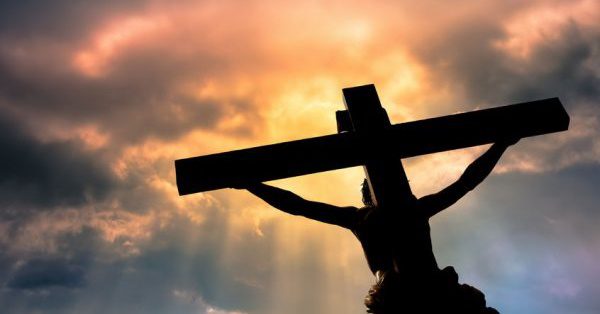
Image: Stock photo by bolina from 123rf.com.
Stay in the loop! Like Teaching Nonviolent Atonement on Facebook!
Next Post

July 10, 2017 The Prophet Jeremiah: Social Justice Warrior - The RavenCast
Browse Our Archives
Select a Category Atonement and Current Events Curriculum Faith and Families Interviews Jesus the Forgiving Victim Lent Montessori politics Reviews The Bible Explained Uncategorized Valentine's Day Wednesday Sermon Who is God?
Select a Month July 2020 November 2019 October 2019 September 2019 August 2019 July 2019 June 2019 May 2019 April 2019 March 2019 February 2019 January 2019 December 2018 November 2018 October 2018 September 2018 August 2018 July 2018 June 2018 May 2018 April 2018 March 2018 February 2018 January 2018 December 2017 November 2017 October 2017 September 2017 August 2017 July 2017 June 2017 May 2017 April 2017 March 2017 February 2017 January 2017 December 2016 November 2016 October 2016 September 2016 August 2016 June 2016 May 2016 April 2016 March 2016 February 2016 January 2016 December 2015 November 2015 October 2015 September 2015 August 2015 July 2015 June 2015 May 2015 April 2015 March 2015 February 2015 January 2015 December 2014 November 2014 October 2014 September 2014 August 2014 July 2014 June 2014 May 2014 April 2014 March 2014 January 2014 December 2013 September 2013 August 2013 July 2013
Follow Us!
TAKE THE
Religious Wisdom Quiz
Who spoke to the burning bush?
Select your answer to see how you score.
Aaron Miriam Moses Joseph
Related posts from Teaching Nonviolent Atonement

Forgiveness in the Time of COVID-19 by Julia...

Reflections on Indigenous Wisdom For Healing A Wounded...

How Forgiveness Can Transform Our Violence and Build...

Jesus Unmasked: God's Economy and How to Cheat...
TRENDING AT PATHEOS Progressive Christian

What Being a Modern-Day Apostle Means to Me
In my last column, I discussed the ins and outs of modern-day...

Did Ancient China Once Worship the God of...
Across human history, a common thread weaves through the origins of the...

Love Your Neighbor – Including Earth-Kin: Lev. 19,...
God’s command to love your neighbor means acting in an ethical and...

Lead a Church Study of “Jesus and Lao...
Guest writer Jack Thomas (The Irreverent Reverend) reflects on leading his church...

Pastoral Wisdom for Responding to Sermon Pushback
Getting sermon pushback on your social justice sermon? Learn practical, Proverbs-based strategies...

Principles for Understanding the Apostolic Ministry Today
Whenever people discover that my formal ministry title is "apostle," as in...
view all Progressive Christian blogs
Ad-Free & Subscriber Log-In Subscription Support
- About Us
- 2026 Calendar
- Videos
- Podcasts
- Library of World Religions
- Faith In Media Tracker
- Advertise With Us
- Write for Us
- Privacy Policy
- Terms of Service
- Do Not Sell My Data
- Contact Us
- Radiant Digital
- Manage Newsletter Subscriptions
- Unsubscribe From Notifications
- Sitemap
Copyright 2008-2026, Patheos. All rights reserved.
Subscription Support Ad-Free & Subscriber Log-In
Follow Patheos