
BuddhistCatholicContemplativeEvangelicalGeneral ChristianHinduJewishLatter-day SaintMuslimNew VisionsProgressive Christian
Beliefs
- Buddhist
- Catholic
- Contemplative
- Evangelical
- General Christian
- Hindu
- Jewish
- Latter-day Saint
- More Voices
- Muslim
- New Visions
- Pagan
- Progressive Christian
Topics
- Religion News
- Food and Religion
- Sports and Religion
- Religious Art
- Religious Music and Entertainment
- Religious Events
- History and Religion
- Style and Religion
- Politics and Religion
- Women in Religion
- Recreation Outdoors and Religion
- Business Finance and Religion
- Careers Workplace and Religion
- Education and Religion
- Family Parenting and Religion
- Health Fitness and Religion
- Home and Religion
- Relationships and Religion
- Technology and Religion
- Travel and Religion
Columnists
- Buddhist Columnists
- Business Finance and Religion Columnists
- Careers Workplace and Religion Columnists
- Catholic Columnists
- Contemplative Columnists
- Education and Religion Columnists
- Evangelists Columnists
- Family Parenting and Religion Columnists
- General Christian Columnists
- Health Fitness and Religion Columnists
- Hindu Columnists
- History and Religion Columnists
- Home and Religion Columnists
- Jewish Columnists
- More Voices Columnists
- Latter Day Columnists
- Muslim Columnists
- New Visions Columnists
- Nonreligious Columnists
- Pagan Columnists
- Politics and Religion Columnists
- Progressive Columnists
- Recreation Outdoors and Religion Columnists
- Relationships and Religion Columnists
- Religion News Columnists
- Religious Art Columnists
- Religious Events Columnists
- Religious Music and Entertainment Columnists
- Sports and Religion Columnists
- Style and Religion Columnists
- Technology and Religion Columnists
- Travel and Religion Columnists
- Women in Religion Columnists
Resource Library
- 2026 Calendar
- Library of World Religions
- The 100 Most Holy Places on Earth
- Patheos Answers
- Podcasts
- Videos
- Faith Leaders Database
- Anglican Episcopalian
- Bahai
- Baptist
- Buddhism
- Christianity
- Confucianism
- Eastern Orthodoxy
- Hinduism
- Holiness and Pentecostal
- ISKCON
- Islam
- Judaism
- Lutheran
- Methodist
- The Church of Jesus Christ of Latter-day Saints
- New Age
- Paganism
- Presbytarian and Reformed
- Protestantism
- Religion Behind the Scenes
- Roman Catholic
- Scientology
- Shia Islam
- Sikhism
- Sufism
- Sunni Islam
- Taoism
- Zen
- See all religions
Research Tools
 Ad-Free & Subscriber Log-In Subscription Support
Ad-Free & Subscriber Log-In Subscription Support
Follow Patheos 

- Trending:
- Forgiveness
- |
- Marriage
- |
- Consciousness
- |
- Death Penalty
- |
- Election
- |
- Halloween
 Teaching Nonviolent Atonement
- Home
- Progressive Christian
- Mimetic Theory and Race Relations: Avoiding Pitfalls that Perpetuate Racism
Mimetic Theory and Race Relations: Avoiding Pitfalls that Perpetuate Racism
Last updated on: June 23, 2017 at 11:22 am by Lindsey Paris-Lopez
Mimetic Theory and Race Relations: Avoiding Pitfalls that Perpetuate Racism 2017-06-23T11:22:12-05:00 Lindsey Paris-Lopez
Patheos Explore the world's faith through different perspectives on religion and spirituality! Patheos has the views of the prevalent religions and spiritualities of the world.
 On Violence and Forgiveness: Mimetic Theory 101
Violence begets violence. Victims of violence, when they have and use the power to retaliate, perpetuate cycles of violence that eventually blur the distinctions between the original attacker and the one attacked. Sometimes, victims of violence without the power to retaliate against their attackers begin new cycles of violence against those whom they have the power to harm.
Forgiveness is the best hope we have for stopping violence in its tracks. Forgiveness makes repentance possible because it is through being forgiven that we are able to see our own wrong without the blinders of fear that keep us in our violent ways lest we make ourselves more vulnerable to counterattack. In the shelter of forgiveness, we can lay down our arms and take up the hard work of repairing the damage we have caused in order to reconcile ourselves to those we have hurt and make at-one-ment/atonement.
I believe and teach all of this as an aspiring peacemaker, guided by my Christian faith, my commitment to social justice, and René Girard’s mimetic theory. Mimetic theory’s great insight about conflict and forgiveness is that humans are imitative creatures who learn what to desire from one-another, and conflicts can arise from shared desire. Once violent conflicts arise, both parties to the conflict become mimetic doubles – or mirror images of each other as they lose their individuality in the fog of violence. At that point, there are two ways out. One is for both parties to unite against an outside party, a scapegoat, onto whom they can cast their anger. The other is for one party to lay down arms and begin a cycle of forgiveness. Scapegoating displaces the violence; forgiveness dissolves it.
Major Pitfalls in Mimetic Theory and Race Relations
That said, there are at least two major potential pitfalls to avoid within this understanding of the nature of violence and forgiveness. I want to speak of these pitfalls in the context of systemic racism. The first pitfall is the assumption that, because of the reciprocal nature of violence, today’s victims of systemic racism can become tomorrow’s enforcers of it. The second pitfall is the assumption that, because forgiveness breaks the cycle of violence, the onus is on racial minorities to begin the dismantling of racism, since they are the people in a position to forgive. Both pitfalls are dangerous, faulty conclusions that may arise from misapplying mimetic theory to peacemaking and racial reconciliation.
Pitfall 1: Believing in the Danger of “Reverse Racism”
White people in the United States (my home country and thus the one I am most prepared to critique) are in no danger of reverse racism. None. The roots of systemic racism penetrate so deeply into the foundation of this country and the branches reach so far and wide that racism cannot be uprooted and then replanted to ensnare a separate group of victims. Any confusion on this issue is a misunderstanding of what systemic racism is.
Although violence is self-perpetuating and offended parties often become offenders, deep, sustained and systemic violence by a dominant group over and against another group is harder to reciprocate than individual or small-group violence. In the case of systemic racism in the United States, there is no way for racial minorities to wield the powers of violence and oppression against white people that have been wielded against them. The pervasiveness of racism and the power structures keeping it in place are such that the victims and perpetrators cannot simply be swapped out. It is possible for individual African Americans, for example, to hold a degree of power over individual white people, but they cannot inflict the burdens of generations of slavery, physical violence, economic oppression, housing and employment restriction, squashing of progress, stereotypes about intelligence and beauty, and all-around dehumanization that white supremacy has inflicted.
Those who study Girard are acutely aware of how easily victims can become victimizers. But the system of white supremacy cannot easily be reversed, nor are those on the underside of it trying to reverse it, but rather dismantle it. There are better ways to apply Girardian thought to race relations than worrying about reverse racism.
In fact, the Girardian understanding of scapegoating helps shed light on the origins of racism in this country. Indentured servitude, for black and white people, preceded slavery. In the earliest days of colonialism, most Europeans who sailed to the not-yet-United-States were indentured servants. Poor and indentured blacks and whites found common cause to unite against wealthy white rulers, most famously in Bacon’s Rebellion. After the uprising of hundreds of blacks and whites together, the ruling class sought to protect its rule by broadening the divide between blacks and poor or indentured whites. Dividing those who would unite against them, the white ruling class forged a faux solidarity with poor whites by institutionalizing black slavery as a scapegoat, creating myths and lies to “justify” even greater levels of cruelty against slaves in order to make poor whites feel superior. They used divisions of race to break bonds of class.
And the lies of institutional racism have become the structural myths on which our culture is built. They have penetrated every aspect of personal, social, cultural and economic life and created physical and psychological barriers that imprison minds and hearts. Lies told white Americans that bearers of dark skin were inhuman, dangerous, violent, hypersexual, inherently lazy, condemned. When black skin was demonized, cruelty became righteous. The institutions of racism have changed form but not content. From slavery through Jim Crow through legal segregation and now with de facto segregation manifesting itself in a disproportionately dark prison-industrial complex, environmental racism and concentrated poverty, institutional racism is a fact that has shaped black lives shrouded in a myth of whitewash and denial.
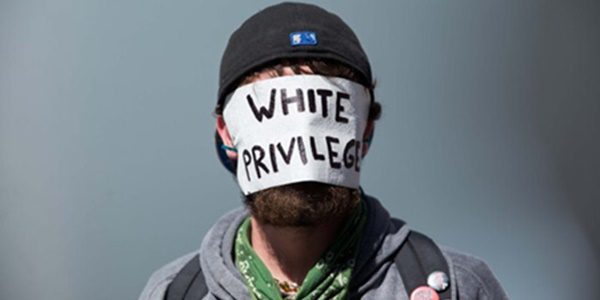
Myths that shape lives also poison minds. Racism is a mimetic contagion from which no white person is immune, because white privilege and all the myths that “normalize” it cloud our understanding of racial oppression. We must continually struggle to open our eyes.
So how do we dismantle racism?
Pitfall 2: Demanding Forgiveness As Conditional to Repentance
We are often blind to our violence in the midst of committing it, recognizing our faults only through the light of forgiveness. When it is clear that our “enemy” means us no harm, we begin to look inward, wonder why we called them “enemy” in the first place, and hopefully recognize our errors. In Jesus’s nonviolent death, hearts are broken open as the innocence of the victim is recognized. In his revenge-less resurrection, we are given the opportunity to turn from our worst selves to our best.
But the logic that forgiveness precedes repentance may be seen as an extra burden placed upon those already grievously injured. The truth is, forgiveness before repentance is a burden, but it is one that Christ has already borne. It is not something that can be demanded by an offender, because that compounds the offense. The offended may choose to offer it freely, but an offender need not “wait” for it. If we can recognize that we are in the wrong, then we see through the lens of forgiveness that Christ has made available to all humanity, regardless of faith.
To my fellow white people, then, I want to say that, as we open our eyes to the systemic injustice all around us, we need not be paralyzed by fear of vengeance or despair upon seeing the worst within ourselves. We are forgiven already, by Jesus who suffers with all victims, and, largely, by the racial minorities who have suffered at our expense. We must recognize the forgiveness we have already received and start acting upon it. Even as systemic violence continues, those oppressed on racial grounds overwhelmingly do for us what far too many white people failed and continue to fail to do for them: treat us as if we are human. That should be enough to awaken us and call us to action.
Consequences of Pitfalls: Perpetuating Racism
If we fall into the dangerous and interconnected pitfalls of fearing reverse racism and demanding forgiveness, we deepen and perpetuate systemic racism. The fear that reverse racism can happen belies the systemic nature of racism and denies the reality of white privilege (and when white privilege is denied, it cannot be dismantled or transformed).
For example, it is through the misunderstanding of systemic racism that some people can look at things like this list of “10 Ways You Can Actively Reject Your White Privilege” and consider it racist. Asking white people to take up minimal space in anti-racism activities is not a racist request; it is a necessary step for allowing perspectives too long been silenced to be heard. Likewise, recognizing that white people will always have a degree of racism is an acknowledgment of how deeply generations of racism have infected our minds in ways we might not consciously acknowledge; a diagnosis, not an insult.
But fear of reverse racism can be even more harmful in that it perpetuates the lie sewn into our social fabric and drilled into our conscience: dark is dangerous. That is a fabrication and a projection. Throughout the history of this country, white people have been overwhelmingly dangerous to racial minorities. Racial minorities live with the injustice of being feared, an injustice that endangers them every day. That injustice is compounded by the fact that they forgive white ignorance, denial and micro-aggression every day, yet systemic racism remains intact.
Conclusion:
Mimetic theory can shed light on systemic racism as the foundational violence of our country and help us understand how racial fears and prejudices are perpetuated through the mimetic networks of human relations. And positive mimesis, in turn, can disseminate antidotes to racial prejudice: respect, understanding, compassion. Let us avoid the pitfalls of misapplied mimetic theory and instead dismantle the American myth of racism. We have a lot of work to do.
Image: “Racism: The Elephant In The Room,” by Backbone Campaign: Alex Garland, Damien Conway, Andy Clark, and John Duffy. Image cropped. Available on Flickr via Attribution 2.0 Generic license.
Stay in the loop! Like Teaching Nonviolent Atonement on Facebook!
Previous Post

June 15, 2017
Man Who Attacked GOP Was a Product of American Logic of Violence
Next Post
June 20, 2017 Hands Off My Story! Truth, Lies, and Cultural Appropriation
Browse Our Archives
Select a Category Atonement and Current Events Curriculum Faith and Families Interviews Jesus the Forgiving Victim Lent Montessori politics Reviews The Bible Explained Uncategorized Valentine's Day Wednesday Sermon Who is God?
Select a Month July 2020 November 2019 October 2019 September 2019 August 2019 July 2019 June 2019 May 2019 April 2019 March 2019 February 2019 January 2019 December 2018 November 2018 October 2018 September 2018 August 2018 July 2018 June 2018 May 2018 April 2018 March 2018 February 2018 January 2018 December 2017 November 2017 October 2017 September 2017 August 2017 July 2017 June 2017 May 2017 April 2017 March 2017 February 2017 January 2017 December 2016 November 2016 October 2016 September 2016 August 2016 June 2016 May 2016 April 2016 March 2016 February 2016 January 2016 December 2015 November 2015 October 2015 September 2015 August 2015 July 2015 June 2015 May 2015 April 2015 March 2015 February 2015 January 2015 December 2014 November 2014 October 2014 September 2014 August 2014 July 2014 June 2014 May 2014 April 2014 March 2014 January 2014 December 2013 September 2013 August 2013 July 2013
Follow Us!
TAKE THE
Religious Wisdom Quiz
What prophet was taken up to heaven in a chariot of fire?
Select your answer to see how you score.
Isaiah Jeremiah Elijah Elisha
Related posts from Teaching Nonviolent Atonement

Forgiveness in the Time of COVID-19 by Julia...


How Forgiveness Can Transform Our Violence and Build...

The Chosen One Chooses Love Over Fear [VIDEO]
TRENDING AT PATHEOS Progressive Christian

What Being a Modern-Day Apostle Means to Me
In my last column, I discussed the ins and outs of modern-day...

Did Ancient China Once Worship the God of...
Across human history, a common thread weaves through the origins of the...

Love Your Neighbor – Including Earth-Kin: Lev. 19,...
God’s command to love your neighbor means acting in an ethical and...

Lead a Church Study of “Jesus and Lao...
Guest writer Jack Thomas (The Irreverent Reverend) reflects on leading his church...

Pastoral Wisdom for Responding to Sermon Pushback
Getting sermon pushback on your social justice sermon? Learn practical, Proverbs-based strategies...

Principles for Understanding the Apostolic Ministry Today
Whenever people discover that my formal ministry title is "apostle," as in...
view all Progressive Christian blogs
Ad-Free & Subscriber Log-In Subscription Support
- About Us
- 2026 Calendar
- Videos
- Podcasts
- Library of World Religions
- Faith In Media Tracker
- Advertise With Us
- Write for Us
- Privacy Policy
- Terms of Service
- Do Not Sell My Data
- Contact Us
- Radiant Digital
- Manage Newsletter Subscriptions
- Unsubscribe From Notifications
- Sitemap
Copyright 2008-2026, Patheos. All rights reserved.
Subscription Support Ad-Free & Subscriber Log-In
Follow Patheos