
BuddhistCatholicContemplativeEvangelicalGeneral ChristianHinduJewishLatter-day SaintMuslimNew VisionsProgressive Christian
Beliefs
- Buddhist
- Catholic
- Contemplative
- Evangelical
- General Christian
- Hindu
- Jewish
- Latter-day Saint
- More Voices
- Muslim
- New Visions
- Pagan
- Progressive Christian
Topics
- Religion News
- Food and Religion
- Sports and Religion
- Religious Art
- Religious Music and Entertainment
- Religious Events
- History and Religion
- Style and Religion
- Politics and Religion
- Women in Religion
- Recreation Outdoors and Religion
- Business Finance and Religion
- Careers Workplace and Religion
- Education and Religion
- Family Parenting and Religion
- Health Fitness and Religion
- Home and Religion
- Relationships and Religion
- Technology and Religion
- Travel and Religion
Columnists
- Buddhist Columnists
- Business Finance and Religion Columnists
- Careers Workplace and Religion Columnists
- Catholic Columnists
- Contemplative Columnists
- Education and Religion Columnists
- Evangelists Columnists
- Family Parenting and Religion Columnists
- General Christian Columnists
- Health Fitness and Religion Columnists
- Hindu Columnists
- History and Religion Columnists
- Home and Religion Columnists
- Jewish Columnists
- More Voices Columnists
- Latter Day Columnists
- Muslim Columnists
- New Visions Columnists
- Nonreligious Columnists
- Pagan Columnists
- Politics and Religion Columnists
- Progressive Columnists
- Recreation Outdoors and Religion Columnists
- Relationships and Religion Columnists
- Religion News Columnists
- Religious Art Columnists
- Religious Events Columnists
- Religious Music and Entertainment Columnists
- Sports and Religion Columnists
- Style and Religion Columnists
- Technology and Religion Columnists
- Travel and Religion Columnists
- Women in Religion Columnists
Resource Library
- 2026 Calendar
- Library of World Religions
- The 100 Most Holy Places on Earth
- Patheos Answers
- Podcasts
- Videos
- Faith Leaders Database
- Anglican Episcopalian
- Bahai
- Baptist
- Buddhism
- Christianity
- Confucianism
- Eastern Orthodoxy
- Hinduism
- Holiness and Pentecostal
- ISKCON
- Islam
- Judaism
- Lutheran
- Methodist
- The Church of Jesus Christ of Latter-day Saints
- New Age
- Paganism
- Presbytarian and Reformed
- Protestantism
- Religion Behind the Scenes
- Roman Catholic
- Scientology
- Shia Islam
- Sikhism
- Sufism
- Sunni Islam
- Taoism
- Zen
- See all religions
Research Tools
 Ad-Free & Subscriber Log-In Subscription Support
Ad-Free & Subscriber Log-In Subscription Support
Follow Patheos 

- Trending:
- Forgiveness
- |
- Marriage
- |
- Consciousness
- |
- Death Penalty
- |
- Election
- |
- Halloween
 Teaching Nonviolent Atonement
- Home
- Progressive Christian
- Is Jesus Mean? Foolish People, Dull Minds, and Burning Hearts
Is Jesus Mean? Foolish People, Dull Minds, and Burning Hearts
Last updated on: May 4, 2017 at 10:32 am by Tom Truby
Is Jesus Mean? Foolish People, Dull Minds, and Burning Hearts 2017-05-04T10:32:20-05:00 Tom Truby
Patheos Explore the world's faith through different perspectives on religion and spirituality! Patheos has the views of the prevalent religions and spiritualities of the world.
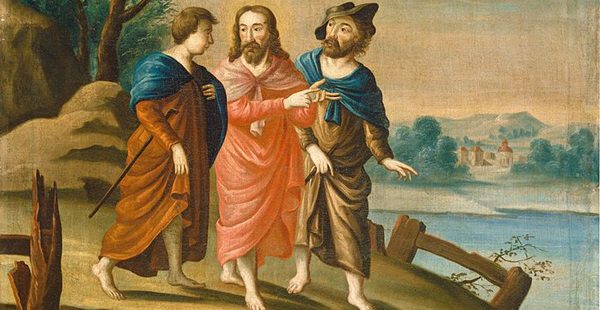 Reflections on Year A, The Third Sunday of Easter
April 30th, 2017
By Rev. Thomas L. Truby
Then Jesus said to them, “You foolish people! Your dull minds keep you from believing all that the prophets talked about. Wasn’t it necessary for the Christ to suffer these things and then enter into his glory?” Then he interpreted for them the things written about himself in all the scriptures, starting with Moses and going through all the Prophets. Luke 24:25-27
In this amazing story of the resurrected Jesus on the road to Emmaus, Jesus makes a descriptive assessment of his disciples and all of humanity by extension. He says humans are foolish and dull of mind. I don’t think he is criticizing the disciples, chiding them for not seeing sooner, shaming them for lacking in intelligence, or being mean. I know that’s how I have always read it and it may be how manuscript copiers thought of it too. It could even be their way of thinking got captured in the way they translated the original text. But as I look at it now, I see a deeper truth. I think it’s a descriptive statement said in love along the lines of “Father forgive them. They don’t know what they are doing.” Jesus is using a very gentle tone full of compassion and in no way is he scolding them.
Dullness of Mind Leads to Sacrificing Others
Of course they are dull of mind! They didn’t have the anthropological data needed to see reality accurately. Jesus is about to provide that. In fact, now that he is resurrected most of the work is already done. All he needs to do now is interpret its meaning for them. That’s why Jesus came and that’s why he is now making his appearance after the crucifixion. He is providing the missing piece in a way they can take it in.
Each one of us is dull of mind about the thing “hidden from the foundation of the world” until the message of the life, death and resurrection of Christ takes hold. Without the crucifixion and resurrection it is impossible for us to be anything other than dull of mind. That event was needed to reveal what we could not see before it and could never see on our own.
Our foolish and self-destructive actions grew out of the dullness of our minds. We weren’t able to see the way we build our fragile and temporary peace through sacrificing the vulnerable while hiding the innocence of our victims from ourselves. We have been doing this since the beginning when Cain killed innocent Abel.
God Desires Mercy, Not Sacrifice
Jesus said to them, “Your dull minds keep you from believing all that the prophets talked about.” The prophets told them that God didn’t need sacrifice; he wasn’t that kind of God. God wanted compassion and mercy, justice stripped of retribution and solely centered on rehabilitation, but they couldn’t believe it. Their anxious minds were dull with fear. Fear clouds thinking and reduces options. They dare not risk all and refrain from sacrifice. Surely God would be angry and retaliate if they did. The very thought of it flooded their minds with undefinable dread. No, dull of mind is not a statement assessing intelligence; it is a descriptor revealing profound and inescapable anxiety.
The Stranger asks, “Wasn’t it necessary for the Christ to suffer these things and then enter into his glory?” With bewildered faces the disciples have no answer. Why would Jesus need to suffer and enter into his glory to reverse the dullness of mind the disciples and all humanity were caught in? Because in his suffering he showed humankind what we do to each other. He allowed us to do to him what we do to each other so that we could see what we do. And so humanity killed Jesus thinking his death necessary and even God’s will. The human species killed an innocent man who was the Son of God. We did this habitually and without understanding.
In our anxiety our minds became dull and we could not see our own propensity for violence that we siphoned into our victims. Our victims carried just enough of our violence for us to refrain from turning on each other and destroying our own community. Sometimes there weren’t enough victims to absorb it all and we plunged into war. For this to work as well as it did we had to hide what we do from ourselves.
The Resurrection: God’s Love Is Bigger Than Our Violence
We had to make our minds dull and fail to see what the prophets were telling us. Jesus came along and allowed this to happen to him so that we could see it. But then from the grave he rises, showing us that God’s love for us is bigger than our commitment to violent death dealing. Only the resurrection is powerful enough to overcome our resistance to seeing the truth about ourselves.
God knows that millions upon millions of innocent people have been sacrificed to human greed, envy, jealousy and violence. Perhaps they are the real “great cloud of witnesses” all witnessing to their innocence and the power of the resurrection as God lifts up those people whom others have put down. Their numbers are staggering and they come from all religions, races, ethnicities and gender identities. Their number is mounting by the day. We read about them in the news, picture them in our history books and see them on television. Some day we will be among them.
When the Stranger told them how to read their scripture, both the law and the prophets, as a story with Jesus’ life, death and resurrection as its centerpiece and interpretive lens, he was giving them a tool for recovering their sight. He was in the act of giving them sharp minds not dulled by anxiety, unable to see the truth. Always before they had lived in fear of judgment; both from God and from each other. This was the moment he revealed the thing hidden since the foundation of the world, since the beginning of culture; the underpinnings of religion. As he did this their hearts burned with clarity and excitement. Suddenly it all made sense. The missing piece to the puzzle fell into place.
The Key to Interpreting Scripture
This text makes it clear that Jesus did not assume the scriptures were self-evident or self-interpreting. They needed a key. This text has Jesus giving them the key. From this point forward their dullness of mind was beginning to lift. The profound anxiety that had gripped their lives began to evaporate. The fear of death that had them in its grasp was being relieved.
They caught a glimpse of something so exciting, so revelatory, and so salvific that their hearts burned. Their minds could not take it in but their hearts felt the implications and they knew they would be thinking about these things for the rest of their lives. It would take years for the dullness of their minds to totally dissipate but their hearts knew they were on the right track.
“When they came to Emmaus, he acted as if he was going on ahead. But they urged him, saying, ‘Stay with us.’” They weren’t ready for him to leave. They needed more time. They wanted to hear more. This Stranger was making sense of all the events they had just gone through. He was putting everything into a new light and it was life giving. Would he stay the night with them! Yes, and much more!
“So he went in to stay with them. After he took his seat at the table with them, he took the bread, blessed and broke it, and gave it to them. Their eyes were opened and they recognized him, but he disappeared from their sight.”
“They recognized him, but he disappeared from their sight.” The moment the disciples recognized Jesus in the breaking of bread, his bodily presence was no longer required as a condition of their new hope. The bond between them and the Stranger had become so intimate that already they were different people. The dullness was leaving them and in its place they felt their hearts burning.
After he vanished “They said to each other, ‘Weren’t our hearts on fire when he spoke to us along the road and when he explained the scriptures for us.’” “They got up right then and returned to Jerusalem.”
Image: Christ on the Road to Emmaus, Public Domain.
Stay in the loop! Like Teaching Nonviolent Atonement on Facebook!


Browse Our Archives
Select a Category Atonement and Current Events Curriculum Faith and Families Interviews Jesus the Forgiving Victim Lent Montessori politics Reviews The Bible Explained Uncategorized Valentine's Day Wednesday Sermon Who is God?
Select a Month July 2020 November 2019 October 2019 September 2019 August 2019 July 2019 June 2019 May 2019 April 2019 March 2019 February 2019 January 2019 December 2018 November 2018 October 2018 September 2018 August 2018 July 2018 June 2018 May 2018 April 2018 March 2018 February 2018 January 2018 December 2017 November 2017 October 2017 September 2017 August 2017 July 2017 June 2017 May 2017 April 2017 March 2017 February 2017 January 2017 December 2016 November 2016 October 2016 September 2016 August 2016 June 2016 May 2016 April 2016 March 2016 February 2016 January 2016 December 2015 November 2015 October 2015 September 2015 August 2015 July 2015 June 2015 May 2015 April 2015 March 2015 February 2015 January 2015 December 2014 November 2014 October 2014 September 2014 August 2014 July 2014 June 2014 May 2014 April 2014 March 2014 January 2014 December 2013 September 2013 August 2013 July 2013
Follow Us!
TAKE THE
Religious Wisdom Quiz
What order did the four beasts that rose from the sea in Daniel's vision appear?
Select your answer to see how you score.
Leopard, bear, lion with eagle's wings, terrifying beast with iron teeth Lion with eagle's wings, bear, leopard, terrifying beast with iron teeth Bear, lion with eagle's wings, terrifying beast with iron teeth, leopard Terrifying beast with iron teeth, lion with eagle's wings, leopard, bear
Related posts from Teaching Nonviolent Atonement

Forgiveness in the Time of COVID-19 by Julia...


Reflections on Indigenous Wisdom For Healing A Wounded...

How Forgiveness Can Transform Our Violence and Build...
TRENDING AT PATHEOS Progressive Christian

Why Christians Have a Sacred Duty to Vote:...
The Bible offers strong support for the sacred duty to vote. Here...

What Being a Modern-Day Apostle Means to Me
In my last column, I discussed the ins and outs of modern-day...

Did Ancient China Once Worship the God of...
Across human history, a common thread weaves through the origins of the...

Love Your Neighbor – Including Earth-Kin: Lev. 19,...
God’s command to love your neighbor means acting in an ethical and...

Lead a Church Study of “Jesus and Lao...
Guest writer Jack Thomas (The Irreverent Reverend) reflects on leading his church...

Principles for Understanding the Apostolic Ministry Today
Whenever people discover that my formal ministry title is "apostle," as in...
view all Progressive Christian blogs
Ad-Free & Subscriber Log-In Subscription Support
- About Us
- 2026 Calendar
- Videos
- Podcasts
- Library of World Religions
- Faith In Media Tracker
- Advertise With Us
- Write for Us
- Privacy Policy
- Terms of Service
- Do Not Sell My Data
- Contact Us
- Radiant Digital
- Manage Newsletter Subscriptions
- Unsubscribe From Notifications
- Sitemap
Copyright 2008-2026, Patheos. All rights reserved.
Subscription Support Ad-Free & Subscriber Log-In
Follow Patheos