
BuddhistCatholicContemplativeEvangelicalGeneral ChristianHinduJewishLatter-day SaintMuslimNew VisionsProgressive Christian
Beliefs
- Buddhist
- Catholic
- Contemplative
- Evangelical
- General Christian
- Hindu
- Jewish
- Latter-day Saint
- More Voices
- Muslim
- New Visions
- Pagan
- Progressive Christian
Topics
- Religion News
- Food and Religion
- Sports and Religion
- Religious Art
- Religious Music and Entertainment
- Religious Events
- History and Religion
- Style and Religion
- Politics and Religion
- Women in Religion
- Recreation Outdoors and Religion
- Business Finance and Religion
- Careers Workplace and Religion
- Education and Religion
- Family Parenting and Religion
- Health Fitness and Religion
- Home and Religion
- Relationships and Religion
- Technology and Religion
- Travel and Religion
Columnists
- Buddhist Columnists
- Business Finance and Religion Columnists
- Careers Workplace and Religion Columnists
- Catholic Columnists
- Contemplative Columnists
- Education and Religion Columnists
- Evangelists Columnists
- Family Parenting and Religion Columnists
- General Christian Columnists
- Health Fitness and Religion Columnists
- Hindu Columnists
- History and Religion Columnists
- Home and Religion Columnists
- Jewish Columnists
- More Voices Columnists
- Latter Day Columnists
- Muslim Columnists
- New Visions Columnists
- Nonreligious Columnists
- Pagan Columnists
- Politics and Religion Columnists
- Progressive Columnists
- Recreation Outdoors and Religion Columnists
- Relationships and Religion Columnists
- Religion News Columnists
- Religious Art Columnists
- Religious Events Columnists
- Religious Music and Entertainment Columnists
- Sports and Religion Columnists
- Style and Religion Columnists
- Technology and Religion Columnists
- Travel and Religion Columnists
- Women in Religion Columnists
Resource Library
- 2026 Calendar
- Library of World Religions
- The 100 Most Holy Places on Earth
- Patheos Answers
- Podcasts
- Videos
- Faith Leaders Database
- Anglican Episcopalian
- Bahai
- Baptist
- Buddhism
- Christianity
- Confucianism
- Eastern Orthodoxy
- Hinduism
- Holiness and Pentecostal
- ISKCON
- Islam
- Judaism
- Lutheran
- Methodist
- The Church of Jesus Christ of Latter-day Saints
- New Age
- Paganism
- Presbytarian and Reformed
- Protestantism
- Religion Behind the Scenes
- Roman Catholic
- Scientology
- Shia Islam
- Sikhism
- Sufism
- Sunni Islam
- Taoism
- Zen
- See all religions
Research Tools
 Ad-Free & Subscriber Log-In Subscription Support
Ad-Free & Subscriber Log-In Subscription Support
Follow Patheos 

- Trending:
- Forgiveness
- |
- Marriage
- |
- Consciousness
- |
- Death Penalty
- |
- Election
- |
- Halloween
 Teaching Nonviolent Atonement
- Home
- Progressive Christian
- The Failure of Liberty and Justice for All: Trump, the Civil War, and Continued Slavery
The Failure of Liberty and Justice for All: Trump, the Civil War, and Continued Slavery
Last updated on: May 3, 2017 at 4:48 pm by Adam Ericksen
The Failure of Liberty and Justice for All: Trump, the Civil War, and Continued Slavery 2017-05-03T16:48:49-05:00 Adam Ericksen
Patheos Explore the world's faith through different perspectives on religion and spirituality! Patheos has the views of the prevalent religions and spiritualities of the world.
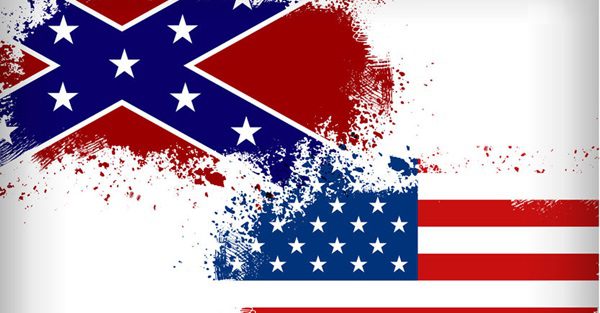
Donald Trump is making headlines again for his puzzling comments. What does he mean when he talks about Russia, Obama hacking his phone, Syria, and North Korea? He seems to change his mind on a daily, if not hourly, basis. Does he have dementia, like Joe Scarborough of Morning Joe suggested? Or is he crazy like a fox, employing an offensive political strategy to keep world leaders, or heck, the whole human race, off balance?
His comments about the Civil War are another prominent example. In an interview with Salena Zito of Sirius XM’s POTUS channel, he praised Andrew Jackson over Abraham Lincoln. Trump stated that Andrew Jackson would have avoided the Civil War. It’s hard to imagine that Jackson, “an unapologetic slave owner,” would have done anything to end slavery. So, is Trump saying that Jackson would have avoided the Civil War by ignoring the evils of American slavery? As with almost everything Trump says, it’s hard to know what he means.
For example, what did Trump mean when he asked this during the interview –
People don’t realize, you know, the Civil War, if you think about it, why? People don’t ask that question, but why was there a Civil War? Why could that one not have been worked out?
Many have criticized Trump for not knowing basic history. Why did we fight the Civil War? Every fifth grader knows the Civil War was about slavery. We are told that the Civil War was a fight for the American ideal of “liberty and justice for all,” as our pledge of allegiance claims.
But America has failed in its ideal of “liberty and justice for all” from the very beginning. Of course, there are a few people who still want to avoid staring the sin of racism in the face by claiming the Civil War was about state’s rights. But we know it was about state’s rights to own black slaves. The underlying cause of the Civil War was the satanic mix of racism and slavery that fueled a significant portion of American culture.
We Need to Ask the Question: Could Nonviolence Have Solved Slavery?
But the question, “Why did the United States have to fight a Civil War to end slavery?” is a very good question. It took a gruesome war to “end” slavery in 1865 in the United States. But there are two important points to be made about Trump’s question. First, most other nations didn’t suffer a violent civil war to end slavery. Take England, for example. Their nonviolent process of ending slavery began in 1772, when Judge Lord Mansfield freed a slave. He ruled that English law didn’t support slavery.
The British Parliament outlawed the slave trade in 1807. The Royal Navy even suppressed slave trade in the Atlantic as they patrolled the seas of West Africa. It is estimated that, “Between 1807 and 1860, the Royal Navy, West Africa Squadron seized approximately 1600 ships involved in the slave trade and freed 150,000 Africans who were aboard these vessels.”
Like in the United States, slavery in England was an economic institution fueled by racism. Slave owners benefited economically from slavery. So, what did England do with the slave owners, who lived on the backs of slaves? If England simply ended slavery, slave owners would become resentful that their livelihoods were taken away. And many slave owners were culturally influential. In addition, recently revealed documents show that slave ownership in England “was far more common than has previously been presumed.”
We might say, “Ahh, screw the jerks!” But that would lead to further resentment and a potential civil war. England solved the problem of resentment by compensating slave owners with “the Sum of Twenty Millions Pounds Sterling.” Indeed, it feels … umm … I believe the technical term is “icky,” to buy off slave owners. But England paid them off because they knew the alternative could be as disastrous as a civil war.
Could the U.S. have solved slavery without a Civil War? It’s an important question that we should take more seriously. After all, the violence of the Civil War didn’t bring about “liberty and justice for all.” It only formed a new kind of slavery.
We Need to Ask the Question: Why Did the Civil War Fail?
Which leads me to my second point. Why did the Civil War fail? We praise the Civil War for providing freedom by ending slavery, but it didn’t. As historian David Swanson writes, the Civil War “murdered hundreds of thousands of people on both sides in order to accomplish the greater good of ending slavery. Slavery did not end.”
The 13th Amendment was supposed to end slavery, but it contained a loophole. It allowed enslavement of convicted felons. A criminal justice system emerged that allowed black men to be arrested for petty, minor, or made-up crimes. It didn’t provide liberty and justice for all. Freed by the 13th Amendment, black men were once again enslaved by the 13th Amendment. They were arrested and forced to pay a debt through hard labor in mines or mills. The post-Civil War slaves were worked to death. And once the American system killed them, it arrested more black men to enslave.
We glorify the Civil War for ending slavery, but the truth is, it didn’t end slavery. The larger culture turned a blind eye to the post-Civil War criminal justice system that continued to enslave black men. Tragically, our culture continues to turn a blind eye to the mass incarceration of black bodies that remains a racist tool of forced labor.
Why Could That One Not Have Been Worked Out?
Which brings me back to Trump’s question, why couldn’t we work out the Civil War?
Here’s your answer, President Trump. It’s because the United States has glorified war since the founding of our nation. We believe violence is the best way to solve our problems. Our glorification of the Civil War has enabled us to create a perpetual state of war. But if we’re honest about our history and our present, we’ll realize that the Civil War didn’t work. We couldn’t work it out because the American project, built upon the foundations of violence and its original sin of racism, doomed the American ideal of equality from the very beginning.
But there is hope. Ta Nehisi-Coates claims that America needs “a national reckoning that would lead to spiritual renewal.” He’s right. That spiritual renewal begins with Americans repenting of the violence, racism, and slavery of our past and present. Only then can we can hope for a better future where “liberty and justice for all” have a place in American culture.
Image: Copyright: astrozombie / 123RF Stock Photo
Stay in the loop! Like Teaching Nonviolent Atonement on Facebook!
Next Post

May 4, 2017 Is Jesus Mean? Foolish People, Dull Minds, and Burning Hearts
Browse Our Archives
Select a Category Atonement and Current Events Curriculum Faith and Families Interviews Jesus the Forgiving Victim Lent Montessori politics Reviews The Bible Explained Uncategorized Valentine's Day Wednesday Sermon Who is God?
Select a Month July 2020 November 2019 October 2019 September 2019 August 2019 July 2019 June 2019 May 2019 April 2019 March 2019 February 2019 January 2019 December 2018 November 2018 October 2018 September 2018 August 2018 July 2018 June 2018 May 2018 April 2018 March 2018 February 2018 January 2018 December 2017 November 2017 October 2017 September 2017 August 2017 July 2017 June 2017 May 2017 April 2017 March 2017 February 2017 January 2017 December 2016 November 2016 October 2016 September 2016 August 2016 June 2016 May 2016 April 2016 March 2016 February 2016 January 2016 December 2015 November 2015 October 2015 September 2015 August 2015 July 2015 June 2015 May 2015 April 2015 March 2015 February 2015 January 2015 December 2014 November 2014 October 2014 September 2014 August 2014 July 2014 June 2014 May 2014 April 2014 March 2014 January 2014 December 2013 September 2013 August 2013 July 2013
Follow Us!
TAKE THE
Religious Wisdom Quiz
Who saw the vision of the valley of dry bones?
Select your answer to see how you score.
Ezekiel Jeremiah Daniel Isaiah
Related posts from Teaching Nonviolent Atonement

Perfect Love Casts Out Fear, But Can It...

God’s Holy Name, False Prophets, and the Politics...

Building God's Kingdom or Destroying Ourselves? Sodom, The...
Repent And Live: Renouncing White Supremacy And War...
TRENDING AT PATHEOS Progressive Christian

What Being a Modern-Day Apostle Means to Me
In my last column, I discussed the ins and outs of modern-day...

Did Ancient China Once Worship the God of...
Across human history, a common thread weaves through the origins of the...

Love Your Neighbor – Including Earth-Kin: Lev. 19,...
God’s command to love your neighbor means acting in an ethical and...

Lead a Church Study of “Jesus and Lao...
Guest writer Jack Thomas (The Irreverent Reverend) reflects on leading his church...

Pastoral Wisdom for Responding to Sermon Pushback
Getting sermon pushback on your social justice sermon? Learn practical, Proverbs-based strategies...

Principles for Understanding the Apostolic Ministry Today
Whenever people discover that my formal ministry title is "apostle," as in...
view all Progressive Christian blogs
Ad-Free & Subscriber Log-In Subscription Support
- About Us
- 2026 Calendar
- Videos
- Podcasts
- Library of World Religions
- Faith In Media Tracker
- Advertise With Us
- Write for Us
- Privacy Policy
- Terms of Service
- Do Not Sell My Data
- Contact Us
- Radiant Digital
- Manage Newsletter Subscriptions
- Unsubscribe From Notifications
- Sitemap
Copyright 2008-2026, Patheos. All rights reserved.
Subscription Support Ad-Free & Subscriber Log-In
Follow Patheos