
BuddhistCatholicContemplativeEvangelicalGeneral ChristianHinduJewishLatter-day SaintMuslimNew VisionsProgressive Christian
Beliefs
- Buddhist
- Catholic
- Contemplative
- Evangelical
- General Christian
- Hindu
- Jewish
- Latter-day Saint
- More Voices
- Muslim
- New Visions
- Pagan
- Progressive Christian
Topics
- Religion News
- Food and Religion
- Sports and Religion
- Religious Art
- Religious Music and Entertainment
- Religious Events
- History and Religion
- Style and Religion
- Politics and Religion
- Women in Religion
- Recreation Outdoors and Religion
- Business Finance and Religion
- Careers Workplace and Religion
- Education and Religion
- Family Parenting and Religion
- Health Fitness and Religion
- Home and Religion
- Relationships and Religion
- Technology and Religion
- Travel and Religion
Columnists
- Buddhist Columnists
- Business Finance and Religion Columnists
- Careers Workplace and Religion Columnists
- Catholic Columnists
- Contemplative Columnists
- Education and Religion Columnists
- Evangelists Columnists
- Family Parenting and Religion Columnists
- General Christian Columnists
- Health Fitness and Religion Columnists
- Hindu Columnists
- History and Religion Columnists
- Home and Religion Columnists
- Jewish Columnists
- More Voices Columnists
- Latter Day Columnists
- Muslim Columnists
- New Visions Columnists
- Nonreligious Columnists
- Pagan Columnists
- Politics and Religion Columnists
- Progressive Columnists
- Recreation Outdoors and Religion Columnists
- Relationships and Religion Columnists
- Religion News Columnists
- Religious Art Columnists
- Religious Events Columnists
- Religious Music and Entertainment Columnists
- Sports and Religion Columnists
- Style and Religion Columnists
- Technology and Religion Columnists
- Travel and Religion Columnists
- Women in Religion Columnists
Resource Library
- 2026 Calendar
- Library of World Religions
- The 100 Most Holy Places on Earth
- Patheos Answers
- Podcasts
- Videos
- Faith Leaders Database
- Anglican Episcopalian
- Bahai
- Baptist
- Buddhism
- Christianity
- Confucianism
- Eastern Orthodoxy
- Hinduism
- Holiness and Pentecostal
- ISKCON
- Islam
- Judaism
- Lutheran
- Methodist
- The Church of Jesus Christ of Latter-day Saints
- New Age
- Paganism
- Presbytarian and Reformed
- Protestantism
- Religion Behind the Scenes
- Roman Catholic
- Scientology
- Shia Islam
- Sikhism
- Sufism
- Sunni Islam
- Taoism
- Zen
- See all religions
Research Tools
 Ad-Free & Subscriber Log-In Subscription Support
Ad-Free & Subscriber Log-In Subscription Support
Follow Patheos 

- Trending:
- Forgiveness
- |
- Marriage
- |
- Consciousness
- |
- Death Penalty
- |
- Election
- |
- Halloween
 Teaching Nonviolent Atonement
- Home
- Progressive Christian
- Bad Analogies, Good Relationship: Thoughts On The Trinity On St. Patrick’s Day
Bad Analogies, Good Relationship: Thoughts On The Trinity On St. Patrick’s Day
Last updated on: March 17, 2017 at 5:35 pm by Lindsey Paris-Lopez
Bad Analogies, Good Relationship: Thoughts On The Trinity On St. Patrick’s Day 2017-03-17T17:35:32-05:00 Lindsey Paris-Lopez
Patheos Explore the world's faith through different perspectives on religion and spirituality! Patheos has the views of the prevalent religions and spiritualities of the world.
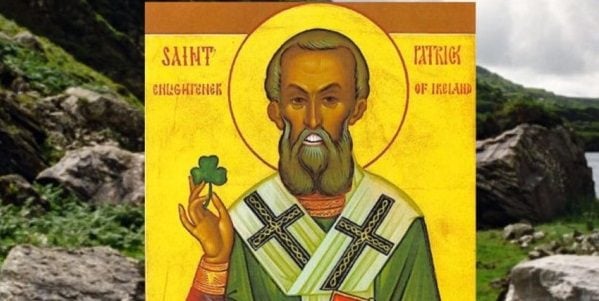 I can’t observe St. Patrick’s Day without watching this modern classic from Lutheran Satire:
Hilarious, isn’t it? I think so. But there was a time when I wouldn’t have been so amused.
The Trinity has caused me much anxiety throughout my lifetime. Or perhaps I should say, not the Trinity itself, but the desire to understand it, the need I felt to grasp it intellectually in order to be able to trust in my faith. I wanted assurance for my salvation. I wanted my identity to be marked by a confidence in my beliefs, a confidence that long eluded me. Being bewildered about the core doctrine of the Christian faith felt like being adrift in a sea of uncertainty, with waves of fear and doubt crashing all around and threatening to overwhelm me.
So there was a time when a video mocking all the ways to misunderstand the Trinity would not have have amused me at all. And for those struggling to understand the Trinity, there is little comfort in condemnation and accusations of heresy for people who work hard to wrap their minds around this mystery only to come up with imperfect understandings. At worst, these condemnations not only victimize people struggling to understand God, but reinforce the idea of God as a tyrant who requires adherence to strict and rigid dogma. And nothing could be further from the truth about the Trinity.
The Trinity is a mystery that cannot be grasped or pinned down, cannot be encapsulated in words or formulas. But it can be experienced, embraced, and enjoyed. It can also unfold itself to us as it dissolves our fears. For if the Trinity is God and God is Perfect Love, then the Trinity should cast out all our fears, not be their source. But trying to pin the concept of Trinity down in words will only entangle us in confusion. That’s why the Triune God revealed God’s self to us not in words but in a person, the person of Jesus.
Jesus, the Word of God made flesh, is God’s love letter to humanity. When humanity was confused about who God is and what God requires, Jesus clarified our vision with the revelation that God is Love and Light, in whom there is no hatred or violence. When humanity was blind in a fog of confusion, projecting our own violence onto God and finding transcendence from our violent passions in the false peace of sacrifice, Jesus showed us the depth of God’s mercy. In his life he healed the brokenness of our selves and our societies by embracing the marginalized and pulling them in from the margins. In his death as scapegoat he became the magnetic target of all our hatred, pulling our violence onto himself so we would not direct it at each other. In his resurrection he proved that love triumphs over hate. In all of this, Jesus revealed to us a power greater than violence and thus redefined God in our understanding. The understanding of the Trinity came about over time as the life and meaning of Jesus not only reshaped our perception of God, but drew us deeper into relationship with God. Jesus’s perfect love cast out all fear and showed us that fear, violence, and vengeance have no place within God. Jesus’s revelation that God is Love is the key to entering into the mystery of the Trinity.
Love is not solitary isolation, but relationship. For God to be love means that God is ever giving and receiving of Love. Love permeates inward and reaches outward. The love that Jesus extended to the world, to reveal the true nature of God, ever flows between God the Father and God the Son. Jesus drew his love for the world from the Father, the inexhaustible Source of Love, who sent his love into the world in flesh, the embodied Love of Jesus. At Pentecost, the Spirit of Love – the perfect Love in and through which all of creation came into being — was poured out that we might more fully embody love. From the beginning of time, Love has been dancing in perfect harmony, leaving stars and planets in its footsteps. We who have been made from Love in the image of Love are called to join in the dance.
This may seem like a poetic jumble. But it is the clearest way for me to understand the Trinity, to understand Love, to understand God – and the clearest way for me to understand what it means to be human. While I have a single body, my identity is bound up in my relationships. I am not Lindsey without my husband, without my daughters, without my mother and father, without the dear friends who have made me who I am. I am not me without you. I am who I am because of what I have learned through and from others and the desires that have seeped into my consciousness and the people upon whom I depend both known and unknown to me. To be human is to be in relationship, and it is to be made in the image of God, who is relationship.
But whereas our relationships are marred by rivalries and jealousies, by miscommunications and desires at the expense of others, the relationship of God is perfect harmony, perfect communion, perfect Love. Jesus as the fully human one was also the fully loving one, and until the perfect Love found in the Triune God casts out our fear, we are not yet fully human. We are being molded by God into God’s image, following Jesus who modeled for us the perfect relationship with Love and showed us how to extend the love we receive in ever-flowing abundance to a hurting world.
The Trinity is the relationship of Love. Relationships cannot be defined or pinned down, but they can be lived and strengthened. I find value in studying the theology of the Church Fathers and Mothers who dedicated their lives to exploring the depths of this mystery, but if talk of the Trinity leaves your head spinning, it’s okay to let the talking go for a while. Focus instead on loving your neighbor and enemy, and you’ll find your footing as you’re swept up in the dance of Love.
Happy St. Patrick’s Day!
Image: Screenshot from Youtube: St. Patrick’s Bad Analogies by Lutheran Satire.
This was originally published on March 17, 2016.
Previous Post

March 17, 2017
Saint Patrick, Druids, and the Snakes: The Truth is in the Middle
Next Post

March 21, 2017 Islam, Friendship, and Truth: Esmail Koushanpour
Browse Our Archives
Select a Category Atonement and Current Events Curriculum Faith and Families Interviews Jesus the Forgiving Victim Lent Montessori politics Reviews The Bible Explained Uncategorized Valentine's Day Wednesday Sermon Who is God?
Select a Month July 2020 November 2019 October 2019 September 2019 August 2019 July 2019 June 2019 May 2019 April 2019 March 2019 February 2019 January 2019 December 2018 November 2018 October 2018 September 2018 August 2018 July 2018 June 2018 May 2018 April 2018 March 2018 February 2018 January 2018 December 2017 November 2017 October 2017 September 2017 August 2017 July 2017 June 2017 May 2017 April 2017 March 2017 February 2017 January 2017 December 2016 November 2016 October 2016 September 2016 August 2016 June 2016 May 2016 April 2016 March 2016 February 2016 January 2016 December 2015 November 2015 October 2015 September 2015 August 2015 July 2015 June 2015 May 2015 April 2015 March 2015 February 2015 January 2015 December 2014 November 2014 October 2014 September 2014 August 2014 July 2014 June 2014 May 2014 April 2014 March 2014 January 2014 December 2013 September 2013 August 2013 July 2013
Follow Us!
TAKE THE
Religious Wisdom Quiz
Who boldly risked her life to save her people with the phrase, "If I perish, I perish"?
Select your answer to see how you score.
Esther Ruth Deborah Hannah
Related posts from Teaching Nonviolent Atonement

Forgiveness in the Time of COVID-19 by Julia...

Jesus Unmasked: On Being Lost And Found: Sheep,...

Jesus Unmasked: Humility Is Not A Competition [Video]

Perfect Love Casts Out Fear, But Can It...
TRENDING AT PATHEOS Progressive Christian

What Being a Modern-Day Apostle Means to Me
In my last column, I discussed the ins and outs of modern-day...

Did Ancient China Once Worship the God of...
Across human history, a common thread weaves through the origins of the...

Love Your Neighbor – Including Earth-Kin: Lev. 19,...
God’s command to love your neighbor means acting in an ethical and...

Lead a Church Study of “Jesus and Lao...
Guest writer Jack Thomas (The Irreverent Reverend) reflects on leading his church...

Pastoral Wisdom for Responding to Sermon Pushback
Getting sermon pushback on your social justice sermon? Learn practical, Proverbs-based strategies...

Principles for Understanding the Apostolic Ministry Today
Whenever people discover that my formal ministry title is "apostle," as in...
view all Progressive Christian blogs
Ad-Free & Subscriber Log-In Subscription Support
- About Us
- 2026 Calendar
- Videos
- Podcasts
- Library of World Religions
- Faith In Media Tracker
- Advertise With Us
- Write for Us
- Privacy Policy
- Terms of Service
- Do Not Sell My Data
- Contact Us
- Radiant Digital
- Manage Newsletter Subscriptions
- Unsubscribe From Notifications
- Sitemap
Copyright 2008-2026, Patheos. All rights reserved.
Subscription Support Ad-Free & Subscriber Log-In
Follow Patheos