
BuddhistCatholicContemplativeEvangelicalGeneral ChristianHinduJewishLatter-day SaintMuslimNew VisionsProgressive Christian
Beliefs
- Buddhist
- Catholic
- Contemplative
- Evangelical
- General Christian
- Hindu
- Jewish
- Latter-day Saint
- More Voices
- Muslim
- New Visions
- Pagan
- Progressive Christian
Topics
- Religion News
- Food and Religion
- Sports and Religion
- Religious Art
- Religious Music and Entertainment
- Religious Events
- History and Religion
- Style and Religion
- Politics and Religion
- Women in Religion
- Recreation Outdoors and Religion
- Business Finance and Religion
- Careers Workplace and Religion
- Education and Religion
- Family Parenting and Religion
- Health Fitness and Religion
- Home and Religion
- Relationships and Religion
- Technology and Religion
- Travel and Religion
Columnists
- Buddhist Columnists
- Business Finance and Religion Columnists
- Careers Workplace and Religion Columnists
- Catholic Columnists
- Contemplative Columnists
- Education and Religion Columnists
- Evangelists Columnists
- Family Parenting and Religion Columnists
- General Christian Columnists
- Health Fitness and Religion Columnists
- Hindu Columnists
- History and Religion Columnists
- Home and Religion Columnists
- Jewish Columnists
- More Voices Columnists
- Latter Day Columnists
- Muslim Columnists
- New Visions Columnists
- Nonreligious Columnists
- Pagan Columnists
- Politics and Religion Columnists
- Progressive Columnists
- Recreation Outdoors and Religion Columnists
- Relationships and Religion Columnists
- Religion News Columnists
- Religious Art Columnists
- Religious Events Columnists
- Religious Music and Entertainment Columnists
- Sports and Religion Columnists
- Style and Religion Columnists
- Technology and Religion Columnists
- Travel and Religion Columnists
- Women in Religion Columnists
Resource Library
- 2026 Calendar
- Library of World Religions
- The 100 Most Holy Places on Earth
- Patheos Answers
- Podcasts
- Videos
- Faith Leaders Database
- Anglican Episcopalian
- Bahai
- Baptist
- Buddhism
- Christianity
- Confucianism
- Eastern Orthodoxy
- Hinduism
- Holiness and Pentecostal
- ISKCON
- Islam
- Judaism
- Lutheran
- Methodist
- The Church of Jesus Christ of Latter-day Saints
- New Age
- Paganism
- Presbytarian and Reformed
- Protestantism
- Religion Behind the Scenes
- Roman Catholic
- Scientology
- Shia Islam
- Sikhism
- Sufism
- Sunni Islam
- Taoism
- Zen
- See all religions
Research Tools
 Ad-Free & Subscriber Log-In Subscription Support
Ad-Free & Subscriber Log-In Subscription Support
Follow Patheos 

- Trending:
- Forgiveness
- |
- Marriage
- |
- Consciousness
- |
- Death Penalty
- |
- Election
- |
- Halloween
 Teaching Nonviolent Atonement
- Home
- Progressive Christian
- Thursday Sermon: A Plan from the Beginning of Time!
Thursday Sermon: A Plan from the Beginning of Time!
Last updated on: January 12, 2017 at 4:00 pm by Tom Truby
Thursday Sermon: A Plan from the Beginning of Time! 2017-01-12T16:00:45-05:00 Tom Truby
Patheos Explore the world's faith through different perspectives on religion and spirituality! Patheos has the views of the prevalent religions and spiritualities of the world.
 Pastors have a frequent question when they begin to discover mimetic theory. “That’s great. But how does it preach?”
Reverend Tom Truby shows that mimetic theory is a powerful tool that enables pastors to preach the Gospel in a way that is meaningful and refreshing to the modern world. Each Wednesday, Teaching Nonviolent Atonement will highlight his sermons as an example of preaching the Gospel through mimetic theory.
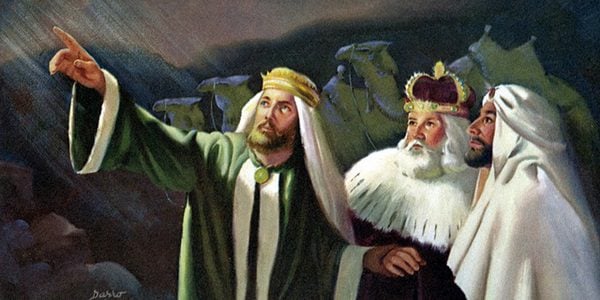
In this sermon, Tom discusses the Magi as they visit the Christ-child. Mimetic theory helps us understand how we tend to form identity by excluding others. Religion has a long history of this pattern. But the story of the Magi tells us that God doesn’t exclude anyone. All people are included in God’s radical love. Let the light shine!
Year A, The Day of Epiphany though celebrated the Sunday after Epiphany
January 8th, 2017
By Thomas L. Truby
Matthew 2:1-12, Ephesians 3:1-12 and Isaiah 60:1-6
A Plan from the Beginning of Time!
The Day of Epiphany, the day we celebrate the wise men’s visit to the Holy Child and the day the Christmas Season officially ends, was Friday, January 6th. Those of us who use the lectionary were given a choice this year for which text to focus on this Sunday. We can either use the readings for the Day of Epiphany or move forward 30 years in the life of Jesus and examine Jesus’ baptism by John the Baptist. I found the texts for The Day of Epiphany more intriguing and so I want to go backwards in time and in Matthew to the coming of the Magi. Last Sunday we talked about what happened after the Magi left; today we explore what their coming means for us.
Who are these Magi? Where did they come from; India, Mesopotamia, Persia; who knows? All we know is that they came from elsewhere, from outside, from some other culture and religion. They were foreigners and that may be the point Matthew is making in including them in his story of the birth of Jesus.
Were they scientists, astrologers, philosophers, or religious leaders in their own country? We don’t know. What religion did they claim? It wasn’t Judaism and it couldn’t have been Christianity since this was long before its formation. I suppose they could have been Hindu. Why did Matthew include the three kings in his story? Could it be that Matthew saw them as a fulfillment of the prophets who wrote:
Arise! Shine! Your light has come; the LORD’S glory has shone upon you. Though darkness covers the earth and gloom the nations, the LORD will shine upon you, God’s glory will appear to you. Nations will come to your light and kings to your dawning radiance.
Is Matthew saying Jesus is the dawning radiance and these kings are the nations coming to his light? Does Matthew see something universal happening here; powerful and outside the realm of divisive religion?
Our epistle lesson from Paul advances this same idea. Paul writes to the people in Ephesus, “This is why I, Paul, am a prisoner of Christ for you Gentiles.” Gentiles aren’t Jews or Christians; they are of every religious persuasion and none; they’re like the Magi. When the Magi bring their gifts of gold, frankincense and myrrh they symbolize the whole world placing their gifts before Jesus. Each culture brings what is valuable to it, what they have to share with the world and Jesus receives them all. Jesus, a baby in a poor and dominated minority culture, in his radical weakness receives all their gifts. None are rejected and considered unworthy. While Jesus had to be born in a particular culture, he was born for us all and all are included. His birth marks the end of “us” and “them.” The end of “us” and “them” is one of the major meanings of the “good news.”
Paul writes, “Earlier generations didn’t know this hidden plan that God has now revealed…This plan is that the Gentiles would be coheirs and parts of the same body, and that they would share with the Jews in the promises of God in Christ through the gospel.” Matthew is pointing toward the same thing when he includes the coming of the Magi in his story of Jesus’ birth. It is appropriate that their coming marks our Day of Epiphany, our seeing the light. Their presence at the birth scene shows us that Jesus’ coming to human-kind precedes all religion and embraces all persons no matter their religion.
Religion is built on separation; separating those we think of as good from those we think of as bad; those like us who believe this way from those unlike us who don’t; those who express their religion this way from those who express their religion that way. Jesus is not interested in separation. He wants to bring that which is separated into unity. This is why the foreign kings show up at the birth of Jesus and are led by a star. The star is a symbol of universal hope; a hope that comes from outside our violence soaked world.
The world longs for this star even as it eludes us. Matthew says “When they saw the star, they were filled with joy.” Their longing had been satisfied. A way of escape from Herod and his violence-based empire had been found. The escape lies in a house in Bethlehem and is the embodiment of human vulnerability.
Magi came from the east and asked where the new born king of the Jews is to be born. For them a new star signals his presence on earth. It’s a cosmic event and they have come to honor this new born king. They didn’t realize their good news would not be received with gladness by all. They believe God, whoever God is, is doing something new and he is doing it among the Jews. Its source is here but it has ramifications far beyond its source.
All of this was “good news” for the Magi but Herod and the political system that circled round him found it alarming. Empire does not like radical new things that might disturb its hold on privilege. “When King Herod heard this, he was troubled, and everyone in Jerusalem was troubled with him.” A potential opponent to their power had been detected and they must take measures to protect themselves. Herod “gathered all the chief priests and legal experts and asked them where the Christ was to be born.”
The idea of a Messiah was a great hope for all the common people who suffered deeply throughout the land. Herod was against hope for hopeful people cause problems. He wanted people crushed and hopeless; to feel it useless to oppose him and so he had to blot out their hope before it gained momentum.
After discovering that the child was to be born in Bethlehem, “Herod secretly called for the magi and found out from them the time when the star had first appeared.” Why was he meeting secretly with them? Was he afraid the chief priests and legal experts would expose him as a liar? Was he afraid they would switch allegiances and join forces with the future messiah in their hope of replacing Herod? For whatever reason, he does not want them to know his real plan for the destruction of the child.
The kings come and Herod tells them to “Go and search carefully for the child. When you’ve found him, report to me so that I too may go and honor him.” What a lie! He doesn’t care about this child or the Messiah. He wants to kill the child! Deceit and death, the two tools of empire, are now fully employed. But not all truth can be rooted out. The child and his mother still remain and the wise men go home by another way. An angel warns Joseph and the vulnerable family escape to Egypt. It’s all part of a secret plan to preserve light for the whole human race.
In their innocence the three wise men had been drawn into the dark world of Herod but they had managed to make their escape. Now they were on the road again and the star they had seen in the east was still ahead of them. It was still there! The darkness of Herod’s court had not put it out.
Paul writes, “God sent me to reveal the secret plan that has been hidden since the beginning of time by God who created everything….God gave his grace to me, the least of all God’s people,” (Remember how vengeful and violent Paul had been; those were the days when Paul had the same spirit as Herod.) Back to the text, “God gave his grace to me, the least of all God’s people, to preach the good news about the immeasurable riches of Christ to the Gentiles.” The good news contains the message that everyone, even foreign kings and philosophers and violent men like Paul, have “bold and confident access to God through faith in him.” Through the forgiveness revealed on the cross all barriers have been removed and no one is excluded. Jesus has shown us the open and welcoming face of God and even empire can’t stop it. It’s too late. It has already happened.
Now we know God is a God of life, joy and vitality and deception and death are on their way out. This is the plan God had from the beginning of time that he accomplished through Christ Jesus our Lord. Thanks be to God!
Image: Flickr: Waiting for the Word, The Wise Men 27, Creative Commons License, some changes made.
Stay in the loop! Like Teaching Nonviolent Atonement on Facebook!
Previous Post

January 11, 2017
Bible Matters: The Prophet Hosea: Sex, Love, and Politics
Next Post
January 13, 2017 Less Red-baiting, More Peacemaking in the Age of Trump
Browse Our Archives
Select a Category Atonement and Current Events Curriculum Faith and Families Interviews Jesus the Forgiving Victim Lent Montessori politics Reviews The Bible Explained Uncategorized Valentine's Day Wednesday Sermon Who is God?
Select a Month July 2020 November 2019 October 2019 September 2019 August 2019 July 2019 June 2019 May 2019 April 2019 March 2019 February 2019 January 2019 December 2018 November 2018 October 2018 September 2018 August 2018 July 2018 June 2018 May 2018 April 2018 March 2018 February 2018 January 2018 December 2017 November 2017 October 2017 September 2017 August 2017 July 2017 June 2017 May 2017 April 2017 March 2017 February 2017 January 2017 December 2016 November 2016 October 2016 September 2016 August 2016 June 2016 May 2016 April 2016 March 2016 February 2016 January 2016 December 2015 November 2015 October 2015 September 2015 August 2015 July 2015 June 2015 May 2015 April 2015 March 2015 February 2015 January 2015 December 2014 November 2014 October 2014 September 2014 August 2014 July 2014 June 2014 May 2014 April 2014 March 2014 January 2014 December 2013 September 2013 August 2013 July 2013
Follow Us!
TAKE THE
Religious Wisdom Quiz
Where does Scripture say, "do not let the sun go down on your anger"?
Select your answer to see how you score.
Ephesians Luke Genesis Proverbs
Related posts from Teaching Nonviolent Atonement

Forgiveness in the Time of COVID-19 by Julia...

Reflections on Indigenous Wisdom For Healing A Wounded...

How Forgiveness Can Transform Our Violence and Build...

Jesus Unmasked: God's Economy and How to Cheat...
TRENDING AT PATHEOS Progressive Christian

What Being a Modern-Day Apostle Means to Me
In my last column, I discussed the ins and outs of modern-day...

Did Ancient China Once Worship the God of...
Across human history, a common thread weaves through the origins of the...

Love Your Neighbor – Including Earth-Kin: Lev. 19,...
God’s command to love your neighbor means acting in an ethical and...

Lead a Church Study of “Jesus and Lao...
Guest writer Jack Thomas (The Irreverent Reverend) reflects on leading his church...

Pastoral Wisdom for Responding to Sermon Pushback
Getting sermon pushback on your social justice sermon? Learn practical, Proverbs-based strategies...

Principles for Understanding the Apostolic Ministry Today
Whenever people discover that my formal ministry title is "apostle," as in...
view all Progressive Christian blogs
Ad-Free & Subscriber Log-In Subscription Support
- About Us
- 2026 Calendar
- Videos
- Podcasts
- Library of World Religions
- Faith In Media Tracker
- Advertise With Us
- Write for Us
- Privacy Policy
- Terms of Service
- Do Not Sell My Data
- Contact Us
- Radiant Digital
- Manage Newsletter Subscriptions
- Unsubscribe From Notifications
- Sitemap
Copyright 2008-2026, Patheos. All rights reserved.
Subscription Support Ad-Free & Subscriber Log-In
Follow Patheos