
BuddhistCatholicContemplativeEvangelicalGeneral ChristianHinduJewishLatter-day SaintMuslimNew VisionsProgressive Christian
Beliefs
- Buddhist
- Catholic
- Contemplative
- Evangelical
- General Christian
- Hindu
- Jewish
- Latter-day Saint
- More Voices
- Muslim
- New Visions
- Pagan
- Progressive Christian
Topics
- Religion News
- Food and Religion
- Sports and Religion
- Religious Art
- Religious Music and Entertainment
- Religious Events
- History and Religion
- Style and Religion
- Politics and Religion
- Women in Religion
- Recreation Outdoors and Religion
- Business Finance and Religion
- Careers Workplace and Religion
- Education and Religion
- Family Parenting and Religion
- Health Fitness and Religion
- Home and Religion
- Relationships and Religion
- Technology and Religion
- Travel and Religion
Columnists
- Buddhist Columnists
- Business Finance and Religion Columnists
- Careers Workplace and Religion Columnists
- Catholic Columnists
- Contemplative Columnists
- Education and Religion Columnists
- Evangelists Columnists
- Family Parenting and Religion Columnists
- General Christian Columnists
- Health Fitness and Religion Columnists
- Hindu Columnists
- History and Religion Columnists
- Home and Religion Columnists
- Jewish Columnists
- More Voices Columnists
- Latter Day Columnists
- Muslim Columnists
- New Visions Columnists
- Nonreligious Columnists
- Pagan Columnists
- Politics and Religion Columnists
- Progressive Columnists
- Recreation Outdoors and Religion Columnists
- Relationships and Religion Columnists
- Religion News Columnists
- Religious Art Columnists
- Religious Events Columnists
- Religious Music and Entertainment Columnists
- Sports and Religion Columnists
- Style and Religion Columnists
- Technology and Religion Columnists
- Travel and Religion Columnists
- Women in Religion Columnists
Resource Library
- 2026 Calendar
- Library of World Religions
- The 100 Most Holy Places on Earth
- Patheos Answers
- Podcasts
- Videos
- Faith Leaders Database
- Anglican Episcopalian
- Bahai
- Baptist
- Buddhism
- Christianity
- Confucianism
- Eastern Orthodoxy
- Hinduism
- Holiness and Pentecostal
- ISKCON
- Islam
- Judaism
- Lutheran
- Methodist
- The Church of Jesus Christ of Latter-day Saints
- New Age
- Paganism
- Presbytarian and Reformed
- Protestantism
- Religion Behind the Scenes
- Roman Catholic
- Scientology
- Shia Islam
- Sikhism
- Sufism
- Sunni Islam
- Taoism
- Zen
- See all religions
Research Tools
 Ad-Free & Subscriber Log-In Subscription Support
Ad-Free & Subscriber Log-In Subscription Support
Follow Patheos 

- Trending:
- Forgiveness
- |
- Marriage
- |
- Consciousness
- |
- Death Penalty
- |
- Election
- |
- Halloween
 Teaching Nonviolent Atonement
- Home
- Progressive Christian
- Wednesday Sermon: A New Fire!
Wednesday Sermon: A New Fire!
Last updated on: December 7, 2016 at 1:06 pm by Tom Truby
Wednesday Sermon: A New Fire! 2016-12-07T13:06:53-05:00 Tom Truby
Patheos Explore the world's faith through different perspectives on religion and spirituality! Patheos has the views of the prevalent religions and spiritualities of the world.
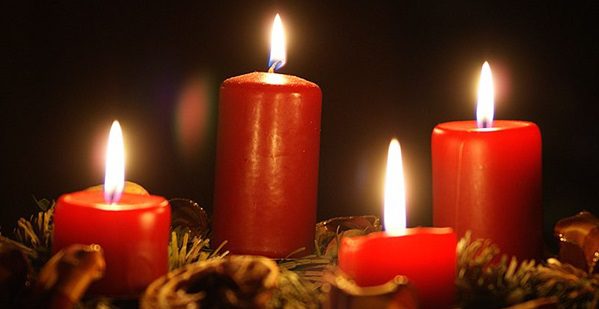 Pastors have a frequent question when they begin to discover mimetic theory. “That’s great. But how does it preach?”
Reverend Tom Truby shows that mimetic theory is a powerful tool that enables pastors to preach the Gospel in a way that is meaningful and refreshing to the modern world. Each Wednesday, Teaching Nonviolent Atonement will highlight his sermons as an example of preaching the Gospel through mimetic theory.
In this sermon, Tom explores John the Baptist. John seems to be a bit cantankerous as he talks about separating the wheat from the chaff and burning the chaff in unquenchable fire! Tom explains that the fire that burns the chaff should be seen in Jesus and the cross. The fire is God’s love in the face of human violence. It’s a fire that And this fire that burns away our chaff so that our love and compassion might burn brighter and brighter. Indeed, that is a new fire!
Year A, 2nd Sunday of Advent
December 4th, 2016
Thomas L. Truby
Matthew 3:1-12
A New Fire!
On the second Sunday of Advent we always talk about John the Baptist; the transitional figure in the move from an old way of living life to a new way of living that centers on what Jesus has revealed to us.
John was a different sort of guy. He dressed differently, ate different food, and had a life-style radically different than his contemporaries. He didn’t see things in conventional ways. His message was popular; everyone was drawn to him. He didn’t go to them. They came to him; came clear out into the wilderness to see him.
His message inspired them. They knew something was deeply wrong and they wanted to fix it. They thought it had to do with their moral lives and so they confessed their sins to John the Baptist. John baptized them as a way of confirming their desire to change. It signaled having their old desires washed down the river so they could start afresh.
Even Pharisees and Sadducees; the elite, educated, upper crust came. John the Baptist wasn’t so kind to them. “He said to them, ‘You children of snakes! Who warned you to escape from the angry judgment that is coming soon?’”
John the Baptist speaking to the Pharisees and Sadducees goes on. “Produce fruit that shows you have changed your hearts and lives.” What fruit is he talking about? Does he want them to drop out of their comfortable lives and live like him? Does he want them to eat more simply, dress in clothes no one else will wear, and become homeless out in the desert?
The word “fruit” is a loaded term. Rome constantly talked about the Pax Romana; the peace of Rome, and they said it allowed for political and economic stability. They saw peace and prosperity as the “fruit” of knuckling-under to Rome. John the Baptist thinks the Sadducees and the Pharisees live off Roman fruit and he doesn’t like it.
The Sadducees were the governing class who gained their wealth by cooperating with the Romans. It’s obvious how they benefited from Rome. The Pharisees were religious people, a kind of lay-witness mission really, who won their place in culture by being against the Romans and the Sadducees. They said if people would just clean up their act and be more religious, God would reward them by giving them victory. Of course, when the Romans were defeated the Pharisees would be the new chief administrators. Do you think the fruit they produce will be that much better than the old? John the Baptist doesn’t think so because what he says next is even harsher.
“Don’t even think about saying to yourselves, Abraham is our father.” John the Baptist sees Caesar as their father in two different and opposite ways. For the Sadducees Caesar is their father by virtue of eating from his table. For the Pharisees their identity as a group was built on being the enemies of Caesar. It’s not that they are for the people and pointed to God. No, they are against Rome and their brothers who collaborate with Rome. That’s who they are. Both groups have cut themselves off from Abraham, the real father of them all.
John the Baptist tells them God doesn’t need them to populate his kingdom. “I tell you God is able to raise up Abraham’s children from these stones,” he says. God can bring forward people from places you would never think of. They could be common people without education you think below you, they could be non-religious people with a keen eye for hypocrisy that you would never include, they could be folks with light skin and dark skin and cultural backgrounds different from all of you. People may look like inert stones to you but God can bring forward Abraham’s children from places you don’t appreciate.
“The ax is already at the root of the trees.” John the Baptist sounds so angry. What trees is he talking about and who has the ax?
“Therefore, every tree that doesn’t produce good fruit will be chopped down and tossed into the fire.” Tossed into the fire! What vision dances in his head? Apparently the criteria for determining whether or not a tree gets cut down is the fruit it produces. It doesn’t depend on how tall the tree, how green the leaves, how thick the bark or how much shade it casts; it depends solely on the quality of its fruit.
Is the church producing good fruit? Is the church teaching people how to love and not point the finger? Does the church practice loving our enemies and including the stranger? Does it help the poor and visit those in prison?
As followers of Jesus our identity comes from Jesus who substituted himself for the victim at the center of the lynching. If we follow Jesus, instead of joining the lynchers we support those being lynched. Our identities are in the process of changing from those who are over-against to those who refuse to join the crowd in being over-against anyone.
This may put us at odds with the crowd who wants unanimity in the pointing of the finger. Are we willing to suffer and sacrifice when we are attacked? Is the institutional church a tree that will be cut down for lack of fruit? If it falls it will be because history has judged it of little value. We didn’t have anything to say to our culture and times and so our culture simply lost interest and turned away. That’s how the church will be cut down. It won’t be some supernatural judgement from God.
And now John the Baptist comes to the point of his white-hot observations. “I baptize with water. The one who is coming after me is stronger than I am. I’m not worthy to carry his sandals. He will baptize you with the Holy Spirit and with fire.”
Does John the Baptist understand what the one who comes after him will be like? No, he can’t. He lives before the crucifixion and resurrection. He can’t grasp that the Holy Spirit is God’s spirit of compassion, mercy, forgiveness and love revealed in Jesus. It is the very embodiment of the good fruit that John the Baptist has been pointing toward. And this fire that Jesus gets baptized with; it’s the fire of love. It’s a love so deep and intense that it propels him to choose to be engulfed in our flames of hate, violence and retribution so that we can see what we do and allow ourselves to be forgiven. This is why John the Baptist says he is not worthy to carry Jesus’ sandals. Jesus’ way is so much better than John the Baptist’s but John, even as he says that, can’t understand how.
We see the limitation of his vision in the next sentence. “The shovel he uses to sift the wheat from the husks is in his hands. He will clean out his threshing area and bring the wheat into his barn. But he will burn the husks with a fire that can’t be put out.” John the Baptist thinks he is talking about separating some people from others through some kind of divine intervention. Actually John the Baptist envisions a truth that lies deeper than he can know; like a painter who paints beyond his own understanding or a musician who expresses music beyond his vocabulary.
The shovel he uses to sift the wheat from the husks is Jesus’ crucifixion and resurrection. He uses it to separate God from all violence. When he cleans the threshing floor and all the wheat is in his barn, all humans are in the barn. The husks that get burned in a fire that can’t be squelched turn out to be hatred, violence, greed and the pointing of the finger. When he chose to go to the cross and inhabit the resurrection he lit the husks with the fire of love and the fire continues to burn our chaff away. On this second Sunday of Advent we celebrate the fire even as it burns in us. Amen.
Image: By Liesel (Own work) [CC BY-SA 3.0 (http://creativecommons.org/licenses/by-sa/3.0)], via Wikimedia Commons

Stay in the loop! Like Teaching Nonviolent Atonement on Facebook!
Next Post

December 8, 2016 Forming Identity – Rick Santorum, Twitter, and Immigration
Browse Our Archives
Select a Category Atonement and Current Events Curriculum Faith and Families Interviews Jesus the Forgiving Victim Lent Montessori politics Reviews The Bible Explained Uncategorized Valentine's Day Wednesday Sermon Who is God?
Select a Month July 2020 November 2019 October 2019 September 2019 August 2019 July 2019 June 2019 May 2019 April 2019 March 2019 February 2019 January 2019 December 2018 November 2018 October 2018 September 2018 August 2018 July 2018 June 2018 May 2018 April 2018 March 2018 February 2018 January 2018 December 2017 November 2017 October 2017 September 2017 August 2017 July 2017 June 2017 May 2017 April 2017 March 2017 February 2017 January 2017 December 2016 November 2016 October 2016 September 2016 August 2016 June 2016 May 2016 April 2016 March 2016 February 2016 January 2016 December 2015 November 2015 October 2015 September 2015 August 2015 July 2015 June 2015 May 2015 April 2015 March 2015 February 2015 January 2015 December 2014 November 2014 October 2014 September 2014 August 2014 July 2014 June 2014 May 2014 April 2014 March 2014 January 2014 December 2013 September 2013 August 2013 July 2013
Follow Us!
TAKE THE
Religious Wisdom Quiz
True or False: The apostles drew lots to choose Matthias to replace Judas.
Select your answer to see how you score.
TRUE FALSE
Related posts from Teaching Nonviolent Atonement

How Forgiveness Can Transform Our Violence and Build...

The Politics of Jesus - Legion and Immigrant...

How My Atheist Father Helps Me Appreciate The...

"I Do Not Give As The World Gives"...
TRENDING AT PATHEOS Progressive Christian

What Being a Modern-Day Apostle Means to Me
In my last column, I discussed the ins and outs of modern-day...

Did Ancient China Once Worship the God of...
Across human history, a common thread weaves through the origins of the...

Love Your Neighbor – Including Earth-Kin: Lev. 19,...
God’s command to love your neighbor means acting in an ethical and...

Lead a Church Study of “Jesus and Lao...
Guest writer Jack Thomas (The Irreverent Reverend) reflects on leading his church...

Pastoral Wisdom for Responding to Sermon Pushback
Getting sermon pushback on your social justice sermon? Learn practical, Proverbs-based strategies...

Principles for Understanding the Apostolic Ministry Today
Whenever people discover that my formal ministry title is "apostle," as in...
view all Progressive Christian blogs
Ad-Free & Subscriber Log-In Subscription Support
- About Us
- 2026 Calendar
- Videos
- Podcasts
- Library of World Religions
- Faith In Media Tracker
- Advertise With Us
- Write for Us
- Privacy Policy
- Terms of Service
- Do Not Sell My Data
- Contact Us
- Radiant Digital
- Manage Newsletter Subscriptions
- Unsubscribe From Notifications
- Sitemap
Copyright 2008-2026, Patheos. All rights reserved.
Subscription Support Ad-Free & Subscriber Log-In
Follow Patheos