
BuddhistCatholicContemplativeEvangelicalGeneral ChristianHinduJewishLatter-day SaintMuslimNew VisionsProgressive Christian
Beliefs
- Buddhist
- Catholic
- Contemplative
- Evangelical
- General Christian
- Hindu
- Jewish
- Latter-day Saint
- More Voices
- Muslim
- New Visions
- Pagan
- Progressive Christian
Topics
- Religion News
- Food and Religion
- Sports and Religion
- Religious Art
- Religious Music and Entertainment
- Religious Events
- History and Religion
- Style and Religion
- Politics and Religion
- Women in Religion
- Recreation Outdoors and Religion
- Business Finance and Religion
- Careers Workplace and Religion
- Education and Religion
- Family Parenting and Religion
- Health Fitness and Religion
- Home and Religion
- Relationships and Religion
- Technology and Religion
- Travel and Religion
Columnists
- Buddhist Columnists
- Business Finance and Religion Columnists
- Careers Workplace and Religion Columnists
- Catholic Columnists
- Contemplative Columnists
- Education and Religion Columnists
- Evangelists Columnists
- Family Parenting and Religion Columnists
- General Christian Columnists
- Health Fitness and Religion Columnists
- Hindu Columnists
- History and Religion Columnists
- Home and Religion Columnists
- Jewish Columnists
- More Voices Columnists
- Latter Day Columnists
- Muslim Columnists
- New Visions Columnists
- Nonreligious Columnists
- Pagan Columnists
- Politics and Religion Columnists
- Progressive Columnists
- Recreation Outdoors and Religion Columnists
- Relationships and Religion Columnists
- Religion News Columnists
- Religious Art Columnists
- Religious Events Columnists
- Religious Music and Entertainment Columnists
- Sports and Religion Columnists
- Style and Religion Columnists
- Technology and Religion Columnists
- Travel and Religion Columnists
- Women in Religion Columnists
Resource Library
- 2026 Calendar
- Library of World Religions
- The 100 Most Holy Places on Earth
- Patheos Answers
- Podcasts
- Videos
- Faith Leaders Database
- Anglican Episcopalian
- Bahai
- Baptist
- Buddhism
- Christianity
- Confucianism
- Eastern Orthodoxy
- Hinduism
- Holiness and Pentecostal
- ISKCON
- Islam
- Judaism
- Lutheran
- Methodist
- The Church of Jesus Christ of Latter-day Saints
- New Age
- Paganism
- Presbytarian and Reformed
- Protestantism
- Religion Behind the Scenes
- Roman Catholic
- Scientology
- Shia Islam
- Sikhism
- Sufism
- Sunni Islam
- Taoism
- Zen
- See all religions
Research Tools
 Ad-Free & Subscriber Log-In Subscription Support
Ad-Free & Subscriber Log-In Subscription Support
Follow Patheos 

- Trending:
- Forgiveness
- |
- Marriage
- |
- Consciousness
- |
- Death Penalty
- |
- Election
- |
- Halloween
 Teaching Nonviolent Atonement
- Home
- Progressive Christian
- Vote for Life
Vote for Life
Last updated on: November 7, 2016 at 9:47 pm by Lindsey Paris-Lopez
Vote for Life 2016-11-07T21:47:10-05:00 Lindsey Paris-Lopez
Patheos Explore the world's faith through different perspectives on religion and spirituality! Patheos has the views of the prevalent religions and spiritualities of the world.
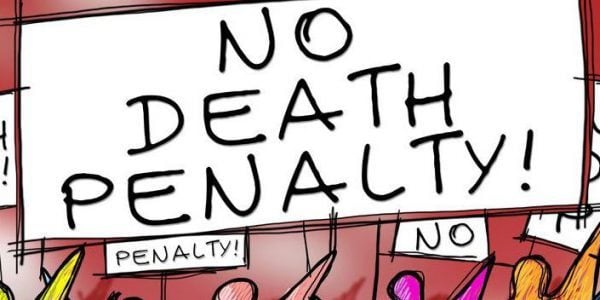 All over the nation, stress levels are in the stratosphere as the election season comes to its frantic conclusion. The choice for president feels like life and death to many of us, and may indeed affect our lives in profound ways. But certain votes will have a direct impact on whether others live or die. If you live in California, Nebraska, or Oklahoma, you have a chance to vote for life, human dignity, and redemption by rejecting the death penalty.
California actually has 2 competing ballot initiatives. Whereas proposition 62 would abolish the death penalty, proposition 66 would expedite it. Proposition 66 could be seen, in part, as an example of an argument against the death penalty backfiring, as many people cite cost, time, and a heart-wrenching appeals process that re-opens the wound for the victim’s family members as pragmatic arguments for life in prison. Theoretically, both initiatives could pass, in which case the initiative with the higher total of votes will win out.
Nebraska’s governor, Pete Ricketts, would like to reinstate the death penalty after a bipartisan legislature repealed it over his veto. He has invested time and money to lobby for Referendum 426. The language of the referendum may be confusing. A “repeal” vote repeals Legislative Bill (LB) 268 which bans the death penalty, rather than the death penalty itself. A vote to “retain” retains not the death penalty but LB 268 which repeals the death penalty. Nebraska voters, please read your ballots carefully!
Oklahoma voters will not have an opportunity to repeal the death penalty yet. But they may ensure that the power to execute is not enshrined in their constitution. In Oklahoma, after multiple botched executions, the attorney general agreed to halt executions temporarily while their means, not their morality, was investigated. Should State Question 776 be approved by voters, the death penalty will resume and be enshrined in the Oklahoma constitution, exponentially frustrating efforts to stay individual executions or repeal the death penalty altogether.
If you have an opportunity to vote to repeal the death penalty, maintain its ban, or keep it from being enshrined in your state’s constitution, please do so. The Raven Foundation has previously called for the abolition of the death penalty. I have called it the “contagion of vengeance enshrined in law.” Ultimately, it is rooted in a pessimistic view of humanity that denies the eternal and unconditional dignity of every person.
The horrific crimes that lead to the death penalty never occur in a vacuum. We live in a violent nation within a violent world, and are rarely aware of our participation in systemic violence. And when we are caught up in cycles of vengeance, we excuse our own violence while condemning the violence of others.
We are all guilty of hurting others, inadvertently and deliberately. We are all prone to self-justification which perpetuates injury until we humbly acknowledge that our judgment is flawed and prone to error, confess our faults, and seek to make amends. The state, as well, is prone to error, and as an entity of power and control over others, tendencies toward unfair imposition of power must be restricted by policies that cultivate humility and self-reflection. The death penalty, once carried out, is final, permanent, and irreversible. A state with the power to execute human beings is one that is unlikely to give a fair, much less compassionate, hearing to people who question its judgment, not only on the death penalty but on all matters. When the power to condemn a human being to death is enshrined in law, all other laws created to serve and value life are undermined. The state sends a message that human dignity is conditional and revocable. This message can manifest itself in innumerable dangerous and demeaning ways.
Those who favor the death penalty will argue that it stops the violence of criminals, deters further violence, and honors the life of the victim by exacting justice. No penalty can relieve the pain and void filled by the violent murder of a loved one, but the death penalty at least ensures that a similar fate is suffered by the perpetrator of a crime. This logic of retribution is hard to argue, especially to one who is suffering. But ultimately, the death penalty further perpetuates suffering and adds to the morass of cruelty by taking another loved one away from another family, and bringing back no one. This eye-for-an-eye justice leaves our nation blind to the healing power of mercy and redemption. Crime is not deterred by its perpetuation by the state. Victims are not honored by the reinforcement of the notion that life can be taken by those who deem it unworthy. But when evil is answered with mercy, life triumphs over death.
Finally, for Christians, the death penalty has been put on trial and condemned by the One who was executed as a criminal and vindicated by the judgment of Love. Jesus, Christians believe, exposed our violence by standing in the place of our victims. By exposing us to our victims, Jesus turned our perspective of justice upside-down, and answered our blood-thirstiness with forgiveness. One need not hold a spiritual or theological belief in Jesus’s divinity to see that the gospel is the exposure of human violence – individual and state violence — from the vantage of the victim. Learning to see through the eyes of the victim of state violence helps us to see how wrong our nation has been time after time, from the genocide of Native Americans and theft of their land to slavery to our continual wars. The state is guilty of violence and in need of forgiveness, as are we all. Because none of our hands are clean, none of us has the moral authority to assign death. And we were born to build up life, not take it away.
Whatever your faith, whatever your politics, a fundamental truth is that life is unconditionally sacred. The death penalty denies that truth, whereas answering deadly crime with life affirms that people can learn, grow, and be redeemed. Without this hope, we doom ourselves to our own destruction. Residents of California, Nebraska and Oklahoma, please vote for life.
Image: Stock photo from 123rf.com by france68. Some changes made.
Stay in the loop! Like Teaching Nonviolent Atonement on Facebook!
Previous Post

November 5, 2016
Review: "From the Blood of Abel" By Matthew Distefano
Next Post
November 8, 2016 Donald Trump, Revenge, and Another Miss Universe
Browse Our Archives
Select a Category Atonement and Current Events Curriculum Faith and Families Interviews Jesus the Forgiving Victim Lent Montessori politics Reviews The Bible Explained Uncategorized Valentine's Day Wednesday Sermon Who is God?
Select a Month July 2020 November 2019 October 2019 September 2019 August 2019 July 2019 June 2019 May 2019 April 2019 March 2019 February 2019 January 2019 December 2018 November 2018 October 2018 September 2018 August 2018 July 2018 June 2018 May 2018 April 2018 March 2018 February 2018 January 2018 December 2017 November 2017 October 2017 September 2017 August 2017 July 2017 June 2017 May 2017 April 2017 March 2017 February 2017 January 2017 December 2016 November 2016 October 2016 September 2016 August 2016 June 2016 May 2016 April 2016 March 2016 February 2016 January 2016 December 2015 November 2015 October 2015 September 2015 August 2015 July 2015 June 2015 May 2015 April 2015 March 2015 February 2015 January 2015 December 2014 November 2014 October 2014 September 2014 August 2014 July 2014 June 2014 May 2014 April 2014 March 2014 January 2014 December 2013 September 2013 August 2013 July 2013
Follow Us!
TAKE THE
Religious Wisdom Quiz
What does Hebrews define as "confidence in what we hope for"?
Select your answer to see how you score.
Love Righteousness Faith Salvation
Related posts from Teaching Nonviolent Atonement

Forgiveness in the Time of COVID-19 by Julia...

Reflections on Indigenous Wisdom For Healing A Wounded...

How Forgiveness Can Transform Our Violence and Build...

Jesus Unmasked: God's Economy and How to Cheat...
TRENDING AT PATHEOS Progressive Christian

Why Christians Have a Sacred Duty to Vote:...
The Bible offers strong support for the sacred duty to vote. Here...

What Being a Modern-Day Apostle Means to Me
In my last column, I discussed the ins and outs of modern-day...

Did Ancient China Once Worship the God of...
Across human history, a common thread weaves through the origins of the...

Love Your Neighbor – Including Earth-Kin: Lev. 19,...
God’s command to love your neighbor means acting in an ethical and...

Lead a Church Study of “Jesus and Lao...
Guest writer Jack Thomas (The Irreverent Reverend) reflects on leading his church...

Principles for Understanding the Apostolic Ministry Today
Whenever people discover that my formal ministry title is "apostle," as in...
view all Progressive Christian blogs
Ad-Free & Subscriber Log-In Subscription Support
- About Us
- 2026 Calendar
- Videos
- Podcasts
- Library of World Religions
- Faith In Media Tracker
- Advertise With Us
- Write for Us
- Privacy Policy
- Terms of Service
- Do Not Sell My Data
- Contact Us
- Radiant Digital
- Manage Newsletter Subscriptions
- Unsubscribe From Notifications
- Sitemap
Copyright 2008-2026, Patheos. All rights reserved.
Subscription Support Ad-Free & Subscriber Log-In
Follow Patheos