
BuddhistCatholicContemplativeEvangelicalGeneral ChristianHinduJewishLatter-day SaintMuslimNew VisionsProgressive Christian
Beliefs
- Buddhist
- Catholic
- Contemplative
- Evangelical
- General Christian
- Hindu
- Jewish
- Latter-day Saint
- More Voices
- Muslim
- New Visions
- Pagan
- Progressive Christian
Topics
- Religion News
- Food and Religion
- Sports and Religion
- Religious Art
- Religious Music and Entertainment
- Religious Events
- History and Religion
- Style and Religion
- Politics and Religion
- Women in Religion
- Recreation Outdoors and Religion
- Business Finance and Religion
- Careers Workplace and Religion
- Education and Religion
- Family Parenting and Religion
- Health Fitness and Religion
- Home and Religion
- Relationships and Religion
- Technology and Religion
- Travel and Religion
Columnists
- Buddhist Columnists
- Business Finance and Religion Columnists
- Careers Workplace and Religion Columnists
- Catholic Columnists
- Contemplative Columnists
- Education and Religion Columnists
- Evangelists Columnists
- Family Parenting and Religion Columnists
- General Christian Columnists
- Health Fitness and Religion Columnists
- Hindu Columnists
- History and Religion Columnists
- Home and Religion Columnists
- Jewish Columnists
- More Voices Columnists
- Latter Day Columnists
- Muslim Columnists
- New Visions Columnists
- Nonreligious Columnists
- Pagan Columnists
- Politics and Religion Columnists
- Progressive Columnists
- Recreation Outdoors and Religion Columnists
- Relationships and Religion Columnists
- Religion News Columnists
- Religious Art Columnists
- Religious Events Columnists
- Religious Music and Entertainment Columnists
- Sports and Religion Columnists
- Style and Religion Columnists
- Technology and Religion Columnists
- Travel and Religion Columnists
- Women in Religion Columnists
Resource Library
- 2026 Calendar
- Library of World Religions
- The 100 Most Holy Places on Earth
- Patheos Answers
- Podcasts
- Videos
- Faith Leaders Database
- Anglican Episcopalian
- Bahai
- Baptist
- Buddhism
- Christianity
- Confucianism
- Eastern Orthodoxy
- Hinduism
- Holiness and Pentecostal
- ISKCON
- Islam
- Judaism
- Lutheran
- Methodist
- The Church of Jesus Christ of Latter-day Saints
- New Age
- Paganism
- Presbytarian and Reformed
- Protestantism
- Religion Behind the Scenes
- Roman Catholic
- Scientology
- Shia Islam
- Sikhism
- Sufism
- Sunni Islam
- Taoism
- Zen
- See all religions
Research Tools
 Ad-Free & Subscriber Log-In Subscription Support
Ad-Free & Subscriber Log-In Subscription Support
Follow Patheos 

- Trending:
- Forgiveness
- |
- Marriage
- |
- Consciousness
- |
- Death Penalty
- |
- Election
- |
- Halloween
 Teaching Nonviolent Atonement
- Home
- Progressive Christian
- Review: “From the Blood of Abel” By Matthew Distefano
Review: “From the Blood of Abel” By Matthew Distefano
Last updated on: November 5, 2016 at 9:48 pm by Adam Ericksen
Review: “From the Blood of Abel” By Matthew Distefano 2016-11-05T21:48:16-05:00 Adam Ericksen
Patheos Explore the world's faith through different perspectives on religion and spirituality! Patheos has the views of the prevalent religions and spiritualities of the world.
 As a father with young children, I often have to go to obligatory birthday parties. Every parent knows what I’m talking about – my son brought home an invitation to the event and pleaded with me to take him. So, my son and his introverted father went to the party, which happened to be at a bowling alley. He bowled while I made my way to the bar to sit with the other dads.
I made small talk with them. As an introvert, I’ve learned to ask a lot of questions, which keeps the attention off of me and onto others. But I soon ran out of questions. Thus ensued the dreaded Awkward Silence. A sense existential angst poured into my body as I knew what was about to happen.
“So,” my conversation partner began, “what do you do for a living?”
And here is where I came to my dilemma. Do I tell the truth, which is usually adds to the Awkward Silence, or do I make up something really exciting – the FBI, CIA, or Video Game Tester?
“I’m a pastor,” I replied, “and a blogger for the Raven Foundation and Teaching Nonviolent Atonement websites.”
Yep. Our friend Awkward Silence came for a visit. Few know how to respond to “Hi. My name is Adam. I’m a pastor and a blogger.” But words soon began to fill the silence. Another dad sitting next to us heard the word Atonement and wanted to talk.. I was completely surprised when he said with a great deal of passion, “I don’t think Jesus should have done it. He shouldn’t have gone to the cross. He should have resisted. Think of all the great things he could have done if he’d just stayed alive!”
There was an edge to his voice that made me very uncomfortable. So, I asked the bartender for another drink and looked this dad square in the face and said, “Yeah, so, what do you do?”
Introverts know the art of the pivot.
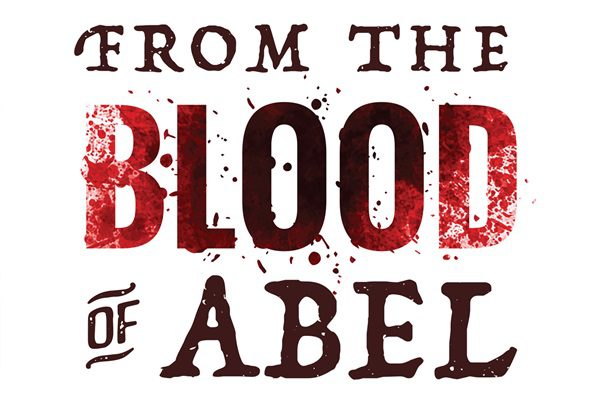
Still, I wish I’d had a better response. In fact, I wish I’d had a copy of Matthew Distefano’s latest book From the Blood of Abel: Humanity’s Causes of Violence and the Bible’s Theological-Anthropological Solution.
Of course, people have been asking this question for 2,000 years. Matthew asks it like this, “Why does Jesus do this? Why does he lay down his life? Surely, he would have had a better chance of bringing about change had he stood up and fought for himself. All of this forgiveness and mercy talk is good for what, now that he is dead?”
Indeed, that’s exactly what this dad was saying. But he was missing the point, and Matthew explains the importance of Jesus’ death and resurrection so beautifully in this book. The build up to Jesus’ death is referred to as the Passion narratives. Matthew explains the Passion and Resurrection like this, “…the Passion and the Resurrection is all about the pouring out of one’s self for the other, in the spirit of love, mercy, compassion, and forgiveness.”
Paul, one of the earliest Christians, claimed that many found the cross to be a stumbling block or just foolish. Many believed it was foolish because Jesus was a failure. He was killed, after all. It’s a stumbling block for many modern people because of a later theological development that claimed Jesus atoned for human sin by channeling the wrath of God upon himself, thus saving Christians from God’s wrath – a wrath that sinners will surely receive.
But Matthew provides an important corrective to both of these mistaken beliefs. Jesus’ mission was to reveal who God is. Jesus went to the cross to show the extent of God’s love. The cross shows that there is no wrath in God. Rather, It reveals that wrath belongs to humans alone. Wrathful humans killed Jesus, not God. This is the biggest problem with our species, for we’ve been wrathfully killing one another since the beginning of human culture.
But how does God respond to the murder of the Son? If we take the Incarnation seriously, then God loves humanity so much that God forgives us even when we kill God. Humans enacted deicide; we killed God in Christ. If God were ever to be wrathful, it would be at this moment. But Jesus changes everything we thought we knew about God by responding with words of forgiveness, “Father, forgive them, for they know not what they do.”
Matthew explains it like this, “…the death of Jesus represents all of humanity’s judgment against God.” Matthew then explains the resurrection in a refreshing way that is consistent with Jesus’ words on the cross. In the Resurrection, Jesus appeared to his followers, those who had abandoned him to the cross a mere three day before, and said, “Peace be with you.” In contrast to humanity’s judgment against God on the cross, Matthew writes that, “the peace and forgiveness the Resurrection brought was God’s judgement for humanity.” Jesus went to the cross to reveal that God’s judgment for humanity is forgiveness and peace!
From the Blood of Abel is an exciting and hopeful book. It’s easy to understand and invites us to follow the God of nonviolent love. In doing so, we will participate with God in the healing of ourselves and the world. Indeed, I wish I could have given this book to that other dad at the bowling alley. It’s definitely a strike!
Previous Post

November 4, 2016
Truth, Lies, and Political Scapegoating - Interview with Hanna Mäkelä
Next Post
November 7, 2016 Vote for Life
Browse Our Archives
Select a Category Atonement and Current Events Curriculum Faith and Families Interviews Jesus the Forgiving Victim Lent Montessori politics Reviews The Bible Explained Uncategorized Valentine's Day Wednesday Sermon Who is God?
Select a Month July 2020 November 2019 October 2019 September 2019 August 2019 July 2019 June 2019 May 2019 April 2019 March 2019 February 2019 January 2019 December 2018 November 2018 October 2018 September 2018 August 2018 July 2018 June 2018 May 2018 April 2018 March 2018 February 2018 January 2018 December 2017 November 2017 October 2017 September 2017 August 2017 July 2017 June 2017 May 2017 April 2017 March 2017 February 2017 January 2017 December 2016 November 2016 October 2016 September 2016 August 2016 June 2016 May 2016 April 2016 March 2016 February 2016 January 2016 December 2015 November 2015 October 2015 September 2015 August 2015 July 2015 June 2015 May 2015 April 2015 March 2015 February 2015 January 2015 December 2014 November 2014 October 2014 September 2014 August 2014 July 2014 June 2014 May 2014 April 2014 March 2014 January 2014 December 2013 September 2013 August 2013 July 2013
Follow Us!
TAKE THE
Religious Wisdom Quiz
What did God use to lead the Israelites by day?
Select your answer to see how you score.
An angel A pillar of cloud A trumpet A pillar of fire
Related posts from Teaching Nonviolent Atonement

Forgiveness in the Time of COVID-19 by Julia...

Reflections on Indigenous Wisdom For Healing A Wounded...

How Forgiveness Can Transform Our Violence and Build...

Jesus Unmasked: God's Economy and How to Cheat...
TRENDING AT PATHEOS Progressive Christian

Why Christians Have a Sacred Duty to Vote:...
The Bible offers strong support for the sacred duty to vote. Here...

What Being a Modern-Day Apostle Means to Me
In my last column, I discussed the ins and outs of modern-day...

Did Ancient China Once Worship the God of...
Across human history, a common thread weaves through the origins of the...

Love Your Neighbor – Including Earth-Kin: Lev. 19,...
God’s command to love your neighbor means acting in an ethical and...

Lead a Church Study of “Jesus and Lao...
Guest writer Jack Thomas (The Irreverent Reverend) reflects on leading his church...

Principles for Understanding the Apostolic Ministry Today
Whenever people discover that my formal ministry title is "apostle," as in...
view all Progressive Christian blogs
Ad-Free & Subscriber Log-In Subscription Support
- About Us
- 2026 Calendar
- Videos
- Podcasts
- Library of World Religions
- Faith In Media Tracker
- Advertise With Us
- Write for Us
- Privacy Policy
- Terms of Service
- Do Not Sell My Data
- Contact Us
- Radiant Digital
- Manage Newsletter Subscriptions
- Unsubscribe From Notifications
- Sitemap
Copyright 2008-2026, Patheos. All rights reserved.
Subscription Support Ad-Free & Subscriber Log-In
Follow Patheos