
BuddhistCatholicContemplativeEvangelicalGeneral ChristianHinduJewishLatter-day SaintMuslimNew VisionsProgressive Christian
Beliefs
- Buddhist
- Catholic
- Contemplative
- Evangelical
- General Christian
- Hindu
- Jewish
- Latter-day Saint
- More Voices
- Muslim
- New Visions
- Pagan
- Progressive Christian
Topics
- Religion News
- Food and Religion
- Sports and Religion
- Religious Art
- Religious Music and Entertainment
- Religious Events
- History and Religion
- Style and Religion
- Politics and Religion
- Women in Religion
- Recreation Outdoors and Religion
- Business Finance and Religion
- Careers Workplace and Religion
- Education and Religion
- Family Parenting and Religion
- Health Fitness and Religion
- Home and Religion
- Relationships and Religion
- Technology and Religion
- Travel and Religion
Columnists
- Buddhist Columnists
- Business Finance and Religion Columnists
- Careers Workplace and Religion Columnists
- Catholic Columnists
- Contemplative Columnists
- Education and Religion Columnists
- Evangelists Columnists
- Family Parenting and Religion Columnists
- General Christian Columnists
- Health Fitness and Religion Columnists
- Hindu Columnists
- History and Religion Columnists
- Home and Religion Columnists
- Jewish Columnists
- More Voices Columnists
- Latter Day Columnists
- Muslim Columnists
- New Visions Columnists
- Nonreligious Columnists
- Pagan Columnists
- Politics and Religion Columnists
- Progressive Columnists
- Recreation Outdoors and Religion Columnists
- Relationships and Religion Columnists
- Religion News Columnists
- Religious Art Columnists
- Religious Events Columnists
- Religious Music and Entertainment Columnists
- Sports and Religion Columnists
- Style and Religion Columnists
- Technology and Religion Columnists
- Travel and Religion Columnists
- Women in Religion Columnists
Resource Library
- 2026 Calendar
- Library of World Religions
- The 100 Most Holy Places on Earth
- Patheos Answers
- Podcasts
- Videos
- Faith Leaders Database
- Anglican Episcopalian
- Bahai
- Baptist
- Buddhism
- Christianity
- Confucianism
- Eastern Orthodoxy
- Hinduism
- Holiness and Pentecostal
- ISKCON
- Islam
- Judaism
- Lutheran
- Methodist
- The Church of Jesus Christ of Latter-day Saints
- New Age
- Paganism
- Presbytarian and Reformed
- Protestantism
- Religion Behind the Scenes
- Roman Catholic
- Scientology
- Shia Islam
- Sikhism
- Sufism
- Sunni Islam
- Taoism
- Zen
- See all religions
Research Tools
 Ad-Free & Subscriber Log-In Subscription Support
Ad-Free & Subscriber Log-In Subscription Support
Follow Patheos 

- Trending:
- Forgiveness
- |
- Marriage
- |
- Consciousness
- |
- Death Penalty
- |
- Election
- |
- Halloween
 Teaching Nonviolent Atonement
- Home
- Progressive Christian
- Who is God? Answers from Christianity and Islam
Who is God? Answers from Christianity and Islam
Last updated on: October 19, 2016 at 7:20 pm by Adam Ericksen
Who is God? Answers from Christianity and Islam 2016-10-19T19:20:32-05:00 Adam Ericksen
Patheos Explore the world's faith through different perspectives on religion and spirituality! Patheos has the views of the prevalent religions and spiritualities of the world.
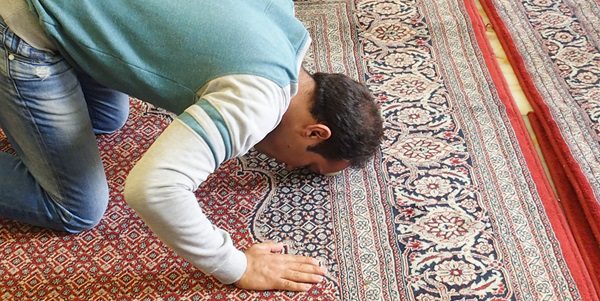
This is the third installment of my series on Faith and Families. These weekly videos are generally based on the lectionary passages for the upcoming Sunday and seek to find ways families can discuss passage, along with providing a family activity that relates to the message. This week we are going off lectionary to explore Christianity and Islam’s view of God.
Who is God?
Christianity and Islam have different, but not opposing, answers. In this video and in the text below, I explore the essence of their answers.
God in Christianity
There is a verse in the New Testament that claims “God is love.” It’s one of only two passages in the New Testament that define God. The other passage states, “God is light and in him there is no darkness at all.”
Love is how Christianity defines God. For the New Testament, God’s love is universal. As Jesus says, it extends even to those we call our enemies.
God is defined as love in the New Testament, but how does the New Testament define love? If you’ve ever been to a wedding, you’ve heard 1 Corinthians 13. It goes like this:
Love is patient; love is kind; love is not envious or boastful or arrogant or rude. It does not insist on its own way; it is not irritable or resentful; it does not rejoice in wrongdoing, but rejoices in the truth. It bears all things, believes all things, hopes all things, endures all things.
Replace the word “love” in that paragraph with God, and you have a good understanding of Christianity’s essential understanding of God.
The point is that you don’t have to do anything to earn God’s love. Nor can you do anything to lose God’s love. God loves you, in all of your humanity, because God is love. God loves you, not because you deserve it, but because it’s who God is.
God in Islam
Islam defines God with a slight difference. At the beginning of each chapter of the Qur’an is the statement, “In the name of God, Most Compassionate, Most Merciful.” Whereas Christianity claims that God is love, Islam emphasizes that God is compassion and mercy.
In Arabic, the word for compassion and mercy come from the word Rahm. According to Abdullah Yusuf Ali in his translation of the Qur’an, the Islamic view of compassion and mercy,
may imply pity, long suffering, patience and forgiveness, all of which the sinner needs and God Most Merciful bestows in abundant measure. But there is a Mercy that goes before even the need arises, the Grace which is ever watchful, and flows from God Most Gracious to all his creatures, protecting them, preserving them, guiding them, and leading them to clearer light and higher life.
Still, the English word “mercy” doesn’t quite do justice. It may surprise many, but Rahm, this essential aspect of God, is tied to motherhood. Rahm means “uterus” or “womb.”
God’s mercy is like a mother’s womb that instinctively nurtures the baby within. God’s womb-like mercy encompasses all of creation. Like God’s love in Christianity, God’s mercy is universal. As Ali claims, God’s mercy “flows from God Most Gracious to all his creatures…” There’s a verse in the Qur’an that confirms this, “My mercy encompasses all things” (7:156).
Christianity and Islam emphasize slightly different characteristics of God. Love and mercy are not the same, but they are certainly compatible. And they are universal. Love and mercy extend not just to all humans, but to all of creation.
I often wonder, how different would the world be if more Christians and more Muslims took seriously the God whose love and mercy “encompasses all things”? How would we relate differently to others, indeed, to all of creation, if we took the fundamental messages of these two religions more seriously? For God’s love and mercy aren’t just for “us” and not for “them.” There is no separating the world into those who are “in” and those who are “out.” Rather, everyone’s in. God’s love and mercy are universal, for everyone and everything.
With Families
Parents and children can have a great conversation about God’s love. You can read 1 Corinthians 13 out loud. How do you respond to the original text? How do you respond when you replace the word “love” with the word “God”?
You can also talk about Rahmah and Rahm. How do you respond to the concept that God’s mercy is like a mother’s womb that automatically seeks to nurture us?
For an art project, you can make a heart out of construction paper. On one side write “God is love” and on the other side write “God is mercy.” Cut a hole near the top of the heart and tie ribbon or string to the hole. Hang the heart on the door of your room to remind you of the God who is love and mercy. (See the video above for more about the art project.)
Image: Pixabay
Stay in the loop! Like Teaching Nonviolent Atonement on Facebook!
Previous Post

October 18, 2016
The Suzanne Ross Interview: The Problem with Being Good
Next Post
October 20, 2016 Parenting During a Political Crisis
Browse Our Archives
Select a Category Atonement and Current Events Curriculum Faith and Families Interviews Jesus the Forgiving Victim Lent Montessori politics Reviews The Bible Explained Uncategorized Valentine's Day Wednesday Sermon Who is God?
Select a Month July 2020 November 2019 October 2019 September 2019 August 2019 July 2019 June 2019 May 2019 April 2019 March 2019 February 2019 January 2019 December 2018 November 2018 October 2018 September 2018 August 2018 July 2018 June 2018 May 2018 April 2018 March 2018 February 2018 January 2018 December 2017 November 2017 October 2017 September 2017 August 2017 July 2017 June 2017 May 2017 April 2017 March 2017 February 2017 January 2017 December 2016 November 2016 October 2016 September 2016 August 2016 June 2016 May 2016 April 2016 March 2016 February 2016 January 2016 December 2015 November 2015 October 2015 September 2015 August 2015 July 2015 June 2015 May 2015 April 2015 March 2015 February 2015 January 2015 December 2014 November 2014 October 2014 September 2014 August 2014 July 2014 June 2014 May 2014 April 2014 March 2014 January 2014 December 2013 September 2013 August 2013 July 2013
Follow Us!
TAKE THE
Religious Wisdom Quiz
Which writer besides Solomon and David contributed to Proverbs?
Select your answer to see how you score.
Moses Nathan Agur Asaph
Related posts from Teaching Nonviolent Atonement

Toxic Christianity: 3 Things We Can Do That...

The Secret of Life: An Interview with Audrey...

Forgiveness in the Time of COVID-19 by Julia...

How Forgiveness Can Transform Our Violence and Build...
TRENDING AT PATHEOS Progressive Christian

What Being a Modern-Day Apostle Means to Me
In my last column, I discussed the ins and outs of modern-day...

Did Ancient China Once Worship the God of...
Across human history, a common thread weaves through the origins of the...

Love Your Neighbor – Including Earth-Kin: Lev. 19,...
God’s command to love your neighbor means acting in an ethical and...

Lead a Church Study of “Jesus and Lao...
Guest writer Jack Thomas (The Irreverent Reverend) reflects on leading his church...

Pastoral Wisdom for Responding to Sermon Pushback
Getting sermon pushback on your social justice sermon? Learn practical, Proverbs-based strategies...

Principles for Understanding the Apostolic Ministry Today
Whenever people discover that my formal ministry title is "apostle," as in...
view all Progressive Christian blogs
Ad-Free & Subscriber Log-In Subscription Support
- About Us
- 2026 Calendar
- Videos
- Podcasts
- Library of World Religions
- Faith In Media Tracker
- Advertise With Us
- Write for Us
- Privacy Policy
- Terms of Service
- Do Not Sell My Data
- Contact Us
- Radiant Digital
- Manage Newsletter Subscriptions
- Unsubscribe From Notifications
- Sitemap
Copyright 2008-2026, Patheos. All rights reserved.
Subscription Support Ad-Free & Subscriber Log-In
Follow Patheos