
BuddhistCatholicContemplativeEvangelicalGeneral ChristianHinduJewishLatter-day SaintMuslimNew VisionsProgressive Christian
Beliefs
- Buddhist
- Catholic
- Contemplative
- Evangelical
- General Christian
- Hindu
- Jewish
- Latter-day Saint
- More Voices
- Muslim
- New Visions
- Pagan
- Progressive Christian
Topics
- Religion News
- Food and Religion
- Sports and Religion
- Religious Art
- Religious Music and Entertainment
- Religious Events
- History and Religion
- Style and Religion
- Politics and Religion
- Women in Religion
- Recreation Outdoors and Religion
- Business Finance and Religion
- Careers Workplace and Religion
- Education and Religion
- Family Parenting and Religion
- Health Fitness and Religion
- Home and Religion
- Relationships and Religion
- Technology and Religion
- Travel and Religion
Columnists
- Buddhist Columnists
- Business Finance and Religion Columnists
- Careers Workplace and Religion Columnists
- Catholic Columnists
- Contemplative Columnists
- Education and Religion Columnists
- Evangelists Columnists
- Family Parenting and Religion Columnists
- General Christian Columnists
- Health Fitness and Religion Columnists
- Hindu Columnists
- History and Religion Columnists
- Home and Religion Columnists
- Jewish Columnists
- More Voices Columnists
- Latter Day Columnists
- Muslim Columnists
- New Visions Columnists
- Nonreligious Columnists
- Pagan Columnists
- Politics and Religion Columnists
- Progressive Columnists
- Recreation Outdoors and Religion Columnists
- Relationships and Religion Columnists
- Religion News Columnists
- Religious Art Columnists
- Religious Events Columnists
- Religious Music and Entertainment Columnists
- Sports and Religion Columnists
- Style and Religion Columnists
- Technology and Religion Columnists
- Travel and Religion Columnists
- Women in Religion Columnists
Resource Library
- 2026 Calendar
- Library of World Religions
- The 100 Most Holy Places on Earth
- Patheos Answers
- Podcasts
- Videos
- Faith Leaders Database
- Anglican Episcopalian
- Bahai
- Baptist
- Buddhism
- Christianity
- Confucianism
- Eastern Orthodoxy
- Hinduism
- Holiness and Pentecostal
- ISKCON
- Islam
- Judaism
- Lutheran
- Methodist
- The Church of Jesus Christ of Latter-day Saints
- New Age
- Paganism
- Presbytarian and Reformed
- Protestantism
- Religion Behind the Scenes
- Roman Catholic
- Scientology
- Shia Islam
- Sikhism
- Sufism
- Sunni Islam
- Taoism
- Zen
- See all religions
Research Tools
 Ad-Free & Subscriber Log-In Subscription Support
Ad-Free & Subscriber Log-In Subscription Support
Follow Patheos 

- Trending:
- Forgiveness
- |
- Marriage
- |
- Consciousness
- |
- Death Penalty
- |
- Election
- |
- Halloween
 Teaching Nonviolent Atonement
- Home
- Progressive Christian
- The Melvin Bray Interview: Politics, Racism, and Telling a Better Story
The Melvin Bray Interview: Politics, Racism, and Telling a Better Story
Last updated on: October 7, 2016 at 1:34 pm by Adam Ericksen
The Melvin Bray Interview: Politics, Racism, and Telling a Better Story 2016-10-07T13:34:09-05:00 Adam Ericksen
Patheos Explore the world's faith through different perspectives on religion and spirituality! Patheos has the views of the prevalent religions and spiritualities of the world.
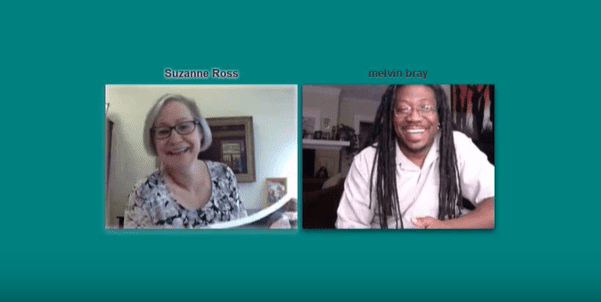 Our guest for this week’s installment of our Raven ReViews Election 2016 series was Melvin Bray, author of the upcoming book Better: Waking Up to Who We Could Be. (Pre-order now with the code Ship16 and receive 20% off!) Melvin is a gifted storyteller and writer whose approach to telling better stories about ourselves is especially pivotal in this election season. As we struggle with the issues of racism that have dogged the presidential campaigns, his insights are especially important for Christians. Melvin does not flinch from his message that too often the ways in which we have interpreted and handed down our faith stories have been instrumental in perpetuating racism in our nation and in our churches. Grounding his message is his belief that “better” is possible. Melvin speaks directly to Christians when he says, “The problem isn’t our stories, but rather the way we tell them.”
The show notes, video, and mp3 of the interview are below.
Full Video
Full MP3
The problems that we face today are problems that people who have been in traditionally power over positions, aren’t going to be able to solve. They are not problems that white males, white people, males, upper class folk, extremely educated folk, are going to be able to lead us out of. Melvin’s goal is to be in support of women, particularly women of color and queer folk, who are in the best position and experience to lead us beyond the problems we face now around sexism, heterosexism, racism, etc.
Part 1: What is Racism?
Part 1 Video
Part 1 MP3
The definition of racism needs to be rooted in the field of critical race theory. A working definition of racism is that racism is a system of laws, practices, economic structures, religious structures, it’s a system that privileges white people and unprivleges people of color.
Systemic Racism analogy: What part of a lawnmower cuts that grass? You might say the blade. But the blade by itself doesn’t do anything. It just sits on the grass. It’s not the motor. A motor, even if it has gas and has started, will just sit there. Even the whole lawnmower, humming, isn’t going to cut grass without someone pushing it. It requires some agency. The way the pieces of racism work together
If you are a part of the system, and you participate in the privileging of yourself, or the unpriveleging of others, whether intentionally or unintentionally, then that makes you a part of the system.
Racism is not about how you feel about a person. When people say this is a racist system that is predicated on white supremacy, and supported by structures like white objectivity, then they are not saying that you feel a certain way toward black people and that’s your problem. It’s not about that. It’s about being involved in a process that is meant to privilege you in certain ways while it unprivileges other people in other ways. How you feel about it doesn’t effect that system. What affects the system is how you choose to be in relationship to it. This is where we get into questions about dismantling racism. Dismantling “whiteness.”
The designation of the term “white” historically exists to privilege a particular group of people. It’s to say, “you are not them” and therefore certain things belong to you. When we talk about dismantling whiteness, we mean there are some things that you are going to have to give up in order to be a part of what is becoming. There’s a choice to put oneself within a system that privileges some and unprivileges others. This is also the reason that people of color can still participate in white supremacy. They can choose to hold up particular notions about who we should be in the world versus choosing a healthier way of being in the world that isn’t antagonistic or hostile toward others.
We can point to a time in history before people called themselves “white.” People started used the term “white.” In the United States, there was a time when those in power feared that poor white people would unite with black people against them. So they got poor white people to think, “Well, at least I’m not black or Native American.” Laws and social practices were constructed to create a white structure against people of color.
Part 2: Racism and Politics
Part 2 Video
https://www.youtube.com/watch?v=sXflR4_l0Jg
Part 2 MP3
Racism is showing up in the way the DNC and RNC electoral campaigns run themselves. For example, this should be a run away election for Hillary Clinton because she’s running against someone who is so far beyond the pale that he shouldn’t even be a viable consideration. So, Democrats make fun of Republicans for bigotry, and that bigotry has reality, so why is it so close?
First, these folk aren’t dumb. They appeal to some real or perceived needs that are expressed by particular people. But those needs to represent all the people. Here’s the problem: You go to a place like Georgia. Whether Georgia is a blue state or red state is determined by between 150,000-200,000 votes. All the DNC has to do is register 200,000 people. If they register people of color, 90% of them are going to vote Democrat. Texas is a red state by about 900,000 votes. There are 3 million eligible Latino voters who have not been registered. Why isn’t the DNC encouraging these people to register?
There are two reasons. Either the white vote is being privileged as the only important votes, or people are running from the inevitable shifts in power when you add more people to the system. White men consultants who advise to either go door to door or do political campaign ads make money 15% on those ad buys.
If the same amount were spent on grass roots efforts, you’d get more voters who are people of color, but the predominantly white people in power wouldn’t get paid the same way. That’s racism.
If the DNC seeks to register people of color, there’s a fear that they may not always vote for the DNC, or the people of color might start making more demands. As much as Hillary Clinton is the only viable option, but Hillary Clinton would rather risk losing than say, “Hey I’m going to bring these new people in and then I’m going to convince people to get excited to vote for me by giving them the things that matter to them.” The economic plan put forth by BY 100 is an economic plan that would benefit people of color and help correct some wrongs that have been done. Campaign Zero is a plan for how to remedy problems around state sanctioned murder of people of color by police. Clinton hasn’t said she would support any of these measures. She hasn’t said, “Let me look at this Black Lives Matter platform and see what parts we can incorporate. She has offered nothing to say, “Get excited about me.” That’s part of the racism because the assumption is that you might as well vote for us because we’re better than the other guy.
If you are in a position of power, there’s very little motivation to let it go. If you grow up in a male dominated world, you find yourself, as a male, resisting any change. Even if we say that women are a part of the structure, they find themselves having to answer to men for choices they make. We need to interrogate power. You can’t have a conversation about dismantling racism without changing the way power is leveraged and who gets to leverage it. If we had that going on in the election season now, one thing we’d change is the terms we use to talk about things. What lets me know that racism is alive is language constructs. Like “Make America Great Again.” Any person of color is going to look at that and say, “So, when was America great? Tell me what time we want to go back to, because more than likely, my story was on the losing end of that greatness.”
But the other side isn’t much better. They say, “Better together.” It sounds good. But when it was framed at the DNC, there was this ahistorical framing that was aggravating for anyone of a person of color who knows anything about history. The DNC said that we’ve always been a nation that believed we are better together. But when was that? Trillions of dollars of wealth were created on the back of black slaves.
Both sides need to use language that speaks to the truth about who we are, what we need to do to work on, and who we want to be.
Part 3: Telling a Better Story and Birth of a Nation
Part 3 Video
Part 3 MP3
How do we impact the Narrative that keep perpetuating Bad stories we tell about ourselves, that are either incomplete or outright lies?
Birth of a Nation tells the story of Nat Turner, who led the most successful slave revolt in the country, but even it was stopped. Turner is portrayed in the movie as surviving in a system of brutal slavery with internal compromises.
Nat Turner is one of Melvin’s heroes. As a high school teacher, Melvin always had Nat Turner’s picture in his room as someone who has motivated him. Turner’s rebellion is usually discredited with language around it being an act of violene. That language calls what he did into questions. That language starts at second lane. As if violence started with Nat Turner. The violent brutalization started long before Nat Turner. Nat Turner said we cannot continue to be brutalized, to be subject to violence, and hold on to our fragile humanity that these people are constantly trying to take from us. It was explicitly called chattel slavery. It was a way to tell black slaves that they were not human, they were chattel. Nat Turner said no more. I will not accept this pillaging of my body or my mind or my faith or my future. I’m going to bring this to an end.
Melvin calls into question the philosophical binary between violence and nonviolence. Even if we call what Turner did “violence” it was an act of necessary preservation of life, not an act of selfish taking of life, which changes the terms of violence.
We hear the same language of violence and nonviolence in the modern protests movements. People in power insist that protests stay nonviolent. It’s another example of hypocrisy coming from the mouths of those in power – our violence is okay and yours is not.
Supremacist logic says that whatever white poeopel choose to do is justifiable, not necessarily justified. It says certain people belong on top and others do not. If someone on top does something questionable, you can debate whether it was justifiable. But there is no debate with someone on the bottom. It could be racial or gender or many other forms of supremacy. The notion is that the only appropriate response to those acts of violence is to allow them to continue until those who are perpetrating them choose out of the goodness of their heart, the conviction of the Holy Spirit, the acknowledgment of wrong doing and a conversion to the right out of nowhere to stop.
The point is not that one form of violence is right and another is wrong. It’s that the argument about violence is beside the point as a moral barometer of what is actually wrong. Dehumanization is the issue. Debating violence is a way to self-justify and give yourself the illusion that you are talking about violence when you are actually avoiding talking about the real violence that’s taking place.
Better: Reimagining Biblical Stories
In Better: Waking Up to Who We Could Be, Melvin looks at the Bible with an angle that rescues them from a supremacist interpretation. Better asks “What if the world, with all of its racism, sexism, heterosexism, ecological disregard, tribalism, what if the world is exactly the world we storied into existence with our hostile telling of our faith stories?”
We take stories that are about virtues of love, joy, peace, long suffering, gentleness meekness, courage, justice, and beauty, and we turn them into stories that glorify our own illegitimate grabs at power. If we have storied ourselves into this way of being into the world, then we can story our way out of it. We can go back to those virtues and make sure that in our telling of the story we are reflecting those virtues. Some of our stories are cautionary tales of what happens when we don’t live by those virtues.
For more, read Suzanne’s article introducing the discussion with Melvin “Am I a Racist: Confronting Our Blind Spots.“
Photo: YouTube.
Stay in the loop! Like Teaching Nonviolent Atonement on Facebook!

Browse Our Archives
Select a Category Atonement and Current Events Curriculum Faith and Families Interviews Jesus the Forgiving Victim Lent Montessori politics Reviews The Bible Explained Uncategorized Valentine's Day Wednesday Sermon Who is God?
Select a Month July 2020 November 2019 October 2019 September 2019 August 2019 July 2019 June 2019 May 2019 April 2019 March 2019 February 2019 January 2019 December 2018 November 2018 October 2018 September 2018 August 2018 July 2018 June 2018 May 2018 April 2018 March 2018 February 2018 January 2018 December 2017 November 2017 October 2017 September 2017 August 2017 July 2017 June 2017 May 2017 April 2017 March 2017 February 2017 January 2017 December 2016 November 2016 October 2016 September 2016 August 2016 June 2016 May 2016 April 2016 March 2016 February 2016 January 2016 December 2015 November 2015 October 2015 September 2015 August 2015 July 2015 June 2015 May 2015 April 2015 March 2015 February 2015 January 2015 December 2014 November 2014 October 2014 September 2014 August 2014 July 2014 June 2014 May 2014 April 2014 March 2014 January 2014 December 2013 September 2013 August 2013 July 2013
Follow Us!
TAKE THE
Religious Wisdom Quiz
I am an offering without defect, completely burned on the altar as a pleasing aroma to the Lord. What am I?
Select your answer to see how you score.
A peace offering A grain offering A burnt offering A sin offering
Related posts from Teaching Nonviolent Atonement

Toxic Christianity: 3 Things We Can Do That...

The Secret of Life: An Interview with Audrey...

Forgiveness in the Time of COVID-19 by Julia...

TRENDING AT PATHEOS Progressive Christian

Why Christians Have a Sacred Duty to Vote:...
The Bible offers strong support for the sacred duty to vote. Here...

What Being a Modern-Day Apostle Means to Me
In my last column, I discussed the ins and outs of modern-day...

Did Ancient China Once Worship the God of...
Across human history, a common thread weaves through the origins of the...

Love Your Neighbor – Including Earth-Kin: Lev. 19,...
God’s command to love your neighbor means acting in an ethical and...

Lead a Church Study of “Jesus and Lao...
Guest writer Jack Thomas (The Irreverent Reverend) reflects on leading his church...

Principles for Understanding the Apostolic Ministry Today
Whenever people discover that my formal ministry title is "apostle," as in...
view all Progressive Christian blogs
Ad-Free & Subscriber Log-In Subscription Support
- About Us
- 2026 Calendar
- Videos
- Podcasts
- Library of World Religions
- Faith In Media Tracker
- Advertise With Us
- Write for Us
- Privacy Policy
- Terms of Service
- Do Not Sell My Data
- Contact Us
- Radiant Digital
- Manage Newsletter Subscriptions
- Unsubscribe From Notifications
- Sitemap
Copyright 2008-2026, Patheos. All rights reserved.
Subscription Support Ad-Free & Subscriber Log-In
Follow Patheos