
BuddhistCatholicContemplativeEvangelicalGeneral ChristianHinduJewishLatter-day SaintMuslimNew VisionsProgressive Christian
Beliefs
- Buddhist
- Catholic
- Contemplative
- Evangelical
- General Christian
- Hindu
- Jewish
- Latter-day Saint
- More Voices
- Muslim
- New Visions
- Pagan
- Progressive Christian
Topics
- Religion News
- Food and Religion
- Sports and Religion
- Religious Art
- Religious Music and Entertainment
- Religious Events
- History and Religion
- Style and Religion
- Politics and Religion
- Women in Religion
- Recreation Outdoors and Religion
- Business Finance and Religion
- Careers Workplace and Religion
- Education and Religion
- Family Parenting and Religion
- Health Fitness and Religion
- Home and Religion
- Relationships and Religion
- Technology and Religion
- Travel and Religion
Columnists
- Buddhist Columnists
- Business Finance and Religion Columnists
- Careers Workplace and Religion Columnists
- Catholic Columnists
- Contemplative Columnists
- Education and Religion Columnists
- Evangelists Columnists
- Family Parenting and Religion Columnists
- General Christian Columnists
- Health Fitness and Religion Columnists
- Hindu Columnists
- History and Religion Columnists
- Home and Religion Columnists
- Jewish Columnists
- More Voices Columnists
- Latter Day Columnists
- Muslim Columnists
- New Visions Columnists
- Nonreligious Columnists
- Pagan Columnists
- Politics and Religion Columnists
- Progressive Columnists
- Recreation Outdoors and Religion Columnists
- Relationships and Religion Columnists
- Religion News Columnists
- Religious Art Columnists
- Religious Events Columnists
- Religious Music and Entertainment Columnists
- Sports and Religion Columnists
- Style and Religion Columnists
- Technology and Religion Columnists
- Travel and Religion Columnists
- Women in Religion Columnists
Resource Library
- 2026 Calendar
- Library of World Religions
- The 100 Most Holy Places on Earth
- Patheos Answers
- Podcasts
- Videos
- Faith Leaders Database
- Anglican Episcopalian
- Bahai
- Baptist
- Buddhism
- Christianity
- Confucianism
- Eastern Orthodoxy
- Hinduism
- Holiness and Pentecostal
- ISKCON
- Islam
- Judaism
- Lutheran
- Methodist
- The Church of Jesus Christ of Latter-day Saints
- New Age
- Paganism
- Presbytarian and Reformed
- Protestantism
- Religion Behind the Scenes
- Roman Catholic
- Scientology
- Shia Islam
- Sikhism
- Sufism
- Sunni Islam
- Taoism
- Zen
- See all religions
Research Tools
 Ad-Free & Subscriber Log-In Subscription Support
Ad-Free & Subscriber Log-In Subscription Support
Follow Patheos 

- Trending:
- Forgiveness
- |
- Marriage
- |
- Consciousness
- |
- Death Penalty
- |
- Election
- |
- Halloween
 Teaching Nonviolent Atonement
- Home
- Progressive Christian
- “Am I A Racist?” Confronting Our Blind Spots with Melvin Bray
“Am I A Racist?” Confronting Our Blind Spots with Melvin Bray
Last updated on: October 4, 2016 at 9:58 am by Suzanne Ross
“Am I A Racist?” Confronting Our Blind Spots with Melvin Bray 2016-10-04T09:58:56-05:00 Suzanne Ross
Patheos Explore the world's faith through different perspectives on religion and spirituality! Patheos has the views of the prevalent religions and spiritualities of the world.
 The question, “Am I a Racist?” may be harder to answer than it first appears. Because answering “no” to the question is not necessarily an ironclad defense. Here’s why.
Blind to Our Scapegoats
Racism is a form of scapegoating and scapegoating has a tricky way of hiding in plain sight. Of course, scapegoating is easy to spot in others. We know it when we see it and it’s easy to condemn because we recognize it as a form of injustice. With racism as our test case, this is obvious.
But here’s the tricky part: while we easily recognize scapegoating (and racism) in others, it is extraordinarily difficult to spot it in ourselves. Because to have a scapegoat is not to know you have one. Which is to say that our scapegoats live in a blind spot in our self-awareness. It’s not impossible, but it is rarely the case that someone self-identifies as a racist! We explain our behaviors by saying that we are defending our rights or way of life or protecting our families or their jobs against criminals and bad guys.
But let me be clear: To be a racist is not to know you are one.
Even though there are criminals and bad guys out there, if you have fallen into a racist/ scapegoating pattern, you are most likely gravely mistaken about who the bad guys are and where the threat, if there is one, is coming from.
Unfortunately, denying that you are a racist just might be a symptom of racism! The truth might be that in the stories we’ve been telling we have cast ourselves in the wrong roles. What if the bad guys in the story turn out to be us?
You Can Change the World
Discovering that you are not as good as you thought might not be as terrible as it seems! Sure, realizing you are part of the problem is no ego-boost, but if you are part of the problem, then you can be part of the solution in a way you never realized before.
Think about it this way: if you’re serious about solving the problem of racism in America, then discovering that you can change the world by changing yourself is actually a good thing. Because trying to change other people is, let’s face it, nothing more than an exercise in self-importance because you get to be the good guy. But changing yourself, well, only you can do that and the truth is that you have the power to do it right now. By no longer being willing to play your part in perpetuating racial oppression, you not only make yourself a better person, you make the world a better place for everyone.
Do Better with Melvin Bray
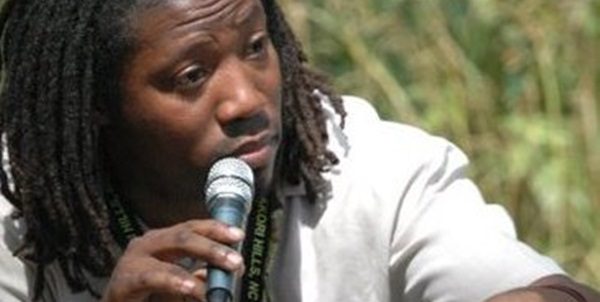
Our guest for this week’s installment of our Raven ReViews Election 2016 series is Melvin Bray, a gifted storyteller and writer whose approach to telling better stories about ourselves is especially pivotal in this election season. As we struggle with the issues of racism that have dogged the presidential campaigns his insights are especially important for Christians. Melvin does not flinch from his message that too often the ways in which we have interpreted and handed down our faith stories have been instrumental in perpetuating racism in our nation and in our churches. Grounding his message is his belief that “better” is possible. Melvin speaks directly to Christians when he says, “The problem isn’t our stories, but rather the way we tell them.”
If you care about issues of race, politics, and biblical interpretation, don’t miss this chance to do “better” with Melvin Bray. Click here five minutes before the chat begins to participate.
__________________________________________________________________________
Melvin Bray (melvinbray.com, @themelvinbray) is an Emmy® award-winning storyteller, writer, educator and social entrepreneur who resides with his wife, three kids and two dogs in the Westview neighborhood of southwest Atlanta, GA. He is an active participant in multiple vanguard networks working to cultivate more sustainable approaches to a life of faith, including Faith Forward, Auburn Seminary’s “MountainTop,” CommonUnity, and the Table to Action Project Atlanta. He is co-editor of Faith Forward, Vol 1 and Vol 2 (Copper House, 2013, 2015), which explore the growth edges of children’s and youth ministry, and coordinating author of The Stories in which We Find Ourselves, reimaginings of the biblical narrative that put the goal of beloved community front-and-center. Melvin works to help communities of goodwill find better stories and scripts–better ways of thinking and doing–that move them toward beloved community (collabyrinthconsulting.com). His new book, Better: Waking Up To Who We Could Be, will be available in January.
Explore what’s at stake in this pivotal election with our 6-part series, Raven ReViews Election 2016: Weekly Interviews on 6 Crucial Topics:
Image: melvinbray.com
Next Post

October 5, 2016 Wednesday Sermon: The Power of Forgiveness
Browse Our Archives
Select a Category Atonement and Current Events Curriculum Faith and Families Interviews Jesus the Forgiving Victim Lent Montessori politics Reviews The Bible Explained Uncategorized Valentine's Day Wednesday Sermon Who is God?
Select a Month July 2020 November 2019 October 2019 September 2019 August 2019 July 2019 June 2019 May 2019 April 2019 March 2019 February 2019 January 2019 December 2018 November 2018 October 2018 September 2018 August 2018 July 2018 June 2018 May 2018 April 2018 March 2018 February 2018 January 2018 December 2017 November 2017 October 2017 September 2017 August 2017 July 2017 June 2017 May 2017 April 2017 March 2017 February 2017 January 2017 December 2016 November 2016 October 2016 September 2016 August 2016 June 2016 May 2016 April 2016 March 2016 February 2016 January 2016 December 2015 November 2015 October 2015 September 2015 August 2015 July 2015 June 2015 May 2015 April 2015 March 2015 February 2015 January 2015 December 2014 November 2014 October 2014 September 2014 August 2014 July 2014 June 2014 May 2014 April 2014 March 2014 January 2014 December 2013 September 2013 August 2013 July 2013
Follow Us!
TAKE THE
Religious Wisdom Quiz
True or False: The Israelites crossed the Red Sea by boat.
Select your answer to see how you score.
FALSE TRUE
Related posts from Teaching Nonviolent Atonement

How Forgiveness Can Transform Our Violence and Build...

The Chosen One Chooses Love Over Fear [VIDEO]

Jesus Unmasked: Jesus Brings the Fire!

Perfect Love Casts Out Fear, But Can It...
TRENDING AT PATHEOS Progressive Christian

What Being a Modern-Day Apostle Means to Me
In my last column, I discussed the ins and outs of modern-day...

Did Ancient China Once Worship the God of...
Across human history, a common thread weaves through the origins of the...

Love Your Neighbor – Including Earth-Kin: Lev. 19,...
God’s command to love your neighbor means acting in an ethical and...

Lead a Church Study of “Jesus and Lao...
Guest writer Jack Thomas (The Irreverent Reverend) reflects on leading his church...

Pastoral Wisdom for Responding to Sermon Pushback
Getting sermon pushback on your social justice sermon? Learn practical, Proverbs-based strategies...

Principles for Understanding the Apostolic Ministry Today
Whenever people discover that my formal ministry title is "apostle," as in...
view all Progressive Christian blogs
Ad-Free & Subscriber Log-In Subscription Support
- About Us
- 2026 Calendar
- Videos
- Podcasts
- Library of World Religions
- Faith In Media Tracker
- Advertise With Us
- Write for Us
- Privacy Policy
- Terms of Service
- Do Not Sell My Data
- Contact Us
- Radiant Digital
- Manage Newsletter Subscriptions
- Unsubscribe From Notifications
- Sitemap
Copyright 2008-2026, Patheos. All rights reserved.
Subscription Support Ad-Free & Subscriber Log-In
Follow Patheos