
BuddhistCatholicContemplativeEvangelicalGeneral ChristianHinduJewishLatter-day SaintMuslimNew VisionsProgressive Christian
Beliefs
- Buddhist
- Catholic
- Contemplative
- Evangelical
- General Christian
- Hindu
- Jewish
- Latter-day Saint
- More Voices
- Muslim
- New Visions
- Pagan
- Progressive Christian
Topics
- Religion News
- Food and Religion
- Sports and Religion
- Religious Art
- Religious Music and Entertainment
- Religious Events
- History and Religion
- Style and Religion
- Politics and Religion
- Women in Religion
- Recreation Outdoors and Religion
- Business Finance and Religion
- Careers Workplace and Religion
- Education and Religion
- Family Parenting and Religion
- Health Fitness and Religion
- Home and Religion
- Relationships and Religion
- Technology and Religion
- Travel and Religion
Columnists
- Buddhist Columnists
- Business Finance and Religion Columnists
- Careers Workplace and Religion Columnists
- Catholic Columnists
- Contemplative Columnists
- Education and Religion Columnists
- Evangelists Columnists
- Family Parenting and Religion Columnists
- General Christian Columnists
- Health Fitness and Religion Columnists
- Hindu Columnists
- History and Religion Columnists
- Home and Religion Columnists
- Jewish Columnists
- More Voices Columnists
- Latter Day Columnists
- Muslim Columnists
- New Visions Columnists
- Nonreligious Columnists
- Pagan Columnists
- Politics and Religion Columnists
- Progressive Columnists
- Recreation Outdoors and Religion Columnists
- Relationships and Religion Columnists
- Religion News Columnists
- Religious Art Columnists
- Religious Events Columnists
- Religious Music and Entertainment Columnists
- Sports and Religion Columnists
- Style and Religion Columnists
- Technology and Religion Columnists
- Travel and Religion Columnists
- Women in Religion Columnists
Resource Library
- 2026 Calendar
- Library of World Religions
- The 100 Most Holy Places on Earth
- Patheos Answers
- Podcasts
- Videos
- Faith Leaders Database
- Anglican Episcopalian
- Bahai
- Baptist
- Buddhism
- Christianity
- Confucianism
- Eastern Orthodoxy
- Hinduism
- Holiness and Pentecostal
- ISKCON
- Islam
- Judaism
- Lutheran
- Methodist
- The Church of Jesus Christ of Latter-day Saints
- New Age
- Paganism
- Presbytarian and Reformed
- Protestantism
- Religion Behind the Scenes
- Roman Catholic
- Scientology
- Shia Islam
- Sikhism
- Sufism
- Sunni Islam
- Taoism
- Zen
- See all religions
Research Tools
 Ad-Free & Subscriber Log-In Subscription Support
Ad-Free & Subscriber Log-In Subscription Support
Follow Patheos 

- Trending:
- Forgiveness
- |
- Marriage
- |
- Consciousness
- |
- Death Penalty
- |
- Election
- |
- Halloween
 Teaching Nonviolent Atonement
- Home
- Progressive Christian
- A Message to White America About How to Decide If You’ll See “The Birth of A Nation”
A Message to White America About How to Decide If You’ll See “The Birth of A Nation”
Last updated on: October 11, 2016 at 4:40 pm by Suzanne Ross
A Message to White America About How to Decide If You’ll See “The Birth of A Nation” 2016-10-11T16:40:52-05:00 Suzanne Ross
Patheos Explore the world's faith through different perspectives on religion and spirituality! Patheos has the views of the prevalent religions and spiritualities of the world.
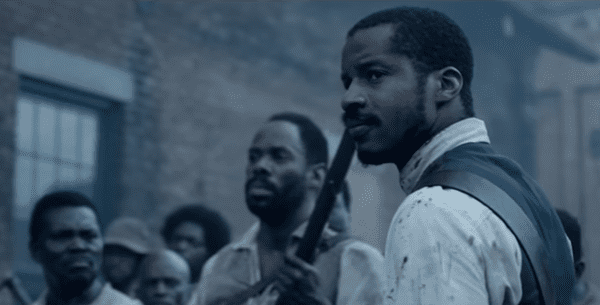 Nate Parker’s 2016 movie, The Birth of a Nation, is based on the life of the African-American slave Nat Turner (1800-1831). It’s a movie rife with violence and brutality, turning an unflinching eye toward the endemic abuse and sexual exploitation of black women at the hands of their white owners. It blinks only to spare us the trauma of witnessing the assault itself. To use modern terminology, the movie explores the rape culture that existed as a justified component of the subjugation of black slaves. We witness husbands, sons and brothers, rendered mute and powerless by violent oppression, forced to hand their wives, mothers and daughters over to be raped. The shared grief and anger of black men and women over this violation to their humanity is not difficult for white audience members to empathize with.
Yet the depth of the suffering of enslaved black men and women during the prosecution of chattel servitude has not always elicited empathy from white America, then or now. Which is perhaps why Nate Parker’s movie can function as a necessary corrective, for it gives artistic expression to the excruciating mental, emotional and spiritual pain that led Nat Turner to take up arms against a system of oppression that showed no signs of yielding to political pressure.
My husband and I attended a pre-release screening and we left the theater emotionally drained and grief-stricken. What we witnessed was the impact on human beings who are battered in spirit and soul by a system whose first language was dehumanizing violence. A system operated and defended relentlessly by white men and women, the racial kin of my husband and I. While we related to Nat as a human being, we were convicted by our race as complicit in his oppression. We wanted to weep for all of us.
To Boycott or Not to Boycott
The movie opened last weekend to dismal ticket sales. The reason appears to have little to do with the quality of the movie itself, which received standing ovations at film festivals and garnered a slew of complimentary reviews. No, the speculation is that the reason movie goers stayed home was due to the controversy surrounding accusations of sexual violence made against the filmmaker and star, Nate Parker.
The thoughts that follow are directed at the white folk who boycotted the film as an act of moral outrage. At first blush, this seems like the right thing to do. After all, none of us wants to enable or condone rape with our financial support. The court of public opinion judged Nate Parker’s damage control tour through talk shows and interviews to be a dismal failure. He was not apologetic enough, appeared to qualify his apologies, and seemed to cast himself as the victim, a moral sin of the first order.
But I would like to focus your attention on a troubling irony: a movie that begs us to acknowledge centuries of unapologetic rape of enslaved women by white men is being shunned because one black man, accused and acquitted of rape in a court of law, is not displaying the proper remorse. My aim is not to excuse any rape at any time no matter who the perpetrators are or were. What I’m asking you to consider is the uncomfortable possibility that Nate Parker is being scapegoated so that white folks once again do not have to confront the awful reality of the financial profits many of our race accrued from the devastating rape culture of slavery.
The Guilty Scapegoat
Many who believe that Nate Parker is guilty of something, whether an actual rape or a lesser crime such as objectification of women or insensitivity to the suffering of others will object to the suggestion that this is a case of scapegoating. Scapegoats, so goes the common understanding, are innocent victims not guilty sexual predators. But this is where the common understanding is wrong.
Scapegoats can be guilty, very guilty, and still function as scapegoats. Someone guilty of a crime, whether rape or drug possession or theft, is your scapegoat if by accusing them of some moral transgression, you can avoid examining your own complicity in the same moral ill. In our example, if Nate Parker is guilty of being a poster boy for today’s rape culture, then we can feel good about having done something to end this terrible plague against women. Resting in our self-righteousness, we do not have to examine our own participation and the ways in which we are benefiting from rape culture.
Do we laugh at crude jokes? Do we excuse what Donald Trump calls “locker room talk” as harmless banter? Do we pay to see movies that exploit women and portray them as sexual objects, whose individual identities are sacrificed to male ego-needs? Do we fail to acknowledge the epidemic of sexual assaults against women, evidence of which exploded this weekend on Twitter? If so, we are deriving a sense of our own goodness and building bonds of solidarity with others from the exploitation of women. There’s no other way to think about it that is honest with yourself.
Facing the Truth
Scapegoating is not something you do; it is a relationship to the truth. Whether you buy a ticket to The Birth of a Nation is not as simple as deciding Parker’s guilt or innocence. You may believe that Parker is truly guilty of rape. All well and good. But – and this in only something you can know for yourself – if you are using Parker’s past to hide from the truth about the benefits that have accrued to the powerful and privileged from rape culture then or now, then you and Parker are enmeshed in a scapegoating relationship.
If white America so easily condemns Parker for refusing to acknowledge his crime yet we continue to deny the ongoing legacy of racism and its effect on African-Americans, then it may be that we are guilty of the very thing we accuse Parker – perpetrating violence and denying our guilt. This is, of course, a terrible and cruel coincidence for the African-American actor, writer, and director who finds himself, like his hero Nat Turner, not only financially defeated but having his identity defined by a relationship to power that has been forced upon him and is beyond his control.
Nate Parker, the writer and actor, convincingly crawled inside the skin of Nat Turner and allowed moviegoers to go with him. White America might do well to wonder what part we played in his research for the role.
Image: Screenshot from YouTube channel Fresh Movie Trailers, “The Birth of a Nation Movie Trailer #2.”
Stay in the loop! Like Teaching Nonviolent Atonement on Facebook!
Next Post

October 12, 2016 Wednesday Sermon: One Embraced a New Way of Living!
Browse Our Archives
Select a Category Atonement and Current Events Curriculum Faith and Families Interviews Jesus the Forgiving Victim Lent Montessori politics Reviews The Bible Explained Uncategorized Valentine's Day Wednesday Sermon Who is God?
Select a Month July 2020 November 2019 October 2019 September 2019 August 2019 July 2019 June 2019 May 2019 April 2019 March 2019 February 2019 January 2019 December 2018 November 2018 October 2018 September 2018 August 2018 July 2018 June 2018 May 2018 April 2018 March 2018 February 2018 January 2018 December 2017 November 2017 October 2017 September 2017 August 2017 July 2017 June 2017 May 2017 April 2017 March 2017 February 2017 January 2017 December 2016 November 2016 October 2016 September 2016 August 2016 June 2016 May 2016 April 2016 March 2016 February 2016 January 2016 December 2015 November 2015 October 2015 September 2015 August 2015 July 2015 June 2015 May 2015 April 2015 March 2015 February 2015 January 2015 December 2014 November 2014 October 2014 September 2014 August 2014 July 2014 June 2014 May 2014 April 2014 March 2014 January 2014 December 2013 September 2013 August 2013 July 2013
Follow Us!
TAKE THE
Religious Wisdom Quiz
What sea bordered the land of Canaan to the west?
Select your answer to see how you score.
Dead Sea Mediterranean Sea Red Sea Sea of Galilee
Related posts from Teaching Nonviolent Atonement

Perfect Love Casts Out Fear, But Can It...

Racism: Survivors and Perpetrators Find Healing in Africa

The One Thing: My Dad, City Slickers, and...

TRENDING AT PATHEOS Progressive Christian

What Being a Modern-Day Apostle Means to Me
In my last column, I discussed the ins and outs of modern-day...

Did Ancient China Once Worship the God of...
Across human history, a common thread weaves through the origins of the...

Love Your Neighbor – Including Earth-Kin: Lev. 19,...
God’s command to love your neighbor means acting in an ethical and...

Lead a Church Study of “Jesus and Lao...
Guest writer Jack Thomas (The Irreverent Reverend) reflects on leading his church...

Pastoral Wisdom for Responding to Sermon Pushback
Getting sermon pushback on your social justice sermon? Learn practical, Proverbs-based strategies...

Principles for Understanding the Apostolic Ministry Today
Whenever people discover that my formal ministry title is "apostle," as in...
view all Progressive Christian blogs
Ad-Free & Subscriber Log-In Subscription Support
- About Us
- 2026 Calendar
- Videos
- Podcasts
- Library of World Religions
- Faith In Media Tracker
- Advertise With Us
- Write for Us
- Privacy Policy
- Terms of Service
- Do Not Sell My Data
- Contact Us
- Radiant Digital
- Manage Newsletter Subscriptions
- Unsubscribe From Notifications
- Sitemap
Copyright 2008-2026, Patheos. All rights reserved.
Subscription Support Ad-Free & Subscriber Log-In
Follow Patheos