
BuddhistCatholicContemplativeEvangelicalGeneral ChristianHinduJewishLatter-day SaintMuslimNew VisionsProgressive Christian
Beliefs
- Buddhist
- Catholic
- Contemplative
- Evangelical
- General Christian
- Hindu
- Jewish
- Latter-day Saint
- More Voices
- Muslim
- New Visions
- Pagan
- Progressive Christian
Topics
- Religion News
- Food and Religion
- Sports and Religion
- Religious Art
- Religious Music and Entertainment
- Religious Events
- History and Religion
- Style and Religion
- Politics and Religion
- Women in Religion
- Recreation Outdoors and Religion
- Business Finance and Religion
- Careers Workplace and Religion
- Education and Religion
- Family Parenting and Religion
- Health Fitness and Religion
- Home and Religion
- Relationships and Religion
- Technology and Religion
- Travel and Religion
Columnists
- Buddhist Columnists
- Business Finance and Religion Columnists
- Careers Workplace and Religion Columnists
- Catholic Columnists
- Contemplative Columnists
- Education and Religion Columnists
- Evangelists Columnists
- Family Parenting and Religion Columnists
- General Christian Columnists
- Health Fitness and Religion Columnists
- Hindu Columnists
- History and Religion Columnists
- Home and Religion Columnists
- Jewish Columnists
- More Voices Columnists
- Latter Day Columnists
- Muslim Columnists
- New Visions Columnists
- Nonreligious Columnists
- Pagan Columnists
- Politics and Religion Columnists
- Progressive Columnists
- Recreation Outdoors and Religion Columnists
- Relationships and Religion Columnists
- Religion News Columnists
- Religious Art Columnists
- Religious Events Columnists
- Religious Music and Entertainment Columnists
- Sports and Religion Columnists
- Style and Religion Columnists
- Technology and Religion Columnists
- Travel and Religion Columnists
- Women in Religion Columnists
Resource Library
- 2026 Calendar
- Library of World Religions
- The 100 Most Holy Places on Earth
- Patheos Answers
- Podcasts
- Videos
- Faith Leaders Database
- Anglican Episcopalian
- Bahai
- Baptist
- Buddhism
- Christianity
- Confucianism
- Eastern Orthodoxy
- Hinduism
- Holiness and Pentecostal
- ISKCON
- Islam
- Judaism
- Lutheran
- Methodist
- The Church of Jesus Christ of Latter-day Saints
- New Age
- Paganism
- Presbytarian and Reformed
- Protestantism
- Religion Behind the Scenes
- Roman Catholic
- Scientology
- Shia Islam
- Sikhism
- Sufism
- Sunni Islam
- Taoism
- Zen
- See all religions
Research Tools
 Ad-Free & Subscriber Log-In Subscription Support
Ad-Free & Subscriber Log-In Subscription Support
Follow Patheos 

- Trending:
- Forgiveness
- |
- Marriage
- |
- Consciousness
- |
- Death Penalty
- |
- Election
- |
- Halloween
 Teaching Nonviolent Atonement
- Home
- Progressive Christian
- A Flood of Violence: Is It Divine or Human?
A Flood of Violence: Is It Divine or Human?
Last updated on: October 27, 2016 at 9:59 am by Adam Ericksen
A Flood of Violence: Is It Divine or Human? 2016-10-27T09:59:57-05:00 Adam Ericksen
Patheos Explore the world's faith through different perspectives on religion and spirituality! Patheos has the views of the prevalent religions and spiritualities of the world.
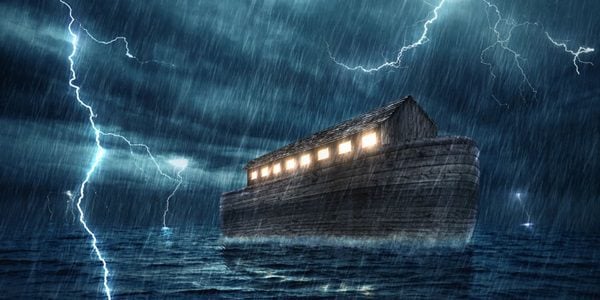 Why would we teach our children the story of Noah and the flood? It’s not a cute story about animals entering an ark. It’s a divine horror story that should be rated R.
Despite that horror, I’ve talked before about how the flood story in Genesis is light years beyond other ancient divine flood stories. In the Babylonian tale, for example, the gods flood the earth, killing everyone except for one family. Why? Because humans were too noisy. They partied too much. The gods were angry and irritable because they couldn’t sleep with all that racket.
The ancient Jews re-told the Babylonian story. For them, God’s problem wasn’t that humans were too noisy. Rather, God’s problem was with human violence. Genesis 6:11 states, “Now the earth was corrupt in God’s sight, and the earth was filled with violence.” The corruption of the earth was associated with human violence. God says to Noah, “I have determined to make an end of all flesh, for the earth is filled with violence because of them; now I am going to destroy them along with the earth.”
This text of divine terrorism is more than genocide, it’s geocide. The God character has no other recourse to solve the problem of violence that to use bigger and more destructive violence. It’s an escalation to the extreme.
René Girard has helped us a great deal concerning the interpretation of these stories. While the biblical flood story is better than similar stories in the ancient world, it still associates violence with God. Girard calls those stories “myths.” These myths of divine violence are told by persecutors to cover up their own violence. That cover up of human violence is sealed by projecting it onto the divine.
Girard calls the Bible “a text in travail.” It’s a text that struggles with this idea of myth. We see that struggle in the Genesis account. It doesn’t cover up the fact that the evil of violence is humanity’s biggest problem. Genesis 6:5 states, “The Lord saw that the wickedness of humankind was great in the earth, and that every inclination of the thoughts of their hearts was only evil continually.” While Genesis doesn’t cover up the problem of human violence, it still projects violence onto God. For Girard, that projection is a mythical element of the story. Girard spent his career showing us that the god of violence belongs solely to world of myth.
The flood story reflects a mythical – that is violent – view of God. In Girard’s reading, the “flood” is a metaphor for human violence. But I’ve always been stuck with a question – If the Bible gradually reveals the absolute nonviolence of God, as Girard claims, then there should be alternative examples of flood stories, right? In other words, if this metaphorical use of a “flood” of human violence is true, then it would be really helpful if the Bible explicitly used the “flood” metaphor in a way that referred to a flood of human violence, as opposed to a mythical flood of divine violence.
I’ve been reading through the Scriptures for my Bible Matters video series. The most recent video was on the prophetic book of Daniel. As you may know, Daniel is an apocalyptic book. The word apocalypse simply means “unveiling” or “revealing.” For the biblical authors, apocalyptic genre reveals the truth about violence. And for Daniel, the truth about human violence is that it’s like an uncontrollable flood.
Daniel 9-12 discusses wars among nations. One nation will come to Jerusalem, kill the anointed king, and “destroy the city and the sanctuary. Its end shall come with a flood, and to the end there shall be war.” But the flood of violence continues. A war breaks out between the “the kind of the north and the king of the south.” The king of the south had sons who “shall wage war and assemble a multitude of great forces, which shall advance like a flood and pass through, and again shall carry the war as far as his [enemy’s] fortress.”
The interesting thing about these chapters is that the violence is overwhelming, like a flood, but God is virtually absent from that violence. Daniel secularizes the flood of violence.
These two biblical stories about floods must be read together. The mythical God of violence in the Noah story doesn’t have the last word. The truth revealed in Daniel is that the flood of violence belongs solely to humans.
As Daniel watches in fear as this flood of violence threatens to drown him, an angelic figure says to him, “Do not fear, greatly beloved, you are safe. Be strong and courageous.” But Daniel’s strength and courage never come in the form of violence. At no point is Daniel or the people of God instructed to participate in the flood of violence. Like Noah, they are to be set apart from the violence of the world. They model an alternative way of being for those caught up in a flood of violence. Like Jesus, they may suffer from violence, but they are to remain courageously nonviolent. The only action Daniel provides is that “The wise among the people shall give understanding to many; for some days, however, they shall fall by the sword and flame, and suffer captivity and plunder.”
The wise among the people, like Jesus, would rather suffer violence than inflict violence upon another. But neither do they simply sit back and watch the flood of violence engulf the world. They remain courageous. Whereas Noah avoided the flood, the wise among the people in Daniel risk drowning by entering into the flood of violence. And in doing so, they model for the world another way. The way of nonviolent love.
Image: Copyright: kevron2001 / 123RF Stock Photo
Stay in the loop! Like Teaching Nonviolent Atonement on Facebook!
Previous Post

October 26, 2016
Wednesday Sermon: Justified Already!
Next Post
October 28, 2016 Fascinated with Sex? Newt Gingrich, Megyn Kelly, and Overcoming Hatred
Browse Our Archives
Select a Category Atonement and Current Events Curriculum Faith and Families Interviews Jesus the Forgiving Victim Lent Montessori politics Reviews The Bible Explained Uncategorized Valentine's Day Wednesday Sermon Who is God?
Select a Month July 2020 November 2019 October 2019 September 2019 August 2019 July 2019 June 2019 May 2019 April 2019 March 2019 February 2019 January 2019 December 2018 November 2018 October 2018 September 2018 August 2018 July 2018 June 2018 May 2018 April 2018 March 2018 February 2018 January 2018 December 2017 November 2017 October 2017 September 2017 August 2017 July 2017 June 2017 May 2017 April 2017 March 2017 February 2017 January 2017 December 2016 November 2016 October 2016 September 2016 August 2016 June 2016 May 2016 April 2016 March 2016 February 2016 January 2016 December 2015 November 2015 October 2015 September 2015 August 2015 July 2015 June 2015 May 2015 April 2015 March 2015 February 2015 January 2015 December 2014 November 2014 October 2014 September 2014 August 2014 July 2014 June 2014 May 2014 April 2014 March 2014 January 2014 December 2013 September 2013 August 2013 July 2013
Follow Us!
TAKE THE
Religious Wisdom Quiz
What is the name of the tree whose fruit Adam and Eve were forbidden to eat?
Select your answer to see how you score.
Tree of Life Olive Tree Tree of the Knowledge of Good and Evil Fig Tree
Related posts from Teaching Nonviolent Atonement


St. Francis Preaches on Violence

God Doesn’t Smite Anyone - Reflections on Sodom,...
Jesus Unmasked: Episode 2 – Pride and the...
TRENDING AT PATHEOS Progressive Christian

What Being a Modern-Day Apostle Means to Me
In my last column, I discussed the ins and outs of modern-day...

Did Ancient China Once Worship the God of...
Across human history, a common thread weaves through the origins of the...

Love Your Neighbor – Including Earth-Kin: Lev. 19,...
God’s command to love your neighbor means acting in an ethical and...

Lead a Church Study of “Jesus and Lao...
Guest writer Jack Thomas (The Irreverent Reverend) reflects on leading his church...

Pastoral Wisdom for Responding to Sermon Pushback
Getting sermon pushback on your social justice sermon? Learn practical, Proverbs-based strategies...

Principles for Understanding the Apostolic Ministry Today
Whenever people discover that my formal ministry title is "apostle," as in...
view all Progressive Christian blogs
Ad-Free & Subscriber Log-In Subscription Support
- About Us
- 2026 Calendar
- Videos
- Podcasts
- Library of World Religions
- Faith In Media Tracker
- Advertise With Us
- Write for Us
- Privacy Policy
- Terms of Service
- Do Not Sell My Data
- Contact Us
- Radiant Digital
- Manage Newsletter Subscriptions
- Unsubscribe From Notifications
- Sitemap
Copyright 2008-2026, Patheos. All rights reserved.
Subscription Support Ad-Free & Subscriber Log-In
Follow Patheos