
BuddhistCatholicContemplativeEvangelicalGeneral ChristianHinduJewishLatter-day SaintMuslimNew VisionsProgressive Christian
Beliefs
- Buddhist
- Catholic
- Contemplative
- Evangelical
- General Christian
- Hindu
- Jewish
- Latter-day Saint
- More Voices
- Muslim
- New Visions
- Pagan
- Progressive Christian
Topics
- Religion News
- Food and Religion
- Sports and Religion
- Religious Art
- Religious Music and Entertainment
- Religious Events
- History and Religion
- Style and Religion
- Politics and Religion
- Women in Religion
- Recreation Outdoors and Religion
- Business Finance and Religion
- Careers Workplace and Religion
- Education and Religion
- Family Parenting and Religion
- Health Fitness and Religion
- Home and Religion
- Relationships and Religion
- Technology and Religion
- Travel and Religion
Columnists
- Buddhist Columnists
- Business Finance and Religion Columnists
- Careers Workplace and Religion Columnists
- Catholic Columnists
- Contemplative Columnists
- Education and Religion Columnists
- Evangelists Columnists
- Family Parenting and Religion Columnists
- General Christian Columnists
- Health Fitness and Religion Columnists
- Hindu Columnists
- History and Religion Columnists
- Home and Religion Columnists
- Jewish Columnists
- More Voices Columnists
- Latter Day Columnists
- Muslim Columnists
- New Visions Columnists
- Nonreligious Columnists
- Pagan Columnists
- Politics and Religion Columnists
- Progressive Columnists
- Recreation Outdoors and Religion Columnists
- Relationships and Religion Columnists
- Religion News Columnists
- Religious Art Columnists
- Religious Events Columnists
- Religious Music and Entertainment Columnists
- Sports and Religion Columnists
- Style and Religion Columnists
- Technology and Religion Columnists
- Travel and Religion Columnists
- Women in Religion Columnists
Resource Library
- 2026 Calendar
- Library of World Religions
- The 100 Most Holy Places on Earth
- Patheos Answers
- Podcasts
- Videos
- Faith Leaders Database
- Anglican Episcopalian
- Bahai
- Baptist
- Buddhism
- Christianity
- Confucianism
- Eastern Orthodoxy
- Hinduism
- Holiness and Pentecostal
- ISKCON
- Islam
- Judaism
- Lutheran
- Methodist
- The Church of Jesus Christ of Latter-day Saints
- New Age
- Paganism
- Presbytarian and Reformed
- Protestantism
- Religion Behind the Scenes
- Roman Catholic
- Scientology
- Shia Islam
- Sikhism
- Sufism
- Sunni Islam
- Taoism
- Zen
- See all religions
Research Tools
 Ad-Free & Subscriber Log-In Subscription Support
Ad-Free & Subscriber Log-In Subscription Support
Follow Patheos 

- Trending:
- Forgiveness
- |
- Marriage
- |
- Consciousness
- |
- Death Penalty
- |
- Election
- |
- Halloween
 Teaching Nonviolent Atonement
- Home
- Progressive Christian
- Wednesday Sermon: Joy Breaks Out!
Wednesday Sermon: Joy Breaks Out!
Last updated on: September 14, 2016 at 1:13 pm by Tom Truby
Wednesday Sermon: Joy Breaks Out! 2016-09-14T13:13:00-05:00 Tom Truby
Patheos Explore the world's faith through different perspectives on religion and spirituality! Patheos has the views of the prevalent religions and spiritualities of the world.
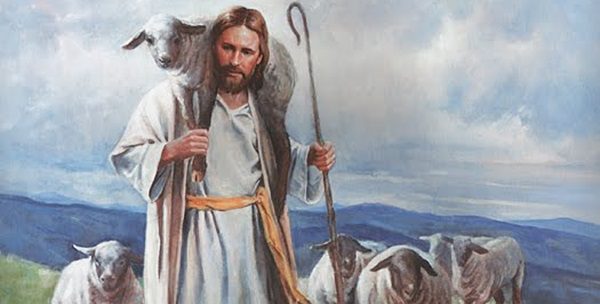 Pastors have a frequent question when they begin to discover mimetic theory. “That’s great. But how does it preach?”
Reverend Tom Truby shows that mimetic theory is a powerful tool that enables pastors to preach the Gospel in a way that is meaningful and refreshing to the modern world. Each Wednesday, Teaching Nonviolent Atonement will highlight his sermons as an example of preaching the Gospel through mimetic theory.
In this sermon, Tom explains that the parable of the lost sheep seeks to transform sacrificial worldviews that maintain unity at the expense of the one. Jesus seek the one lost sheep and brings it back to the fold. The parable inverts sacrificial worldviews by pointing us to the Kingdom of God, where joy breaks out and, as Tom states, “No one is excluded, no one is sacrificed, and no one is lost.”
Year C, Pentecost 17
September 11th, 2016
By Thomas L. Truby
Luke 15:1-10
Joy Breaks Out!
Since we are outdoors today for our service it’s easy to imagine open land and grazing sheep, and wolves and cougars that could be watching them from the hills. Which one of you, having a hundred sheep and losing one of them, does not leave the ninety-nine in open cougar country and go after the one that is lost until he finds it?
I don’t see any hands being raised. No one in their right mind would leave ninety-nine sheep unattended in the wilderness! It would be foolish and very bad business practice. You risk losing your whole herd to rescue one sheep.
Yet this is the image Jesus presents. This is what the story suggests. Already the story has an edge and the edge sharpens when the shepherd puts the full-grown sheep on his shoulders and carries it home, rejoicing. Have any of you carried a full-grown sheep? They weigh nearly as much as a man. Can you imagine your average shepherd rejoicing as he trudges out of the hills carrying this stray sheep? My hunch is his language would have a very different color. This is a very strange shepherd.
Then this strange shepherd does one more thing even stranger. When he gets home he calls together his friends and neighbors and asks them to party with him in celebration at finding his one lost sheep. Shepherds tended to be a rough lot—not the sentimental sort that gets weepy about recovering one sheep. Everyone would know this shepherd does not match any shepherd they have ever known. In modern terms, Jesus has transported them into the world of science fiction where they are not sure of the rules and surprises ambush you. Maybe he can open their minds to seeing in a new way.
Then Jesus concludes his story with, “In the same way, I tell you, there will be more joy in heaven over one sinner who changes both heart and life than over ninety-nine people who have no need to change their hearts and lives.”
Why did Jesus tell this story and what is the deeper meaning? Human culture usually sacrifices one person, or a whole group of vulnerable people, so that the majority, the ninety-nine can blame them and drain off tensions in the larger group. This is how the ninety-nine maintain peace amongst themselves. Unity is maintained through exclusion of the one. This story seems to be the inverse of that. Here the shepherd leaves the ninety-nine in the wilderness to rescues the one who is lost. He brings it back to the fold with great rejoicing. No one is excluded, no one sacrificed, and no one is lost.
Remember the context for this story. “All the tax collectors and sinners were gathering around Jesus to listen to him. The Pharisees and legal experts were grumbling, saying, ‘This man welcomes sinners and eats with them.’” The tax collectors and sinners were excluded from Jewish culture because they were considered bad people. By eating with those the culture excluded, Jesus showed the excluders another way to build peace. Instead of excluding the ones gone astray, they could welcome them to their table, build community with them and share in the joy of their return. No one need be lost. All are gathered together. All God’s children are welcome at the table. It’s the opposite of sacrificing the one so as to unite the many.
Jesus deliberately uses the word “joy” to describe the return of the one who had been lost. Joy is a relational term and suggests delight. Joy is a three year old who lights up when she see mommy or daddy enter the room. It’s the opposite of shame and a beautiful thing. The tax collectors and sinners Jesus speaks to aren’t used to being looked at with joyful eyes—eyes that delight in seeing them. No, they are used to being seen with dead eyes full of disdain.
I keep picturing drug addicts and how we look at them. We push them away from the table and tell them when they are clean we will welcome them back. We think separating them from us motivates them to quit their addiction. I wonder if Jesus looks at them differently. Maybe he would keep them at the table, sharing with them and loving them as they struggle with their demons.
Could this different way of seeing them be what attracts the tax collectors and sinners? They sense that he likes them in a deep and joyful way even though he knows they are the cultures lost sheep. He doesn’t look at them with the same eyes with which they look at themselves. They see in his face the delight the shepherd displays upon finding the one sheep he had risked all to find. Could this be why they come close and listen to him?
How can it be that one sinner who repents is the occasion for all this joy? Repentance is always about changing our minds. It’s where we rethink things and come to new conclusions. It can be an “ah-ha” where the pieces suddenly come together or it can be a gradual process where our world slowly reconfigured. The latter has been my experience. And it’s still happening. On Friday morning Laura, my wife, and I had a two hour breakfast conversation at a restaurant that had us rummaging through our ever-deepening faith in this strange shepherd who carries us. It was a wonderful conversation and deeply nurturing to both of us.
Why do the ninety-nine righteous persons need no repentance? Is it because only those who are not good in their own eyes can allow themselves to be forgiven? Maybe the ninety-nine righteous people like their world the way it is. They are quite happy grumbling to each other and building their pseudo-unity around those they see as less worthy than they. It’s not a very joyful world but they know the rules; they define them, enforce them and are there beneficiaries.
The ninety-nine think they have the shepherd in their corner because they didn’t go astray like that one did. But what if the shepherd leaves them in the wilderness and goes after the one stray? And then he asks them to party with him when he finds that one. Somehow this turns the world upside down.
Let’s move on to Jesus’ second story. When you lose a coin, do you light a lamp, sweep the house and search carefully until you find it? Maybe, maybe not! It depends on the coins value and how badly you want it. When you find it, do you call your friends and neighbors and ask them to rejoice with you. Probably not! This woman in her joy at finding the coin is a little over the top. But what if the coin represents a new way of understanding God, and therefore understanding ourselves and the whole world? Maybe it’s a new way of making sense, the missing piece that provides the key to the whole puzzle?
This is how I feel about the non-violent, non-retaliatory, non-sacrificial understanding of God that I have been sharing with you. For me it is the coin that got lost for 1700 years when Christianity got tangled with empire but now is being found! There is a sense in which Jesus himself is the missing sheep and we must risk leaving the ninety-nine to find him. Having found him, or maybe he has found us, we discover we want to call those closest to us to come and celebrate with us. Our friends and neighbors look at us like we’re crazy. They don’t understand the importance of what we are discovering. With the woman in the story I find myself exclaiming, “Rejoice with me, for I have found the coin that has been lost.”
Yes, this is the new thing into which we are being inducted week by week. We are in the process of finding it. With each step we take toward deeper faith, joy breaks out in the presence of God’s angels! Amen.
Image: Flickr, Waiting for the Word; The Good Shepherd 31 Del Parson, Creative Commons License, some changes made.
Stay in the loop! Like Teaching Nonviolent Atonement on Facebook!
Previous Post

September 13, 2016
Hillary Clinton: How to Be “Deplorable”
Next Post
September 15, 2016 Daniel, God, and Apocalyptic Nonviolence: Bible Matters
Browse Our Archives
Select a Category Atonement and Current Events Curriculum Faith and Families Interviews Jesus the Forgiving Victim Lent Montessori politics Reviews The Bible Explained Uncategorized Valentine's Day Wednesday Sermon Who is God?
Select a Month July 2020 November 2019 October 2019 September 2019 August 2019 July 2019 June 2019 May 2019 April 2019 March 2019 February 2019 January 2019 December 2018 November 2018 October 2018 September 2018 August 2018 July 2018 June 2018 May 2018 April 2018 March 2018 February 2018 January 2018 December 2017 November 2017 October 2017 September 2017 August 2017 July 2017 June 2017 May 2017 April 2017 March 2017 February 2017 January 2017 December 2016 November 2016 October 2016 September 2016 August 2016 June 2016 May 2016 April 2016 March 2016 February 2016 January 2016 December 2015 November 2015 October 2015 September 2015 August 2015 July 2015 June 2015 May 2015 April 2015 March 2015 February 2015 January 2015 December 2014 November 2014 October 2014 September 2014 August 2014 July 2014 June 2014 May 2014 April 2014 March 2014 January 2014 December 2013 September 2013 August 2013 July 2013
Follow Us!
TAKE THE
Religious Wisdom Quiz
How many chapters are in the book of Romans?
Select your answer to see how you score.
12 18 16 21
Related posts from Teaching Nonviolent Atonement

Forgiveness in the Time of COVID-19 by Julia...

Reflections on Indigenous Wisdom For Healing A Wounded...

How Forgiveness Can Transform Our Violence and Build...

Jesus Unmasked: God's Economy and How to Cheat...
TRENDING AT PATHEOS Progressive Christian

What Being a Modern-Day Apostle Means to Me
In my last column, I discussed the ins and outs of modern-day...

Did Ancient China Once Worship the God of...
Across human history, a common thread weaves through the origins of the...

Love Your Neighbor – Including Earth-Kin: Lev. 19,...
God’s command to love your neighbor means acting in an ethical and...

Lead a Church Study of “Jesus and Lao...
Guest writer Jack Thomas (The Irreverent Reverend) reflects on leading his church...

Pastoral Wisdom for Responding to Sermon Pushback
Getting sermon pushback on your social justice sermon? Learn practical, Proverbs-based strategies...

Principles for Understanding the Apostolic Ministry Today
Whenever people discover that my formal ministry title is "apostle," as in...
view all Progressive Christian blogs
Ad-Free & Subscriber Log-In Subscription Support
- About Us
- 2026 Calendar
- Videos
- Podcasts
- Library of World Religions
- Faith In Media Tracker
- Advertise With Us
- Write for Us
- Privacy Policy
- Terms of Service
- Do Not Sell My Data
- Contact Us
- Radiant Digital
- Manage Newsletter Subscriptions
- Unsubscribe From Notifications
- Sitemap
Copyright 2008-2026, Patheos. All rights reserved.
Subscription Support Ad-Free & Subscriber Log-In
Follow Patheos