
BuddhistCatholicContemplativeEvangelicalGeneral ChristianHinduJewishLatter-day SaintMuslimNew VisionsProgressive Christian
Beliefs
- Buddhist
- Catholic
- Contemplative
- Evangelical
- General Christian
- Hindu
- Jewish
- Latter-day Saint
- More Voices
- Muslim
- New Visions
- Pagan
- Progressive Christian
Topics
- Religion News
- Food and Religion
- Sports and Religion
- Religious Art
- Religious Music and Entertainment
- Religious Events
- History and Religion
- Style and Religion
- Politics and Religion
- Women in Religion
- Recreation Outdoors and Religion
- Business Finance and Religion
- Careers Workplace and Religion
- Education and Religion
- Family Parenting and Religion
- Health Fitness and Religion
- Home and Religion
- Relationships and Religion
- Technology and Religion
- Travel and Religion
Columnists
- Buddhist Columnists
- Business Finance and Religion Columnists
- Careers Workplace and Religion Columnists
- Catholic Columnists
- Contemplative Columnists
- Education and Religion Columnists
- Evangelists Columnists
- Family Parenting and Religion Columnists
- General Christian Columnists
- Health Fitness and Religion Columnists
- Hindu Columnists
- History and Religion Columnists
- Home and Religion Columnists
- Jewish Columnists
- More Voices Columnists
- Latter Day Columnists
- Muslim Columnists
- New Visions Columnists
- Nonreligious Columnists
- Pagan Columnists
- Politics and Religion Columnists
- Progressive Columnists
- Recreation Outdoors and Religion Columnists
- Relationships and Religion Columnists
- Religion News Columnists
- Religious Art Columnists
- Religious Events Columnists
- Religious Music and Entertainment Columnists
- Sports and Religion Columnists
- Style and Religion Columnists
- Technology and Religion Columnists
- Travel and Religion Columnists
- Women in Religion Columnists
Resource Library
- 2026 Calendar
- Library of World Religions
- The 100 Most Holy Places on Earth
- Patheos Answers
- Podcasts
- Videos
- Faith Leaders Database
- Anglican Episcopalian
- Bahai
- Baptist
- Buddhism
- Christianity
- Confucianism
- Eastern Orthodoxy
- Hinduism
- Holiness and Pentecostal
- ISKCON
- Islam
- Judaism
- Lutheran
- Methodist
- The Church of Jesus Christ of Latter-day Saints
- New Age
- Paganism
- Presbytarian and Reformed
- Protestantism
- Religion Behind the Scenes
- Roman Catholic
- Scientology
- Shia Islam
- Sikhism
- Sufism
- Sunni Islam
- Taoism
- Zen
- See all religions
Research Tools
 Ad-Free & Subscriber Log-In Subscription Support
Ad-Free & Subscriber Log-In Subscription Support
Follow Patheos 

- Trending:
- Forgiveness
- |
- Marriage
- |
- Consciousness
- |
- Death Penalty
- |
- Election
- |
- Halloween
 Teaching Nonviolent Atonement
- Home
- Progressive Christian
- Saving Face: Blood, Carnage, and Creating Peace After WWII
Saving Face: Blood, Carnage, and Creating Peace After WWII
Last updated on: September 2, 2016 at 2:32 pm by Adam Ericksen
Saving Face: Blood, Carnage, and Creating Peace After WWII 2016-09-02T14:32:09-05:00 Adam Ericksen
Patheos Explore the world's faith through different perspectives on religion and spirituality! Patheos has the views of the prevalent religions and spiritualities of the world.
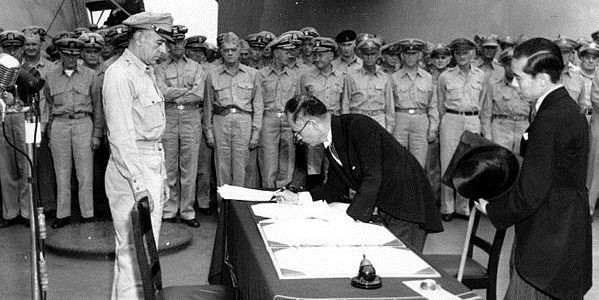 “Let us pray that peace now be restored to the world and that God will preserve it always.”
With those words spoken 71 years ago today, on September 2, 1945, Douglas MacArthur, Supreme Commander for the Allied Powers, ended World War II.
The deadliest war in human history ended with a prayer that God would preserve peace throughout the world.
General MacArthur offered that prayer during a formal signing ceremony on board the USS Missouri. Leading members of Allied powers were there, as well as official delegates from Japan. The Japanese were there to sign the official “Instrument of Surrender.”
One month earlier, the United States dropped atomic bombs on Hiroshima and Nagasaki, “killing at least 129,000 people” and causing nuclear devastation to the Japanese people for future generations.
I appreciate MacArthur’s prayers for peace. I believe in God. But the truth is that peace is not God’s responsibility. It is ours.
General MacArthur began his speech saying, “It is my earnest hope, and indeed the hope of all mankind, that from this solemn occasion a better world shall emerge out of the blood and carnage of the past.”
Unfortunately, peace has been elusive for humanity. We continue to hope that peace will emerge from war, from “the blood and carnage of the past.” Walter Wink calls this idea the “myth of redemptive violence.” Violence can never bring peace. It brings a cycle of violence. What matters is that someone stop the cycle of violence.
People often ask, “But what about World War II?” It seems that General MacArthur was right. After WWII, Germany and Japan turned from being bitter enemies to becoming close friends with the Allied powers. Did violence and war bring about their conversion? Can violence be redemptive?
Lessons from WWI
It was not war, blood, and carnage that fostered peace during the aftermath of WWII. It was what happened after the WWII that led to peace. But first, it’s important to learn from the lessons of WWI.
World War I ended with multiple peace treaties, but the most important was the Treaty of Versailles. The buildup to WWI was a long and complicated series of violent events between nations. History shows that no country was completely innocent, thus, no country was completely guilty. Each side of that war claimed that the other side started the hostilities. And each side was correct.
The Treaty of Versailles created “peace” between the Allied powers and Germany. The treaty forced Germany to “accept the responsibility of Germany and her allies for causing all the loss and damage” of the war. Known as the “War Guilt Clause,” it demanded that Germany disarm, concede substantial territory, and pay reparations to countries damaged by the war.
Germans largely felt blamed and humiliated by the treaty. Anger and resentment grew among the population. English economist John Maynard Keynes, the world’s foremost economist during this period, opposed the harsh financial penalty to the German economy and warned about the treaty’s effect upon the nation. Moreover, Keynes boldly stated that the Allies weren’t motivated by peace, “The future life of Europe was not their concern,” he wrote in chapter IV of his document “The Economic Consequences of the Peace.” Rather, they were motivated in part by “revenge, and to the shifting by the victors of their unbearable financial burdens on to the shoulders of the defeated.”
Germans felt punished and shamed by the treaty. It planted the seeds of hostility and resentment. It brought a social crisis, which helped create the conditions for the rise of Adolf Hitler.
Saving Face: Lessons Learned
Let’s go back to September 2, 1945. Onboard the USS Missouri, the Japanese dignitaries didn’t know exactly what to expect. Were the Americans going to blame them the way they blamed Germany after WWI?
But General MacArthur learned from the lessons of history. A better world between the United States and Japan didn’t emerge from a past of bloodshed and carnage. It emerged from allowing the defeated Japanese to “save face.” Instead of shaming the Japanese people, MacArthur stated, “I announce it my firm purpose to proceed in the discharge of my responsibilities with justice and tolerance.”
According to Tom Brokaw, the phrase “justice and tolerance” brought a spirit of peace to the relationship between the Japan and the Allied powers. One Japanese dignitary responded to those words by saying they assuaged Japanese anxiety and transformed the deck of the Missouri into an “altar of peace.”
The “blood and carnage” of war didn’t bring peace. Economic revenge didn’t bring peace. Rather, justice and tolerance are the sisters of peace. Economic justice following WWII didn’t primarily involve punishing the Japanese economy, thus shaming the Japanese people. Rather, it involved helping the Japanese economy. Instead of crippling the Japanese economy by enforcing reparations, the US invested $2.2 billion into the Japanese reconstruction efforts. And Japan, largely due to Japanese economic policies and its own people, grew to become the world’s second largest economy.
Lessons for Today
The events before and after WWI and WWII are long and complicated, with mixed motivations on every side. Unfortunately, the blood and carnage of WWII led to the nuclear standoff of the Cold War. Winning the cold war didn’t bring peace, either. Current events show that we humans have a long way to go if we are to learn the ways of peace.
But the events on the USS Missouri have important lessons for us that we need to remember. As we fight the “War on Terror,” it’s important to realize that the “altar of peace” cannot be built by bombs, drones, and the violence of war. Nor can it be built by shared hatred against a common enemy or a future of assigning shame, blame, and guilt.
Peace can only be built by allowing one another to save face. We need to have the humility to admit that our face needs saving, too. For it is in the face of our fellow human beings, including those we call our enemies, where we find our shared humanity and the possibility of a more peaceful future.
Image: Wikimedia, Public Domain, Japanese Foreign Minister Mamoru Shigemitsu signing the Instrument of Surrender on behalf of the Japanese Government, formally ending World War II. Some changes made.

Previous Post

September 1, 2016
Children, Teachers, and the Biggest Parenting Mistake I’ve Ever Made
Next Post
September 6, 2016 Bound in Love to All Creation: Lessons from Standing Rock
Browse Our Archives
Select a Category Atonement and Current Events Curriculum Faith and Families Interviews Jesus the Forgiving Victim Lent Montessori politics Reviews The Bible Explained Uncategorized Valentine's Day Wednesday Sermon Who is God?
Select a Month July 2020 November 2019 October 2019 September 2019 August 2019 July 2019 June 2019 May 2019 April 2019 March 2019 February 2019 January 2019 December 2018 November 2018 October 2018 September 2018 August 2018 July 2018 June 2018 May 2018 April 2018 March 2018 February 2018 January 2018 December 2017 November 2017 October 2017 September 2017 August 2017 July 2017 June 2017 May 2017 April 2017 March 2017 February 2017 January 2017 December 2016 November 2016 October 2016 September 2016 August 2016 June 2016 May 2016 April 2016 March 2016 February 2016 January 2016 December 2015 November 2015 October 2015 September 2015 August 2015 July 2015 June 2015 May 2015 April 2015 March 2015 February 2015 January 2015 December 2014 November 2014 October 2014 September 2014 August 2014 July 2014 June 2014 May 2014 April 2014 March 2014 January 2014 December 2013 September 2013 August 2013 July 2013
Follow Us!
TAKE THE
Religious Wisdom Quiz
How many children did Job lose in the disasters at the beginning of the book?
Select your answer to see how you score.
Twelve Five Ten Seven
Related posts from Teaching Nonviolent Atonement

Jesus Unmasked: Jesus Brings the Fire!

"I Do Not Give As The World Gives"...

Doubt, Faith, And The God Who Holds Us...

Ancient Resurrection Stories: How Jesus Is Transforming the...
TRENDING AT PATHEOS Progressive Christian

What Being a Modern-Day Apostle Means to Me
In my last column, I discussed the ins and outs of modern-day...

Did Ancient China Once Worship the God of...
Across human history, a common thread weaves through the origins of the...

Love Your Neighbor – Including Earth-Kin: Lev. 19,...
God’s command to love your neighbor means acting in an ethical and...

Lead a Church Study of “Jesus and Lao...
Guest writer Jack Thomas (The Irreverent Reverend) reflects on leading his church...

Pastoral Wisdom for Responding to Sermon Pushback
Getting sermon pushback on your social justice sermon? Learn practical, Proverbs-based strategies...

Principles for Understanding the Apostolic Ministry Today
Whenever people discover that my formal ministry title is "apostle," as in...
view all Progressive Christian blogs
Ad-Free & Subscriber Log-In Subscription Support
- About Us
- 2026 Calendar
- Videos
- Podcasts
- Library of World Religions
- Faith In Media Tracker
- Advertise With Us
- Write for Us
- Privacy Policy
- Terms of Service
- Do Not Sell My Data
- Contact Us
- Radiant Digital
- Manage Newsletter Subscriptions
- Unsubscribe From Notifications
- Sitemap
Copyright 2008-2026, Patheos. All rights reserved.
Subscription Support Ad-Free & Subscriber Log-In
Follow Patheos