
BuddhistCatholicContemplativeEvangelicalGeneral ChristianHinduJewishLatter-day SaintMuslimNew VisionsProgressive Christian
Beliefs
- Buddhist
- Catholic
- Contemplative
- Evangelical
- General Christian
- Hindu
- Jewish
- Latter-day Saint
- More Voices
- Muslim
- New Visions
- Pagan
- Progressive Christian
Topics
- Religion News
- Food and Religion
- Sports and Religion
- Religious Art
- Religious Music and Entertainment
- Religious Events
- History and Religion
- Style and Religion
- Politics and Religion
- Women in Religion
- Recreation Outdoors and Religion
- Business Finance and Religion
- Careers Workplace and Religion
- Education and Religion
- Family Parenting and Religion
- Health Fitness and Religion
- Home and Religion
- Relationships and Religion
- Technology and Religion
- Travel and Religion
Columnists
- Buddhist Columnists
- Business Finance and Religion Columnists
- Careers Workplace and Religion Columnists
- Catholic Columnists
- Contemplative Columnists
- Education and Religion Columnists
- Evangelists Columnists
- Family Parenting and Religion Columnists
- General Christian Columnists
- Health Fitness and Religion Columnists
- Hindu Columnists
- History and Religion Columnists
- Home and Religion Columnists
- Jewish Columnists
- More Voices Columnists
- Latter Day Columnists
- Muslim Columnists
- New Visions Columnists
- Nonreligious Columnists
- Pagan Columnists
- Politics and Religion Columnists
- Progressive Columnists
- Recreation Outdoors and Religion Columnists
- Relationships and Religion Columnists
- Religion News Columnists
- Religious Art Columnists
- Religious Events Columnists
- Religious Music and Entertainment Columnists
- Sports and Religion Columnists
- Style and Religion Columnists
- Technology and Religion Columnists
- Travel and Religion Columnists
- Women in Religion Columnists
Resource Library
- 2026 Calendar
- Library of World Religions
- The 100 Most Holy Places on Earth
- Patheos Answers
- Podcasts
- Videos
- Faith Leaders Database
- Anglican Episcopalian
- Bahai
- Baptist
- Buddhism
- Christianity
- Confucianism
- Eastern Orthodoxy
- Hinduism
- Holiness and Pentecostal
- ISKCON
- Islam
- Judaism
- Lutheran
- Methodist
- The Church of Jesus Christ of Latter-day Saints
- New Age
- Paganism
- Presbytarian and Reformed
- Protestantism
- Religion Behind the Scenes
- Roman Catholic
- Scientology
- Shia Islam
- Sikhism
- Sufism
- Sunni Islam
- Taoism
- Zen
- See all religions
Research Tools
 Ad-Free & Subscriber Log-In Subscription Support
Ad-Free & Subscriber Log-In Subscription Support
Follow Patheos 

- Trending:
- Forgiveness
- |
- Marriage
- |
- Consciousness
- |
- Death Penalty
- |
- Election
- |
- Halloween
 Teaching Nonviolent Atonement
- Home
- Progressive Christian
- Muhammad Ali: The G.O.A.T., White America, and Islam
Muhammad Ali: The G.O.A.T., White America, and Islam
Last updated on: June 7, 2016 at 4:48 pm by Adam Ericksen
Muhammad Ali: The G.O.A.T., White America, and Islam 2016-06-07T16:48:53-05:00 Adam Ericksen
Patheos Explore the world's faith through different perspectives on religion and spirituality! Patheos has the views of the prevalent religions and spiritualities of the world.
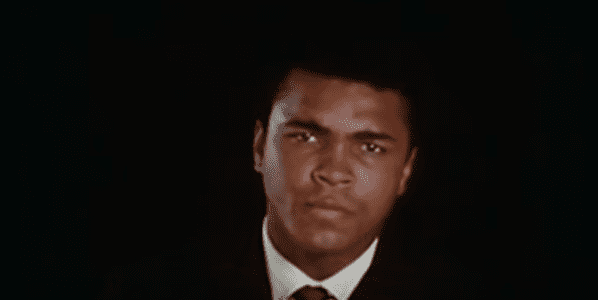 Muhammad Ali was a giant. A legend whose persona was larger than life. He is known for being the G.O.A.T.
If you’re a boxing fan (which I’m not), you know that G.O.A.T. refers to Ali being the “Greatest of All Time.” Part of Ali’s greatness was his unabashed self-confidence. He frequently boasted, “I am the greatest!” His verbal punches were as powerful, and as entertaining, as the punches he threw in the ring.
But if you’re a mimetic theory fan (which I am), G.O.A.T. doesn’t refer to the “Greatest of All Time.” Rather, it refers to the tendency all humans have to scapegoat. Mimetic theory is a social theory that claims humans have a natural tendency to blame someone else for the problems that threaten our community. Inner conflicts and rivalries are channeled onto someone else – our scapegoat – who becomes a lightning rod for our inner hostilities. The scapegoating process provides the community with a sense of harmony as it unites against a common enemy.
Muhammad Ali was definitely America’s G.O.A.T.
Ali was at his boxing prime during the 1960s, when conflicts permeated the United States. Ali confronted two of those major conflicts – racism and the Vietnam War. After converting to Islam, Ali was conscripted into the Vietnam War. Ali refused to participate, claiming to be a conscientious objector. He stated,
War is against the teachings of the Qur’an. I’m not trying to dodge the draft. We are not supposed to take part in no wars unless declared by Allah or the Messenger. We don’t take part in Christian wars or wars of any unbelievers … Man I ain’t got no quarrel with them Viet Cong … Why should they ask me to put on a uniform and go ten thousand miles from home and drop bombs and bullets on brown people in Vietnam while so-called Negro people in Louisville are treated like dogs and denied basic human rights?
As a boxer and a social commentator, Ali may indeed have been the G.O.A.T. He was one of the greatest and most influential voices of all time. And he made many in white America very uncomfortable.
Because, you see, scapegoats are supposed to keep quiet. The status quo doesn’t like it when scapegoats talk. That’s because the status quo likes to turn a blind eye to our goats. But Muhammad Ali refused to be silenced. Instead, as a member of a group marginalized by America’s systemic sin of racism, Ali’s powerful voice spoke up for those on the margins. Ali suffered the consequences. He was threatened with prison, ridiculed by many, stripped of his heavyweight title, and banned from boxing during his prime.
But he spoke up for scapegoats because of his faith in Islam. I know many nonviolent Muslims who would challenge his statement that Allah or the Messenger would declare war. But questions or religious pacifism and nonviolence aside, Muhammad Ali made the status quo of white America uncomfortable in the same way that the Prophet Muhammad made the status quo of his culture uncomfortable.
The Prophet Muhammad lived in a culture that marginalized the poor, widows, and orphans. The divide between rich and poor was even bigger in Muhammad’s time than it is in ours. Muhammad’s own tribe, the Quraysh, believed that “Fate” was in control. The economic elite felt no incentive to help the poor. They feared helping the poor would be an economic hardship and that they would be going against Fate.
The Prophet Muhammad knew that “Fate” was a superstition that simply reinforced the status quo. He insisted that Allah cares about all people, but especially those on the margins of society. Muhammad began to speak up for the poor and the dispossessed. He made the radical claim for his time that the poor deserved to be cared for and respected, simply because they were human.
And the Prophet Muhammad suffered the consequences for his actions. In speaking for the scapegoats, he became a scapegoat as his own tribe united against him. Over many years, Muhammad hid from the Quraysh, who sought to kill him. Martin Lings writes in his biography of Muhammad that the Quraysh tribe agreed that, “Every clan was to nominate a strong, reliable and well connected young man, and at a given moment all these chosen men together should fall upon Muhammad, each striking him a mortal blow, so that his blood would be on all the clans.” That’s important because if Muhammad’s blood was on all the clans, no individual clan would be held responsible for his death. That’s the paradox of the scapegoating mechanism – when everyone is guilty, no one is guilty.
Although threatened, Muhammad continued to confront the Quraysh with their own scapegoating practices. Muhammad spoke the truth about victims to the powerful elite. He confronted the status quo with their own political and economic violence, which made the powerful very uncomfortable.
Muhammad Ali’s greatness was similar to the greatness of the Prophet Muhammad. They risked their lives to speak the truth about their culture’s scapegoats. In doing so, they made many uncomfortable. And that’s a good thing. We should be uncomfortable with racism and economic injustice. In making the status quo feel uncomfortable, they pointed all of us toward a better world.
Image: Screenshot from YouTube.
Previous Post

June 3, 2016
A Boy, a 450 Pound Gorilla, and a God Who Is Not In Control
Next Post
June 8, 2016 Wednesday Sermon: Galatians, Indians and Empire
Browse Our Archives
Select a Category Atonement and Current Events Curriculum Faith and Families Interviews Jesus the Forgiving Victim Lent Montessori politics Reviews The Bible Explained Uncategorized Valentine's Day Wednesday Sermon Who is God?
Select a Month July 2020 November 2019 October 2019 September 2019 August 2019 July 2019 June 2019 May 2019 April 2019 March 2019 February 2019 January 2019 December 2018 November 2018 October 2018 September 2018 August 2018 July 2018 June 2018 May 2018 April 2018 March 2018 February 2018 January 2018 December 2017 November 2017 October 2017 September 2017 August 2017 July 2017 June 2017 May 2017 April 2017 March 2017 February 2017 January 2017 December 2016 November 2016 October 2016 September 2016 August 2016 June 2016 May 2016 April 2016 March 2016 February 2016 January 2016 December 2015 November 2015 October 2015 September 2015 August 2015 July 2015 June 2015 May 2015 April 2015 March 2015 February 2015 January 2015 December 2014 November 2014 October 2014 September 2014 August 2014 July 2014 June 2014 May 2014 April 2014 March 2014 January 2014 December 2013 September 2013 August 2013 July 2013
Follow Us!
TAKE THE
Religious Wisdom Quiz
In the Parable of the Wise and Foolish Virgins, what did the wise bring?
Select your answer to see how you score.
Bread New clothes Extra oil Wine
Related posts from Teaching Nonviolent Atonement

Perfect Love Casts Out Fear, But Can It...

God’s Holy Name, False Prophets, and the Politics...

Building God's Kingdom or Destroying Ourselves? Sodom, The...
Racism: Survivors and Perpetrators Find Healing in Africa
TRENDING AT PATHEOS Progressive Christian

Why Christians Have a Sacred Duty to Vote:...
The Bible offers strong support for the sacred duty to vote. Here...

What Being a Modern-Day Apostle Means to Me
In my last column, I discussed the ins and outs of modern-day...

Did Ancient China Once Worship the God of...
Across human history, a common thread weaves through the origins of the...

Love Your Neighbor – Including Earth-Kin: Lev. 19,...
God’s command to love your neighbor means acting in an ethical and...

Lead a Church Study of “Jesus and Lao...
Guest writer Jack Thomas (The Irreverent Reverend) reflects on leading his church...

Principles for Understanding the Apostolic Ministry Today
Whenever people discover that my formal ministry title is "apostle," as in...
view all Progressive Christian blogs
Ad-Free & Subscriber Log-In Subscription Support
- About Us
- 2026 Calendar
- Videos
- Podcasts
- Library of World Religions
- Faith In Media Tracker
- Advertise With Us
- Write for Us
- Privacy Policy
- Terms of Service
- Do Not Sell My Data
- Contact Us
- Radiant Digital
- Manage Newsletter Subscriptions
- Unsubscribe From Notifications
- Sitemap
Copyright 2008-2026, Patheos. All rights reserved.
Subscription Support Ad-Free & Subscriber Log-In
Follow Patheos