
BuddhistCatholicContemplativeEvangelicalGeneral ChristianHinduJewishLatter-day SaintMuslimNew VisionsProgressive Christian
Beliefs
- Buddhist
- Catholic
- Contemplative
- Evangelical
- General Christian
- Hindu
- Jewish
- Latter-day Saint
- More Voices
- Muslim
- New Visions
- Pagan
- Progressive Christian
Topics
- Religion News
- Food and Religion
- Sports and Religion
- Religious Art
- Religious Music and Entertainment
- Religious Events
- History and Religion
- Style and Religion
- Politics and Religion
- Women in Religion
- Recreation Outdoors and Religion
- Business Finance and Religion
- Careers Workplace and Religion
- Education and Religion
- Family Parenting and Religion
- Health Fitness and Religion
- Home and Religion
- Relationships and Religion
- Technology and Religion
- Travel and Religion
Columnists
- Buddhist Columnists
- Business Finance and Religion Columnists
- Careers Workplace and Religion Columnists
- Catholic Columnists
- Contemplative Columnists
- Education and Religion Columnists
- Evangelists Columnists
- Family Parenting and Religion Columnists
- General Christian Columnists
- Health Fitness and Religion Columnists
- Hindu Columnists
- History and Religion Columnists
- Home and Religion Columnists
- Jewish Columnists
- More Voices Columnists
- Latter Day Columnists
- Muslim Columnists
- New Visions Columnists
- Nonreligious Columnists
- Pagan Columnists
- Politics and Religion Columnists
- Progressive Columnists
- Recreation Outdoors and Religion Columnists
- Relationships and Religion Columnists
- Religion News Columnists
- Religious Art Columnists
- Religious Events Columnists
- Religious Music and Entertainment Columnists
- Sports and Religion Columnists
- Style and Religion Columnists
- Technology and Religion Columnists
- Travel and Religion Columnists
- Women in Religion Columnists
Resource Library
- 2026 Calendar
- Library of World Religions
- The 100 Most Holy Places on Earth
- Patheos Answers
- Podcasts
- Videos
- Faith Leaders Database
- Anglican Episcopalian
- Bahai
- Baptist
- Buddhism
- Christianity
- Confucianism
- Eastern Orthodoxy
- Hinduism
- Holiness and Pentecostal
- ISKCON
- Islam
- Judaism
- Lutheran
- Methodist
- The Church of Jesus Christ of Latter-day Saints
- New Age
- Paganism
- Presbytarian and Reformed
- Protestantism
- Religion Behind the Scenes
- Roman Catholic
- Scientology
- Shia Islam
- Sikhism
- Sufism
- Sunni Islam
- Taoism
- Zen
- See all religions
Research Tools
 Ad-Free & Subscriber Log-In Subscription Support
Ad-Free & Subscriber Log-In Subscription Support
Follow Patheos 

- Trending:
- Forgiveness
- |
- Marriage
- |
- Consciousness
- |
- Death Penalty
- |
- Election
- |
- Halloween
 Teaching Nonviolent Atonement
- Home
- Progressive Christian
- Why Atheists Are Right: On God’s Non-existence, Terrorists, and Biblical Nonviolence
Why Atheists Are Right: On God’s Non-existence, Terrorists, and Biblical Nonviolence
Last updated on: March 10, 2016 at 2:10 pm by Adam Ericksen
Why Atheists Are Right: On God’s Non-existence, Terrorists, and Biblical Nonviolence 2016-03-10T14:10:27-05:00 Adam Ericksen
Patheos Explore the world's faith through different perspectives on religion and spirituality! Patheos has the views of the prevalent religions and spiritualities of the world.
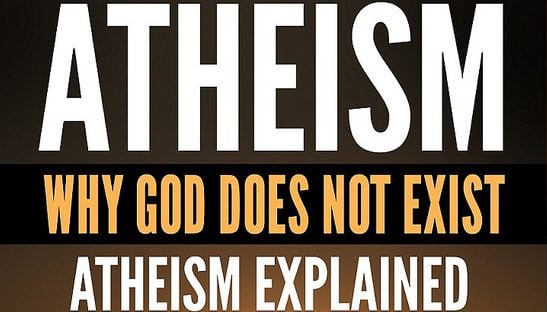
Image: Flickr, Atheism: Why God Does Not Exist: Atheism Explained, Shalu Sharma, Creative Commons License, some changes made
Atheists will sometimes challenge us to prove that God exists. Sometimes they assert that the more we discover from science, the less room there is for God. So, with more science we will discover that fact that God doesn’t exist.
The problem is that we aren’t using the word “God” in the same way.
These atheists are right. God doesn’t “exist” as a being within the universe. If we believed that God is a physical entity, then we’d be in trouble. But God isn’t like Zeus. God doesn’t hang out on Mt. Olympus with other gods.
Science is the study of things that exist within the universe. You see, to claim that science will eventually leave no room for God is to think that God takes up space – that God is a being within the universe. But that’s a category mistake.
Part of the genius of the Judeo-Christian tradition is that the ancient Jews didn’t believe that God was a being within the universe. God is not a category of beings within the universe. In fact, whenever someone claimed that God was a being within the universe, the ancient Jews called it idolatry. Commenting on the prophet Isaiah, theologian James Alison states that God is more like nothing in the universe than like anything in the universe. (See James’ book, Jesus the Forgiving Victim.)
Why does this matter? For me, it’s not about defeating atheists in an argument about God. That’s a rivalry that gets us nowhere. And frankly, I don’t think God is interested in our rivalries. It’s more about the fact that God is not a thing in creation that we can grasp and use as a weapon against others. That is also idolatry.
Even our ideas about God are not things to be grasped as weapons to defeat our opponents. Using theology as a weapon to define who is included and who is excluded is idolatry.
For example, there’s a great story in the Old Testament about the prophet Elisha. A man named Naaman had leprosy and went to Elisha to be healed. But Naaman had a big problem – he was the commander of the army of Aram, one of Israel’s greatest enemies. Make no mistake, Naaman was a terrorist. Not only did he endorse raiders from Aram looting and threatening Israelites, he also kidnapped and enslaved children from Israel.
But nobody in Aram could heal Naaman, so he went to Elisha.
Elisha didn’t use God as a weapon to defeat his enemy who terrorized his people. God didn’t respond to Naaman’s violence with more violence. Rather, God worked through Elisha with nonviolent love to heal Naaman. After he was healed, Naaman the terrorist was converted to believing in the God of Israel. Naaman’s conversion didn’t come from Elisha threatening divine fire and brimstone upon him. There’s no theological manipulation in the story. No “Convert or you will die!” moment. Nor did his conversion come from Elisha arguing the finer points of ancient Israelite theology. There was none of that. The fact is that Naaman was converted by an act of divine love.
About 800 years later, Jesus placed himself within this nonviolent story of Elisha by teaching his followers to, “Love your enemies and pray for those who persecute you.”
It’s important that atheists and theists be clear about what we mean by “God.” For Christians, God is not a being within creation. No matter how hard you look in the universe, you will not find a physical being we call God. When we look at the story of Elisha and Naaman, when we look at the whole life, death, and resurrection of Jesus, we discover that God is the Spirit of nonviolent love that embraces all things, all people, including our enemies, yes, even including terrorists.
Next Post

March 11, 2016 Islam Does Not Hate Us. Muslims Want To Be Our Friends.
Browse Our Archives
Select a Category Atonement and Current Events Curriculum Faith and Families Interviews Jesus the Forgiving Victim Lent Montessori politics Reviews The Bible Explained Uncategorized Valentine's Day Wednesday Sermon Who is God?
Select a Month July 2020 November 2019 October 2019 September 2019 August 2019 July 2019 June 2019 May 2019 April 2019 March 2019 February 2019 January 2019 December 2018 November 2018 October 2018 September 2018 August 2018 July 2018 June 2018 May 2018 April 2018 March 2018 February 2018 January 2018 December 2017 November 2017 October 2017 September 2017 August 2017 July 2017 June 2017 May 2017 April 2017 March 2017 February 2017 January 2017 December 2016 November 2016 October 2016 September 2016 August 2016 June 2016 May 2016 April 2016 March 2016 February 2016 January 2016 December 2015 November 2015 October 2015 September 2015 August 2015 July 2015 June 2015 May 2015 April 2015 March 2015 February 2015 January 2015 December 2014 November 2014 October 2014 September 2014 August 2014 July 2014 June 2014 May 2014 April 2014 March 2014 January 2014 December 2013 September 2013 August 2013 July 2013
Follow Us!
TAKE THE
Religious Wisdom Quiz
What does the Bible say about using one's gifts or talents?
Select your answer to see how you score.
Hide them Use them for God's glory Waste them Brag about them
Related posts from Teaching Nonviolent Atonement

Forgiveness in the Time of COVID-19 by Julia...


Reflections on Indigenous Wisdom For Healing A Wounded...

How Forgiveness Can Transform Our Violence and Build...
TRENDING AT PATHEOS Progressive Christian

What Being a Modern-Day Apostle Means to Me
In my last column, I discussed the ins and outs of modern-day...

Did Ancient China Once Worship the God of...
Across human history, a common thread weaves through the origins of the...

Love Your Neighbor – Including Earth-Kin: Lev. 19,...
God’s command to love your neighbor means acting in an ethical and...

Lead a Church Study of “Jesus and Lao...
Guest writer Jack Thomas (The Irreverent Reverend) reflects on leading his church...

Pastoral Wisdom for Responding to Sermon Pushback
Getting sermon pushback on your social justice sermon? Learn practical, Proverbs-based strategies...

Principles for Understanding the Apostolic Ministry Today
Whenever people discover that my formal ministry title is "apostle," as in...
view all Progressive Christian blogs
Ad-Free & Subscriber Log-In Subscription Support
- About Us
- 2026 Calendar
- Videos
- Podcasts
- Library of World Religions
- Faith In Media Tracker
- Advertise With Us
- Write for Us
- Privacy Policy
- Terms of Service
- Do Not Sell My Data
- Contact Us
- Radiant Digital
- Manage Newsletter Subscriptions
- Unsubscribe From Notifications
- Sitemap
Copyright 2008-2026, Patheos. All rights reserved.
Subscription Support Ad-Free & Subscriber Log-In
Follow Patheos