
BuddhistCatholicContemplativeEvangelicalGeneral ChristianHinduJewishLatter-day SaintMuslimNew VisionsProgressive Christian
Beliefs
- Buddhist
- Catholic
- Contemplative
- Evangelical
- General Christian
- Hindu
- Jewish
- Latter-day Saint
- More Voices
- Muslim
- New Visions
- Pagan
- Progressive Christian
Topics
- Religion News
- Food and Religion
- Sports and Religion
- Religious Art
- Religious Music and Entertainment
- Religious Events
- History and Religion
- Style and Religion
- Politics and Religion
- Women in Religion
- Recreation Outdoors and Religion
- Business Finance and Religion
- Careers Workplace and Religion
- Education and Religion
- Family Parenting and Religion
- Health Fitness and Religion
- Home and Religion
- Relationships and Religion
- Technology and Religion
- Travel and Religion
Columnists
- Buddhist Columnists
- Business Finance and Religion Columnists
- Careers Workplace and Religion Columnists
- Catholic Columnists
- Contemplative Columnists
- Education and Religion Columnists
- Evangelists Columnists
- Family Parenting and Religion Columnists
- General Christian Columnists
- Health Fitness and Religion Columnists
- Hindu Columnists
- History and Religion Columnists
- Home and Religion Columnists
- Jewish Columnists
- More Voices Columnists
- Latter Day Columnists
- Muslim Columnists
- New Visions Columnists
- Nonreligious Columnists
- Pagan Columnists
- Politics and Religion Columnists
- Progressive Columnists
- Recreation Outdoors and Religion Columnists
- Relationships and Religion Columnists
- Religion News Columnists
- Religious Art Columnists
- Religious Events Columnists
- Religious Music and Entertainment Columnists
- Sports and Religion Columnists
- Style and Religion Columnists
- Technology and Religion Columnists
- Travel and Religion Columnists
- Women in Religion Columnists
Resource Library
- 2026 Calendar
- Library of World Religions
- The 100 Most Holy Places on Earth
- Patheos Answers
- Podcasts
- Videos
- Faith Leaders Database
- Anglican Episcopalian
- Bahai
- Baptist
- Buddhism
- Christianity
- Confucianism
- Eastern Orthodoxy
- Hinduism
- Holiness and Pentecostal
- ISKCON
- Islam
- Judaism
- Lutheran
- Methodist
- The Church of Jesus Christ of Latter-day Saints
- New Age
- Paganism
- Presbytarian and Reformed
- Protestantism
- Religion Behind the Scenes
- Roman Catholic
- Scientology
- Shia Islam
- Sikhism
- Sufism
- Sunni Islam
- Taoism
- Zen
- See all religions
Research Tools
 Ad-Free & Subscriber Log-In Subscription Support
Ad-Free & Subscriber Log-In Subscription Support
Follow Patheos 

- Trending:
- Forgiveness
- |
- Marriage
- |
- Consciousness
- |
- Death Penalty
- |
- Election
- |
- Halloween
 Teaching Nonviolent Atonement
- Home
- Progressive Christian
- The Resurrection is No Myth, But It Is Dangerous
The Resurrection is No Myth, But It Is Dangerous
Last updated on: March 29, 2016 at 6:45 pm by Adam Ericksen
The Resurrection is No Myth, But It Is Dangerous 2016-03-29T18:45:40-05:00 Adam Ericksen
Patheos Explore the world's faith through different perspectives on religion and spirituality! Patheos has the views of the prevalent religions and spiritualities of the world.
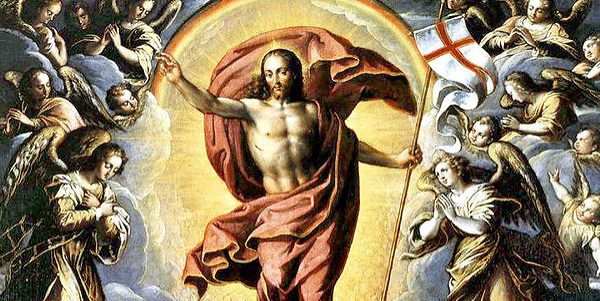
Flickr, “Resurrection 60,” by Waiting for the Word, Creative Commons License, some changes made
The resurrection is often packaged around cute little bunnies and plastic Easter eggs full of candy.
But resurrection isn’t soft and cuddly. Resurrection is dangerous. It is risky. It is not safe.
Resurrection is dangerous because it transforms how we relate to our fellow human beings, specifically to our enemies. And it transforms our understanding of the divine.
Throughout human history we have been caught up in cycles of violence – and we thought the gods were caught up in the same cycles of violence.
For example, the resurrection of Jesus is often compared to myths of resurrected gods throughout the ancient world. One such myth is about an Egyptian god named Horus and his father Osirus. Horus is portrayed as a good god that fought against the forces of evil, namely, an evil god named Set, who killed Horus’s father, a god named Osirus. Fortunately, Horus and his mother were able to resurrect Osirus. But the question remained, what should they to do about Set?
The resurrected Osirus asked Horus a question, “What is the most glorious deed a man can perform?”
Horus answered, “To take revenge upon one who has injured his father or mother.”*
And that’s what Horus did. Once he defeated Set in violent battle, Horus was acclaimed to be “lord of all the earth” and “once again established order and justice.”
There is a certain amount of truth within this myth. Throughout history, humans have thought that the only way to contain evil and violence is with our own violence. Horus wanted to destroy Set in order to establish peace, order, and justice. But the myth is honest about another motivation – no matter how good and just our violence seems to be, it always carries with it a motivation for revenge.
Ultimately, violence cannot be contained. It always escalates into cycles of increasing revenge. We see this cycle in ancient myths, but we also see it in the modern world. Just like the violence between Horus and Set, the United States believe that the way to deal with evil is to violently defeat our enemies. How does the United States respond to ISIS? We seek revenge by killing them.
In other words, Horus is our divine model.
The resurrection of Jesus tells a radically different story than the myth of Horus. Jesus was resurrected not to seek revenge against his enemies. No, the resurrection of Jesus is not a violent myth. The resurrection of Jesus is the Good News that God isn’t out for revenge. Rather, Jesus was resurrected to reveal God’s radical offer of peace and forgiveness.
After his death, the disciples were consumed with fear and locked themselves in a room. The resurrected Jesus suddenly appeared to them. While there, Jesus repeated the phrase, “Peace be with you” three times.
Why did Jesus have to repeat that phrase? Because if this was a myth like other resurrection myths, the disciples would have thought that the resurrected Jesus would seek revenge. The disciples had a lot to fear; after all, they just betrayed, denied, and abandoned Jesus to his death.
But the resurrection of Jesus was no myth. It was Gospel. It was the Good News that God doesn’t hold our sins against us, but forgives us, offers us peace, and invites us to extend that peace to others.
Most of us don’t believe in Jesus. We believe in the gods of myth. We believe in Horus. We believe in violence. Whether our next president is Donald Trump, Ted Cruz, or Hillary Clinton, if our enemies hit us, we will hit them back. And we will fool ourselves into believing that we will hit back so hard that our enemies will never even think about hitting us again. And the cycle of violence will continue. And Horus will be our god.
Unless we decide to believe in the resurrection of Jesus. But faith in the resurrection is dangerous because the resurrection is God’s alternative to the myths of violence. When you believe the resurrection of Jesus, you can no longer fight violence with violence in the name of God. Rather, you “fight” violence with forgiveness. You don’t engage evil with more evil, but with love. Resurrection is dangerous because our enemies may respond to our offer of peace with violence. That’s the risk of faith in the resurrection of Jesus.
But that risk is our greatest hope for a more peaceful world.
*Told in World Mythology, second edition, edited by Donna Rosenberg, pages 165-168
Next Post

March 30, 2016 Wednesday Sermon: Resurrected!
Browse Our Archives
Select a Category Atonement and Current Events Curriculum Faith and Families Interviews Jesus the Forgiving Victim Lent Montessori politics Reviews The Bible Explained Uncategorized Valentine's Day Wednesday Sermon Who is God?
Select a Month July 2020 November 2019 October 2019 September 2019 August 2019 July 2019 June 2019 May 2019 April 2019 March 2019 February 2019 January 2019 December 2018 November 2018 October 2018 September 2018 August 2018 July 2018 June 2018 May 2018 April 2018 March 2018 February 2018 January 2018 December 2017 November 2017 October 2017 September 2017 August 2017 July 2017 June 2017 May 2017 April 2017 March 2017 February 2017 January 2017 December 2016 November 2016 October 2016 September 2016 August 2016 June 2016 May 2016 April 2016 March 2016 February 2016 January 2016 December 2015 November 2015 October 2015 September 2015 August 2015 July 2015 June 2015 May 2015 April 2015 March 2015 February 2015 January 2015 December 2014 November 2014 October 2014 September 2014 August 2014 July 2014 June 2014 May 2014 April 2014 March 2014 January 2014 December 2013 September 2013 August 2013 July 2013
Follow Us!
TAKE THE
Religious Wisdom Quiz
Who dreamed about the sun, moon, and stars bowing to him?
Select your answer to see how you score.
Adam Elijah Daniel Joseph
Related posts from Teaching Nonviolent Atonement

Forgiveness in the Time of COVID-19 by Julia...


How Forgiveness Can Transform Our Violence and Build...

Jesus Unmasked: On Being Lost And Found: Sheep,...
TRENDING AT PATHEOS Progressive Christian

What Being a Modern-Day Apostle Means to Me
In my last column, I discussed the ins and outs of modern-day...

Did Ancient China Once Worship the God of...
Across human history, a common thread weaves through the origins of the...

Love Your Neighbor – Including Earth-Kin: Lev. 19,...
God’s command to love your neighbor means acting in an ethical and...

Lead a Church Study of “Jesus and Lao...
Guest writer Jack Thomas (The Irreverent Reverend) reflects on leading his church...

Pastoral Wisdom for Responding to Sermon Pushback
Getting sermon pushback on your social justice sermon? Learn practical, Proverbs-based strategies...

Principles for Understanding the Apostolic Ministry Today
Whenever people discover that my formal ministry title is "apostle," as in...
view all Progressive Christian blogs
Ad-Free & Subscriber Log-In Subscription Support
- About Us
- 2026 Calendar
- Videos
- Podcasts
- Library of World Religions
- Faith In Media Tracker
- Advertise With Us
- Write for Us
- Privacy Policy
- Terms of Service
- Do Not Sell My Data
- Contact Us
- Radiant Digital
- Manage Newsletter Subscriptions
- Unsubscribe From Notifications
- Sitemap
Copyright 2008-2026, Patheos. All rights reserved.
Subscription Support Ad-Free & Subscriber Log-In
Follow Patheos