
BuddhistCatholicContemplativeEvangelicalGeneral ChristianHinduJewishLatter-day SaintMuslimNew VisionsProgressive Christian
Beliefs
- Buddhist
- Catholic
- Contemplative
- Evangelical
- General Christian
- Hindu
- Jewish
- Latter-day Saint
- More Voices
- Muslim
- New Visions
- Pagan
- Progressive Christian
Topics
- Religion News
- Food and Religion
- Sports and Religion
- Religious Art
- Religious Music and Entertainment
- Religious Events
- History and Religion
- Style and Religion
- Politics and Religion
- Women in Religion
- Recreation Outdoors and Religion
- Business Finance and Religion
- Careers Workplace and Religion
- Education and Religion
- Family Parenting and Religion
- Health Fitness and Religion
- Home and Religion
- Relationships and Religion
- Technology and Religion
- Travel and Religion
Columnists
- Buddhist Columnists
- Business Finance and Religion Columnists
- Careers Workplace and Religion Columnists
- Catholic Columnists
- Contemplative Columnists
- Education and Religion Columnists
- Evangelists Columnists
- Family Parenting and Religion Columnists
- General Christian Columnists
- Health Fitness and Religion Columnists
- Hindu Columnists
- History and Religion Columnists
- Home and Religion Columnists
- Jewish Columnists
- More Voices Columnists
- Latter Day Columnists
- Muslim Columnists
- New Visions Columnists
- Nonreligious Columnists
- Pagan Columnists
- Politics and Religion Columnists
- Progressive Columnists
- Recreation Outdoors and Religion Columnists
- Relationships and Religion Columnists
- Religion News Columnists
- Religious Art Columnists
- Religious Events Columnists
- Religious Music and Entertainment Columnists
- Sports and Religion Columnists
- Style and Religion Columnists
- Technology and Religion Columnists
- Travel and Religion Columnists
- Women in Religion Columnists
Resource Library
- 2026 Calendar
- Library of World Religions
- The 100 Most Holy Places on Earth
- Patheos Answers
- Podcasts
- Videos
- Faith Leaders Database
- Anglican Episcopalian
- Bahai
- Baptist
- Buddhism
- Christianity
- Confucianism
- Eastern Orthodoxy
- Hinduism
- Holiness and Pentecostal
- ISKCON
- Islam
- Judaism
- Lutheran
- Methodist
- The Church of Jesus Christ of Latter-day Saints
- New Age
- Paganism
- Presbytarian and Reformed
- Protestantism
- Religion Behind the Scenes
- Roman Catholic
- Scientology
- Shia Islam
- Sikhism
- Sufism
- Sunni Islam
- Taoism
- Zen
- See all religions
Research Tools
 Ad-Free & Subscriber Log-In Subscription Support
Ad-Free & Subscriber Log-In Subscription Support
Follow Patheos 

- Trending:
- Forgiveness
- |
- Marriage
- |
- Consciousness
- |
- Death Penalty
- |
- Election
- |
- Halloween
 Teaching Nonviolent Atonement
- Home
- Progressive Christian
- Wednesday Sermon: With Every Eye Fixed on Him
Wednesday Sermon: With Every Eye Fixed on Him
Last updated on: January 27, 2016 at 1:14 pm by Tom Truby
Wednesday Sermon: With Every Eye Fixed on Him 2016-01-27T13:14:43-05:00 Tom Truby
Patheos Explore the world's faith through different perspectives on religion and spirituality! Patheos has the views of the prevalent religions and spiritualities of the world.
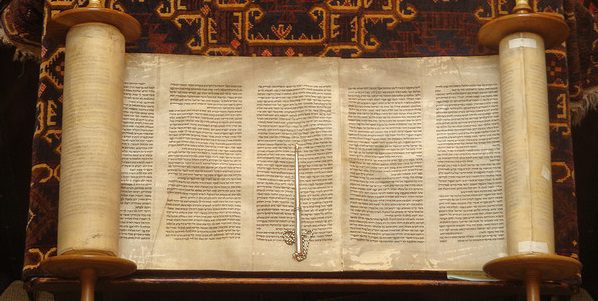
Photo: Flickr, Lawrie Cate, Torah, Creative Commons License, some changes made.
Pastors have a frequent question when they begin to discover mimetic theory. “That’s great. But how does it preach?”
Reverend Tom Truby show that mimetic theory is a powerful tool that enables pastors to preach the Gospel in a way that is meaningful and refreshing to the modern world. Each Wednesday, Teaching Nonviolent Atonement will highlight Tom’s sermons as an example of preaching the Gospel through mimetic theory.
In this sermon, Tom reflects upon the mimetic pull of the crowd that Jesus often encountered. All eyes were fixed on Jesus as he preached his first sermon. Would he give into the temptation to please the eyes in the crowd? Or would he continue “to speak in line with the will of God; a will that always seeks what’s best for all and not simply the speaker’s own ego needs”? Tom explores the mimetic drama below.
With Every Eye Fixed on Him
Year C, 3rd Sunday after the Epiphany
January 24, 2016
By Thomas L. Truby
Luke 4:14-21
In Luke’s gospel Jesus is baptized and the Spirit calls him into the wilderness where he is tempted to let go of his vision. We will visit that scene on the first Sunday of Lent. The story today begins with “Jesus returned in the power of the Spirit to Galilee.” Returned from where? Returned from the wilderness! He has been in the wilderness for forty days wrestling with himself and with God, sorting through what he must do, grieving through what doing what he must do will cost him, struggling to let go of his self-focused desire so as to embrace his Father’s love for all human kind that Jesus must communicate in a way that humankind can feel and see. He has managed to maintain his focus through it all, a feat no human had ever achieved, and so returns to Galilee “in the power of the Spirit.”
Jesus returns to civilization, is seen among his peers, and news about him spread throughout the whole countryside. He had been missing but now he is back! Everybody had wondered what had happened to him. They had been talking about him. He went to the Jordan River, got baptized by John the Baptist and then disappeared. Nobody knew where he went or why he left. But he is back now and he is by himself. Has he changed? Is he different? What’s he like now? I wonder where he went.
“He taught in their synagogues and was praised by everyone.” We don’t know what he taught but we know he came back with a message everyone liked. “Under the power of the Spirit” means his message wasn’t rooted in human wisdom, politics as usual or popular group-think. His message was tuned to an outside source, a source beyond the gravitational field of human entanglement. On first hearing everyone was drawn to it. It seemed so fresh and vigorous. They hadn’t realized yet that his message would have implications with which they too would have to struggle. If we take Jesus’ message seriously it will eventually pull every one of us into our own wilderness of temptation. Jesus had the Spirit because he had just gone through that and come out the other side.
“Jesus went to Nazareth, where he had been raised (grown up).” He goes back to the community that formed him, that lives in him, and that he has always thought of as his home and begins his work there. Surely they will embrace his teaching. They will understand what he is doing and support him since he wants to set them and everyone else free. That’s his dream. He knows their oppression and has a vision for their redemption. He loves them and this is what drives him to go home first.
“On the Sabbath he went to the synagogue as he normally did and stood up to read.” Luke presents Jesus as a faithful young Jew who went to the synagogue, the center of their cultural life, the place where people discuss ideas, find comfort, and ground themselves in their local and Jewish identity. He is not antireligious though I suspect he hopes his Spirit-empowered message will liberate the human bondage resident even in his own religion and synagogue. Even the little synagogue in Nazareth needed deliverance as we will soon see.
I suppose he could have gone to the synagogue and not stood up. His standing up drew the bearer of the scroll to him. As a Jewish male in good standing he was entitled to read the text out loud. Apparently he could read. His act is full of intentionality. In Luke this will be the first public statement declaring his understanding of what he is doing. Functionally it is the equivalent to changing water into wine in John’s gospel. With this statement it all begins.
“The synagogue assistant gave him the scroll from the prophet Isaiah.” Did that happen to be the scroll to be read for the day like our lectionary reading and did Jesus know what it was in advance? I don’t know. What if he had been handed Jeremiah or Ezekiel? What would he have done then?
“The synagogue assistant gave him the scroll from the prophet Isaiah. He unrolled the scroll and found the place where it was written.” Can you sense the drama in this? He has the whole scroll in his hands. Which section will he read? They have heard Isaiah read so many times they practically know it by heart. Will Jesus read a section that sheds some light on what happened during those weeks when he was missing? Jesus’ eyes scan down the text. He finds what he has been looking for and stops. Taking a deep breath he begins:
The Spirit of the Lord is upon me,
because the Lord has anointed me.
He has sent me to preach good news to the poor,
to proclaim release to the prisoners
and recovery of sight to the blind,
to liberate the oppressed,
and to proclaim the year of the Lord’s favor….
He stops. In mid-sentence he stops. Had he read the whole thing he would have read “to proclaim the year of the Lord’s favor and the day of vengeance of our God.” It’s the passage where Isaiah speaks of favor for us and vengeance for our enemies. But Jesus stops and won’t read the last part. Jesus’ audience, knowing the text, expects him to read the whole thing but he doesn’t. “He rolled up the scroll, gave it back to the synagogue assistant, and sat down. Every eye in the synagogue was fixed on him.” Are they in shock? What will he say next? Their eyes plead with him to say something that will complete Isaiah’s sentence and confirm their understanding of the world.
Have you ever been the one upon whom every eye is fixed? It can be very unnerving. It’s why some very good basketball shooters grow cold. They become aware of everyone looking at them and it messes with their concentration and rhythm and so they miss. This is why some of us find it so difficult to speak up at large meetings. The knowledge that everyone is looking at us so impacts us we can’t retain what we thought we had to say. TV cameras have that effect on me. I am so aware of the potential audience the camera hides that I can’t think straight so whatever I do say comes out terribly garbled and embarrassing to me.
That doesn’t happen to all. For some, “eyes fixed on them” brings them out and enhances their performance. Either way the eyes of others fixed on us have a huge impact. How will Jesus respond? His great temptation will be to say something that pleases those eyes, wins their approval and draws them toward liking him. If he yields he will no longer be operating in the power of the Spirit; that Spirit that comes from a place beyond human rivalry, that place outside the sphere of human influence. To speak in the power of the Spirit is to speak in line with the will of God; a will that always seeks what’s best for all and not simply the speaker’s own ego needs. When Jesus won the battle against his own narcissism that the New Testament portrays as the struggle with the devil, was his winning sufficiently grounded to stand the test of every eye in the synagogue being fixed on him?
This was Jesus’ chance to become famous without going to the cross. He could avoid being unpopular, criticized, rejected and eventually killed. Was Jesus called to be admired by the people of Nazareth or grounded in God? All he had to do was say what those eyes wanted him to say and he would be famous. He could please them and they would love him but he would no longer be his Father’s son and the mission he and his father had joined to do would be aborted. What will Jesus do?
With every eye in the synagogue fixed on him, he began to explain to them, “Today, this scripture has been fulfilled just as you heard it.” Next week we will explore what happens next. In the meantime may our eyes not be focused on each other but fixed on Jesus. Amen.

Browse Our Archives
Select a Category Atonement and Current Events Curriculum Faith and Families Interviews Jesus the Forgiving Victim Lent Montessori politics Reviews The Bible Explained Uncategorized Valentine's Day Wednesday Sermon Who is God?
Select a Month July 2020 November 2019 October 2019 September 2019 August 2019 July 2019 June 2019 May 2019 April 2019 March 2019 February 2019 January 2019 December 2018 November 2018 October 2018 September 2018 August 2018 July 2018 June 2018 May 2018 April 2018 March 2018 February 2018 January 2018 December 2017 November 2017 October 2017 September 2017 August 2017 July 2017 June 2017 May 2017 April 2017 March 2017 February 2017 January 2017 December 2016 November 2016 October 2016 September 2016 August 2016 June 2016 May 2016 April 2016 March 2016 February 2016 January 2016 December 2015 November 2015 October 2015 September 2015 August 2015 July 2015 June 2015 May 2015 April 2015 March 2015 February 2015 January 2015 December 2014 November 2014 October 2014 September 2014 August 2014 July 2014 June 2014 May 2014 April 2014 March 2014 January 2014 December 2013 September 2013 August 2013 July 2013
Follow Us!
TAKE THE
Religious Wisdom Quiz
Who boldly risked her life to save her people with the phrase, "If I perish, I perish"?
Select your answer to see how you score.
Esther Ruth Hannah Deborah
Related posts from Teaching Nonviolent Atonement

Forgiveness in the Time of COVID-19 by Julia...

Reflections on Indigenous Wisdom For Healing A Wounded...

How Forgiveness Can Transform Our Violence and Build...

Jesus Unmasked: God's Economy and How to Cheat...
TRENDING AT PATHEOS Progressive Christian

Why Christians Have a Sacred Duty to Vote:...
The Bible offers strong support for the sacred duty to vote. Here...

What Being a Modern-Day Apostle Means to Me
In my last column, I discussed the ins and outs of modern-day...

Did Ancient China Once Worship the God of...
Across human history, a common thread weaves through the origins of the...

Love Your Neighbor – Including Earth-Kin: Lev. 19,...
God’s command to love your neighbor means acting in an ethical and...

Lead a Church Study of “Jesus and Lao...
Guest writer Jack Thomas (The Irreverent Reverend) reflects on leading his church...

Principles for Understanding the Apostolic Ministry Today
Whenever people discover that my formal ministry title is "apostle," as in...
view all Progressive Christian blogs
Ad-Free & Subscriber Log-In Subscription Support
- About Us
- 2026 Calendar
- Videos
- Podcasts
- Library of World Religions
- Faith In Media Tracker
- Advertise With Us
- Write for Us
- Privacy Policy
- Terms of Service
- Do Not Sell My Data
- Contact Us
- Radiant Digital
- Manage Newsletter Subscriptions
- Unsubscribe From Notifications
- Sitemap
Copyright 2008-2026, Patheos. All rights reserved.
Subscription Support Ad-Free & Subscriber Log-In
Follow Patheos