
BuddhistCatholicContemplativeEvangelicalGeneral ChristianHinduJewishLatter-day SaintMuslimNew VisionsProgressive Christian
Beliefs
- Buddhist
- Catholic
- Contemplative
- Evangelical
- General Christian
- Hindu
- Jewish
- Latter-day Saint
- More Voices
- Muslim
- New Visions
- Pagan
- Progressive Christian
Topics
- Religion News
- Food and Religion
- Sports and Religion
- Religious Art
- Religious Music and Entertainment
- Religious Events
- History and Religion
- Style and Religion
- Politics and Religion
- Women in Religion
- Recreation Outdoors and Religion
- Business Finance and Religion
- Careers Workplace and Religion
- Education and Religion
- Family Parenting and Religion
- Health Fitness and Religion
- Home and Religion
- Relationships and Religion
- Technology and Religion
- Travel and Religion
Columnists
- Buddhist Columnists
- Business Finance and Religion Columnists
- Careers Workplace and Religion Columnists
- Catholic Columnists
- Contemplative Columnists
- Education and Religion Columnists
- Evangelists Columnists
- Family Parenting and Religion Columnists
- General Christian Columnists
- Health Fitness and Religion Columnists
- Hindu Columnists
- History and Religion Columnists
- Home and Religion Columnists
- Jewish Columnists
- More Voices Columnists
- Latter Day Columnists
- Muslim Columnists
- New Visions Columnists
- Nonreligious Columnists
- Pagan Columnists
- Politics and Religion Columnists
- Progressive Columnists
- Recreation Outdoors and Religion Columnists
- Relationships and Religion Columnists
- Religion News Columnists
- Religious Art Columnists
- Religious Events Columnists
- Religious Music and Entertainment Columnists
- Sports and Religion Columnists
- Style and Religion Columnists
- Technology and Religion Columnists
- Travel and Religion Columnists
- Women in Religion Columnists
Resource Library
- 2026 Calendar
- Library of World Religions
- The 100 Most Holy Places on Earth
- Patheos Answers
- Podcasts
- Videos
- Faith Leaders Database
- Anglican Episcopalian
- Bahai
- Baptist
- Buddhism
- Christianity
- Confucianism
- Eastern Orthodoxy
- Hinduism
- Holiness and Pentecostal
- ISKCON
- Islam
- Judaism
- Lutheran
- Methodist
- The Church of Jesus Christ of Latter-day Saints
- New Age
- Paganism
- Presbytarian and Reformed
- Protestantism
- Religion Behind the Scenes
- Roman Catholic
- Scientology
- Shia Islam
- Sikhism
- Sufism
- Sunni Islam
- Taoism
- Zen
- See all religions
Research Tools
 Ad-Free & Subscriber Log-In Subscription Support
Ad-Free & Subscriber Log-In Subscription Support
Follow Patheos 

- Trending:
- Forgiveness
- |
- Marriage
- |
- Consciousness
- |
- Death Penalty
- |
- Election
- |
- Halloween
 Teaching Nonviolent Atonement
- Home
- Progressive Christian
- Wednesday Sermon: Dawn Breaks Upon Us – The Gospel’s Alternative To Rome
Wednesday Sermon: Dawn Breaks Upon Us – The Gospel’s Alternative To Rome
Last updated on: December 9, 2015 at 2:34 pm by Tom Truby
Wednesday Sermon: Dawn Breaks Upon Us – The Gospel’s Alternative To Rome 2015-12-09T14:34:50-05:00 Tom Truby
Patheos Explore the world's faith through different perspectives on religion and spirituality! Patheos has the views of the prevalent religions and spiritualities of the world.
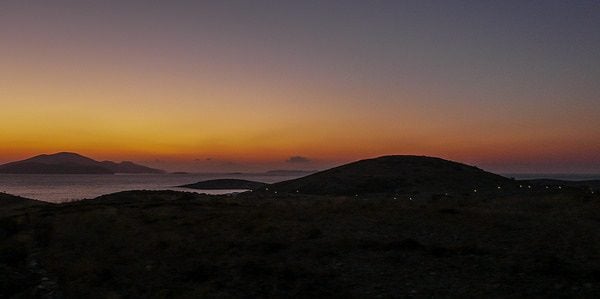
Photo: Flickr, Dawn, by Paolo Gamba, Creative Commons License, some changes made
Pastors have a frequent question when they begin to discover mimetic theory. “That’s great. But how does it preach?”
Reverend Tom Truby show that mimetic theory is a powerful tool that enables pastors to preach the Gospel in a way that is meaningful and refreshing to the modern world. Each Wednesday, Teaching Nonviolent Atonement will highlight Tom’s sermons as an example of preaching the Gospel through mimetic theory.
In this sermon, Tom continues his Advent reflections. As the Gospel light of dawn breaks upon us, he reveals that the Gospel of Luke offered his readers an alternative to the dark and violent ways of Rome. “Roman roads were built to bring the Legions who brutally imposed their ‘peace,'” writes Tom. “Is there any other way for peace to arrive?” The answer is provided by the Good News, not with the Roman sword, but with Christ’s forgiveness.
Year C, Advent 2
December 6th, 2015
By Thomas L. Truby
Luke 3:1-6 and Philippians 1:9-11
Dawn Breaks Upon Us
Here is the question; why does Luke go into so much detail when describing the setting for his story?
In the fifteenth year of the reign of Emperor Tiberius, when Pontius Pilate was governor of Judea, and Herod was ruler of Galilee, and his brother Philip ruler of the region of Ituraea and Trachonitis, and Lysanias ruler of Abilene, during the high priesthood of Annas and Caiaphas, the word of God came to John son of Zechariah in the wilderness.
An incredible sentence! Luke goes to great lengths to give us a precise geopolitical context for something that is happening in history. At a particular point, in a particular place, inhabited by particular people something begins to happen. For Luke this something is hugely important—so important that Luke believes Isaiah wrote about it centuries before:
“Prepare the way of the Lord, make his paths straight. Every valley shall be filled, and every mountain and hill shall be made low, and the crooked shall be made straight, and the rough ways made smooth; and all flesh shall see the salvation of God.”
When the interstate road system was begun during the Eisenhower administration the nation prepared the way for a new and more vital economy by making the roads straight, filling the valleys, lowering the hills and paving over the rough places. Now we drive on the interstate through the Cascade Mountains, across the prairies of Nebraska, over the marshes in Florida and through the Badlands of South Dakota. This system of level roads has changed the face of our nation. But what Luke refers to here is something far bigger than that and it’s something for the whole world.
Rome was the one who built roads. Their engineers plotted a straight line toward their destination and then crews built the roads. If mountains were in the way they were removed, if valleys were too deep, they were filled. Nothing stopped them. Is Luke offering an alternative to Rome?
Roman roads were built to bring the Legions who brutally imposed their “peace”. Is there any other way for peace to arrive? What form would it take? How do we grasp on to it or is it an empty dream? It’s so tempting these days to just give up and dull ourselves with drinking parties and the anxieties of day-to-day life—no larger vision to keep our head up for. On this second week in Advent we need something to pull our eyes away from the grim realities we see around us.
John, son of Zechariah, who lives in the wilderness on the edge of civilization, suddenly emerges and proclaims a baptism of repentance for the forgiveness of sins. He sees that humans have a terrible problem that needs straightening out. Something within human thinking has gone terribly wrong and hearts and lives have become sick. John the Baptist thinks humans need forgiveness from God and repentance; that is, change of mind on what they are doing, a change of direction. He asked people to publicly act to confirm their intention to change and many were baptized.
John the Baptist, looking from his place in the wilderness on the edge, could see that people were destroying the very community they needed. If this destruction could be washed out of them, if they could renounce their desire to best their neighbor, and insure their own success at their neighbor’s expense, they would find peace.
John himself has disciplined his desires and now lives in the wilderness dressed simply and surviving off the land. He has renounced his desire to best his neighbor. He has chosen to live outside normal culture with its hierarchies founded on the bodies of those at the bottom. Do black lives matter? Are all humans of worth, even those in the third world who live far below the poverty level? And so he preached a baptism of repentance for the forgiveness of sins. Their sins were all the times they had made themselves the center, their own desires more important than their neighbors, and not noticed that God stands as an upholder of the ones buried at the bottom.
“John went throughout the region of the Jordan River, calling for people to be baptized to show that they were changing their hearts and lives and wanted God to forgive their sins.” Convicted people everywhere pledged themselves to try harder by submitting to John’s baptism. It was a sincere movement and quite popular – but it didn’t work. John the Baptist could change behavior for a while but his message of trying harder didn’t change hearts. Something more, something different, was needed. What would it be?
The apostle Paul knew what it was. He preached it all the time. The story of the death and resurrection of Jesus contains all humans need to change their hearts. Jesus, God’s Son enters history as a vulnerable child, he grows into full manhood and preaches love and forgiveness and shows it in his actions toward all people, even the people the culture looked down on. When Jesus behaved with this kind of compassion, the self-centered people not liking what Jesus showed them about themselves condemned him as a common criminal. They killed an innocent man, and in killing him they killed God. This happened so that we would all see what we do. It’s key to human anthropology. Pogo was right, “I have seen the enemy and he is us.”
What is the penalty for killing God and killing each other? Surely God will avenge the death of his son and all the people of the earth we have killed. By the law of tit for tat we deserve to die but the punishment never comes! Instead of the sword of justice the resurrected Jesus says “don’t be afraid. I come bringing peace.” Your cycle of violence has been broken and I give you the power to forgive in the way you have been forgiven. We are all candidates for death row whose sentence has been utterly commuted. God has done it out of mercy and because he is love. The story of how he did it is true and has the power to change hearts.
The people of Philippi have tasted this power and their hearts have begun to change. Paul hopes their growth will continue and so he encourages them with these words, “This is my prayer: that your love might become even more and more rich with knowledge and all kinds ofinsight.” Did you catch that? He prays their love will grow in richness, not that they will be rich but that their love will be rich. He prays they will be knowledgeable and full of insight. Insight sees the connections; how what we do impacts our families, friends, communities and the world in indirect ways that we probably haven’t thought about. There is so much we could do that we don’t see. For example, what would it say to our neighbors if we sold something we didn’t need and used the money to support an Iraqi refugee at this particular time in history? Would it help in lowering the mountains and filling the valleys?
Paul’s love prayer continues. “I pray this so that you will be able to decide what really matters and so you will be sincere and blameless on the day of Christ.” Paul wants the hearts of his people to be in the right place when time is up, whether cosmic time or our personal time on this earth.
Paul goes on, “I pray that you will then be filled with the fruit of righteousness, which comes from Jesus Christ, in order to give glory and praise to God.” He prays they will continue to move away from self-centeredness and me-me-me to actions that give glory and praise to God. He wants them to escape their bondage to themselves and find life in serving others.
Friends, this morning we have been exposed to real knowledge and insight on human anthropology and on what we can do to bring peace. Luke says our salvation begins when “by the tender mercy of our God; the dawn from on high breaks upon us, to give light to us who sit in darkness and in the shadow of death, to guide our feet on the way to peace.” So be it. Amen.
Next Post

December 11, 2015 What Should Progressives Do About Donald Trump?
Browse Our Archives
Select a Category Atonement and Current Events Curriculum Faith and Families Interviews Jesus the Forgiving Victim Lent Montessori politics Reviews The Bible Explained Uncategorized Valentine's Day Wednesday Sermon Who is God?
Select a Month July 2020 November 2019 October 2019 September 2019 August 2019 July 2019 June 2019 May 2019 April 2019 March 2019 February 2019 January 2019 December 2018 November 2018 October 2018 September 2018 August 2018 July 2018 June 2018 May 2018 April 2018 March 2018 February 2018 January 2018 December 2017 November 2017 October 2017 September 2017 August 2017 July 2017 June 2017 May 2017 April 2017 March 2017 February 2017 January 2017 December 2016 November 2016 October 2016 September 2016 August 2016 June 2016 May 2016 April 2016 March 2016 February 2016 January 2016 December 2015 November 2015 October 2015 September 2015 August 2015 July 2015 June 2015 May 2015 April 2015 March 2015 February 2015 January 2015 December 2014 November 2014 October 2014 September 2014 August 2014 July 2014 June 2014 May 2014 April 2014 March 2014 January 2014 December 2013 September 2013 August 2013 July 2013
Follow Us!
TAKE THE
Religious Wisdom Quiz
Who said, "Lord, why do you stand far off?"
Select your answer to see how you score.
Moses David Jeremiah Job
Related posts from Teaching Nonviolent Atonement

Toxic Christianity: 3 Things We Can Do That...

The Secret of Life: An Interview with Audrey...

Forgiveness in the Time of COVID-19 by Julia...

TRENDING AT PATHEOS Progressive Christian

Why Christians Have a Sacred Duty to Vote:...
The Bible offers strong support for the sacred duty to vote. Here...

What Being a Modern-Day Apostle Means to Me
In my last column, I discussed the ins and outs of modern-day...

Did Ancient China Once Worship the God of...
Across human history, a common thread weaves through the origins of the...

Love Your Neighbor – Including Earth-Kin: Lev. 19,...
God’s command to love your neighbor means acting in an ethical and...

Lead a Church Study of “Jesus and Lao...
Guest writer Jack Thomas (The Irreverent Reverend) reflects on leading his church...

Principles for Understanding the Apostolic Ministry Today
Whenever people discover that my formal ministry title is "apostle," as in...
view all Progressive Christian blogs
Ad-Free & Subscriber Log-In Subscription Support
- About Us
- 2026 Calendar
- Videos
- Podcasts
- Library of World Religions
- Faith In Media Tracker
- Advertise With Us
- Write for Us
- Privacy Policy
- Terms of Service
- Do Not Sell My Data
- Contact Us
- Radiant Digital
- Manage Newsletter Subscriptions
- Unsubscribe From Notifications
- Sitemap
Copyright 2008-2026, Patheos. All rights reserved.
Subscription Support Ad-Free & Subscriber Log-In
Follow Patheos