
BuddhistCatholicContemplativeEvangelicalGeneral ChristianHinduJewishLatter-day SaintMuslimNew VisionsProgressive Christian
Beliefs
- Buddhist
- Catholic
- Contemplative
- Evangelical
- General Christian
- Hindu
- Jewish
- Latter-day Saint
- More Voices
- Muslim
- New Visions
- Pagan
- Progressive Christian
Topics
- Religion News
- Food and Religion
- Sports and Religion
- Religious Art
- Religious Music and Entertainment
- Religious Events
- History and Religion
- Style and Religion
- Politics and Religion
- Women in Religion
- Recreation Outdoors and Religion
- Business Finance and Religion
- Careers Workplace and Religion
- Education and Religion
- Family Parenting and Religion
- Health Fitness and Religion
- Home and Religion
- Relationships and Religion
- Technology and Religion
- Travel and Religion
Columnists
- Buddhist Columnists
- Business Finance and Religion Columnists
- Careers Workplace and Religion Columnists
- Catholic Columnists
- Contemplative Columnists
- Education and Religion Columnists
- Evangelists Columnists
- Family Parenting and Religion Columnists
- General Christian Columnists
- Health Fitness and Religion Columnists
- Hindu Columnists
- History and Religion Columnists
- Home and Religion Columnists
- Jewish Columnists
- More Voices Columnists
- Latter Day Columnists
- Muslim Columnists
- New Visions Columnists
- Nonreligious Columnists
- Pagan Columnists
- Politics and Religion Columnists
- Progressive Columnists
- Recreation Outdoors and Religion Columnists
- Relationships and Religion Columnists
- Religion News Columnists
- Religious Art Columnists
- Religious Events Columnists
- Religious Music and Entertainment Columnists
- Sports and Religion Columnists
- Style and Religion Columnists
- Technology and Religion Columnists
- Travel and Religion Columnists
- Women in Religion Columnists
Resource Library
- 2026 Calendar
- Library of World Religions
- The 100 Most Holy Places on Earth
- Patheos Answers
- Podcasts
- Videos
- Faith Leaders Database
- Anglican Episcopalian
- Bahai
- Baptist
- Buddhism
- Christianity
- Confucianism
- Eastern Orthodoxy
- Hinduism
- Holiness and Pentecostal
- ISKCON
- Islam
- Judaism
- Lutheran
- Methodist
- The Church of Jesus Christ of Latter-day Saints
- New Age
- Paganism
- Presbytarian and Reformed
- Protestantism
- Religion Behind the Scenes
- Roman Catholic
- Scientology
- Shia Islam
- Sikhism
- Sufism
- Sunni Islam
- Taoism
- Zen
- See all religions
Research Tools
 Ad-Free & Subscriber Log-In Subscription Support
Ad-Free & Subscriber Log-In Subscription Support
Follow Patheos 

- Trending:
- Forgiveness
- |
- Marriage
- |
- Consciousness
- |
- Death Penalty
- |
- Election
- |
- Halloween
 Teaching Nonviolent Atonement
- Home
- Progressive Christian
- Authentically Boring: The Case for Praying by Rote
Authentically Boring: The Case for Praying by Rote
Last updated on: August 10, 2015 at 9:52 pm by Suzanne Ross
Authentically Boring: The Case for Praying by Rote 2015-08-10T21:52:59-05:00 Suzanne Ross
Patheos Explore the world's faith through different perspectives on religion and spirituality! Patheos has the views of the prevalent religions and spiritualities of the world.
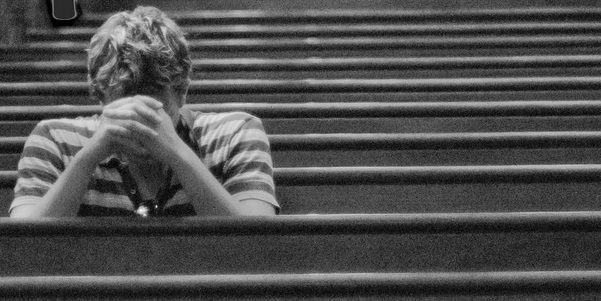
Photo: Flickr, The Prayer Continued, Creative Commons License, some modifications made.
This article is part of my blog series inspired by Jesus the Forgiving Victim: Listening for the Unheard Voice by James Alison.*
Do you recite the psalms during your Sunday worship? How about the Our Father? What about at home, in your private prayers –do written prayers play a role?
Reciting written prayers by rote leaves many people empty. It seems inauthentic to rely on someone else’s words. We want to be ourselves before God and so we feel that our prayers should arise from our deepest desires. Do you feel that way? If so, it’s probably because you have experienced the way in which prayers that come from the heart evoke a deep sense of connectedness to God. Often those prayers come without words. They erupt unbidden as a cry of anguish, a tear of grief, or a spasm of remorse. Such authentic expressions of our longing for God’s comforting presence surely need no words.
Of course there are also the prayers we pray with our own words. They are often petitions for healing, peace, or comfort. But prayers in which we remind God of what needs doing are a maybe a bit inauthentic, too. I mean, doesn’t God already know about these things? Does he really need persuading to do the right thing? Maybe behind our petitions is a little desire to impress God with how noble, good and generous we are. I’m just saying!
Maybe the truth is what we really, truly want is too embarrassing to admit to, even before God. Not that I know from personal experience, but we might long for whatever will give us an advantage over others. Who doesn’t want to be the winner, whatever the contest, or have more money or prestige? And who among us has not prayed for the perfect parking space? We might utter that last one in jest, but the one thing it has going for it is authenticity! James Alison calls these embarrassing prayers our “smelly little desires” and he rightly observes that we usually put a stopper on them. We prefer to pray the desires we think God wants us to have. And though we reject the inauthenticity of written prayers, our own prayers can be even worse when we use them to win God’s approval.
So let’s give written prayers a second look because I think there is a very good reason for us to pray them. A few years ago, I adopted the habit of praying one part of the Liturgy of the Hours – a serious practice of praying by rote that goes back to the early days of Christianity. It’s called the Office of Readings and the Universalis program offers it with two options. You can pray the same psalms every day or opt for a variation. I opted for the variation. The psalms rotate through a regular cycle, but at least I don’t get the exact same ones every morning.
It seems that the more familiar the psalm the more my mind wanders away from my devotion to mundane things. Psalm 100 is a real problem for me. It is way too familiar – so short that I tasked my students in bible camp one year to memorize it and I did too. But recently when Psalm 100 came up in the cycle, I heard something new in verse 3:
Know that the Lord is God.
It is he that made us, and we are his;
We are his people, and the sheep of his pasture.
Typically when I read this I am annoyed with the psalmist for making such an obvious statement about God. For heaven’s sake, who doesn’t know that God is our Creator! But on this morning I realized that this prayer was not meant to be mine, but was God’s prayer for me! The unassuming, little Psalm 100 was God speaking directly to my doubts and insecurities. I heard God saying, “Don’t you know, dear one, that I made you? I am the one revealed to you by my Son, the one who loves you more than you will ever know. You are my child, a precious sheep whom I will never abandon. Why do you ever doubt that I love you?”
Much to my surprise, I felt relieved that I needn’t be ashamed of my smelly, little desires for parking spaces or recognition or even for revenge on the guy who cut me off in traffic. God knows what they are, even when I try to hide them from myself, and get this – they don’t matter to God! God loves me, shameful mess that I am, and nothing can change that. What made that revelation possible? Well, rather than trying to affect God’s behavior or impress God with the nobility of my desires, Psalm 100 turned the tables on me. It allowed me to be shaped by an encounter with God’s desire for me.
James says that this is “the urgent reason why we need to pray: so as to allow the One who knows what is good for us, unlike us ourselves, whose desire is for us and for our fruition… to gain access to re-creating us from within… [when we pray] we are asking to become a symptom of his pattern of desire.” (426) So James encourages us to pray our grand prayers and our smelly ones, but also not to neglect the written prayers of our tradition. They are especially good at freeing us from our need to be “authentic”. Don’t worry if the prayers feel boring or repetitive, just keep at it because sometimes we encounter the most authentic experiences of God where we least expect to find them.
*Years ago, just when I was about to give up on Christianity as irrelevant to my life, I stumbled across the work of James Alison. He helped me encounter a God of mercy who loved me more than I could imagine – what a gift! So when he asked for help to produce his course of introduction to Christianity, Jesus the Forgiving Victim: Listening for the Unheard Voice, I jumped at the chance. All proceeds from sales of the course go to support the website, translations, promotion, and James’ living and travel expenses. James is an independent scholar and itinerant preacher and is very grateful for your support. James and I both pray that this blog series and the course itself will be a meaningful part of your journey toward a deeper faith and fuller life in Christ. You can learn more about the course and purchase it at our store.
For other parts of this series see:
Jesus the Forgiving Victim: Huh?
Listening for the Unheard Voice
Authentically Boring: The Case for Praying by Rote
Previous Post

July 31, 2015
Franklin Graham, Islam, and the Future of Progressive Christianity
Next Post
August 11, 2015 My Daughter, the Star Wars Myth, and Jesus – How to Defeat Evil
Browse Our Archives
Select a Category Atonement and Current Events Curriculum Faith and Families Interviews Jesus the Forgiving Victim Lent Montessori politics Reviews The Bible Explained Uncategorized Valentine's Day Wednesday Sermon Who is God?
Select a Month July 2020 November 2019 October 2019 September 2019 August 2019 July 2019 June 2019 May 2019 April 2019 March 2019 February 2019 January 2019 December 2018 November 2018 October 2018 September 2018 August 2018 July 2018 June 2018 May 2018 April 2018 March 2018 February 2018 January 2018 December 2017 November 2017 October 2017 September 2017 August 2017 July 2017 June 2017 May 2017 April 2017 March 2017 February 2017 January 2017 December 2016 November 2016 October 2016 September 2016 August 2016 June 2016 May 2016 April 2016 March 2016 February 2016 January 2016 December 2015 November 2015 October 2015 September 2015 August 2015 July 2015 June 2015 May 2015 April 2015 March 2015 February 2015 January 2015 December 2014 November 2014 October 2014 September 2014 August 2014 July 2014 June 2014 May 2014 April 2014 March 2014 January 2014 December 2013 September 2013 August 2013 July 2013
Follow Us!
TAKE THE
Religious Wisdom Quiz
Who was the Amalekite king spared by Saul, contrary to God's command?
Select your answer to see how you score.
Abner Agag Goliath Ish-bosheth
Related posts from Teaching Nonviolent Atonement

Forgiveness in the Time of COVID-19 by Julia...

Reflections on Indigenous Wisdom For Healing A Wounded...

How Forgiveness Can Transform Our Violence and Build...

Jesus Unmasked: God's Economy and How to Cheat...
TRENDING AT PATHEOS Progressive Christian

What Being a Modern-Day Apostle Means to Me
In my last column, I discussed the ins and outs of modern-day...

Did Ancient China Once Worship the God of...
Across human history, a common thread weaves through the origins of the...

Love Your Neighbor – Including Earth-Kin: Lev. 19,...
God’s command to love your neighbor means acting in an ethical and...

Lead a Church Study of “Jesus and Lao...
Guest writer Jack Thomas (The Irreverent Reverend) reflects on leading his church...

Pastoral Wisdom for Responding to Sermon Pushback
Getting sermon pushback on your social justice sermon? Learn practical, Proverbs-based strategies...

Principles for Understanding the Apostolic Ministry Today
Whenever people discover that my formal ministry title is "apostle," as in...
view all Progressive Christian blogs
Ad-Free & Subscriber Log-In Subscription Support
- About Us
- 2026 Calendar
- Videos
- Podcasts
- Library of World Religions
- Faith In Media Tracker
- Advertise With Us
- Write for Us
- Privacy Policy
- Terms of Service
- Do Not Sell My Data
- Contact Us
- Radiant Digital
- Manage Newsletter Subscriptions
- Unsubscribe From Notifications
- Sitemap
Copyright 2008-2026, Patheos. All rights reserved.
Subscription Support Ad-Free & Subscriber Log-In
Follow Patheos