
BuddhistCatholicContemplativeEvangelicalGeneral ChristianHinduJewishLatter-day SaintMuslimNew VisionsProgressive Christian
Beliefs
- Buddhist
- Catholic
- Contemplative
- Evangelical
- General Christian
- Hindu
- Jewish
- Latter-day Saint
- More Voices
- Muslim
- New Visions
- Pagan
- Progressive Christian
Topics
- Religion News
- Food and Religion
- Sports and Religion
- Religious Art
- Religious Music and Entertainment
- Religious Events
- History and Religion
- Style and Religion
- Politics and Religion
- Women in Religion
- Recreation Outdoors and Religion
- Business Finance and Religion
- Careers Workplace and Religion
- Education and Religion
- Family Parenting and Religion
- Health Fitness and Religion
- Home and Religion
- Relationships and Religion
- Technology and Religion
- Travel and Religion
Columnists
- Buddhist Columnists
- Business Finance and Religion Columnists
- Careers Workplace and Religion Columnists
- Catholic Columnists
- Contemplative Columnists
- Education and Religion Columnists
- Evangelists Columnists
- Family Parenting and Religion Columnists
- General Christian Columnists
- Health Fitness and Religion Columnists
- Hindu Columnists
- History and Religion Columnists
- Home and Religion Columnists
- Jewish Columnists
- More Voices Columnists
- Latter Day Columnists
- Muslim Columnists
- New Visions Columnists
- Nonreligious Columnists
- Pagan Columnists
- Politics and Religion Columnists
- Progressive Columnists
- Recreation Outdoors and Religion Columnists
- Relationships and Religion Columnists
- Religion News Columnists
- Religious Art Columnists
- Religious Events Columnists
- Religious Music and Entertainment Columnists
- Sports and Religion Columnists
- Style and Religion Columnists
- Technology and Religion Columnists
- Travel and Religion Columnists
- Women in Religion Columnists
Resource Library
- 2026 Calendar
- Library of World Religions
- The 100 Most Holy Places on Earth
- Patheos Answers
- Podcasts
- Videos
- Faith Leaders Database
- Anglican Episcopalian
- Bahai
- Baptist
- Buddhism
- Christianity
- Confucianism
- Eastern Orthodoxy
- Hinduism
- Holiness and Pentecostal
- ISKCON
- Islam
- Judaism
- Lutheran
- Methodist
- The Church of Jesus Christ of Latter-day Saints
- New Age
- Paganism
- Presbytarian and Reformed
- Protestantism
- Religion Behind the Scenes
- Roman Catholic
- Scientology
- Shia Islam
- Sikhism
- Sufism
- Sunni Islam
- Taoism
- Zen
- See all religions
Research Tools
 Ad-Free & Subscriber Log-In Subscription Support
Ad-Free & Subscriber Log-In Subscription Support
Follow Patheos 

- Trending:
- Forgiveness
- |
- Marriage
- |
- Consciousness
- |
- Death Penalty
- |
- Election
- |
- Halloween
 Teaching Nonviolent Atonement
- Home
- Progressive Christian
- How the Warrior Mindset Has Damaged Policing, Children and Youth
How the Warrior Mindset Has Damaged Policing, Children and Youth
Last updated on: May 26, 2015 at 11:54 am by Suzanne Ross
How the Warrior Mindset Has Damaged Policing, Children and Youth 2015-05-26T11:54:32-05:00 Suzanne Ross
Patheos Explore the world's faith through different perspectives on religion and spirituality! Patheos has the views of the prevalent religions and spiritualities of the world.

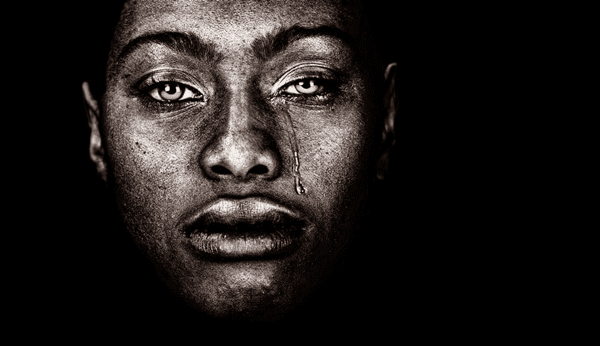
Copyright: / 123RF Stock Photo
One reason Adam and I love having Bob Koehler’s weekly political analysis on the Raven Foundation website is that he is an intuitive mimetic thinker. Just as Girard claims for mimetic theory, Bob’s analysis consistently “contradicts the thesis of human autonomy.” Most politicians and law enforcement experts don’t even know that “human autonomy” is a speculative theory. They believe in it as an article of faith, and in his latest post, Zero Toleranceabout the President’s Task Force on 21st Century Community Policing, Bob points out how that faith has led to disastrous results for children and youth, especially in policing practices.
Human Autonomy: The Lie We All Believe
If you take human autonomy as your starting point, you lose sight of the most central characteristic of human nature: we learn who we are and how to behave from one another. How we treat children is who they will become. This bit of wisdom has gone by many names, among them the popular notion of the “self-fulfilling prophecy”. If teachers consistently have low expectations for certain groups of kids, say minorities or those labeled as “problem kids”, the kids will meet those meager expectations but rarely exceed them. Why? Because our sense of identity is not something we own or develop in isolation. We become ourselves in and through the significant relationships that nurture us from the cradle and envelop us as we move out into the world.
When police officers and teachers greet children with suspicion, as problems to manage as if they are expendable and useless to the world, why would we be surprised that such a thing as the “school-to-prison pipeline” exists? Bob isn’t. And though he finds some hopeful signs for a change of heart in the Task Force’s report, he is also rightly skeptical. Because though the report shows signs of mimetic insights, Bob tells us that it fails dismally at telling the truth about our “nation’s history of slavery and Jim Crow segregation and any current manifestation of institutional racism.” Addiction to the illusion of autonomy is an addiction to a lie, so telling the truth is out of character, to say the least. Sadly, autonomy is a lie that enables us to blame the kids who become inmates rather than examine our complicity in their failure to thrive.
The Task Force calls for a shift in law enforcement culture from a “warrior mindset” to that of a “guardian” role. It acknowledges that a better goal for policing is “protection” rather than enforcement or suppression of crime. Well bravo! A sure way to change outcomes for kids is to change attitudes of the adults that engage with them. What if the police actually saw it as their duty to protect children and adolescents from mistreatment and abuse, even and especially the mistreatment and abuse that can come from the police? Not only would this change outcomes for kids, it has the potential to change our entire society. Because when we treat children as a problem to manage, we are depriving our world of a valuable resource that comes from the children themselves.
Childhood is a Distinct Form of Human Life
It’s been a long time since we thought of children as miniature adults. We’ve known for over one hundred years that childhood is a special and unique stage in human development. The Task Force actually acknowledged the need for officers to be “trained in child and adolescent development” – wouldn’t that be a game changer! But I’d like to suggest we take it a step further, a step that Dr. Maria Montessori encourages us to take. We owe the understanding of childhood as a distinct stage of development in large part to her work and here’s how she pushes her own insight further:
We ought not to consider the child and the adult merely as successive phases in the individual’s life. We ought rather to look upon them as two different forms of human life, going on at the same time, and exerting upon one another a reciprocal influence. The child and the adult are in fact two different and separate parts of humanity which should interpenetrate and work together in the harmony of mutual aid.
The idea that is hard for adults to swallow, even harder to swallow than the illusion of human autonomy, is that we might be better off if we let children set the tone and content of our policing policies. The mimetic insight works both ways: Yes, we make children into our own image, but they can remake us into their image if we let them. As Dr. Montessori puts it, “… not everyone realizes that the child is a wonderfully precious aid to the adult, and that he can, and should… exercise a formative influence on the adult world.” Wasn’t the influence of children exactly what Jesus was advocating when he admonished his rivalrous disciples to “change and become like children”? What it has taken two thousand years for us to see is that it is the children themselves who will make such a change possible.
Can we learn to see children as resources rather than burdens? When will we admit that we need children more than they need us? If you haven’t read Bob’s article yet, please do. It’s a poignant argument for pushing ourselves to make the effort to change, for the sake of our children, for the sake of our shared future.
Next Post

May 29, 2015 Buddhism and Christianity - On Loss, Grief, and Atonement
Browse Our Archives
Select a Category Atonement and Current Events Curriculum Faith and Families Interviews Jesus the Forgiving Victim Lent Montessori politics Reviews The Bible Explained Uncategorized Valentine's Day Wednesday Sermon Who is God?
Select a Month July 2020 November 2019 October 2019 September 2019 August 2019 July 2019 June 2019 May 2019 April 2019 March 2019 February 2019 January 2019 December 2018 November 2018 October 2018 September 2018 August 2018 July 2018 June 2018 May 2018 April 2018 March 2018 February 2018 January 2018 December 2017 November 2017 October 2017 September 2017 August 2017 July 2017 June 2017 May 2017 April 2017 March 2017 February 2017 January 2017 December 2016 November 2016 October 2016 September 2016 August 2016 June 2016 May 2016 April 2016 March 2016 February 2016 January 2016 December 2015 November 2015 October 2015 September 2015 August 2015 July 2015 June 2015 May 2015 April 2015 March 2015 February 2015 January 2015 December 2014 November 2014 October 2014 September 2014 August 2014 July 2014 June 2014 May 2014 April 2014 March 2014 January 2014 December 2013 September 2013 August 2013 July 2013
Follow Us!
TAKE THE
Religious Wisdom Quiz
Who said, "Father, I have sinned against heaven and against you"?
Select your answer to see how you score.
The Pharisee The Lost Sheep The Prodigal Son The Rich Young Ruler
Related posts from Teaching Nonviolent Atonement

How Forgiveness Can Transform Our Violence and Build...

Perfect Love Casts Out Fear, But Can It...
Racism: Survivors and Perpetrators Find Healing in Africa

The One Thing: My Dad, City Slickers, and...
TRENDING AT PATHEOS Progressive Christian

What Being a Modern-Day Apostle Means to Me
In my last column, I discussed the ins and outs of modern-day...

Did Ancient China Once Worship the God of...
Across human history, a common thread weaves through the origins of the...

Love Your Neighbor – Including Earth-Kin: Lev. 19,...
God’s command to love your neighbor means acting in an ethical and...

Lead a Church Study of “Jesus and Lao...
Guest writer Jack Thomas (The Irreverent Reverend) reflects on leading his church...

Pastoral Wisdom for Responding to Sermon Pushback
Getting sermon pushback on your social justice sermon? Learn practical, Proverbs-based strategies...

Principles for Understanding the Apostolic Ministry Today
Whenever people discover that my formal ministry title is "apostle," as in...
view all Progressive Christian blogs
Ad-Free & Subscriber Log-In Subscription Support
- About Us
- 2026 Calendar
- Videos
- Podcasts
- Library of World Religions
- Faith In Media Tracker
- Advertise With Us
- Write for Us
- Privacy Policy
- Terms of Service
- Do Not Sell My Data
- Contact Us
- Radiant Digital
- Manage Newsletter Subscriptions
- Unsubscribe From Notifications
- Sitemap
Copyright 2008-2026, Patheos. All rights reserved.
Subscription Support Ad-Free & Subscriber Log-In
Follow Patheos