
BuddhistCatholicContemplativeEvangelicalGeneral ChristianHinduJewishLatter-day SaintMuslimNew VisionsProgressive Christian
Beliefs
- Buddhist
- Catholic
- Contemplative
- Evangelical
- General Christian
- Hindu
- Jewish
- Latter-day Saint
- More Voices
- Muslim
- New Visions
- Pagan
- Progressive Christian
Topics
- Religion News
- Food and Religion
- Sports and Religion
- Religious Art
- Religious Music and Entertainment
- Religious Events
- History and Religion
- Style and Religion
- Politics and Religion
- Women in Religion
- Recreation Outdoors and Religion
- Business Finance and Religion
- Careers Workplace and Religion
- Education and Religion
- Family Parenting and Religion
- Health Fitness and Religion
- Home and Religion
- Relationships and Religion
- Technology and Religion
- Travel and Religion
Columnists
- Buddhist Columnists
- Business Finance and Religion Columnists
- Careers Workplace and Religion Columnists
- Catholic Columnists
- Contemplative Columnists
- Education and Religion Columnists
- Evangelists Columnists
- Family Parenting and Religion Columnists
- General Christian Columnists
- Health Fitness and Religion Columnists
- Hindu Columnists
- History and Religion Columnists
- Home and Religion Columnists
- Jewish Columnists
- More Voices Columnists
- Latter Day Columnists
- Muslim Columnists
- New Visions Columnists
- Nonreligious Columnists
- Pagan Columnists
- Politics and Religion Columnists
- Progressive Columnists
- Recreation Outdoors and Religion Columnists
- Relationships and Religion Columnists
- Religion News Columnists
- Religious Art Columnists
- Religious Events Columnists
- Religious Music and Entertainment Columnists
- Sports and Religion Columnists
- Style and Religion Columnists
- Technology and Religion Columnists
- Travel and Religion Columnists
- Women in Religion Columnists
Resource Library
- 2026 Calendar
- Library of World Religions
- The 100 Most Holy Places on Earth
- Patheos Answers
- Podcasts
- Videos
- Faith Leaders Database
- Anglican Episcopalian
- Bahai
- Baptist
- Buddhism
- Christianity
- Confucianism
- Eastern Orthodoxy
- Hinduism
- Holiness and Pentecostal
- ISKCON
- Islam
- Judaism
- Lutheran
- Methodist
- The Church of Jesus Christ of Latter-day Saints
- New Age
- Paganism
- Presbytarian and Reformed
- Protestantism
- Religion Behind the Scenes
- Roman Catholic
- Scientology
- Shia Islam
- Sikhism
- Sufism
- Sunni Islam
- Taoism
- Zen
- See all religions
Research Tools
 Ad-Free & Subscriber Log-In Subscription Support
Ad-Free & Subscriber Log-In Subscription Support
Follow Patheos 

- Trending:
- Forgiveness
- |
- Marriage
- |
- Consciousness
- |
- Death Penalty
- |
- Election
- |
- Halloween
 Teaching Nonviolent Atonement
- Home
- Progressive Christian
- Why Was Jesus Crucified? Curriculum Writers Discuss Their Answers, Part 2
Why Was Jesus Crucified? Curriculum Writers Discuss Their Answers, Part 2
Last updated on: March 10, 2015 at 3:49 pm by Maura Junius
Why Was Jesus Crucified? Curriculum Writers Discuss Their Answers, Part 2 2015-03-10T15:49:18-05:00 Maura Junius
Patheos Explore the world's faith through different perspectives on religion and spirituality! Patheos has the views of the prevalent religions and spiritualities of the world.
Welcome to Part 2 in our series in which curriculum writers discuss their approach to teaching atonement. In Part 1, we heard from Catherine Maresca and her approach to letting the faith of pre-school children shape our own theology. Today we hear from John Stonecypher: pastor, dad, blogger and inspired curriculum designer. His weekly conversations for pre-teens are excellent models for home or church school conversations. Like Catherine, John takes the children as his starting point, engaging with them around the stories that they are already hearing.
As parents who are hoping to teach our children about living into the peace of Christ, we can be deeply troubled by movies marketed to pre-teens that feature superheroes using violence to combat villains. How do we counter the glorification of violence in entertainment media without overreacting, making rules we can’t possibly enforce, or stifling all conversation because our kids can’t admit that they are watching this stuff?
John suggests that we allow those stories to be a central part of our conversations with our kids. Rather than sternly opposing them, we can allow the rich diversity of stories out there to lead us into deep, meaningful conversations about our faith. After all, the best way to prepare our kids to make sense of competing stories about violence is to do it with them. John’s online curriculum is called “We Make the Road With Kids,” a weekly email guide for exploring the Bible with children, synced with the weekly readings and themes in Brian McLaren’s We Make the Road by Walking.
Here at TNA, we believe that despite persistent depictions of violence as good or divine, the Cross reveals that it is humans who perpetrate violence and God who endures it and forgives us for it. We hope that whether you are a parent or church school teacher you will find John’s curriculum to be a valuable resource for helping our children navigate these competing narratives with grace and loving kindness.
Geeks at the Cross
By John Stonecypher
 As GeekDad to my little flock of geeklings, I am the teller of the stories that blow our minds – Star Wars and Spider-Man, the Big Bang and evolution, how to defeat the Ender Dragon in Minecraft, and what happens when you pour vinegar on baking soda. This galaxy of stories revolves around a central core – those ancient stories we call “Sacred,” the stories about how Infinity named itself and dwelt among us, and how that changes everything.
“How that changes everything” (in other words, “Atonement”) will be the topic of our Good Friday family Bible talk, and our approach will be guided by 3 principles:
1. Embrace the multiplicity of narratives. Star Wars and Star Trek have fundamentally different views of reality, but that doesn’t mean we can’t love them both and be illumined by both. Some situations require a willingness to believe that reconfiguring a tricorder can solve any problem. Other situations require us to just use the Force. A healthy mind needs many stories, just like a healthy planet needs many species. How does Atonement work? Our various sacred stories about it are… well… various: When God gets pissed off, somebody has to die. Or maybe God wants mercy, not sacrifice? When you have an enemy, send Moses or Batman after them, and then sit back and observe how punching produces justice. Or maybe your enemy is dangerous to you because he doesn’t have his own fig tree, so maybe you should buy him one? The point is that our stories don’t all agree with each other about everything, but we don’t need to feel threatened by that.
2. Let the stories talk to each other. Is Superman faster than The Flash? Is Samson’s strength more comparable to Captain America or The Hulk? Can natural selection co-exist peacefully with the Beatitudes? What can Jesus teach Gandalf and Super Mario about the art of defeating evil? This is where we reap the benefits of diverse narratives. Every story is a little model of the universe, a little theory about how the real world works. Joshua committed genocide based on the idea that it would produce peace. And it worked. Sort of. For a little while. Perhaps his model of the universe needs to be expanded upon. Luckily, we have lots of other models to try out!
3. It’s okay to identify with some stories more than others. My evangelical upbringing warned me against “picking and choosing” in the Bible, and then proceeded to teach me the small subset of stories and interpretations that evangelicals choose to emphasize. The truth is that we live in a galaxy of stories, and like celestial objects, some stories are bigger than others. It takes wisdom and responsible judgment to recognize one story as a supermassive star and another story as a minor asteroid orbiting it. If stories are models of reality, it’s up to us to discern which models work best for explaining the situations we find ourselves in.
When it comes to our many stories about Atonement, we see the story of the Cross as holding the most comprehensive explanatory power for the world we live in. Our apologies to Moses and Batman, but “punching the bad guys” has really not produced the positive results predicted by their theory. In fact, the story of Jesus exposes their theory as little more than “punching somebody for the benefit of everybody else.”
With each weekly conversation, we watch a Youtube playlist I’ve prepared in advance – pulling together lots of different stories and letting them talk amongst themselves:
God is not like He-Man pounding the crap out of Skeletor. Instead, God is the one being pounded, and I am the one wearing fur underpants in public. If we are right to embrace the Cross as an accurate model of how Humanity relates to Divinity, then Brian McLaren is right: Everything must change.
About John Stonecypher
John is the creator of “We Make the Road With Kids,” a weekly email guide for exploring the Bible with children, synced with the weekly readings and themes in Brian McLaren’s We Make the Road by Walking. Each week, the email content emerges from John’s weekly Bible conversations with his sons, ages 10 and 12. With their family Bible studies arranged around playlists of their favorite Youtube video clips, their objective is “to learn to love the Bible like we love Star Wars.”
After 7 years as a pastor, John now focuses on being “a husband and a dad, with some preaching and writing on the side.” “We Make the Road With Kids” is one initiative of his larger project at www.GeekedOutSoul.com, a blog seeking to articulate “a real-world spirituality of Wonder for a new kind of Christian family.”
Previous Post

March 10, 2015
When the Way of Jesus Doesn’t Work: Finding Peace with a Divided Self
Browse Our Archives
Select a Category Atonement and Current Events Curriculum Faith and Families Interviews Jesus the Forgiving Victim Lent Montessori politics Reviews The Bible Explained Uncategorized Valentine's Day Wednesday Sermon Who is God?
Select a Month July 2020 November 2019 October 2019 September 2019 August 2019 July 2019 June 2019 May 2019 April 2019 March 2019 February 2019 January 2019 December 2018 November 2018 October 2018 September 2018 August 2018 July 2018 June 2018 May 2018 April 2018 March 2018 February 2018 January 2018 December 2017 November 2017 October 2017 September 2017 August 2017 July 2017 June 2017 May 2017 April 2017 March 2017 February 2017 January 2017 December 2016 November 2016 October 2016 September 2016 August 2016 June 2016 May 2016 April 2016 March 2016 February 2016 January 2016 December 2015 November 2015 October 2015 September 2015 August 2015 July 2015 June 2015 May 2015 April 2015 March 2015 February 2015 January 2015 December 2014 November 2014 October 2014 September 2014 August 2014 July 2014 June 2014 May 2014 April 2014 March 2014 January 2014 December 2013 September 2013 August 2013 July 2013
Follow Us!
TAKE THE
Religious Wisdom Quiz
Which Christian group is known for not celebrating holidays or birthdays?
Select your answer to see how you score.
Methodists Orthodox Episcopalians Jehovah's Witnesses
Related posts from Teaching Nonviolent Atonement

Sermon: Holy Humor: What’s So Funny about the...

Jesus Christ Superstar: Sex, Politics, and God -...
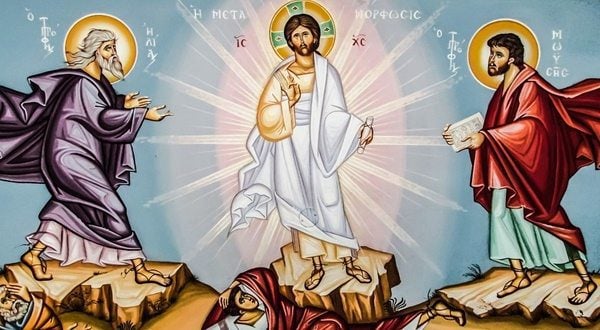
Nonviolent Atonement and the Lectionary: Transfiguration Sunday

Dear Wheaton College: Hazing Has No Place in...
TRENDING AT PATHEOS Progressive Christian

What Being a Modern-Day Apostle Means to Me
In my last column, I discussed the ins and outs of modern-day...

Did Ancient China Once Worship the God of...
Across human history, a common thread weaves through the origins of the...

Love Your Neighbor – Including Earth-Kin: Lev. 19,...
God’s command to love your neighbor means acting in an ethical and...

Lead a Church Study of “Jesus and Lao...
Guest writer Jack Thomas (The Irreverent Reverend) reflects on leading his church...

Pastoral Wisdom for Responding to Sermon Pushback
Getting sermon pushback on your social justice sermon? Learn practical, Proverbs-based strategies...

Principles for Understanding the Apostolic Ministry Today
Whenever people discover that my formal ministry title is "apostle," as in...
view all Progressive Christian blogs
Ad-Free & Subscriber Log-In Subscription Support
- About Us
- 2026 Calendar
- Videos
- Podcasts
- Library of World Religions
- Faith In Media Tracker
- Advertise With Us
- Write for Us
- Privacy Policy
- Terms of Service
- Do Not Sell My Data
- Contact Us
- Radiant Digital
- Manage Newsletter Subscriptions
- Unsubscribe From Notifications
- Sitemap
Copyright 2008-2026, Patheos. All rights reserved.
Subscription Support Ad-Free & Subscriber Log-In
Follow Patheos