
BuddhistCatholicContemplativeEvangelicalGeneral ChristianHinduJewishLatter-day SaintMuslimNew VisionsProgressive Christian
Beliefs
- Buddhist
- Catholic
- Contemplative
- Evangelical
- General Christian
- Hindu
- Jewish
- Latter-day Saint
- More Voices
- Muslim
- New Visions
- Pagan
- Progressive Christian
Topics
- Religion News
- Food and Religion
- Sports and Religion
- Religious Art
- Religious Music and Entertainment
- Religious Events
- History and Religion
- Style and Religion
- Politics and Religion
- Women in Religion
- Recreation Outdoors and Religion
- Business Finance and Religion
- Careers Workplace and Religion
- Education and Religion
- Family Parenting and Religion
- Health Fitness and Religion
- Home and Religion
- Relationships and Religion
- Technology and Religion
- Travel and Religion
Columnists
- Buddhist Columnists
- Business Finance and Religion Columnists
- Careers Workplace and Religion Columnists
- Catholic Columnists
- Contemplative Columnists
- Education and Religion Columnists
- Evangelists Columnists
- Family Parenting and Religion Columnists
- General Christian Columnists
- Health Fitness and Religion Columnists
- Hindu Columnists
- History and Religion Columnists
- Home and Religion Columnists
- Jewish Columnists
- More Voices Columnists
- Latter Day Columnists
- Muslim Columnists
- New Visions Columnists
- Nonreligious Columnists
- Pagan Columnists
- Politics and Religion Columnists
- Progressive Columnists
- Recreation Outdoors and Religion Columnists
- Relationships and Religion Columnists
- Religion News Columnists
- Religious Art Columnists
- Religious Events Columnists
- Religious Music and Entertainment Columnists
- Sports and Religion Columnists
- Style and Religion Columnists
- Technology and Religion Columnists
- Travel and Religion Columnists
- Women in Religion Columnists
Resource Library
- 2026 Calendar
- Library of World Religions
- The 100 Most Holy Places on Earth
- Patheos Answers
- Podcasts
- Videos
- Faith Leaders Database
- Anglican Episcopalian
- Bahai
- Baptist
- Buddhism
- Christianity
- Confucianism
- Eastern Orthodoxy
- Hinduism
- Holiness and Pentecostal
- ISKCON
- Islam
- Judaism
- Lutheran
- Methodist
- The Church of Jesus Christ of Latter-day Saints
- New Age
- Paganism
- Presbytarian and Reformed
- Protestantism
- Religion Behind the Scenes
- Roman Catholic
- Scientology
- Shia Islam
- Sikhism
- Sufism
- Sunni Islam
- Taoism
- Zen
- See all religions
Research Tools
 Ad-Free & Subscriber Log-In Subscription Support
Ad-Free & Subscriber Log-In Subscription Support
Follow Patheos 

- Trending:
- Forgiveness
- |
- Marriage
- |
- Consciousness
- |
- Death Penalty
- |
- Election
- |
- Halloween
 Teaching Nonviolent Atonement
- Home
- Progressive Christian
- Who is God? Part 3: The Son of God: How the Son Subverts Violence and Patriarchy
Who is God? Part 3: The Son of God: How the Son Subverts Violence and Patriarchy
Last updated on: February 12, 2015 at 5:56 pm by Adam Ericksen
Who is God? Part 3: The Son of God: How the Son Subverts Violence and Patriarchy 2015-02-12T17:56:04-05:00 Adam Ericksen
Patheos Explore the world's faith through different perspectives on religion and spirituality! Patheos has the views of the prevalent religions and spiritualities of the world.
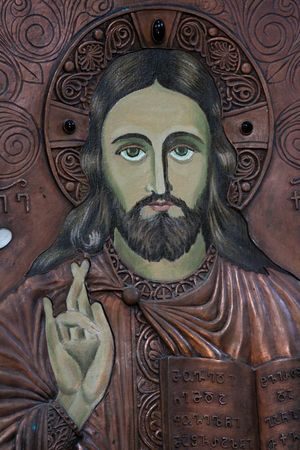
Copyright: / 123RF Stock Photo
My inner feminist recoils when I hear the term “Son of God.” I get the same feeling when I hear “God the Father.” I mean, isn’t that just patriarchal language that elevates men above women? If so, shouldn’t we do away with such violent patriarchal language about God?
It’s true that each of the Gospels call Jesus “the Son of God,” but here’s the catch: when the Gospels call Jesus the “Son of God” they subvert all forms of violence, including patriarchal structures that treat women as less than men. Here’s how:
The term “Son of God” was frequently used in the ancient world for kings and rulers who were thought to be the full representation of the divine. For example, Pharaohs were thought to be the sons of the great Egyptian god Ra. Many Roman emperors claimed divine sonship. Even King David in Psalm 2 claimed that God said to him, “You are my son; today I have begotten you.” The point is that, in the ancient world, the will of the gods was believed to be revealed through their sons.
What makes Jesus unique in the ancient world (and in the modern world!) as the “Son of God” is that he wasn’t a violent political ruler like the Pharaohs, Emperors, or even the kings of Israel. They all used violence to maintain their power. Thus, the gods were associated with power and violence. Jesus wasn’t interested in gaining political power through violence. Rather, he confronted the powers of violence and social exclusion with the nonviolent love of the Kingdom of God.
So, when the early Christians called Jesus the “Son of God” they subverted the idea that God is violent. In the Gospel of John, Jesus proclaimed, “The Father and I are one.” Jesus reveals that the Son and the Father are one in their nonviolent love for all of humanity, indeed, all of creation. The Gospel authors essentially asked, “Do you want to know what God is like? Look to Jesus, the true Son of God, who never killed and who invited all people, but especially the outcast and marginalized, into a community of love and embrace.”
Jesus, the Son of God, had a special relationship with the daughters of God in his culture. Women were often treated as less than men in the ancient world. They were frequently excluded from full community and the privileges that men enjoyed. Jesus was formed by significant aspects of Jewish tradition that challenged the patriarchal systems of the ancient world. The Hebrew Bible gives prominent positions to many women. For example, whole books were devoted to Ruth and Esther. Deborah was an important political leader and prophet of Israel. The Queen of Sheba challenged Solomon to work for justice. And the Abrahamic traditions would never have been born were it not for Sarah.
So, from within his Jewish tradition, Jesus subverted the patriarchal systems of the ancient world by including women into his closest community. Women ministered to Jesus (Mark 15:40-41), Jesus talked with women in public (even as his disciples protested – John 4:27), Jesus taught women (Luke 10:39), he was challenged by a woman and subsequently changed his behavior (Mark 7:24-39), he publicly defended a woman accused of adultery by a group of men (John 7:53-8:11), and he entrusted Mary Magdalene to preach the good news of his resurrection to the disciples (John 20:11-18). Jesus, the nonviolent Son of God, subverted the violent patriarchal systems of his day by treating women with equal worth and entrusting them with preaching and teaching the good news.
By proclaiming Jesus as the Son of God, the early followers of Christ subverted violence and patriarchy. They claimed that God is working to transform our violent and patriarchal systems through nonviolent love. In other words, when we talk about the redemption of the world through the Son of God, we are talking about the power of love, mercy, and forgiveness to draw all of humanity into a new community that includes the powerful and the outcasts, the emperors and the widows, the least and the last.
For other parts in this series see:
Who is God? Part 1: God is Love
Who is God? Part 2: The Holy Spirit and judgmental gods not worth believing in
Like Adam Ericksen – Public Theologian on Facebook for more reflections.

Browse Our Archives
Select a Category Atonement and Current Events Curriculum Faith and Families Interviews Jesus the Forgiving Victim Lent Montessori politics Reviews The Bible Explained Uncategorized Valentine's Day Wednesday Sermon Who is God?
Select a Month July 2020 November 2019 October 2019 September 2019 August 2019 July 2019 June 2019 May 2019 April 2019 March 2019 February 2019 January 2019 December 2018 November 2018 October 2018 September 2018 August 2018 July 2018 June 2018 May 2018 April 2018 March 2018 February 2018 January 2018 December 2017 November 2017 October 2017 September 2017 August 2017 July 2017 June 2017 May 2017 April 2017 March 2017 February 2017 January 2017 December 2016 November 2016 October 2016 September 2016 August 2016 June 2016 May 2016 April 2016 March 2016 February 2016 January 2016 December 2015 November 2015 October 2015 September 2015 August 2015 July 2015 June 2015 May 2015 April 2015 March 2015 February 2015 January 2015 December 2014 November 2014 October 2014 September 2014 August 2014 July 2014 June 2014 May 2014 April 2014 March 2014 January 2014 December 2013 September 2013 August 2013 July 2013
Follow Us!
TAKE THE
Religious Wisdom Quiz
Who prophesied destruction for Jerusalem but also promised a New Covenant?
Select your answer to see how you score.
Joel Isaiah Ezekiel Jeremiah
Related posts from Teaching Nonviolent Atonement

Forgiveness in the Time of COVID-19 by Julia...


Reflections on Indigenous Wisdom For Healing A Wounded...

How Forgiveness Can Transform Our Violence and Build...
TRENDING AT PATHEOS Progressive Christian

What Being a Modern-Day Apostle Means to Me
In my last column, I discussed the ins and outs of modern-day...

Did Ancient China Once Worship the God of...
Across human history, a common thread weaves through the origins of the...

Love Your Neighbor – Including Earth-Kin: Lev. 19,...
God’s command to love your neighbor means acting in an ethical and...

Lead a Church Study of “Jesus and Lao...
Guest writer Jack Thomas (The Irreverent Reverend) reflects on leading his church...

Pastoral Wisdom for Responding to Sermon Pushback
Getting sermon pushback on your social justice sermon? Learn practical, Proverbs-based strategies...

Principles for Understanding the Apostolic Ministry Today
Whenever people discover that my formal ministry title is "apostle," as in...
view all Progressive Christian blogs
Ad-Free & Subscriber Log-In Subscription Support
- About Us
- 2026 Calendar
- Videos
- Podcasts
- Library of World Religions
- Faith In Media Tracker
- Advertise With Us
- Write for Us
- Privacy Policy
- Terms of Service
- Do Not Sell My Data
- Contact Us
- Radiant Digital
- Manage Newsletter Subscriptions
- Unsubscribe From Notifications
- Sitemap
Copyright 2008-2026, Patheos. All rights reserved.
Subscription Support Ad-Free & Subscriber Log-In
Follow Patheos