
BuddhistCatholicContemplativeEvangelicalGeneral ChristianHinduJewishLatter-day SaintMuslimNew VisionsProgressive Christian
Beliefs
- Buddhist
- Catholic
- Contemplative
- Evangelical
- General Christian
- Hindu
- Jewish
- Latter-day Saint
- More Voices
- Muslim
- New Visions
- Pagan
- Progressive Christian
Topics
- Religion News
- Food and Religion
- Sports and Religion
- Religious Art
- Religious Music and Entertainment
- Religious Events
- History and Religion
- Style and Religion
- Politics and Religion
- Women in Religion
- Recreation Outdoors and Religion
- Business Finance and Religion
- Careers Workplace and Religion
- Education and Religion
- Family Parenting and Religion
- Health Fitness and Religion
- Home and Religion
- Relationships and Religion
- Technology and Religion
- Travel and Religion
Columnists
- Buddhist Columnists
- Business Finance and Religion Columnists
- Careers Workplace and Religion Columnists
- Catholic Columnists
- Contemplative Columnists
- Education and Religion Columnists
- Evangelists Columnists
- Family Parenting and Religion Columnists
- General Christian Columnists
- Health Fitness and Religion Columnists
- Hindu Columnists
- History and Religion Columnists
- Home and Religion Columnists
- Jewish Columnists
- More Voices Columnists
- Latter Day Columnists
- Muslim Columnists
- New Visions Columnists
- Nonreligious Columnists
- Pagan Columnists
- Politics and Religion Columnists
- Progressive Columnists
- Recreation Outdoors and Religion Columnists
- Relationships and Religion Columnists
- Religion News Columnists
- Religious Art Columnists
- Religious Events Columnists
- Religious Music and Entertainment Columnists
- Sports and Religion Columnists
- Style and Religion Columnists
- Technology and Religion Columnists
- Travel and Religion Columnists
- Women in Religion Columnists
Resource Library
- 2026 Calendar
- Library of World Religions
- The 100 Most Holy Places on Earth
- Patheos Answers
- Podcasts
- Videos
- Faith Leaders Database
- Anglican Episcopalian
- Bahai
- Baptist
- Buddhism
- Christianity
- Confucianism
- Eastern Orthodoxy
- Hinduism
- Holiness and Pentecostal
- ISKCON
- Islam
- Judaism
- Lutheran
- Methodist
- The Church of Jesus Christ of Latter-day Saints
- New Age
- Paganism
- Presbytarian and Reformed
- Protestantism
- Religion Behind the Scenes
- Roman Catholic
- Scientology
- Shia Islam
- Sikhism
- Sufism
- Sunni Islam
- Taoism
- Zen
- See all religions
Research Tools
 Ad-Free & Subscriber Log-In Subscription Support
Ad-Free & Subscriber Log-In Subscription Support
Follow Patheos 

- Trending:
- Forgiveness
- |
- Marriage
- |
- Consciousness
- |
- Death Penalty
- |
- Election
- |
- Halloween
 Teaching Nonviolent Atonement
- Home
- Progressive Christian
- Full Inclusion of LGBTQ: A Leading Evangelical Ethicist Changes His Mind
Full Inclusion of LGBTQ: A Leading Evangelical Ethicist Changes His Mind
Last updated on: November 14, 2014 at 10:38 am by Adam Ericksen
Full Inclusion of LGBTQ: A Leading Evangelical Ethicist Changes His Mind 2014-11-14T10:38:48-05:00 Adam Ericksen
Patheos Explore the world's faith through different perspectives on religion and spirituality! Patheos has the views of the prevalent religions and spiritualities of the world.
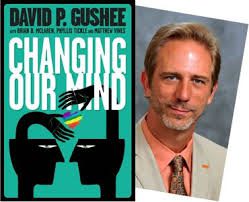
David Gushee, author of “Changing Our Mind”
REPENT!
Do shivers run down your spine when you hear that word? Well, there’s no getting around it – repent is an important biblical word. But as opposed to emphasizing how horrible we sinners are, the word simply means “Change your mind.” So, what happened when the leading American Evangelical ethicist repents? He asked the whole Church to change its mind, too.
That’s what David Gushee has done in his latest book, Changing Our Mind: A Call From America’s Leading Evangelical Ethics Scholar for Full Acceptance of LGBTQ Christians in the Church. Gushee challenges the Church (yes, capital C) to repent and change its mind to fully accept the LGBTQ community. And, of course, Gushee means more than the Catholic Church. Gushee’s call is bigger than changing our individual minds. Gushee claims that he titled the book, Changing Our Mind, “because I believe the question that matters is whether the collective mind of the Church universal can and ought to change.”
I agree with Gushee that the Church needs to change its mind. Why? So that the Church can be the Church!
Much has been said about the Church dying in American. I believe that as long as the Church is involved in scapegoating, bullying, and excluding a certain segment of humanity, the Church deserves to die because it’s not being the Church.
Why do I make such a radical claim? Because the Church is the Body of Christ. If the Church doesn’t act like Christ, if it uses religious laws to exclude and marginalize people as opposed to include and love them, then it has no business calling itself “Church” because it is not acting as the Body of Christ. As Gushee claims,
…if what we are talking about is carving out space for serious committed Christians who happen to be gay or lesbian, to participate in society as equals, in church as kin, and in blessings and demands of covenant on the same terms as everyone else, I now think that has nothing to do with cultural, ecclesial and moral decline, and everything to do with treating people the way Christ did.
The reason that full inclusion of LGBTQ community in the church is the biggest hot button issue of our day is because the theological stakes are high. I believe that those on different sides of this issue actually believe in different gods. One side believes in a god who justifies sacrifice and exclusion. The other side believes in a God who desires mercy and inclusion.
Gushee knows that Jesus changes our understanding of God on a fundamental level. He claims that, “…for the early Jewish and then Gentile Christians, their transformative encounter with Jesus led them to a huge paradigm shift, so huge it is better to call it a paradigm leap.” Jesus calls us to repent of our understanding of God as being violent and exclusionary. For many of us who grew up with an understanding of a violent and wrathful god, this repentance requires a paradigm leap in our understanding of the true nonviolent God of love revealed in Jesus. Because of Jesus, this leap means that Christians should not use God, or biblical verses, to justify excluding others from our midst.
Gushee explains this paradigm leap by referring to Acts 10. Peter believed that religious principles claimed that “it is unlawful for a Jew to associate with or visit a Gentile.” Peter used religious justifications to exclude Gentiles from being fully included into the religious community. But God would have not of that. In a vision, Peter saw a large sheet fall from heaven. On the sheet were all kinds of animals that his religious tradition told him not to eat. But God led Peter on a paradigm shift by saying, “Get up, Peter; kill and eat.” Peter replied, “By no means, Lord; for I have never eaten anything that is profane or unclean.” God then said, “What God has made clean, you must no call profane.” Apparently, Peter was pretty dense because Luke, the author of Acts, tells us that God had to tell Peter this “three times, and [then] the thing was suddenly taken up to heaven.”
But Peter repented. He changed his mind. Of course, that story is about so much more than food. For Peter, it was about full inclusion of those whom he previously thought should never be fully included – the Gentiles. In fact, God was telling Peter that using religious principles, even biblical verses, to exclude another segment of humanity from full inclusion into God’s community is to work against the will of God. And make no mistake, when anyone uses religious principles and biblical verses to exclude the LGBTQ community from full inclusion into the Church they are working against the will of God.
And yet, what about those biblical passages? It’s important to note that Gushee intimately knows the biblical arguments against including the LGBTQ community because he has made those arguments in the past. He formulates that biblical argument like this:
Genesis 1-2 + Genesis 19 + Leviticus 18:22/20:13 + Judges 19 + Matthew 19:1-12/Mark 10:2-12 + Romans 1:26-27 + 1 Corinthians 6:9/1 Timothy 1:10 [+ Ephesians 5:22-33 and all other biblical references to sex and marriage assuming or depicting male + female] = a clear ban on same-sex relationships.
Gushee used to believe that formula was valid, but no longer does. He takes each passage and explores them from their literary, historical, and cultural context and concludes that the Bible is not talking about same-sex relationships in the sense that we talk about loving and committed same-sex relationships. Gushee does an excellent job of deconstructing the use of those verses to justify excluding same sex relationships from full inclusion in the church.
But more to the point are Gushees personal stories about his friendships with people who identify as LGBT. Because of those relationships he has discovered that “The fact that traditionalist Christian teaching produces despair in just about every gay or lesbian person who must endure is surely very relevant information for the LGBT debate.”
When “The Good News” produces despair in anyone, it is no longer Good News. When the Church spreads despair to a certain segment of humanity, telling them that they are second class citizens at best and shamefully disordered human beings at worst, the Church deserves to die.
That’s why it is so important for the Church to listen to Gushee’s words. The Church must repent and change its mind to fully include the LGBT community and all people who experience scapegoating and exclusion, or it will fail in its divine mission to participate in the Good News of God’s reconciliation of the world.
Next Post

November 18, 2014 The Oracle of Certainty: From Ancient Athens to ISIS
Browse Our Archives
Select a Category Atonement and Current Events Curriculum Faith and Families Interviews Jesus the Forgiving Victim Lent Montessori politics Reviews The Bible Explained Uncategorized Valentine's Day Wednesday Sermon Who is God?
Select a Month July 2020 November 2019 October 2019 September 2019 August 2019 July 2019 June 2019 May 2019 April 2019 March 2019 February 2019 January 2019 December 2018 November 2018 October 2018 September 2018 August 2018 July 2018 June 2018 May 2018 April 2018 March 2018 February 2018 January 2018 December 2017 November 2017 October 2017 September 2017 August 2017 July 2017 June 2017 May 2017 April 2017 March 2017 February 2017 January 2017 December 2016 November 2016 October 2016 September 2016 August 2016 June 2016 May 2016 April 2016 March 2016 February 2016 January 2016 December 2015 November 2015 October 2015 September 2015 August 2015 July 2015 June 2015 May 2015 April 2015 March 2015 February 2015 January 2015 December 2014 November 2014 October 2014 September 2014 August 2014 July 2014 June 2014 May 2014 April 2014 March 2014 January 2014 December 2013 September 2013 August 2013 July 2013
Follow Us!
TAKE THE
Religious Wisdom Quiz
For the wages of sin is death, but the gift of God is ____ in Christ Jesus our Lord.
Select your answer to see how you score.
Love Grace Redemption Eternal Life
Related posts from Teaching Nonviolent Atonement

Forgiveness in the Time of COVID-19 by Julia...

Reflections on Indigenous Wisdom For Healing A Wounded...

How Forgiveness Can Transform Our Violence and Build...

Jesus Unmasked: God's Economy and How to Cheat...
TRENDING AT PATHEOS Progressive Christian

What Being a Modern-Day Apostle Means to Me
In my last column, I discussed the ins and outs of modern-day...

Did Ancient China Once Worship the God of...
Across human history, a common thread weaves through the origins of the...

Love Your Neighbor – Including Earth-Kin: Lev. 19,...
God’s command to love your neighbor means acting in an ethical and...

Lead a Church Study of “Jesus and Lao...
Guest writer Jack Thomas (The Irreverent Reverend) reflects on leading his church...

Pastoral Wisdom for Responding to Sermon Pushback
Getting sermon pushback on your social justice sermon? Learn practical, Proverbs-based strategies...

Principles for Understanding the Apostolic Ministry Today
Whenever people discover that my formal ministry title is "apostle," as in...
view all Progressive Christian blogs
Ad-Free & Subscriber Log-In Subscription Support
- About Us
- 2026 Calendar
- Videos
- Podcasts
- Library of World Religions
- Faith In Media Tracker
- Advertise With Us
- Write for Us
- Privacy Policy
- Terms of Service
- Do Not Sell My Data
- Contact Us
- Radiant Digital
- Manage Newsletter Subscriptions
- Unsubscribe From Notifications
- Sitemap
Copyright 2008-2026, Patheos. All rights reserved.
Subscription Support Ad-Free & Subscriber Log-In
Follow Patheos