
BuddhistCatholicContemplativeEvangelicalGeneral ChristianHinduJewishLatter-day SaintMuslimNew VisionsProgressive Christian
Beliefs
- Buddhist
- Catholic
- Contemplative
- Evangelical
- General Christian
- Hindu
- Jewish
- Latter-day Saint
- More Voices
- Muslim
- New Visions
- Pagan
- Progressive Christian
Topics
- Religion News
- Food and Religion
- Sports and Religion
- Religious Art
- Religious Music and Entertainment
- Religious Events
- History and Religion
- Style and Religion
- Politics and Religion
- Women in Religion
- Recreation Outdoors and Religion
- Business Finance and Religion
- Careers Workplace and Religion
- Education and Religion
- Family Parenting and Religion
- Health Fitness and Religion
- Home and Religion
- Relationships and Religion
- Technology and Religion
- Travel and Religion
Columnists
- Buddhist Columnists
- Business Finance and Religion Columnists
- Careers Workplace and Religion Columnists
- Catholic Columnists
- Contemplative Columnists
- Education and Religion Columnists
- Evangelists Columnists
- Family Parenting and Religion Columnists
- General Christian Columnists
- Health Fitness and Religion Columnists
- Hindu Columnists
- History and Religion Columnists
- Home and Religion Columnists
- Jewish Columnists
- More Voices Columnists
- Latter Day Columnists
- Muslim Columnists
- New Visions Columnists
- Nonreligious Columnists
- Pagan Columnists
- Politics and Religion Columnists
- Progressive Columnists
- Recreation Outdoors and Religion Columnists
- Relationships and Religion Columnists
- Religion News Columnists
- Religious Art Columnists
- Religious Events Columnists
- Religious Music and Entertainment Columnists
- Sports and Religion Columnists
- Style and Religion Columnists
- Technology and Religion Columnists
- Travel and Religion Columnists
- Women in Religion Columnists
Resource Library
- 2026 Calendar
- Library of World Religions
- The 100 Most Holy Places on Earth
- Patheos Answers
- Podcasts
- Videos
- Faith Leaders Database
- Anglican Episcopalian
- Bahai
- Baptist
- Buddhism
- Christianity
- Confucianism
- Eastern Orthodoxy
- Hinduism
- Holiness and Pentecostal
- ISKCON
- Islam
- Judaism
- Lutheran
- Methodist
- The Church of Jesus Christ of Latter-day Saints
- New Age
- Paganism
- Presbytarian and Reformed
- Protestantism
- Religion Behind the Scenes
- Roman Catholic
- Scientology
- Shia Islam
- Sikhism
- Sufism
- Sunni Islam
- Taoism
- Zen
- See all religions
Research Tools
 Ad-Free & Subscriber Log-In Subscription Support
Ad-Free & Subscriber Log-In Subscription Support
Follow Patheos 

- Trending:
- Forgiveness
- |
- Marriage
- |
- Consciousness
- |
- Death Penalty
- |
- Election
- |
- Halloween
 Teaching Nonviolent Atonement
- Home
- Progressive Christian
- The Rise of ISIS and the Immoral Equivalency of War
The Rise of ISIS and the Immoral Equivalency of War
Last updated on: October 28, 2014 at 3:59 pm by Suzanne Ross
The Rise of ISIS and the Immoral Equivalency of War 2014-10-28T15:59:06-05:00 Suzanne Ross
Patheos Explore the world's faith through different perspectives on religion and spirituality! Patheos has the views of the prevalent religions and spiritualities of the world.
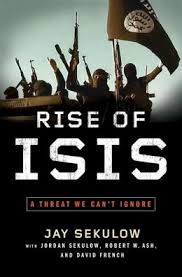 The Rise of ISIS: A Threat We Can’t Ignore by Jay Sekulow is an extended essay attempting to draw a stark distinction between good guys (the U.S. and Israel) and bad guys (ISIS and Hamas). The author’s sole purpose is to justify the destruction of the bad guys by the good guys in good conscience and without remorse. That Jay Sekulow fails in his task is in no way due to the fact that real goodness and evil do not exist. They do. Sekulow’s failure is the direct result of his inability to recognize that the only authentic marker of goodness is not the possession of a compelling argument for the use of violence but the moral strength to refrain from violence when the temptation is the greatest.
Cutting off any disagreement with his claims of difference between us and them as the creation of “moral equivalency”, he reveals his own hidden fear: that he and his enemy have become twins, mirror images of each other returning hate for hate, violence for violence, and indulging in identical self-justifying rhetoric. By advocating U.S. violence as a response to ISIS violence he falls victim to his own accusation. He has become the very thing he so passionately condemns.
The Devil Made Me Do It!
This mirroring of his enemy is revealed most completely in his attempt to draw a distinction between civilian deaths caused by ISIS and Hamas and those caused by US or Israeli combat operations. Sekulow spends a good deal of time in his short book explaining that when Israeli military operations kill civilians it is the fault of Hamas. Why? Because Hamas has forced Israel’s hand by locating their rocket launchers in civilian areas and using civilians as human shields. Hamas kills civilians deliberately, he asserts, while Israel does so with regret. Similarly, ISIS is described as killing civilians as part of their inhuman tactics while the loss of civilian life by US drone attacks, for example, is seen as regrettable but necessary because of the untenable situation we have been put in by our enemies.
What Sekulow fails to document is that Hamas and ISIS describe their violence against civilians as forced upon them by the untenable situation that we, their enemies, have put them in. A quick glance through news reports about the torture and beheading of hostages demonstrates this ironic equivalency. In a video released October 27, ISIS “admits to torture, but blames the hostages and their governments for the abuse.” In another statement, referring to the beheading of James Foley, they accuse the U.S. government of “dragging its feet, reluctant to save James’s life” while European governments were actively negotiating for and securing the release of their citizens. It sounds as if the ISIS jailers are blaming the beheadings on American government’s refusal to pay ransoms, doesn’t it? In other words, just as Sekulow says “ISIS made me do it,” his opponents are saying “the US made me do it”.
Immoral Equivalency
If you feel like you’ve fallen down a rabbit hole, you have. It’s the inevitable desperate scramble for moral footing as enemies begin to resemble each other more and more. As René Girard, the founder of mimetic theory, explains, reciprocity or the imitation of enemies as they return violence for violence, “can be seen only by someone who is outside the conflict because from the inside you must always believe in your difference and respond more and more quickly and forcefully. From the outside, the adversaries look like what they are: simple doubles.” (Battling to the End, page 14) From where Sekulow stands, squarely inside the conflict, he insists more and more stridently on his difference from ISIS even as he grows more and more like them. By seeking to justify his violence as good while condemning the violence of his enemy, Sekulow has fallen victim to an immoral equivalency of his own creation.
Allow me to offer another example of the way in which adversaries imitate one another in the midst of a conflict. It’s taken from a New York Times article called “The Horror Before Beheadings” published on October 26. It caught the attention of ISIS and prompted the release of the video I referred to earlier. The reporter Rukmini Callimachi gives a detailed accounting of the fate of hostages taken by ISIS, most taken by terrorist groups before ISIS even existed. In what amounts to striking examples of how ISIS was directly imitating American behavior and protocols, Callimachi reports that hostages “were given numbers in Arabic, which appeared to be an effort to catalog them – not unlike the numbers American forces had assigned to prisoners in the detention facilities they ran in Iraq.” At one point the French hostages were paraded in orange jumpsuits, “mimicking those worn by prisoners at the United States facility in Guantanamo Bay, Cuba. They also began waterboarding a select few, just as C.I.A. interrogators had treated Muslim prisoners at so-called black sites during the George W. Bush administration.”
Facing Evil, Facing Ourselves
Unfortunately, when Sekulow cites the torture and death of civilians as a reason to destroy ISIS, he inadvertently condemns the U.S. and Israel as well. When he attempts to say, “But we kill civilians only when our enemy forces us to” he does himself no favors. Rather than distinguishing himself from his enemies, he only reveals his similarities. If you are protesting at this point that evil does exist, I would agree with you. But I would have to disagree with Sekulow as to where evil is to be found. Evil is the insistence on differences where they do not exist. Evil is condemning the violence of others while excusing your own. Evil is the spiraling cycle of tit for tat, reciprocal violence that yields only one result: enemy twins who passionately desire each other’s destruction. There is only one way to re-establish meaningful difference and that is to refuse to engage in the game of violent reciprocity. Girard has famously said that the cross of Christ exposed the futility of violence and rendered it incapable of producing anything except reproducing itself. “We can all participate in the divinity of Christ,” Girard explains, “so long as we renounce our own violence.” (Battling to the End, xvi)
If good people will not renounce violence, then who will? If good people will not accept responsibility for their role in “The Rise of ISIS” then I fear we will be calling forth ever more enemy doubles to do battle with. Jay Sekulow wants us to believe that he “hungers for peace”. So he says at the end of his book:
“Now is not the time to grow weary in the face of evil. Now is not the time to allow our hunger for peace to obscure our enemy’s desire for war. Innocent lives are at stake, and immense evil is on the march.” (14)
Ironically, I came away from this book with a clear impression of Sekulow’s “desire for war” and that violence would be the only thing that could satisfy his “hunger for peace”. Evil is indeed on the march, but no more so than at any time in human history. Until so-called good people find the moral courage to renounce the use of violence to achieve our ends, we will be as guilty as our enemies of our collective failure to live in peace. That’s an immoral equivalency that we ignore at our peril.
Next Post

October 28, 2014 Why? – Unlocking the Answer to School Shootings
Browse Our Archives
Select a Category Atonement and Current Events Curriculum Faith and Families Interviews Jesus the Forgiving Victim Lent Montessori politics Reviews The Bible Explained Uncategorized Valentine's Day Wednesday Sermon Who is God?
Select a Month July 2020 November 2019 October 2019 September 2019 August 2019 July 2019 June 2019 May 2019 April 2019 March 2019 February 2019 January 2019 December 2018 November 2018 October 2018 September 2018 August 2018 July 2018 June 2018 May 2018 April 2018 March 2018 February 2018 January 2018 December 2017 November 2017 October 2017 September 2017 August 2017 July 2017 June 2017 May 2017 April 2017 March 2017 February 2017 January 2017 December 2016 November 2016 October 2016 September 2016 August 2016 June 2016 May 2016 April 2016 March 2016 February 2016 January 2016 December 2015 November 2015 October 2015 September 2015 August 2015 July 2015 June 2015 May 2015 April 2015 March 2015 February 2015 January 2015 December 2014 November 2014 October 2014 September 2014 August 2014 July 2014 June 2014 May 2014 April 2014 March 2014 January 2014 December 2013 September 2013 August 2013 July 2013
Follow Us!
TAKE THE
Religious Wisdom Quiz
What is the primary language of the Eastern Orthodox liturgy in Greece?
Select your answer to see how you score.
English Russian Latin Greek
Related posts from Teaching Nonviolent Atonement

How Forgiveness Can Transform Our Violence and Build...

Jesus Unmasked: Jesus Brings the Fire!

St. Francis Preaches on Violence

Building God's Kingdom or Destroying Ourselves? Sodom, The...
TRENDING AT PATHEOS Progressive Christian

What Being a Modern-Day Apostle Means to Me
In my last column, I discussed the ins and outs of modern-day...

Did Ancient China Once Worship the God of...
Across human history, a common thread weaves through the origins of the...

Love Your Neighbor – Including Earth-Kin: Lev. 19,...
God’s command to love your neighbor means acting in an ethical and...

Lead a Church Study of “Jesus and Lao...
Guest writer Jack Thomas (The Irreverent Reverend) reflects on leading his church...

Pastoral Wisdom for Responding to Sermon Pushback
Getting sermon pushback on your social justice sermon? Learn practical, Proverbs-based strategies...

Principles for Understanding the Apostolic Ministry Today
Whenever people discover that my formal ministry title is "apostle," as in...
view all Progressive Christian blogs
Ad-Free & Subscriber Log-In Subscription Support
- About Us
- 2026 Calendar
- Videos
- Podcasts
- Library of World Religions
- Faith In Media Tracker
- Advertise With Us
- Write for Us
- Privacy Policy
- Terms of Service
- Do Not Sell My Data
- Contact Us
- Radiant Digital
- Manage Newsletter Subscriptions
- Unsubscribe From Notifications
- Sitemap
Copyright 2008-2026, Patheos. All rights reserved.
Subscription Support Ad-Free & Subscriber Log-In
Follow Patheos