
BuddhistCatholicContemplativeEvangelicalGeneral ChristianHinduJewishLatter-day SaintMuslimNew VisionsProgressive Christian
Beliefs
- Buddhist
- Catholic
- Contemplative
- Evangelical
- General Christian
- Hindu
- Jewish
- Latter-day Saint
- More Voices
- Muslim
- New Visions
- Pagan
- Progressive Christian
Topics
- Religion News
- Food and Religion
- Sports and Religion
- Religious Art
- Religious Music and Entertainment
- Religious Events
- History and Religion
- Style and Religion
- Politics and Religion
- Women in Religion
- Recreation Outdoors and Religion
- Business Finance and Religion
- Careers Workplace and Religion
- Education and Religion
- Family Parenting and Religion
- Health Fitness and Religion
- Home and Religion
- Relationships and Religion
- Technology and Religion
- Travel and Religion
Columnists
- Buddhist Columnists
- Business Finance and Religion Columnists
- Careers Workplace and Religion Columnists
- Catholic Columnists
- Contemplative Columnists
- Education and Religion Columnists
- Evangelists Columnists
- Family Parenting and Religion Columnists
- General Christian Columnists
- Health Fitness and Religion Columnists
- Hindu Columnists
- History and Religion Columnists
- Home and Religion Columnists
- Jewish Columnists
- More Voices Columnists
- Latter Day Columnists
- Muslim Columnists
- New Visions Columnists
- Nonreligious Columnists
- Pagan Columnists
- Politics and Religion Columnists
- Progressive Columnists
- Recreation Outdoors and Religion Columnists
- Relationships and Religion Columnists
- Religion News Columnists
- Religious Art Columnists
- Religious Events Columnists
- Religious Music and Entertainment Columnists
- Sports and Religion Columnists
- Style and Religion Columnists
- Technology and Religion Columnists
- Travel and Religion Columnists
- Women in Religion Columnists
Resource Library
- 2026 Calendar
- Library of World Religions
- The 100 Most Holy Places on Earth
- Patheos Answers
- Podcasts
- Videos
- Faith Leaders Database
- Anglican Episcopalian
- Bahai
- Baptist
- Buddhism
- Christianity
- Confucianism
- Eastern Orthodoxy
- Hinduism
- Holiness and Pentecostal
- ISKCON
- Islam
- Judaism
- Lutheran
- Methodist
- The Church of Jesus Christ of Latter-day Saints
- New Age
- Paganism
- Presbytarian and Reformed
- Protestantism
- Religion Behind the Scenes
- Roman Catholic
- Scientology
- Shia Islam
- Sikhism
- Sufism
- Sunni Islam
- Taoism
- Zen
- See all religions
Research Tools
 Ad-Free & Subscriber Log-In Subscription Support
Ad-Free & Subscriber Log-In Subscription Support
Follow Patheos 

- Trending:
- Forgiveness
- |
- Marriage
- |
- Consciousness
- |
- Death Penalty
- |
- Election
- |
- Halloween
 Teaching Nonviolent Atonement
- Home
- Progressive Christian
- Sharing Space with God: A Possible Return to Eden
Sharing Space with God: A Possible Return to Eden
Last updated on: August 13, 2014 at 10:00 am by Suzanne Ross
Sharing Space with God: A Possible Return to Eden 2014-08-01T15:50:53-05:00 Suzanne Ross
Patheos Explore the world's faith through different perspectives on religion and spirituality! Patheos has the views of the prevalent religions and spiritualities of the world.
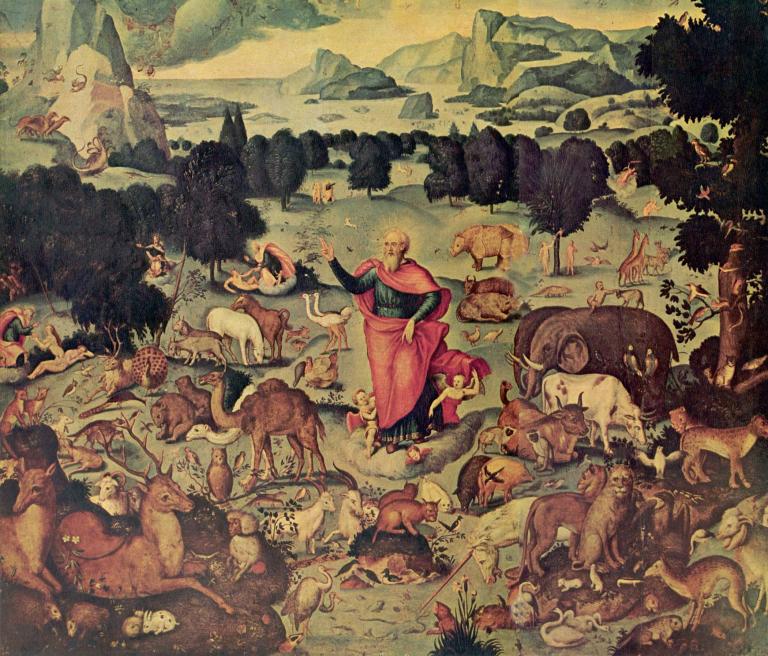
16th century painting
Was the Garden of Eden a shared space? The answer seems obvious – yes, God created the garden and then shared it with Adam and then Eve. But there’s that little problem of the tree that God didn’t want to share. “You may freely eat of every tree of the garden,” God told his newly created companions. “But of the tree of the knowledge of good and evil you shall not eat, for in the day that you eat of it you shall die.” So which is it? Was God a generous God, sharing unconditionally with Adam and Eve, or was he selfish, holding back the most valuable treasure for himself? Did this “yes, but” command of God make a mockery of sharing?
Interpreters of Genesis 2 have often seen God’s “these trees, but not this tree” command as a test of Adam and Eve’s faithfulness. After all, they could have every other fruit in the garden, so by commanding “not this fruit” God was not giving them a difficult test; it’s one he was hoping they would pass easily. Or the prohibition is understood as an act of kindness from a benevolent father who restricts access to dangerous things for his children’s own good. Only God can handle the knowledge of good and evil without risking death, and so we are better off without it. Mimetic theory has contributed to this argument by pointing out that when we divide the world up into good and evil, we often do so as a justification for hatred, exclusion and violence. It seems we always place ourselves among the good (right alongside God) and those we disagree with among the evil (as enemies of God). Insisting on dividing the world up this way is what destroyed Eden so that, in a way, we expelled ourselves from God’s nonjudgmental, all-loving presence.
But I have a gnawing disquiet with this reasoning. Why did God have to point out such a big difference between the Creator and his creatures? Adam and Eve had no delusions of godhood that I can discern in the text. They didn’t seem to think they were anything other than creatures who were the happy beneficiaries of a benevolent Creator’s urge to share everything he had with them. The prohibition seems like an accident waiting to happen, an unnecessary correction to Adam and Eve’s lack of ambition to be anything than what they were.
I recently encountered an explanation of “shared space” in the context of peacebuilding efforts in Northern Ireland that may shed some light on God’s apparent waffling on the sharing thing. At a Methodist Community center in Belfast, the director explained the difference between “shared space” and “neutral space”. Neutral space is the easiest to understand. Think of a neutral zone between combatants where no fighting takes place. A truce is also a kind of neutral space, but carved out in time. Creating a neutral zone or time of truce doesn’t mean that hostilities have ended, only that for this time or in this space they are suspended. A neutral space can look peaceful because no one is killing or being killed. But though the guns are silenced, the hostility remains.
Shared space is very different because it’s not neutral. Shared space involves an invitation to join you in your space. If it’s not yours, you can’t share it with someone! Think of the difference between inviting an adversary to meet you at a restaurant or to join you for dinner at your home. You might be civil to each other in a restaurant, but in your home you are more likely to become friends. Inviting someone into your home is an act of faith in the good intentions of the other, a faith that must be reciprocated for the invitation to be accepted. Shared space does more than suspect hostilities; it creates the conditions for authentic peace to be co-created.
So what does this have to do with the Garden of Eden? I’m not completely sure, but I’m beginning to wonder if God’s apparently selfish prohibition isn’t a sign to us that the Garden was not neutral space. It was God’s space to do with as he pleased. By saying “this is my tree”, God is telling Adam and Eve, “this is my garden”, which is a condition for God to be able to share the garden with them and with us. God did not create Adam and Eve to be acquaintances he would occasionally meet for dinner in a restaurant or wave hello to as he passed them on the street. God created Adam and Eve to be his friends and inviting them into his garden was and is the condition for that friendship to flourish. When the friendship frays and is tested by mistrust, betrayal, rivalry and lies, the surest route to reconciliation is an invitation from God to come back to his garden. Perhaps the rest of Scriptures is nothing more than God’s ongoing invitation for us to join him in his home, which is neither neutral nor evil, but as good as it gets.
tree of knowledge of good and evil
Previous Post

August 8, 2014
David's Sling: Israel and Interpreting Biblical Violence
Next Post
August 14, 2014 Robin Williams on the Ultimate Christian Gift
Browse Our Archives
Select a Category Atonement and Current Events Curriculum Faith and Families Interviews Jesus the Forgiving Victim Lent Montessori politics Reviews The Bible Explained Uncategorized Valentine's Day Wednesday Sermon Who is God?
Select a Month July 2020 November 2019 October 2019 September 2019 August 2019 July 2019 June 2019 May 2019 April 2019 March 2019 February 2019 January 2019 December 2018 November 2018 October 2018 September 2018 August 2018 July 2018 June 2018 May 2018 April 2018 March 2018 February 2018 January 2018 December 2017 November 2017 October 2017 September 2017 August 2017 July 2017 June 2017 May 2017 April 2017 March 2017 February 2017 January 2017 December 2016 November 2016 October 2016 September 2016 August 2016 June 2016 May 2016 April 2016 March 2016 February 2016 January 2016 December 2015 November 2015 October 2015 September 2015 August 2015 July 2015 June 2015 May 2015 April 2015 March 2015 February 2015 January 2015 December 2014 November 2014 October 2014 September 2014 August 2014 July 2014 June 2014 May 2014 April 2014 March 2014 January 2014 December 2013 September 2013 August 2013 July 2013
Follow Us!
TAKE THE
Religious Wisdom Quiz
Which principle does the "Golden Rule" teach?
Select your answer to see how you score.
Rest on the Sabbath Spread the Gospel Pray aloud Treat others as you want to be treated
Related posts from Teaching Nonviolent Atonement
Following Jesus: Emigrating from Violence into Love

Wednesday Sermon: Fighting Through the Lies and Claiming...
Adam, Eve, and the Mimetics of Being Human:...
TRENDING AT PATHEOS Progressive Christian

Why Christians Have a Sacred Duty to Vote:...
The Bible offers strong support for the sacred duty to vote. Here...

What Being a Modern-Day Apostle Means to Me
In my last column, I discussed the ins and outs of modern-day...

Did Ancient China Once Worship the God of...
Across human history, a common thread weaves through the origins of the...

Love Your Neighbor – Including Earth-Kin: Lev. 19,...
God’s command to love your neighbor means acting in an ethical and...

Lead a Church Study of “Jesus and Lao...
Guest writer Jack Thomas (The Irreverent Reverend) reflects on leading his church...

Principles for Understanding the Apostolic Ministry Today
Whenever people discover that my formal ministry title is "apostle," as in...
view all Progressive Christian blogs
Ad-Free & Subscriber Log-In Subscription Support
- About Us
- 2026 Calendar
- Videos
- Podcasts
- Library of World Religions
- Faith In Media Tracker
- Advertise With Us
- Write for Us
- Privacy Policy
- Terms of Service
- Do Not Sell My Data
- Contact Us
- Radiant Digital
- Manage Newsletter Subscriptions
- Unsubscribe From Notifications
- Sitemap
Copyright 2008-2026, Patheos. All rights reserved.
Subscription Support Ad-Free & Subscriber Log-In
Follow Patheos