
BuddhistCatholicContemplativeEvangelicalGeneral ChristianHinduJewishLatter-day SaintMuslimNew VisionsProgressive Christian
Beliefs
- Buddhist
- Catholic
- Contemplative
- Evangelical
- General Christian
- Hindu
- Jewish
- Latter-day Saint
- More Voices
- Muslim
- New Visions
- Pagan
- Progressive Christian
Topics
- Religion News
- Food and Religion
- Sports and Religion
- Religious Art
- Religious Music and Entertainment
- Religious Events
- History and Religion
- Style and Religion
- Politics and Religion
- Women in Religion
- Recreation Outdoors and Religion
- Business Finance and Religion
- Careers Workplace and Religion
- Education and Religion
- Family Parenting and Religion
- Health Fitness and Religion
- Home and Religion
- Relationships and Religion
- Technology and Religion
- Travel and Religion
Columnists
- Buddhist Columnists
- Business Finance and Religion Columnists
- Careers Workplace and Religion Columnists
- Catholic Columnists
- Contemplative Columnists
- Education and Religion Columnists
- Evangelists Columnists
- Family Parenting and Religion Columnists
- General Christian Columnists
- Health Fitness and Religion Columnists
- Hindu Columnists
- History and Religion Columnists
- Home and Religion Columnists
- Jewish Columnists
- More Voices Columnists
- Latter Day Columnists
- Muslim Columnists
- New Visions Columnists
- Nonreligious Columnists
- Pagan Columnists
- Politics and Religion Columnists
- Progressive Columnists
- Recreation Outdoors and Religion Columnists
- Relationships and Religion Columnists
- Religion News Columnists
- Religious Art Columnists
- Religious Events Columnists
- Religious Music and Entertainment Columnists
- Sports and Religion Columnists
- Style and Religion Columnists
- Technology and Religion Columnists
- Travel and Religion Columnists
- Women in Religion Columnists
Resource Library
- 2026 Calendar
- Library of World Religions
- The 100 Most Holy Places on Earth
- Patheos Answers
- Podcasts
- Videos
- Faith Leaders Database
- Anglican Episcopalian
- Bahai
- Baptist
- Buddhism
- Christianity
- Confucianism
- Eastern Orthodoxy
- Hinduism
- Holiness and Pentecostal
- ISKCON
- Islam
- Judaism
- Lutheran
- Methodist
- The Church of Jesus Christ of Latter-day Saints
- New Age
- Paganism
- Presbytarian and Reformed
- Protestantism
- Religion Behind the Scenes
- Roman Catholic
- Scientology
- Shia Islam
- Sikhism
- Sufism
- Sunni Islam
- Taoism
- Zen
- See all religions
Research Tools
 Ad-Free & Subscriber Log-In Subscription Support
Ad-Free & Subscriber Log-In Subscription Support
Follow Patheos 

- Trending:
- Forgiveness
- |
- Marriage
- |
- Consciousness
- |
- Death Penalty
- |
- Election
- |
- Halloween
 Teaching Nonviolent Atonement
- Home
- Progressive Christian
- NT Wright and a Genuine Penal Substitutionary Atonement Theory
NT Wright and a Genuine Penal Substitutionary Atonement Theory
Last updated on: August 4, 2014 at 6:00 am by Adam Ericksen
NT Wright and a Genuine Penal Substitutionary Atonement Theory 2014-08-01T14:50:45-05:00 Adam Ericksen
Patheos Explore the world's faith through different perspectives on religion and spirituality! Patheos has the views of the prevalent religions and spiritualities of the world.
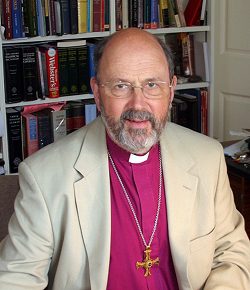
NT Wright courtesy of the University of St. Andrews
What is God like? What are humans like?
When it comes to the Atonement, those two questions guide all of our other questions. They are the two implicit questions behind N.T. Wright’s comments about the Atonement in the video below. For example, Wright says:
“Tragically, some Christians have said that on the cross God embraced the use of violence to solve the problems, therefore this legitimates us in embracing violence…and I want to say, ‘Excuse me. You’re just not reading the text. That the point of that narrative is to say that all the evil and wickedness and violence of the world converged onto this one point, which was Jesus. And the point of that was … that that was the ultimate defeat of violence. It did its worst to him and he in consequence was able to exhaust its force.’”
Notice that Wright separates the violence on the cross from God. Wright is one of my favorite theologians, in part because he makes this move throughout his work. In his book with Marcus J. Borg, The Meaning of Jesus: Two Visions, Wright states this about Jesus’ death, “He would go ahead of the nation to take upon himself the judgment of which he had warned, the wrath of Rome against rebel subjects. That, I believe, lies at the heart of the New Testament’s insistence that Jesus died the death that awaited others, in order that they might not die it” (98).
There are times when Wright talks about the “wrath of God,” but whatever the wrath of God means, it does not mean that God’s wrath was poured out on Jesus while he hung on the cross. It does not mean that “on the cross God embraced the use of violence to solve the problems.” The cross was not about Jesus taking upon himself the “wrath of God”; rather, the cross was about Jesus taking upon himself the “wrath of Rome.” But, it would be foolish to simply blame Rome, or the religious authorities of the time. Indeed, they were part of the historical crucifixion, but you could replace the Roman Empire with any historical empire that attempted to keep the peace through violence, be that the ancient Egyptian, Assyrian, Babylonian, Persian, or Greek Empires, or the modern French, British, or American empires.
Mimetic theory claims that we tend to find reconciliation by channeling our own wrath against a scapegoat. Indeed, this is the way that Empires find inner reconciliation when they experience a threat: they unite against a scapegoat. The same could be said about any group of human beings, whether high school cliques, office workers, church members, or politicians.
But as Wright continues his discussion of Atonement in the video, he says, “I want all of the theories of Atonement because I think that they all ultimately do fit together, but if you just take one of them, say Penal Substitution, and take it out of its biblical context, the danger then is that you do just have a picture of God as a sort of bullying headmaster who because the rest of the class have been bad he picks on his own son and he beats him up and says, ‘Well that’ll do.’ And I dread to think that there are some Christians who really think that that’s what the story is like.”
At this point I want to click the pause button and ask, “Do you really mean you want ALL Atonement theories? Because isn’t that exactly what Penal Substitutionary Atonement claims? That Jesus took upon himself the wrath of God so that the rest of us who have been bad won’t have to take God’s wrath upon ourselves?”
Unfortunately, Wright doesn’t answer that question, but in passing he says we need a “genuine theology of Penal Substitution.” At this point, I have to disagree with Wright because a genuine Penal Substitutionary Atonement theory cannot be a theology. Rather, it must be an anthropology. In other words, Penal Substitutionary Atonement theory describes what humans do, not what God does.
I’ll clarify by breaking down the phrase. The word penal refers to punishment. The theological view of Penal Substitutionary Atonement theory claims that Jesus took upon himself the punishment from God that we deserved. Punishment is an adequate word for what Jesus experienced on the cross, but the question is, “Where did the punishment come from?” We can follow Wright’s logic here, as long as we say that the punishment Jesus experienced didn’t come from God; it came from humans. So, there is truth in the word penal, but it’s an anthropological truth – the punishment came from humans, not from God.
Substitution refers to someone taking on punishment in another person’s place. Wright refers to the substitutionary role of Jesus in the quote from The Meaning of Jesus above when he writes, “Jesus died the death that awaited others, in order that they might not die it.” Again, there is truth in the assertion that Jesus was a substitute for others, but it’s an anthropological truth. Mark Heim states in his book Saved From Sacrifice that on the cross, “God has taken the place of the scapegoat, has lived the violence from the side of the persecuted, has endured sacrifice in order to end sacrifice” (244). Jesus substituted himself in the place of all the scapegoats that humans create. He took on human wrath in order to end our ways of sacrificial violence.
Atonement refers to wiping away our sins, but it’s just as acceptable to think of it simply as “at-one-ment.” Atonement wipes away our sins so that we can be at-one with God and with our fellow human beings. From an anthropological view, the cross demonstrated the human pattern of experiencing a sense of at-one-ness by uniting in sacrificial violence against a scapegoated victim. The anthropological truth is that whenever humans unite against a common enemy we have a sense of oneness and our sins against each other are wiped away as we thrust them upon our scapegoat.
But that is not the theological truth of how God makes Atonement with us. The theological truth is that God wipes away our sins and makes us one with God and with our fellow human beings through forgiveness. We see this on the cross when Jesus says, “Father, forgive them, for they know not what they do.” In fact, during his life, death, and resurrection Jesus made Atonement with God and humanity, not through acts of divine vengeance, but through acts of divine forgiveness.
What is God like? God is like Jesus: nonviolent love and forgiveness in action. Yet, used as a theological doctrine, Penal Substitutionary Atonement has sacralized God’s violence and our own. A genuine theory of Penal Substitutionary Atonement cannot be a theology because it doesn’t tell the truth about God’s atoning forgiveness and love. If we continue to use the phrase Penal Substitutionary Atonement, we must use it as an anthropology, not a theology, for it tells the truth that humans frequently find atonement through sacrificially punishing a substitutionary victim who becomes our scapegoat.
Jesus came to end our sacrificial ways of making atonement by replacing it with God’s way of making atonement – the way of nonviolent forgiveness and love.
Next Post

August 6, 2014 A Defense of the Passive Voice
Browse Our Archives
Select a Category Atonement and Current Events Curriculum Faith and Families Interviews Jesus the Forgiving Victim Lent Montessori politics Reviews The Bible Explained Uncategorized Valentine's Day Wednesday Sermon Who is God?
Select a Month July 2020 November 2019 October 2019 September 2019 August 2019 July 2019 June 2019 May 2019 April 2019 March 2019 February 2019 January 2019 December 2018 November 2018 October 2018 September 2018 August 2018 July 2018 June 2018 May 2018 April 2018 March 2018 February 2018 January 2018 December 2017 November 2017 October 2017 September 2017 August 2017 July 2017 June 2017 May 2017 April 2017 March 2017 February 2017 January 2017 December 2016 November 2016 October 2016 September 2016 August 2016 June 2016 May 2016 April 2016 March 2016 February 2016 January 2016 December 2015 November 2015 October 2015 September 2015 August 2015 July 2015 June 2015 May 2015 April 2015 March 2015 February 2015 January 2015 December 2014 November 2014 October 2014 September 2014 August 2014 July 2014 June 2014 May 2014 April 2014 March 2014 January 2014 December 2013 September 2013 August 2013 July 2013
Follow Us!
TAKE THE
Religious Wisdom Quiz
Who was Mary's cousin, mother of John the Baptist?
Select your answer to see how you score.
Rachel Elizabeth Sarah Martha
Related posts from Teaching Nonviolent Atonement

Forgiveness in the Time of COVID-19 by Julia...

Reflections on Indigenous Wisdom For Healing A Wounded...

How Forgiveness Can Transform Our Violence and Build...

Jesus Unmasked: God's Economy and How to Cheat...
TRENDING AT PATHEOS Progressive Christian

What Being a Modern-Day Apostle Means to Me
In my last column, I discussed the ins and outs of modern-day...

Did Ancient China Once Worship the God of...
Across human history, a common thread weaves through the origins of the...

Love Your Neighbor – Including Earth-Kin: Lev. 19,...
God’s command to love your neighbor means acting in an ethical and...

Lead a Church Study of “Jesus and Lao...
Guest writer Jack Thomas (The Irreverent Reverend) reflects on leading his church...

Pastoral Wisdom for Responding to Sermon Pushback
Getting sermon pushback on your social justice sermon? Learn practical, Proverbs-based strategies...

Principles for Understanding the Apostolic Ministry Today
Whenever people discover that my formal ministry title is "apostle," as in...
view all Progressive Christian blogs
Ad-Free & Subscriber Log-In Subscription Support
- About Us
- 2026 Calendar
- Videos
- Podcasts
- Library of World Religions
- Faith In Media Tracker
- Advertise With Us
- Write for Us
- Privacy Policy
- Terms of Service
- Do Not Sell My Data
- Contact Us
- Radiant Digital
- Manage Newsletter Subscriptions
- Unsubscribe From Notifications
- Sitemap
Copyright 2008-2026, Patheos. All rights reserved.
Subscription Support Ad-Free & Subscriber Log-In
Follow Patheos