
BuddhistCatholicContemplativeEvangelicalGeneral ChristianHinduJewishLatter-day SaintMuslimNew VisionsProgressive Christian
Beliefs
- Buddhist
- Catholic
- Contemplative
- Evangelical
- General Christian
- Hindu
- Jewish
- Latter-day Saint
- More Voices
- Muslim
- New Visions
- Pagan
- Progressive Christian
Topics
- Religion News
- Food and Religion
- Sports and Religion
- Religious Art
- Religious Music and Entertainment
- Religious Events
- History and Religion
- Style and Religion
- Politics and Religion
- Women in Religion
- Recreation Outdoors and Religion
- Business Finance and Religion
- Careers Workplace and Religion
- Education and Religion
- Family Parenting and Religion
- Health Fitness and Religion
- Home and Religion
- Relationships and Religion
- Technology and Religion
- Travel and Religion
Columnists
- Buddhist Columnists
- Business Finance and Religion Columnists
- Careers Workplace and Religion Columnists
- Catholic Columnists
- Contemplative Columnists
- Education and Religion Columnists
- Evangelists Columnists
- Family Parenting and Religion Columnists
- General Christian Columnists
- Health Fitness and Religion Columnists
- Hindu Columnists
- History and Religion Columnists
- Home and Religion Columnists
- Jewish Columnists
- More Voices Columnists
- Latter Day Columnists
- Muslim Columnists
- New Visions Columnists
- Nonreligious Columnists
- Pagan Columnists
- Politics and Religion Columnists
- Progressive Columnists
- Recreation Outdoors and Religion Columnists
- Relationships and Religion Columnists
- Religion News Columnists
- Religious Art Columnists
- Religious Events Columnists
- Religious Music and Entertainment Columnists
- Sports and Religion Columnists
- Style and Religion Columnists
- Technology and Religion Columnists
- Travel and Religion Columnists
- Women in Religion Columnists
Resource Library
- 2026 Calendar
- Library of World Religions
- The 100 Most Holy Places on Earth
- Patheos Answers
- Podcasts
- Videos
- Faith Leaders Database
- Anglican Episcopalian
- Bahai
- Baptist
- Buddhism
- Christianity
- Confucianism
- Eastern Orthodoxy
- Hinduism
- Holiness and Pentecostal
- ISKCON
- Islam
- Judaism
- Lutheran
- Methodist
- The Church of Jesus Christ of Latter-day Saints
- New Age
- Paganism
- Presbytarian and Reformed
- Protestantism
- Religion Behind the Scenes
- Roman Catholic
- Scientology
- Shia Islam
- Sikhism
- Sufism
- Sunni Islam
- Taoism
- Zen
- See all religions
Research Tools
 Ad-Free & Subscriber Log-In Subscription Support
Ad-Free & Subscriber Log-In Subscription Support
Follow Patheos 

- Trending:
- Forgiveness
- |
- Marriage
- |
- Consciousness
- |
- Death Penalty
- |
- Election
- |
- Halloween
 Teaching Nonviolent Atonement
- Home
- Progressive Christian
- Book Review: The Hope to “Reconcile” in a World of Conflict
Book Review: The Hope to “Reconcile” in a World of Conflict
Last updated on: August 29, 2014 at 3:27 pm by Adam Ericksen
Book Review: The Hope to “Reconcile” in a World of Conflict 2014-08-29T15:27:33-05:00 Adam Ericksen
Patheos Explore the world's faith through different perspectives on religion and spirituality! Patheos has the views of the prevalent religions and spiritualities of the world.
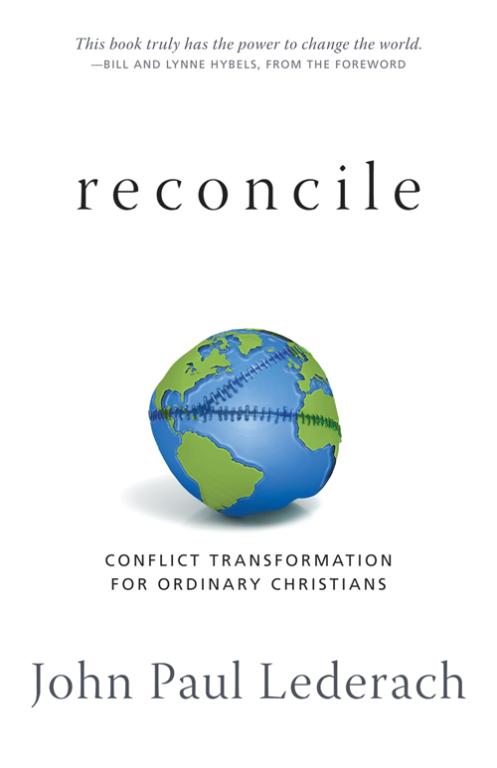
“Reconcile” by John Paul Lederach
From Ferguson to Ukraine to Syria to Iraq to local neighborhoods to family systems, many of us are feeling overwhelmed by the many conflicts that afflict our world. The news continues to feed us an unhealthy diet of continual conflict, hostility, and violence. It’s easy to think that this is just how the world works. It’s easy to lose hope that we can find reconciliation.
If you are beginning to feel a sense of despair like I am, please read Reconcile by international peacebuilder John Paul Lederach. As Bill and Lynne Hybels state in the forward, “This book truly has the power to change the world.”
Lederach is known for working throughout the world in areas of deep seated conflict. Since the 1980s, he has helped to bring reconciliation to national conflicts in Columbia, the Philippines, and Nepal, along with countries in East and West Africa. But Reconcile is not just about restoring relationships in those countries. It’s also about healing inner turmoil, family disputes, neighborhood quarrels, and church clashes.
Immanently practical and engaging, Reconcile is part guidebook and part autobiography. It is written from a Christian perspective, but anyone who reads this book will gain important wisdom on how to nurture reconciliation. With a study guide, this book is ideal for personal reflection or group study.
Lederach claims that conflict is inevitable. Jesus put it another way, “Occasions for stumbling are bound to come.” Reconcile is an important book because it provides the necessary tools and inspiration to engage conflicts in ways that promote reconciliation.
Personally, I deal with conflicts by running away from them. On the other hand, I know many people who deal with conflicts by treating them as a game to win. Both strategies are unhealthy. Lederach guides us through an alternative strategy with a reflection on Matthew 18 in a chapter entitled “Where Two or Three Meet.” This chapter alone is worth the price of the book! In Matthew 18, Jesus provides practical advice for how to engage conflicts. Lederach breaks down Jesus’ advice into four helpful steps. The first step is to go directly to the other person, not in the spirit of confrontation, but rather in the spirit of listening and mutual engagement. If that doesn’t work, the second step is to seek reconciliation by bringing 2-3 witnesses to the next meeting. The third step is to tell the church about the conflict because, as Lederach claims, “Reconciliation is the mission of the church.” And if the first three steps fail to bring reconciliation, the fourth step is to treat the person as a sinner or tax collector. Sounds a bit harsh, huh? Well, Lederach gives us a new perspective on these steps by placing them within the context of Jesus’ teachings. I will examine the two steps that tend to be the most controversial, the first and the last.
The first step is to go directly to the other person. For someone like me who avoids conflict like the plague it seems to be, this first step might be the most difficult! But it is necessary because if we don’t go directly to the other person, we will go behind the other person’s back and gossip with other people. Lederach claims that in “common practice, complainers take the problem outside the relationship and ‘triangle’ other people into the situation.” In mimetic theory terms, we call this triangulation “scapegoating.”
Unfortunately, one of the easiest ways to find reconciliation is for a group to unite against a scapegoat. The scapegoat functions for a group as a common enemy. All of our inner hostility is projected upon our scapegoat and we experience a sense of reconciliation. This strategy takes many forms, including gossiping and physical violence. It is so pervasive that it seems to be our default mechanism for dealing with conflicts, but it always leads to an increase in mutual hostility, distrust, and broken relationships.
It is far better to resist the temptation to scapegoat and go directly to the other person. But when we go to the other, it’s also important to resist the temptation to win and to blame. Reconciliation isn’t about winning a conflict by blaming the other person; it’s about restoring a relationship. As Lederach claims, healing a conflict involves “neither blaming nor retreating. It involves a stance of vulnerable transparency, where [we] speak from the depths of awareness about [our] own concerns, fears, hopes, and needs.”
If the first three steps don’t provide reconciliation, the final step is to treat the other person as “a Gentile or tax collector.” This step has often been interpreted as Jesus advising an act of exclusion. Gentiles and tax collectors were frequently treated as enemies and traitors, as people to be hated and excluded from the community. But Lederach asks a decisive question when it comes to understanding this final step:
How did Jesus treat Gentiles and tax collectors? In answering that question, we can discover how we should respond when we reach this stage of the conflict. What stands out is this simple answer: Jesus ate with them (as in Matthew 19:10). Time and again … Jesus chose the route of seeking out and eating with the very people perceived to be impure and outside the believing community. My interpretation of step 4 is this: Eat with them!
Reconciliation is hard and frequently dangerous work! If you are going to follow Jesus and seek reconciliation with someone labeled an enemy by your group, you risk being labeled an enemy yourself!
Lederach is also clear that reconciliation is often a slow and painful process that requires a balanced sense of justice, mercy, truth, and peace. He also warns “that forcing someone into engagements and relationships [of reconciliation], which we often do under the rubric of spiritual obligation, without fully attending to the preparation and authenticity of that choice, is…damaging.” There are times when so much damage has been done that reconciliation might not be possible. At all times, great care needs to be taken as we seek reconciliation.
Still, reconciliation is not entirely up to us. We certainly have an important role to play, but reconciliation is ultimately up to God. In fact, according to Lederach, reconciliation “lies at the heart of the good news. God moves toward us to mend and heal what has been torn apart. God’s mission is reconciliation.”
Can anyone thwart God’s mission? Tragically, as we watch the news of escalating conflict and hostility, we seem to be thwarting God’s mission pretty easily. But ultimately, I don’t think we can thwart God’s mission of reconciliation. As the Bible states, “in Christ, God was reconciling the world to himself, not counting their trespasses against them, and entrusting us the message of reconciliation to us.”
The good news is that God is reconciling the world. So, as you hear the news about escalating conflict, violence, and war, and as you experience conflict in your own life and communities, please don’t lose hope. Know that God is reconciling the world and entrusting you to the message of reconciliation. And, if you want to help make your neighborhood and the world a better place, please read Reconcile.
Next Post

September 1, 2014 A Theology of Labor
Browse Our Archives
Select a Category Atonement and Current Events Curriculum Faith and Families Interviews Jesus the Forgiving Victim Lent Montessori politics Reviews The Bible Explained Uncategorized Valentine's Day Wednesday Sermon Who is God?
Select a Month July 2020 November 2019 October 2019 September 2019 August 2019 July 2019 June 2019 May 2019 April 2019 March 2019 February 2019 January 2019 December 2018 November 2018 October 2018 September 2018 August 2018 July 2018 June 2018 May 2018 April 2018 March 2018 February 2018 January 2018 December 2017 November 2017 October 2017 September 2017 August 2017 July 2017 June 2017 May 2017 April 2017 March 2017 February 2017 January 2017 December 2016 November 2016 October 2016 September 2016 August 2016 June 2016 May 2016 April 2016 March 2016 February 2016 January 2016 December 2015 November 2015 October 2015 September 2015 August 2015 July 2015 June 2015 May 2015 April 2015 March 2015 February 2015 January 2015 December 2014 November 2014 October 2014 September 2014 August 2014 July 2014 June 2014 May 2014 April 2014 March 2014 January 2014 December 2013 September 2013 August 2013 July 2013
Follow Us!
TAKE THE
Religious Wisdom Quiz
What sea bordered the land of Canaan to the west?
Select your answer to see how you score.
Dead Sea Mediterranean Sea Red Sea Sea of Galilee
Related posts from Teaching Nonviolent Atonement

Forgiveness in the Time of COVID-19 by Julia...

Reflections on Indigenous Wisdom For Healing A Wounded...

How Forgiveness Can Transform Our Violence and Build...

Jesus Unmasked: God's Economy and How to Cheat...
TRENDING AT PATHEOS Progressive Christian

What Being a Modern-Day Apostle Means to Me
In my last column, I discussed the ins and outs of modern-day...

Did Ancient China Once Worship the God of...
Across human history, a common thread weaves through the origins of the...

Love Your Neighbor – Including Earth-Kin: Lev. 19,...
God’s command to love your neighbor means acting in an ethical and...

Lead a Church Study of “Jesus and Lao...
Guest writer Jack Thomas (The Irreverent Reverend) reflects on leading his church...

Pastoral Wisdom for Responding to Sermon Pushback
Getting sermon pushback on your social justice sermon? Learn practical, Proverbs-based strategies...

Principles for Understanding the Apostolic Ministry Today
Whenever people discover that my formal ministry title is "apostle," as in...
view all Progressive Christian blogs
Ad-Free & Subscriber Log-In Subscription Support
- About Us
- 2026 Calendar
- Videos
- Podcasts
- Library of World Religions
- Faith In Media Tracker
- Advertise With Us
- Write for Us
- Privacy Policy
- Terms of Service
- Do Not Sell My Data
- Contact Us
- Radiant Digital
- Manage Newsletter Subscriptions
- Unsubscribe From Notifications
- Sitemap
Copyright 2008-2026, Patheos. All rights reserved.
Subscription Support Ad-Free & Subscriber Log-In
Follow Patheos