
BuddhistCatholicContemplativeEvangelicalGeneral ChristianHinduJewishLatter-day SaintMuslimNew VisionsProgressive Christian
Beliefs
- Buddhist
- Catholic
- Contemplative
- Evangelical
- General Christian
- Hindu
- Jewish
- Latter-day Saint
- More Voices
- Muslim
- New Visions
- Pagan
- Progressive Christian
Topics
- Religion News
- Food and Religion
- Sports and Religion
- Religious Art
- Religious Music and Entertainment
- Religious Events
- History and Religion
- Style and Religion
- Politics and Religion
- Women in Religion
- Recreation Outdoors and Religion
- Business Finance and Religion
- Careers Workplace and Religion
- Education and Religion
- Family Parenting and Religion
- Health Fitness and Religion
- Home and Religion
- Relationships and Religion
- Technology and Religion
- Travel and Religion
Columnists
- Buddhist Columnists
- Business Finance and Religion Columnists
- Careers Workplace and Religion Columnists
- Catholic Columnists
- Contemplative Columnists
- Education and Religion Columnists
- Evangelists Columnists
- Family Parenting and Religion Columnists
- General Christian Columnists
- Health Fitness and Religion Columnists
- Hindu Columnists
- History and Religion Columnists
- Home and Religion Columnists
- Jewish Columnists
- More Voices Columnists
- Latter Day Columnists
- Muslim Columnists
- New Visions Columnists
- Nonreligious Columnists
- Pagan Columnists
- Politics and Religion Columnists
- Progressive Columnists
- Recreation Outdoors and Religion Columnists
- Relationships and Religion Columnists
- Religion News Columnists
- Religious Art Columnists
- Religious Events Columnists
- Religious Music and Entertainment Columnists
- Sports and Religion Columnists
- Style and Religion Columnists
- Technology and Religion Columnists
- Travel and Religion Columnists
- Women in Religion Columnists
Resource Library
- 2026 Calendar
- Library of World Religions
- The 100 Most Holy Places on Earth
- Patheos Answers
- Podcasts
- Videos
- Faith Leaders Database
- Anglican Episcopalian
- Bahai
- Baptist
- Buddhism
- Christianity
- Confucianism
- Eastern Orthodoxy
- Hinduism
- Holiness and Pentecostal
- ISKCON
- Islam
- Judaism
- Lutheran
- Methodist
- The Church of Jesus Christ of Latter-day Saints
- New Age
- Paganism
- Presbytarian and Reformed
- Protestantism
- Religion Behind the Scenes
- Roman Catholic
- Scientology
- Shia Islam
- Sikhism
- Sufism
- Sunni Islam
- Taoism
- Zen
- See all religions
Research Tools
 Ad-Free & Subscriber Log-In Subscription Support
Ad-Free & Subscriber Log-In Subscription Support
Follow Patheos 

- Trending:
- Forgiveness
- |
- Marriage
- |
- Consciousness
- |
- Death Penalty
- |
- Election
- |
- Halloween
 Teaching Nonviolent Atonement
- Home
- Progressive Christian
- Brian McLaren, World War I and the New (Old) Heroism
Brian McLaren, World War I and the New (Old) Heroism
Last updated on: July 29, 2014 at 12:24 pm by Suzanne Ross
Brian McLaren, World War I and the New (Old) Heroism 2014-07-29T12:24:41-05:00 Suzanne Ross
Patheos Explore the world's faith through different perspectives on religion and spirituality! Patheos has the views of the prevalent religions and spiritualities of the world.
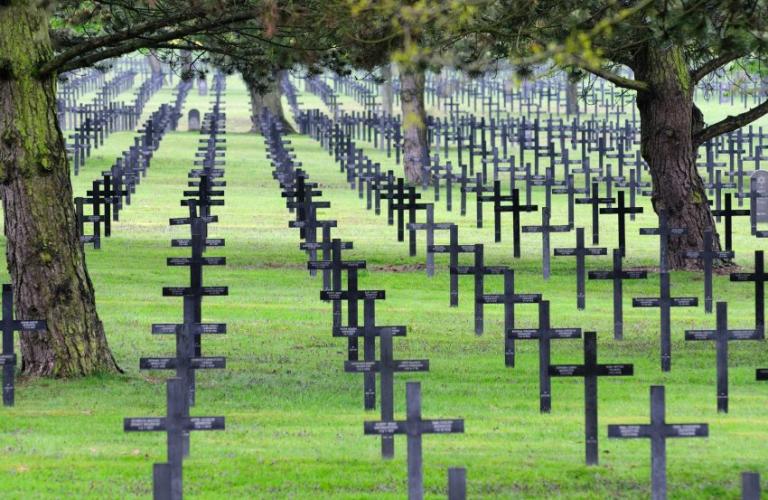
A sea of crosses at the Germany cemetery of Neuville St. Vaast. www.spiegel.de
On July 29, 1914 the first shots of the Great War were fired from gunboats on the Danube River. Austro-Hungarian artillery shelled Serbia from the river and the war that was supposed to be over in weeks or months lasted four and a half years, nearly wiping out a generation of young men from across Europe. Wikipedia’s WWI entry reports that “The total number of military and civilian casualties in World War I was over 37 million. There were over 16 million deaths and 20 million wounded ranking it among the deadliest conflicts in human history.” But these are just estimates. The total number of combatants blown to bits or buried in hastily dug graves can only be guessed at.
What led to such wholesale slaughter? Volumes have been written on the political and social upheaval that occurred as the Ottoman and Austro-Hungarian Empires faced their death throes, but the most eloquent explanation comes from the battlefield itself. The soldier poet Wilfred Owen, killed in WW I at the age of 25, witnessed heroic actions and died heroically himself. But in the poem, “Parable of the Old Man and the Young” Owen warns against romanticizing battlefield deaths. He insists instead that we see the soldier not as a hero but as a victim sacrificed on the altar of pride. Comparing the deaths of the sons of Europe to the biblical story of the near sacrifice of Isaac, the son of Abram*, he says that Europe is doing what Abram would not do – kill his child.
Parable of the Old Man and the Young
So Abram rose, and clave the wood, and went,
And took the fire with him, and a knife.
And as they sojourned both of them together,
Isaac the first-born spake and said, My Father,
Behold the preparations, fire and iron,
But where the lamb for this burnt-offering?
Then Abram bound the youth with belts and straps,
and builded parapets and trenches there,
And stretchèd forth the knife to slay his son.
When lo! an angel called him out of heaven,
Saying, Lay not thy hand upon the lad,
Neither do anything to him. Behold,
A ram, caught in a thicket by its horns;
Offer the Ram of Pride instead of him.
But the old man would not so, but slew his son,
And half the seed of Europe, one by one.
In Owen’s retelling of Genesis 22, Europe does what Abram refused to do and “half the seed of Europe” is sacrificed, “one by one”. As Brian McLaren explains, Abram’s refusal was riskier and more difficult than we realize because in Abram’s time, to offer one’s son as a sacrifice to the gods was a religious/ patriotic duty. To refuse would be akin to draft evasion or desertion in Owen’s Europe. In his new book, We Make the Road by Walking, McLaren explains Abram’s predicament as he headed up the mountain with the accoutrement of sacrifice:
The sacrifice of children for the well-being and security of adults has a long history among human beings. For example, in the ancient Middle East there was a religion dedicated to an idol named Molech. Faithful adherents would sacrifice infants to Molech every year, a horrible display of twisted religiosity to appease their god’s wrath and earn his favor. In contrast, beginning with the story of Abraham and Isaac, we gradually discover that the true God doesn’t require appeasement at all. In fact, God exemplifies true, loving, mature parenthood… self-giving for the sake of one’s children, not sacrificing children for one’s own selfish interest.
At the recent Colloquium on Violence & Religion Conference in Germany, Simon de Keukelaere from the Pontifical Gregorian University, Rome called our attention to Owen’s poem and his belief that the fathers of Europe had failed to be heirs to Abram. Owen sees his predicament as identical to Isaac’s as both sons watch the preparations of their fathers for sacrifice. Abram’s refusal to believe that piety and duty required the death of his son was in direct contradiction to the prevailing beliefs of his family, his tribe, and the wider culture. Had Europe’s fathers been willing to “offer the Ram of Pride” instead of their sons, if they had found the courage to sacrifice their own ambitions, wounded egos, and national identities instead of the lives of their children, then like Abram they would have stayed their hand. Such self-sacrifice is what we might call a new heroism that is as old as Abram, a heroism that might have saved the life of Wilfred Owen and millions like him.
As McLaren explains, any war yet to come “will most likely resemble every war in the past. It will be planned by powerful older men in their comfortable offices, and it will be fought on the ground by people the age of their children and grandchildren.” Rather than demand that our children make the supreme sacrifice of their lives, might we yet find the courage, like the father of our faith, for the heroism of our own, lesser sacrifice of self-interest? McLaren frames the question this way: do we serve God when we sacrifice our children? On this anniversary of the onset of the Great War, I invite you join me for a conversation with Brian McLaren as we reimagine what it might mean to make a new road by following in the footsteps of Abram.
*Though by Genesis 22, Abram was known as Abraham, I chose to follow Wilfred Owen’s use of Abram in his poem.
Previous Post

July 25, 2014
Live Chat with Brian McLaren: We Make the Road by Walking: A Book Review
Browse Our Archives
Select a Category Atonement and Current Events Curriculum Faith and Families Interviews Jesus the Forgiving Victim Lent Montessori politics Reviews The Bible Explained Uncategorized Valentine's Day Wednesday Sermon Who is God?
Select a Month July 2020 November 2019 October 2019 September 2019 August 2019 July 2019 June 2019 May 2019 April 2019 March 2019 February 2019 January 2019 December 2018 November 2018 October 2018 September 2018 August 2018 July 2018 June 2018 May 2018 April 2018 March 2018 February 2018 January 2018 December 2017 November 2017 October 2017 September 2017 August 2017 July 2017 June 2017 May 2017 April 2017 March 2017 February 2017 January 2017 December 2016 November 2016 October 2016 September 2016 August 2016 June 2016 May 2016 April 2016 March 2016 February 2016 January 2016 December 2015 November 2015 October 2015 September 2015 August 2015 July 2015 June 2015 May 2015 April 2015 March 2015 February 2015 January 2015 December 2014 November 2014 October 2014 September 2014 August 2014 July 2014 June 2014 May 2014 April 2014 March 2014 January 2014 December 2013 September 2013 August 2013 July 2013
Follow Us!
TAKE THE
Religious Wisdom Quiz
What does the Bible say about using one's gifts or talents?
Select your answer to see how you score.
Hide them Use them for God's glory Waste them Brag about them
Related posts from Teaching Nonviolent Atonement

Toxic Christianity: 3 Things We Can Do That...

The Secret of Life: An Interview with Audrey...

Forgiveness in the Time of COVID-19 by Julia...

TRENDING AT PATHEOS Progressive Christian

What Being a Modern-Day Apostle Means to Me
In my last column, I discussed the ins and outs of modern-day...

Did Ancient China Once Worship the God of...
Across human history, a common thread weaves through the origins of the...

Love Your Neighbor – Including Earth-Kin: Lev. 19,...
God’s command to love your neighbor means acting in an ethical and...

Lead a Church Study of “Jesus and Lao...
Guest writer Jack Thomas (The Irreverent Reverend) reflects on leading his church...

Pastoral Wisdom for Responding to Sermon Pushback
Getting sermon pushback on your social justice sermon? Learn practical, Proverbs-based strategies...

Principles for Understanding the Apostolic Ministry Today
Whenever people discover that my formal ministry title is "apostle," as in...
view all Progressive Christian blogs
Ad-Free & Subscriber Log-In Subscription Support
- About Us
- 2026 Calendar
- Videos
- Podcasts
- Library of World Religions
- Faith In Media Tracker
- Advertise With Us
- Write for Us
- Privacy Policy
- Terms of Service
- Do Not Sell My Data
- Contact Us
- Radiant Digital
- Manage Newsletter Subscriptions
- Unsubscribe From Notifications
- Sitemap
Copyright 2008-2026, Patheos. All rights reserved.
Subscription Support Ad-Free & Subscriber Log-In
Follow Patheos