
BuddhistCatholicContemplativeEvangelicalGeneral ChristianHinduJewishLatter-day SaintMuslimNew VisionsProgressive Christian
Beliefs
- Buddhist
- Catholic
- Contemplative
- Evangelical
- General Christian
- Hindu
- Jewish
- Latter-day Saint
- More Voices
- Muslim
- New Visions
- Pagan
- Progressive Christian
Topics
- Religion News
- Food and Religion
- Sports and Religion
- Religious Art
- Religious Music and Entertainment
- Religious Events
- History and Religion
- Style and Religion
- Politics and Religion
- Women in Religion
- Recreation Outdoors and Religion
- Business Finance and Religion
- Careers Workplace and Religion
- Education and Religion
- Family Parenting and Religion
- Health Fitness and Religion
- Home and Religion
- Relationships and Religion
- Technology and Religion
- Travel and Religion
Columnists
- Buddhist Columnists
- Business Finance and Religion Columnists
- Careers Workplace and Religion Columnists
- Catholic Columnists
- Contemplative Columnists
- Education and Religion Columnists
- Evangelists Columnists
- Family Parenting and Religion Columnists
- General Christian Columnists
- Health Fitness and Religion Columnists
- Hindu Columnists
- History and Religion Columnists
- Home and Religion Columnists
- Jewish Columnists
- More Voices Columnists
- Latter Day Columnists
- Muslim Columnists
- New Visions Columnists
- Nonreligious Columnists
- Pagan Columnists
- Politics and Religion Columnists
- Progressive Columnists
- Recreation Outdoors and Religion Columnists
- Relationships and Religion Columnists
- Religion News Columnists
- Religious Art Columnists
- Religious Events Columnists
- Religious Music and Entertainment Columnists
- Sports and Religion Columnists
- Style and Religion Columnists
- Technology and Religion Columnists
- Travel and Religion Columnists
- Women in Religion Columnists
Resource Library
- 2026 Calendar
- Library of World Religions
- The 100 Most Holy Places on Earth
- Patheos Answers
- Podcasts
- Videos
- Faith Leaders Database
- Anglican Episcopalian
- Bahai
- Baptist
- Buddhism
- Christianity
- Confucianism
- Eastern Orthodoxy
- Hinduism
- Holiness and Pentecostal
- ISKCON
- Islam
- Judaism
- Lutheran
- Methodist
- The Church of Jesus Christ of Latter-day Saints
- New Age
- Paganism
- Presbytarian and Reformed
- Protestantism
- Religion Behind the Scenes
- Roman Catholic
- Scientology
- Shia Islam
- Sikhism
- Sufism
- Sunni Islam
- Taoism
- Zen
- See all religions
Research Tools
 Ad-Free & Subscriber Log-In Subscription Support
Ad-Free & Subscriber Log-In Subscription Support
Follow Patheos 

- Trending:
- Forgiveness
- |
- Marriage
- |
- Consciousness
- |
- Death Penalty
- |
- Election
- |
- Halloween
 Teaching Nonviolent Atonement
- Home
- Progressive Christian
- Stop Celebrating Memorial Day!
Stop Celebrating Memorial Day!
Last updated on: May 28, 2014 at 3:40 pm by Adam Ericksen
Stop Celebrating Memorial Day! 2014-05-28T15:40:34-05:00 Adam Ericksen
Patheos Explore the world's faith through different perspectives on religion and spirituality! Patheos has the views of the prevalent religions and spiritualities of the world.
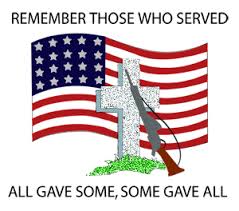 We need to stop celebrating Memorial Day.
I had lunch with my dad on Memorial Day. We had soup and salad. Unfortunately, I did not take pictures of our lunch. Because I’m on Facebook, I know how exciting pictures of lettuce and chicken tortilla soup can be…

That’s me and my children in the Redwood forest.
But even more exciting was our Memorial Day conversation, which centered on our recent travels. I told my dad about my family’s Memorial Day weekend trip to the Redwood Forest in northern California on Saturday and our excursion to Crater Lake in southern Oregon on Sunday. That was fun – and we did take pictures!
Ancient Human Sacrifice
How’s that subheading for a segue? Well, my dad then told me about his recent 30 day cruise to Hawaii and some islands in the South Pacific. When he was touring one South Pacific island, a guide told the group about the human sacrifice that the native islanders used to perform. (Unfortunately, I have no pictures.)
“But it’s not what you think,” the guide said cheerfully. “It was a privilege to be sacrificed. Those who were sacrificed brought honor to their family.”
The guide was a native of the island. While reflecting on the statement, my dad stated that she seemed to take pride in the sacrificial practice – almost as if she wanted to bring it back.
Of course, as a Girardian, my mind went straight to René Girard’s theory of sacrifice. Girard says that sacrificial rituals had a uniting effect on the community. Far from being impractical, sacrifice had an effective social function. Sacrificial rituals brought unity to the group. Where there was once conflict, the blood that flowed from an archaic sacrifice brought reconciliation. Unanimity was so important to the sacrifice that it worked best if the victim wanted to be sacrificed. When it comes to human sacrifice, a willing victim is the best victim. As Girard states in his book Job: The Victim of His People, “The victim must participate if there is to be perfect humanity. His voice must be joined to the unanimous voice of condemnation.”
The unanimous voice of sacrifice can be one of condemnation or honor. It doesn’t matter, just as long as the sacrificial voice is unanimous.
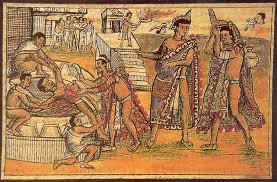
Ancient human sacrifice.
That this conversation about ancient sacrifice took place on Memorial Day is significant. My dad’s tour guide romantically memorialized her ancestors by presenting human sacrifice in an honorable, even privileged, way. It may seem grossly archaic to us, but we’re not much different. We still have our sacrificial rituals.
Modern Human Sacrifice
Memorial Day is clouded by the same sacrificial language. It’s a national ritual where we honor those who perform the greatest sacrifice to protect our “freedoms.” But make no mistake, today’s soldiers are the modern form of willing sacrificial victims.
I once made that statement at a conference and one of the presenters became really upset. She said, “But our soldiers wouldn’t see themselves as victims!”
And that’s exactly the point. It turns out that the greatest victim is not just a willing victim, but a victim who is convinced that he or she isn’t a victim at all. The truth is that we can no longer see soldiers as anything but victims of the human propensity for violence. We see the pictures of caskets brought home revealing our war-torn culture of death. We are now fully aware of post-traumatic stress disorder, of the difficulties soldiers have finding employment, not to mention the life-long physical injuries that affect generations.
Stop Celebrating Memorial Day!
We need to stop celebrating Memorial Day. It’s a ritual of war that runs on the sacrificial mechanism that demands unity, including the unity of the victims of war. Don’t get me wrong, we need to care for our soldiers. As the victims of the human will to violence, that’s the least they deserve. But they also deserve for us to stop romanticizing war. Otherwise we doom them, and ourselves, to endless war.
In today’s reign of violence, continued war will only mean the destruction of humanity.
Previous Post

May 28, 2014
Atonement and the Gay Christian
Next Post
May 29, 2014 Alpha Gods at the University of California: Redeeming Theology
Browse Our Archives
Select a Category Atonement and Current Events Curriculum Faith and Families Interviews Jesus the Forgiving Victim Lent Montessori politics Reviews The Bible Explained Uncategorized Valentine's Day Wednesday Sermon Who is God?
Select a Month July 2020 November 2019 October 2019 September 2019 August 2019 July 2019 June 2019 May 2019 April 2019 March 2019 February 2019 January 2019 December 2018 November 2018 October 2018 September 2018 August 2018 July 2018 June 2018 May 2018 April 2018 March 2018 February 2018 January 2018 December 2017 November 2017 October 2017 September 2017 August 2017 July 2017 June 2017 May 2017 April 2017 March 2017 February 2017 January 2017 December 2016 November 2016 October 2016 September 2016 August 2016 June 2016 May 2016 April 2016 March 2016 February 2016 January 2016 December 2015 November 2015 October 2015 September 2015 August 2015 July 2015 June 2015 May 2015 April 2015 March 2015 February 2015 January 2015 December 2014 November 2014 October 2014 September 2014 August 2014 July 2014 June 2014 May 2014 April 2014 March 2014 January 2014 December 2013 September 2013 August 2013 July 2013
Follow Us!
TAKE THE
Religious Wisdom Quiz
Which Christian principle is in "Do unto others as you would have them do unto you"?
Select your answer to see how you score.
Always judge Never forgive The Golden Rule Keep to yourself
Related posts from Teaching Nonviolent Atonement


How Forgiveness Can Transform Our Violence and Build...

St. Francis Preaches on Violence

God Doesn’t Smite Anyone - Reflections on Sodom,...
TRENDING AT PATHEOS Progressive Christian

What Being a Modern-Day Apostle Means to Me
In my last column, I discussed the ins and outs of modern-day...

Did Ancient China Once Worship the God of...
Across human history, a common thread weaves through the origins of the...

Love Your Neighbor – Including Earth-Kin: Lev. 19,...
God’s command to love your neighbor means acting in an ethical and...

Lead a Church Study of “Jesus and Lao...
Guest writer Jack Thomas (The Irreverent Reverend) reflects on leading his church...

Pastoral Wisdom for Responding to Sermon Pushback
Getting sermon pushback on your social justice sermon? Learn practical, Proverbs-based strategies...

Principles for Understanding the Apostolic Ministry Today
Whenever people discover that my formal ministry title is "apostle," as in...
view all Progressive Christian blogs
Ad-Free & Subscriber Log-In Subscription Support
- About Us
- 2026 Calendar
- Videos
- Podcasts
- Library of World Religions
- Faith In Media Tracker
- Advertise With Us
- Write for Us
- Privacy Policy
- Terms of Service
- Do Not Sell My Data
- Contact Us
- Radiant Digital
- Manage Newsletter Subscriptions
- Unsubscribe From Notifications
- Sitemap
Copyright 2008-2026, Patheos. All rights reserved.
Subscription Support Ad-Free & Subscriber Log-In
Follow Patheos