
BuddhistCatholicContemplativeEvangelicalGeneral ChristianHinduJewishLatter-day SaintMuslimNew VisionsProgressive Christian
Beliefs
- Buddhist
- Catholic
- Contemplative
- Evangelical
- General Christian
- Hindu
- Jewish
- Latter-day Saint
- More Voices
- Muslim
- New Visions
- Pagan
- Progressive Christian
Topics
- Religion News
- Food and Religion
- Sports and Religion
- Religious Art
- Religious Music and Entertainment
- Religious Events
- History and Religion
- Style and Religion
- Politics and Religion
- Women in Religion
- Recreation Outdoors and Religion
- Business Finance and Religion
- Careers Workplace and Religion
- Education and Religion
- Family Parenting and Religion
- Health Fitness and Religion
- Home and Religion
- Relationships and Religion
- Technology and Religion
- Travel and Religion
Columnists
- Buddhist Columnists
- Business Finance and Religion Columnists
- Careers Workplace and Religion Columnists
- Catholic Columnists
- Contemplative Columnists
- Education and Religion Columnists
- Evangelists Columnists
- Family Parenting and Religion Columnists
- General Christian Columnists
- Health Fitness and Religion Columnists
- Hindu Columnists
- History and Religion Columnists
- Home and Religion Columnists
- Jewish Columnists
- More Voices Columnists
- Latter Day Columnists
- Muslim Columnists
- New Visions Columnists
- Nonreligious Columnists
- Pagan Columnists
- Politics and Religion Columnists
- Progressive Columnists
- Recreation Outdoors and Religion Columnists
- Relationships and Religion Columnists
- Religion News Columnists
- Religious Art Columnists
- Religious Events Columnists
- Religious Music and Entertainment Columnists
- Sports and Religion Columnists
- Style and Religion Columnists
- Technology and Religion Columnists
- Travel and Religion Columnists
- Women in Religion Columnists
Resource Library
- 2026 Calendar
- Library of World Religions
- The 100 Most Holy Places on Earth
- Patheos Answers
- Podcasts
- Videos
- Faith Leaders Database
- Anglican Episcopalian
- Bahai
- Baptist
- Buddhism
- Christianity
- Confucianism
- Eastern Orthodoxy
- Hinduism
- Holiness and Pentecostal
- ISKCON
- Islam
- Judaism
- Lutheran
- Methodist
- The Church of Jesus Christ of Latter-day Saints
- New Age
- Paganism
- Presbytarian and Reformed
- Protestantism
- Religion Behind the Scenes
- Roman Catholic
- Scientology
- Shia Islam
- Sikhism
- Sufism
- Sunni Islam
- Taoism
- Zen
- See all religions
Research Tools
 Ad-Free & Subscriber Log-In Subscription Support
Ad-Free & Subscriber Log-In Subscription Support
Follow Patheos 

- Trending:
- Forgiveness
- |
- Marriage
- |
- Consciousness
- |
- Death Penalty
- |
- Election
- |
- Halloween
 Teaching Nonviolent Atonement
- Home
- Progressive Christian
- Faith Forward: The Future of Christian Education, Part 3
Faith Forward: The Future of Christian Education, Part 3
Last updated on: May 5, 2014 at 2:04 pm by Suzanne Ross
Faith Forward: The Future of Christian Education, Part 3 2014-05-05T14:04:13-05:00 Suzanne Ross
Patheos Explore the world's faith through different perspectives on religion and spirituality! Patheos has the views of the prevalent religions and spiritualities of the world.
What’s Emerging? A New Theology of Atonement
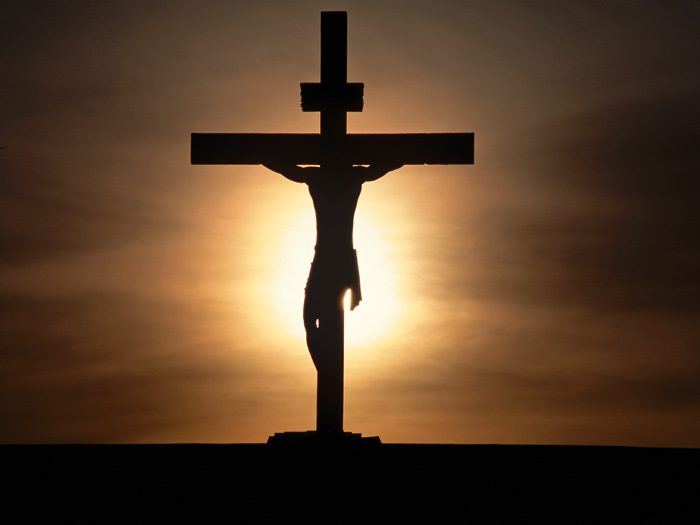 Why do violence and religion appear to be such intimate bedfellows? The apparent connection between the two has provided low hanging fruit for atheists and anti-Christian polemicists for centuries. Not only do we fight brutal wars for religious reasons, but religion itself seems to have been born as a practice of ritualized violence. No human culture seems to have emerged without the appearance of religion, and most of these archaic religions involved some form of sacrifice. It seems hard to argue against the atheists who gleefully insist that religion was founded in and continues to perpetuate violence and so humanity is better off without it.
This presents Christian educators with some fairly difficult issues to deal with. As Dave Csinos, founder of the Faith Forward Conference, points out in this video interview, we really do not have a choice when it comes to addressing the relationship of religion to violence with our children.
“I don’t think children and youth are as sheltered as we like to think they are and I feel, with a lot of people, the onus is on us in how we present violence in the Bible and in the world. But they are already well aware of violence in the world and if they are people who are part of a Christian tradition I’m sure they are already aware of violence in the Bible as well… [And] there are more children in the world and more youth in the world who by far can’t be sheltered from [violence].”
If we are silent in church school classrooms on the subject of violence in the Bible, at the Cross and in our world children and youth could not be faulted if they concluded that either Christianity has nothing useful to say on the subject of violence or that it is so intertwined with violence that those of us who profess to be Christians are silent out of shame. Silence is no longer a viable alternative.
So what’s a Christian educator to do? If you can, get to the 2014 Faith Forward Conference in Nashville, May 19-22 and join other educators actively seeking answers to these questions. You’ll hear some wonderful presentations from folks doing important work in the field of emerging theology and Christian education today, such as Phyllis Tickle, Brian McLaren, Romal Tune, Mark Yaconelli, Melvin Bray, Andrew Root, Ivy Beckwith – check out the entire list of speakers here and here’s the registration info. I hope to see you there!
In my presentation, I’ll be suggesting that one big task facing us is to get our own theology of the Cross straight because I’m guessing that those of you who avoid discussing the violence of the Cross do so for a very good reason – you haven’t found an interpretation that doesn’t blame God for it. From the expulsion of Adam and Eve through the Cross and on to Judgment Day, God’s purposes seem tangled up with God’s violence. The most common understanding of the saving power of the cross still attributes the violence we see there as a divine necessity. Sorting that out from Jesus’ teaching that God is love, in whom there is no darkness at all, has escaped most of our theologies.
An Emerging Understanding of Human Violence
Using the insights of René Girard’s mimetic theory, theologians like Brian McLaren and James Alison are pointing out that if we look at the Cross and see evidence of God’s violence there, we have things backwards. Mimetic theory is an anthropological theory of human violence and it reveals that the violence at the Cross can be explained entirely in human terms. The Cross is, in a very real sense, not unique at all. These theologians understand what happened to Jesus as an instance of how we have habitually scapegoated innocent victims in order to keep and maintain the peace in our communities: we create peace through violence.
Atonement is the goal of a community at odds with itself, riven with conflict, threatened by its own violence. A community in conflict seeks to heal the divide, to find a way to reconcile and achieve unity again, at-one-ment. Habitually humans have achieved reconciliation over against a victim, a practice we have come to call scapegoating. By expelling, demonizing, or killing a scapegoat whom all can agree is guilty of the discord threatening our community, we achieve atonement through violence. What is emerging in atonement theology today is the understanding that God does things differently. God reconciles humanity through enduring our violence, even unto death. Rather than inflict divine violence on his Son, God suffers our violence and forgives us for it.
Human and Divine Atonement in the Gospels
In the Gospel of John, Jesus pointedly contrasts human and divine ways of atonement when he says, “Peace I leave with you; my peace I give to you. I do not give to you as the world gives.” (John 14:27) What passes our notice is that Jesus is not questioning the goal of peace, which is rarely in dispute, even among warring enemies. Human beings have a rather long and shameful history of killing each other in the name of peace. What should demand our attention is the contrast Jesus was drawing between two different methods to achieve the goal of peace. Our word “method” comes from the Greek words meta and hodos, literally “after a way” or “pursuing a way.” Christianity is called the hodos, the Way, in the Acts of the Apostles. Which is to say that there is a choice between this way or that way. Jesus came to shift our reliance from the world’s way of achieving peace to his way. The Christian call is to renounce the world’s way and follow Jesus’ way instead.
Caiaphas famously described the world’s way. The Gospel writer has given us Caiaphas’ message to the ruling Council not because his way of thinking was unusual, but because how he wants the Council to respond to the rabble rouser Jesus is normative. In other words, Caiaphas represented the normal human way of keeping the peace when he said: “You do not understand that it is better for you to have one man die for the people than to have the whole nation destroyed.” (John 11:49-50) Of course, we do understand it. Caiaphas is describing the world’s way of creating peace by sacrificing and scapegoating victims – the one for the many. Yet we cast Caiaphas as the bad guy in this story so we can star opposite him as the good guys who would never have advocated killing the Son of God. Clinging to our sense of our own goodness prevents us from seeing that scapegoating is not the way that only some of us keep and maintain the peace. It is the way of all of humanity, good and bad alike, the sin that Jesus died to forgive.
Of course, this is a difficult truth, something we resist knowing. Such resistance is understandable, even forgivable, for it is painful to accept that we are not as good as we think we are. It may be that the realization that is now emerging, that we are no different than the crowd that cheered Jesus’ death, is what Jesus was referring to when he said, “I still have many things to say to you, but you cannot bear them now.” (John 16:12) If we can bear it now, it will be because the Spirit of truth has at last broken open our hardened hearts so that we can receive bigger, more forgiving hearts.
Emerging Questions for Christian Formation
What might these new hearts be capable of? What mimetic theory reveals is that there are two ways of forming unity and identity available to humanity and that what they have in common is that they both depend on a victim. It is simply the perspective on the victim that is different. With hardened hearts, we form our unity according to the sacrificial model, in which we shame and ostracize some “other” who is not us in order to create solidarity. Or as our hearts break open we shift our perspective – or rather we allow our perspective to be shifted by a God who occupies the place of shame for us such that we begin to draw our identity from the Risen and Forgiving Victim in our midst. Rather than shame, expel, demonize and exclude scapegoated victims in order to be reconciled, we find ourselves being let go from that pattern and freed for a new unity which does not require scapegoats at all.
Before we venture into redesigning Christian education curricula, we need to reimagine the central Christian claim that Christ died to save us from our sins. We need to be able to answer the question James Alison poses:
“How might it be possible to imagine Jesus going up to his death as being quite simply an act of generosity from God who knows no violence toward us at all? What is the shape of that self-giving toward us in our violence?”*
How to invite our children into an experience of the saving love of our God is the task facing Christian educators today. In the next and final post in this series, I will look at the issue of Biblical interpretation and the new story of the relationship of God to violence that is emerging today.
***James Alison created an introduction to Christianity for adults, Jesus the Forgiving Victim: Listening for the Unheard Voice (produced by the Raven Foundation) to engage us in exactly these questions. Brian McLaren says: “This course is what so many of us have been waiting for: a resource for discovering anew the total nonviolence of God and what that means for how we read the Bible and interpret the Cross. Before you design your next children’s or youth program, before you prepare another sermon series, before you give up or give in or check out or fade away… invest a few hours in ‘Jesus the Forgiving Victim’ and watch your faith be deeply renewed.”
Previous Post

May 5, 2014
Patheos Turns Five! Religion, Violence, and Let's Party!
Next Post
May 8, 2014 Who is Allah? #BringBackOurGirls
Browse Our Archives
Select a Category Atonement and Current Events Curriculum Faith and Families Interviews Jesus the Forgiving Victim Lent Montessori politics Reviews The Bible Explained Uncategorized Valentine's Day Wednesday Sermon Who is God?
Select a Month July 2020 November 2019 October 2019 September 2019 August 2019 July 2019 June 2019 May 2019 April 2019 March 2019 February 2019 January 2019 December 2018 November 2018 October 2018 September 2018 August 2018 July 2018 June 2018 May 2018 April 2018 March 2018 February 2018 January 2018 December 2017 November 2017 October 2017 September 2017 August 2017 July 2017 June 2017 May 2017 April 2017 March 2017 February 2017 January 2017 December 2016 November 2016 October 2016 September 2016 August 2016 June 2016 May 2016 April 2016 March 2016 February 2016 January 2016 December 2015 November 2015 October 2015 September 2015 August 2015 July 2015 June 2015 May 2015 April 2015 March 2015 February 2015 January 2015 December 2014 November 2014 October 2014 September 2014 August 2014 July 2014 June 2014 May 2014 April 2014 March 2014 January 2014 December 2013 September 2013 August 2013 July 2013
Follow Us!
TAKE THE
Religious Wisdom Quiz
Which people attacked Israel at Rephidim and were defeated as Moses held up his hands?
Select your answer to see how you score.
Philistines Amalekites Moabites Midianites
Related posts from Teaching Nonviolent Atonement

How Forgiveness Can Transform Our Violence and Build...

How My Atheist Father Helps Me Appreciate The...

The Unity of All Things: How to Be...
We Are One: Unity in Christ with Victims,...
TRENDING AT PATHEOS Progressive Christian

What Being a Modern-Day Apostle Means to Me
In my last column, I discussed the ins and outs of modern-day...

Did Ancient China Once Worship the God of...
Across human history, a common thread weaves through the origins of the...

Love Your Neighbor – Including Earth-Kin: Lev. 19,...
God’s command to love your neighbor means acting in an ethical and...

Lead a Church Study of “Jesus and Lao...
Guest writer Jack Thomas (The Irreverent Reverend) reflects on leading his church...

Pastoral Wisdom for Responding to Sermon Pushback
Getting sermon pushback on your social justice sermon? Learn practical, Proverbs-based strategies...

Principles for Understanding the Apostolic Ministry Today
Whenever people discover that my formal ministry title is "apostle," as in...
view all Progressive Christian blogs
Ad-Free & Subscriber Log-In Subscription Support
- About Us
- 2026 Calendar
- Videos
- Podcasts
- Library of World Religions
- Faith In Media Tracker
- Advertise With Us
- Write for Us
- Privacy Policy
- Terms of Service
- Do Not Sell My Data
- Contact Us
- Radiant Digital
- Manage Newsletter Subscriptions
- Unsubscribe From Notifications
- Sitemap
Copyright 2008-2026, Patheos. All rights reserved.
Subscription Support Ad-Free & Subscriber Log-In
Follow Patheos