
BuddhistCatholicContemplativeEvangelicalGeneral ChristianHinduJewishLatter-day SaintMuslimNew VisionsProgressive Christian
Beliefs
- Buddhist
- Catholic
- Contemplative
- Evangelical
- General Christian
- Hindu
- Jewish
- Latter-day Saint
- More Voices
- Muslim
- New Visions
- Pagan
- Progressive Christian
Topics
- Religion News
- Food and Religion
- Sports and Religion
- Religious Art
- Religious Music and Entertainment
- Religious Events
- History and Religion
- Style and Religion
- Politics and Religion
- Women in Religion
- Recreation Outdoors and Religion
- Business Finance and Religion
- Careers Workplace and Religion
- Education and Religion
- Family Parenting and Religion
- Health Fitness and Religion
- Home and Religion
- Relationships and Religion
- Technology and Religion
- Travel and Religion
Columnists
- Buddhist Columnists
- Business Finance and Religion Columnists
- Careers Workplace and Religion Columnists
- Catholic Columnists
- Contemplative Columnists
- Education and Religion Columnists
- Evangelists Columnists
- Family Parenting and Religion Columnists
- General Christian Columnists
- Health Fitness and Religion Columnists
- Hindu Columnists
- History and Religion Columnists
- Home and Religion Columnists
- Jewish Columnists
- More Voices Columnists
- Latter Day Columnists
- Muslim Columnists
- New Visions Columnists
- Nonreligious Columnists
- Pagan Columnists
- Politics and Religion Columnists
- Progressive Columnists
- Recreation Outdoors and Religion Columnists
- Relationships and Religion Columnists
- Religion News Columnists
- Religious Art Columnists
- Religious Events Columnists
- Religious Music and Entertainment Columnists
- Sports and Religion Columnists
- Style and Religion Columnists
- Technology and Religion Columnists
- Travel and Religion Columnists
- Women in Religion Columnists
Resource Library
- 2026 Calendar
- Library of World Religions
- The 100 Most Holy Places on Earth
- Patheos Answers
- Podcasts
- Videos
- Faith Leaders Database
- Anglican Episcopalian
- Bahai
- Baptist
- Buddhism
- Christianity
- Confucianism
- Eastern Orthodoxy
- Hinduism
- Holiness and Pentecostal
- ISKCON
- Islam
- Judaism
- Lutheran
- Methodist
- The Church of Jesus Christ of Latter-day Saints
- New Age
- Paganism
- Presbytarian and Reformed
- Protestantism
- Religion Behind the Scenes
- Roman Catholic
- Scientology
- Shia Islam
- Sikhism
- Sufism
- Sunni Islam
- Taoism
- Zen
- See all religions
Research Tools
 Ad-Free & Subscriber Log-In Subscription Support
Ad-Free & Subscriber Log-In Subscription Support
Follow Patheos 

- Trending:
- Forgiveness
- |
- Marriage
- |
- Consciousness
- |
- Death Penalty
- |
- Election
- |
- Halloween
 Tea Addicted Witch
- Home
- Pagan
- Yes, Hekate Is Political, Witchcraft Is Political, That’s Just How It Is
Yes, Hekate Is Political, Witchcraft Is Political, That’s Just How It Is
Last updated on: May 7, 2019 at 3:14 pm by River Enodian
Yes, Hekate Is Political, Witchcraft Is Political, That’s Just How It Is 2019-05-07T15:14:44+00:00 River Enodian
Patheos Explore the world's faith through different perspectives on religion and spirituality! Patheos has the views of the prevalent religions and spiritualities of the world.
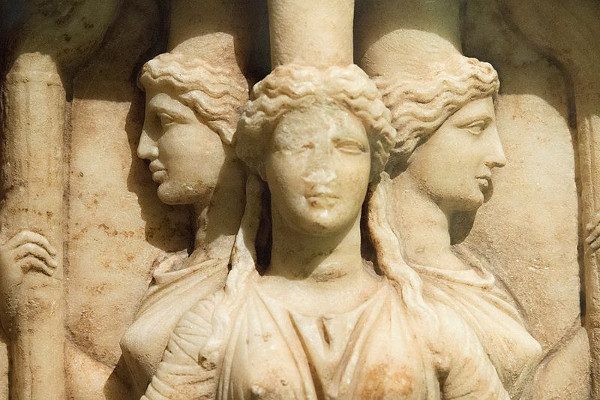
Image from Wikimedia
Hekate is a goddess of the marginalized. Witchcraft is a tool of the disenfranchised. I’m not the first to blog about this, have blogged on similar topics in the past, and others have made some excellent points that I will try not to repeat too much.
As a popular goddess it’s easy to see an oversaturation of content in regards to Hekate with both good and dubious takes on her. Because she is so beloved to so many people, there have been many takes on her based on both historical data and a good chunk of misinformation. So while I’m not unsympathetic to those who are skeptical of bad information on popular deities, I also have been heavily involved in academic and reconstructionist-style Hellenism for a long time and am pretty familiar with all sides and how there are those who want to cherry pick historical data or even revise it out of discomfort in what is presented in it. Hekate is a popular example as a topic and deity who is terribly misunderstood, misrepresented, and often just flat out ignored because her popularity is seen as a bug and not a feature.
But her popularity is for excellent reasons, and not just because she’s a goddess of witchcraft. However it remains a very well known element of hers, one that is frequently downplayed in certain Hellenic reconstructionist communities, often at the cost of truly understanding Hekate and her worship. However, anyone remotely familiar with the PGM (Greek Magical Papyri) is already extremely familiar with how Hekate was commonly invoked and prayed to in acts of magic in antiquity. Arguing that she “wasn’t really a goddess of magic” and that this is merely a modern association is just flat out wrong and very easily disproved. But as I’ve stated before, she isn’t a goddess of just magic, or just any one thing. She’s a goddess of many functions and many epithets.
“Soteira” (Σώτειρα) is the female version of the Greek word Soter (σωτήρ) meaning “savior”. It’s an epithet given to a number of Greek gods, and happens to be one of Hekate’s as well. She is one of a few goddesses who also bears this epithet: Artemis and Persephone also being notable examples. Her deipnon or monthly supper offerings during new moons in historical times weren’t just a means of giving her offerings but also a subtle/not subtle way to provide food for the homeless and hungry. It was a known fact that people who were in need would eat the offerings. They weren’t just offerings to the goddess but also a means of providing her an offering by helping others. While a few frowned upon this, it became quite acceptable to do so.
Hekate has long been a goddess of the marginalized, and while this has been and continues to be met with resistance, it makes a lot of sense given how she is a goddess who crosses over boundaries and rules liminal places. This is not a goddess who would spurn those in need because they ate her offerings, and many people believed that the poor eating them pleased her. “Ask Hekate whether it is better to be rich or starving; she will tell you that the rich send her a meal every month [i.e. food placed inside her door-front shrines] and that the poor make it disappear before it is even served.” – Aristophanes, Plutus 410 ff (trans. O’Neill) (Greek comedy C5th to 4th B.C.)
She was also prayed to for matters of justice and decisions in household matters: “I have heard it foretold, that one day the Athenians would dispense justice in their own houses, that each citizen would have himself a little tribunal constructed in his porch similar to the altars of Hekate (Hekataion), and that there would be such before every door.” – Aristophanes, Wasps. Hers were the shrines that warded off evil, that protected homes and people, and helped those in need of it.
The goddess even had a mystery cult dedicated to her where it was believed those suffering mental illness could be cured. In addition she is the patron of female sorcerers and was strongly associated with women such as Kirke and Medea. Although her cult was not exclusive to women, it was strongly associated with them and their witchcraft. The most important cult centers to her worship were that of mystery religions and traditions such as the Eleusinian Mysteries. She was prayed to both for protection from witchcraft and in aid to perform witchcraft.
Hers is the worship that was associated with the fringes of society and their protection, especially those most likely to be misunderstood or shunned. Hekate is described in the Oxford Classical Dictionary as “more at home on the fringes than in the centre of Greek polytheism. Intrinsically ambivalent and polymorphous, she straddles conventional boundaries and eludes definition.” You can’t discuss fringes of society including the poor, mental illness, LGBTQIA+, and women without getting into politics. Witchcraft has always been political, and that is the same thing with Hekate.
Previous Post

April 25, 2019
When To Magic, And When Not To Magic: Timing Is Everything
Next Post

May 8, 2019 Is There A Wrong Way To Be A Feminist Witch Or Pagan?
Browse Our Archives
Select a Category Book Reviews Class reviews Events Greek Polytheism Initiation and Traditions Magic and witchcraft Paganism and Polytheism Spiritual and Personal Development Tv Show Reviews Uncategorized
Select a Month July 2021 December 2020 November 2020 October 2020 September 2020 August 2020 July 2020 June 2020 April 2020 March 2020 February 2020 January 2020 December 2019 November 2019 October 2019 September 2019 August 2019 July 2019 May 2019 April 2019 March 2019 January 2019 December 2018 November 2018 October 2018 September 2018 August 2018 July 2018 June 2018 May 2018 April 2018 March 2018 February 2018 January 2018
Follow Us!
TAKE THE
Religious Wisdom Quiz
What did God send to feed Elijah during the drought?
Select your answer to see how you score.
Serpent Sheep Ravens Camels
Related posts from Tea Addicted Witch

Autumn Is Coming, And Too Many Are Not...

Yule 2020: After The Darkness Comes The Light...

Honoring Trans Day of Remembrance As A Pagan...

Responsible Magic: The Importance About Caring About Other...
TRENDING AT PATHEOS Pagan

I was recently chatting with someone on Instagram. She asked me what...

While there are many people who share their results, the end of...

On July 23, I saw Christopher Nolan's The Odyssey which is Homer’s...

As I write this two big events have just finished up. One...

Restoring the Watershed of Divine Love
Perhaps cooperation is not something we manufacture through legislation, ideology, or moral...

Many UUs don’t pray because of bad experiences in a previous religion,...
view all Pagan blogs
Ad-Free & Subscriber Log-In Subscription Support
- About Us
- 2026 Calendar
- Videos
- Podcasts
- Library of World Religions
- Faith In Media Tracker
- Advertise With Us
- Write for Us
- Privacy Policy
- Terms of Service
- Do Not Sell My Data
- Contact Us
- Radiant Digital
- Manage Newsletter Subscriptions
- Unsubscribe From Notifications
- Sitemap
Copyright 2008-2026, Patheos. All rights reserved.
Subscription Support Ad-Free & Subscriber Log-In
Follow Patheos