
BuddhistCatholicContemplativeEvangelicalGeneral ChristianHinduJewishLatter-day SaintMuslimNew VisionsProgressive Christian
Beliefs
- Buddhist
- Catholic
- Contemplative
- Evangelical
- General Christian
- Hindu
- Jewish
- Latter-day Saint
- More Voices
- Muslim
- New Visions
- Pagan
- Progressive Christian
Topics
- Religion News
- Food and Religion
- Sports and Religion
- Religious Art
- Religious Music and Entertainment
- Religious Events
- History and Religion
- Style and Religion
- Politics and Religion
- Women in Religion
- Recreation Outdoors and Religion
- Business Finance and Religion
- Careers Workplace and Religion
- Education and Religion
- Family Parenting and Religion
- Health Fitness and Religion
- Home and Religion
- Relationships and Religion
- Technology and Religion
- Travel and Religion
Columnists
- Buddhist Columnists
- Business Finance and Religion Columnists
- Careers Workplace and Religion Columnists
- Catholic Columnists
- Contemplative Columnists
- Education and Religion Columnists
- Evangelists Columnists
- Family Parenting and Religion Columnists
- General Christian Columnists
- Health Fitness and Religion Columnists
- Hindu Columnists
- History and Religion Columnists
- Home and Religion Columnists
- Jewish Columnists
- More Voices Columnists
- Latter Day Columnists
- Muslim Columnists
- New Visions Columnists
- Nonreligious Columnists
- Pagan Columnists
- Politics and Religion Columnists
- Progressive Columnists
- Recreation Outdoors and Religion Columnists
- Relationships and Religion Columnists
- Religion News Columnists
- Religious Art Columnists
- Religious Events Columnists
- Religious Music and Entertainment Columnists
- Sports and Religion Columnists
- Style and Religion Columnists
- Technology and Religion Columnists
- Travel and Religion Columnists
- Women in Religion Columnists
Resource Library
- 2026 Calendar
- Library of World Religions
- The 100 Most Holy Places on Earth
- Patheos Answers
- Podcasts
- Videos
- Faith Leaders Database
- Anglican Episcopalian
- Bahai
- Baptist
- Buddhism
- Christianity
- Confucianism
- Eastern Orthodoxy
- Hinduism
- Holiness and Pentecostal
- ISKCON
- Islam
- Judaism
- Lutheran
- Methodist
- The Church of Jesus Christ of Latter-day Saints
- New Age
- Paganism
- Presbytarian and Reformed
- Protestantism
- Religion Behind the Scenes
- Roman Catholic
- Scientology
- Shia Islam
- Sikhism
- Sufism
- Sunni Islam
- Taoism
- Zen
- See all religions
Research Tools
 Ad-Free & Subscriber Log-In Subscription Support
Ad-Free & Subscriber Log-In Subscription Support
Follow Patheos 

- Trending:
- Forgiveness
- |
- Marriage
- |
- Consciousness
- |
- Death Penalty
- |
- Election
- |
- Halloween
 Tea Addicted Witch
- Home
- Pagan
- Women’s Voices: Battling “Broccultism” In Magical Trads
Women’s Voices: Battling “Broccultism” In Magical Trads
Last updated on: July 25, 2018 at 2:24 pm by River Enodian
Women’s Voices: Battling “Broccultism” In Magical Trads 2018-07-25T14:24:32+00:00 River Enodian
Patheos Explore the world's faith through different perspectives on religion and spirituality! Patheos has the views of the prevalent religions and spiritualities of the world.
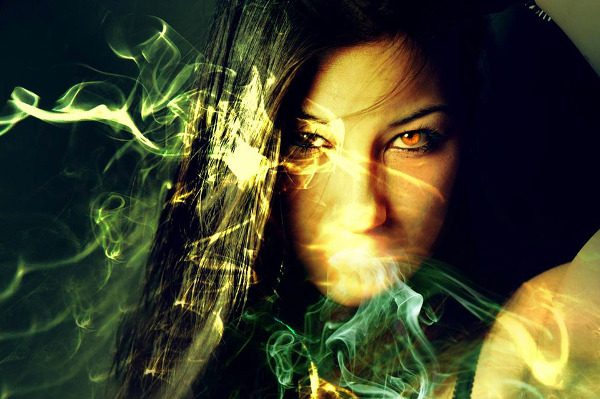
Image from Pixabay
As someone who started out in ceremonial magic and later went into traditional witchcraft, I’ve noticed something rather odd. People tend to think that ceremonial magical traditions are mostly male, and those involved in traditional witchcraft are mostly female. And yet the gender balance in each of the groups is pretty 50-50. So why does this perception continue to exist? Why do some people seem to believe that “ceremonial magic is for men, witchcraft is for women”?
I can’t begin to tell you in how many interviews with people discussing traditions and practices such as the Hermetic Order of the Golden Dawn, the Abramelin operation, and so forth I have been repeatedly asked what it feels like to what appears to be a rare female voice in a “sausage fest”. I am far from being the only woman who has dug into works such as the Greater and Lesser Keys of Solomon, practiced Enochian magic, done the Abramelin operation, or became Adeptus Minor in the Golden Dawn, but I am probably one of the few who is actively speaking on it and being heard. And that shouldn’t be, as I’m not exactly unusual.
And yet in regards to traditional witchcraft and its various circles and permutations, I have not been asked that question once. It’s true that for the most part, witches have been seen as primarily female and as “woman’s magic”–which is also baffling given how many male witches whom I personally know. In addition, back in the day men were also pressed to death and hung for supposedly committing acts of witchcraft, so historically speaking this hasn’t necessarily been something that has been seen as the exclusive property of women. And yet the perception remains today. Why?
It is true that witchcraft is naturally subversive, and has been a venue for those typically lacking in power by society’s standards to even out the odds–and women are most definitely in that category and the most strongly associated with witchcraft. And it’s also true that technically there is no difference between the words “magic” and “witchcraft” by definition. It may be because so much of ceremonial magic is derived from typically patriarchal religions such as Judaism, Christianity, and Islam that the traditions themselves would more naturally attract men. Unfortunately many of modern esoteric orders continue to have a “cis allohet white dude problem” or in short what I refer to as “broccultism”. I suspect that the massive diversity issues and ability to handle them in said groups more than anything else have either silenced or otherwise driven away women from their ranks. It certainly drove me away, sadly enough. So perhaps one of the reasons why women are more associated with traditional witchcraft and its derivations is because quite honestly, most of the traditions in that sphere tend to be far more progressive on issues of gender and sexuality than a lot of modern day ceremonial magical traditions.
When I posted the other day about the persistent problem of objectifying women in magical traditions, there were one particular commenter who insisted that the problem could not possibly exist because “most people involved in witchcraft are female”. Never mind the many authors and influencers past and present off the top of my head such as Leo Martello, Scott Cunningham, Gavin Bone, Stewart Farrar, Devin Hunter, Storm Faerywolf, Robin Artisson, Raymond Buckland, Lee Morgan, Peter Grey, Paul Huson, and maybe these last two might ring a bell: Gerald Gardner and Alex Sanders. Need I say more? Witchcraft is quite obviously pretty far from being a “mostly female” domain, and given how many knowledgeable and amazing male witches whom I happen to personally know, it’s absolutely ridiculous to erase them from the equation.
And when we turn to the side of the other forms of occultism such as ceremonial magic, etc., women’s voices are almost entirely drowned out, and the few who are well known are mostly known due to being married to someone else who is already famous within the tradition. Whenever I bring up writers such as Dion Fortune and S Connelly as one of a number of female voices on the subject of magic that isn’t based in trad craft, people are either unaware that these voices exist or act surprised that the authors in question were female. It’s clear to me that there are some very clear biases in magical traditions that are based in ceremonial magic, qabalah, and the Western Mystery Traditions that are geared more towards male versus female voices. And given how many women are actually in those groups, it would seem to me that we have a massive problem.
It’s painfully obvious that we need more female writers and female voices heard in all magical traditions in general–not just in ceremonial magical traditions. It is true that it is harder for women to become published on the whole; the literary bias among publishers is both well known and well documented. It doesn’t surprise me that one of the few female writers I could name who are published chose to do so with her first initial in lieu of her full name. The fact that the perception is that more women are into witchcraft is probably why you’re more apt to find female authors with titles on witchcraft, and why they are more easily and readily published and available. And yet I suspect that the majority of “known” male authors in witchcraft versus female are greater despite the larger number of women published in it–so the bias towards men still doesn’t even end at witchcraft, a supposedly “mostly female” domain.
Interestingly if you are a member of any of these traditions, you won’t find the genders so skewed. During my time in the Golden Dawn, in all of the GD orders I was a part of the outer order was a fairly even 50-50 split. As you went further up the ranks it became fairly clear that it became weighted more towards men–and I’m very sure given my experiences in those particular esoteric orders as to why that was. In my initiatory witchcraft lineages, the genders remain very even–both among the members and those who would be considered to be elders within those traditions. It could be based on the fact that the structures of what we refer to in the USA as “British Traditional Wicca” is traditionally geared towards gender polarity and hence the balance remains built in. After all, typically for every coven there is a High Priest and a High Priestess. But if witchcraft naturally attracted more women, you wouldn’t find a gender balance among those who were members and not necessarily elders.
So why aren’t more women writing, publishing, and speaking on magical traditions–especially on occultism in general and not just on trad craft? Are inherent biases getting in the way of being heard? It certainly seems that way to me given there are just as many educated and learned women who are occultists as there are men. What needs to be done in order to elevate these voices and encourage more of them to write, publish, and speak on their magical experiences and knowledge? What can we do to challenge the sexism that remains in so many magical circles and prevents these voices from being heard?
In certain occult traditions they are creating diversity councils who are actively working on these issues and more, and I applaud their efforts. I recognize the uphill battle involved, and that in some groups that battle is harder than others. I strongly believe, however, that most of those battles would be resolved by the following: 1) listening to women, 2) not tolerating certain forms of behavior, and 3) having a linear process to follow when inappropriate actions and/or behavior have taken place. I personally left groups when none of the above was occurring, and had any of those points existed I might have stayed. Unfortunately when certain attitudes towards women continue to flourish and be defended, such places will not be safe let alone comfortable places.
Previous Post

July 24, 2018
Beyond The Athame & The Chalice: Rethinking Gender Roles And Polarity
Next Post

July 26, 2018 Beyond Fertility: The Cycle Of Life, Death, Nature, And Sacrifice
Browse Our Archives
Select a Category Book Reviews Class reviews Events Greek Polytheism Initiation and Traditions Magic and witchcraft Paganism and Polytheism Spiritual and Personal Development Tv Show Reviews Uncategorized
Select a Month July 2021 December 2020 November 2020 October 2020 September 2020 August 2020 July 2020 June 2020 April 2020 March 2020 February 2020 January 2020 December 2019 November 2019 October 2019 September 2019 August 2019 July 2019 May 2019 April 2019 March 2019 January 2019 December 2018 November 2018 October 2018 September 2018 August 2018 July 2018 June 2018 May 2018 April 2018 March 2018 February 2018 January 2018
Follow Us!
TAKE THE
Religious Wisdom Quiz
Why did Jesus often use parables?
Select your answer to see how you score.
To reveal truths to those open to God To show off To confuse listeners To entertain only
Related posts from Tea Addicted Witch
Autumn Is Coming, And Too Many Are Not...
Yule 2020: After The Darkness Comes The Light...
Honoring Trans Day of Remembrance As A Pagan...
Responsible Magic: The Importance About Caring About Other...
TRENDING AT PATHEOS Pagan

I was recently chatting with someone on Instagram. She asked me what...

While there are many people who share their results, the end of...

On July 23, I saw Christopher Nolan's The Odyssey which is Homer’s...

As I write this two big events have just finished up. One...

Restoring the Watershed of Divine Love
Perhaps cooperation is not something we manufacture through legislation, ideology, or moral...

Many UUs don’t pray because of bad experiences in a previous religion,...
view all Pagan blogs
Ad-Free & Subscriber Log-In Subscription Support
- About Us
- 2026 Calendar
- Videos
- Podcasts
- Library of World Religions
- Faith In Media Tracker
- Advertise With Us
- Write for Us
- Privacy Policy
- Terms of Service
- Do Not Sell My Data
- Contact Us
- Radiant Digital
- Manage Newsletter Subscriptions
- Unsubscribe From Notifications
- Sitemap
Copyright 2008-2026, Patheos. All rights reserved.
Subscription Support Ad-Free & Subscriber Log-In
Follow Patheos