
BuddhistCatholicContemplativeEvangelicalGeneral ChristianHinduJewishLatter-day SaintMuslimNew VisionsProgressive Christian
Beliefs
- Buddhist
- Catholic
- Contemplative
- Evangelical
- General Christian
- Hindu
- Jewish
- Latter-day Saint
- More Voices
- Muslim
- New Visions
- Pagan
- Progressive Christian
Topics
- Religion News
- Food and Religion
- Sports and Religion
- Religious Art
- Religious Music and Entertainment
- Religious Events
- History and Religion
- Style and Religion
- Politics and Religion
- Women in Religion
- Recreation Outdoors and Religion
- Business Finance and Religion
- Careers Workplace and Religion
- Education and Religion
- Family Parenting and Religion
- Health Fitness and Religion
- Home and Religion
- Relationships and Religion
- Technology and Religion
- Travel and Religion
Columnists
- Buddhist Columnists
- Business Finance and Religion Columnists
- Careers Workplace and Religion Columnists
- Catholic Columnists
- Contemplative Columnists
- Education and Religion Columnists
- Evangelists Columnists
- Family Parenting and Religion Columnists
- General Christian Columnists
- Health Fitness and Religion Columnists
- Hindu Columnists
- History and Religion Columnists
- Home and Religion Columnists
- Jewish Columnists
- More Voices Columnists
- Latter Day Columnists
- Muslim Columnists
- New Visions Columnists
- Nonreligious Columnists
- Pagan Columnists
- Politics and Religion Columnists
- Progressive Columnists
- Recreation Outdoors and Religion Columnists
- Relationships and Religion Columnists
- Religion News Columnists
- Religious Art Columnists
- Religious Events Columnists
- Religious Music and Entertainment Columnists
- Sports and Religion Columnists
- Style and Religion Columnists
- Technology and Religion Columnists
- Travel and Religion Columnists
- Women in Religion Columnists
Resource Library
- 2026 Calendar
- Library of World Religions
- The 100 Most Holy Places on Earth
- Patheos Answers
- Podcasts
- Videos
- Faith Leaders Database
- Anglican Episcopalian
- Bahai
- Baptist
- Buddhism
- Christianity
- Confucianism
- Eastern Orthodoxy
- Hinduism
- Holiness and Pentecostal
- ISKCON
- Islam
- Judaism
- Lutheran
- Methodist
- The Church of Jesus Christ of Latter-day Saints
- New Age
- Paganism
- Presbytarian and Reformed
- Protestantism
- Religion Behind the Scenes
- Roman Catholic
- Scientology
- Shia Islam
- Sikhism
- Sufism
- Sunni Islam
- Taoism
- Zen
- See all religions
Research Tools
 Ad-Free & Subscriber Log-In Subscription Support
Ad-Free & Subscriber Log-In Subscription Support
Follow Patheos 

- Trending:
- Forgiveness
- |
- Marriage
- |
- Consciousness
- |
- Death Penalty
- |
- Election
- |
- Halloween
 Tea Addicted Witch
- Home
- Pagan
- What Is A Witch? Defining Witchcraft For Both Past And Present Day
What Is A Witch? Defining Witchcraft For Both Past And Present Day
Last updated on: July 14, 2018 at 12:01 am by River Enodian
What Is A Witch? Defining Witchcraft For Both Past And Present Day 2018-07-14T00:01:39+00:00 River Enodian
Patheos Explore the world's faith through different perspectives on religion and spirituality! Patheos has the views of the prevalent religions and spiritualities of the world.
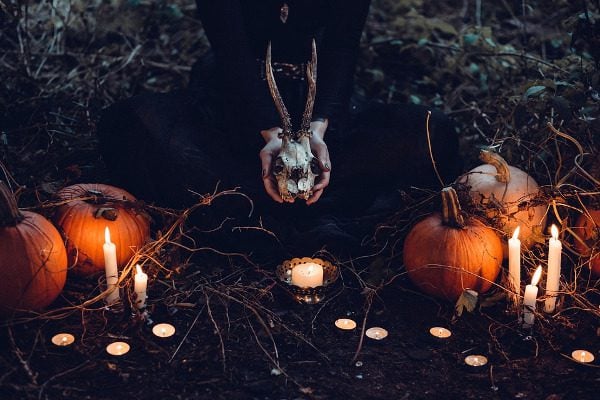
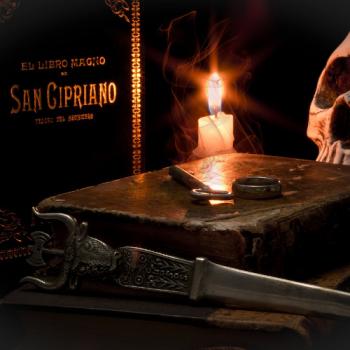
Image from Pixabay
What is witchcraft? Is it separate from magic or a subsection of it? Are the terms “magic” and “witchcraft” interchangeable? If not (or not always), what makes them different?
First of all, a fast etymology lesson. Witchcraft itself comes from the Old English word wicce (wicca in the masculine form), which specifically refers to a “female magician, a sorceress”. The masculine version is not much different. Either way both terms mean “a sorcerer, wizard or magician who practices witchcraft or magic”. In short, if you dig down into the roots of the term, both magic and witchcraft are more or less completely interchangeable. They are virtually the same thing. However, back in the day the term was more commonly associated with women than men and with strong associations of drugs, poisons, or charms–and most specifically with anything to do with herbs.
Today, the terms magic and witchcraft are frequently used interchangeably but with the connotations of witchcraft being a subset of magic and being more involved with nature, the earth, women, fertility, etc. While much of that association can be blamed on modern Wicca both initiatory versions and non, it has its roots (no pun intended!) in the associations of witchcraft with the powers of nature. I would argue that introducing elements of modern ceremonial magical traditions has reduced the direct role of nature in various trad craft disciplines, at least comparatively.
Many excellent blogs and resources are out there at present about witchcraft and the poison path, and as a relative novice to herbalism I won’t attempt much of a discussion on it but I will refer people to this particular blog here. If you dig back into ancient times, specifically Greece, Hekate who is a Greek goddess of witchcraft is also associated with poisons and poisonous herbs. This is no accident or mistake. The term for sorcery in ancient Greece, specifically that in association with herbs and especially poisonous ones, is pharmakeia. It is the same term that the modern word “pharmacy” comes from, and refers to not just medicine but poison, spell, or sorcery. Kirke (often Romanized as Circe) is also a Greek goddess of sorcery, frequently seen as being related by blood to Hekate.
So what can you do with herbs aside from the obviousness of healing or curing, and why do they have strong associations with witchcraft?
If you pick up any basic books on herbs (Scott Cunningham’s book, while it has a few inaccuracies, is a fantastic starting point) you’ll see that different herbs are seen as having different properties: planetary associations, elemental associations, sacred to particular deities, etc. Anyone who has spent any amount of time learning how to craft magical ritual, especially in the ceremonial magical traditions of the West, knows that building rituals and having the corresponding things in that ritual that pertaining to the working will know how important all of that is. If you’re going to do a solar working, for instance, it makes complete sense to have as many things in association with the sun in that ritual. That includes incense/herbs, tools, images, etc. In short, herbs help get stuff done.
In addition to spellwork, you also have the poisonous herbs which can help induce altered states of consciousness. A number of varieties of flying ointments can be found on the web, either in recipe form or available for purchase, all of them containing one or more deadly nightshades–which are once again sacred to the goddess Hekate. Herbs are something which therefore can be used to assist with trance work, something which is useful for any witch or magician. There are also herbs that help with divination and psychic work such as mugwort and bay laurel. Not surprisingly, bay laurel is sacred to Apollo, a Greek god associated with oracles and divination.
So what is a witch? What is witchcraft? I would say that witchcraft is magic which involves a connection with nature, either directly in a literal sense and/or in worship as either part of what is viewed as divine or part of the gods in general. It has historically been strongly associated with the use of herbs in spellcraft and ritual, and I would also argue that while herbs today are no longer seen as being strictly essential to the Craft in many cases, they are nonetheless still important.
Even if herbs are not used directly or at all, witchcraft is magic that deals with the earth. It is chthonic in the truest sense of the word, which means both earth and the underworld. Its roots are with our ancestors, the dead, and the growing things around us. It is magic which deals with life, death, creation, destruction, and abundance. While some of us focus more on some of these things than others due to what we are strong in, witches and witchcraft itself are all about the earth in one form or another. It is our true north.
________
WHAT IS WITCHCRAFT? WHAT MAKES SOMETHING WITCHCRAFT? More Thoughts by Patheos Pagan Writers
What Makes it Witchcraft? by Martha Kirby Capo at The Corner Crone
The Ever Changing Face of Witchcraft by Ian Chambers at By the Pale Moonlight
What Makes Witchcraft . . . . Witchcraft? by Cyndi Brannen at Keeping Her Keys
Defining Witchcraft: General and Personal by Morgan Daimler at Irish-American Witchcraft
What Makes it Witchcraft? by Kelden at By Athame and Stang
On the Necessary, Ineluctable Otherness of Witchcraft by Misha Magdalene at Outside the Charmed Circle
Witchcraft Has No Gatekeepers by Jason Mankey at Raise the Horns
Previous Post

July 10, 2018
Coincidence Magic: Influencing The Odds To Ever Be In Your Favor
Next Post
July 13, 2018 Witches Are Meant To Be Subversive And That Is Our Power
Browse Our Archives
Select a Category Book Reviews Class reviews Events Greek Polytheism Initiation and Traditions Magic and witchcraft Paganism and Polytheism Spiritual and Personal Development Tv Show Reviews Uncategorized
Select a Month July 2021 December 2020 November 2020 October 2020 September 2020 August 2020 July 2020 June 2020 April 2020 March 2020 February 2020 January 2020 December 2019 November 2019 October 2019 September 2019 August 2019 July 2019 May 2019 April 2019 March 2019 January 2019 December 2018 November 2018 October 2018 September 2018 August 2018 July 2018 June 2018 May 2018 April 2018 March 2018 February 2018 January 2018
Follow Us!
TAKE THE
Religious Wisdom Quiz
Who was Jesus' mother?
Select your answer to see how you score.
Anna Martha Mary Elizabeth
Related posts from Tea Addicted Witch
Yule 2020: After The Darkness Comes The Light...

Responsible Magic: The Importance About Caring About Other...
What's In A Magical Name? When To Change,...
Witchcraft Is Political, Which Is Why I Am...
TRENDING AT PATHEOS Pagan

I was recently chatting with someone on Instagram. She asked me what...

While there are many people who share their results, the end of...

On July 23, I saw Christopher Nolan's The Odyssey which is Homer’s...

As I write this two big events have just finished up. One...

Restoring the Watershed of Divine Love
Perhaps cooperation is not something we manufacture through legislation, ideology, or moral...

Many UUs don’t pray because of bad experiences in a previous religion,...
view all Pagan blogs
Ad-Free & Subscriber Log-In Subscription Support
- About Us
- 2026 Calendar
- Videos
- Podcasts
- Library of World Religions
- Faith In Media Tracker
- Advertise With Us
- Write for Us
- Privacy Policy
- Terms of Service
- Do Not Sell My Data
- Contact Us
- Radiant Digital
- Manage Newsletter Subscriptions
- Unsubscribe From Notifications
- Sitemap
Copyright 2008-2026, Patheos. All rights reserved.
Subscription Support Ad-Free & Subscriber Log-In
Follow Patheos