
BuddhistCatholicContemplativeEvangelicalGeneral ChristianHinduJewishLatter-day SaintMuslimNew VisionsProgressive Christian
Beliefs
- Buddhist
- Catholic
- Contemplative
- Evangelical
- General Christian
- Hindu
- Jewish
- Latter-day Saint
- More Voices
- Muslim
- New Visions
- Pagan
- Progressive Christian
Topics
- Religion News
- Food and Religion
- Sports and Religion
- Religious Art
- Religious Music and Entertainment
- Religious Events
- History and Religion
- Style and Religion
- Politics and Religion
- Women in Religion
- Recreation Outdoors and Religion
- Business Finance and Religion
- Careers Workplace and Religion
- Education and Religion
- Family Parenting and Religion
- Health Fitness and Religion
- Home and Religion
- Relationships and Religion
- Technology and Religion
- Travel and Religion
Columnists
- Buddhist Columnists
- Business Finance and Religion Columnists
- Careers Workplace and Religion Columnists
- Catholic Columnists
- Contemplative Columnists
- Education and Religion Columnists
- Evangelists Columnists
- Family Parenting and Religion Columnists
- General Christian Columnists
- Health Fitness and Religion Columnists
- Hindu Columnists
- History and Religion Columnists
- Home and Religion Columnists
- Jewish Columnists
- More Voices Columnists
- Latter Day Columnists
- Muslim Columnists
- New Visions Columnists
- Nonreligious Columnists
- Pagan Columnists
- Politics and Religion Columnists
- Progressive Columnists
- Recreation Outdoors and Religion Columnists
- Relationships and Religion Columnists
- Religion News Columnists
- Religious Art Columnists
- Religious Events Columnists
- Religious Music and Entertainment Columnists
- Sports and Religion Columnists
- Style and Religion Columnists
- Technology and Religion Columnists
- Travel and Religion Columnists
- Women in Religion Columnists
Resource Library
- 2026 Calendar
- Library of World Religions
- The 100 Most Holy Places on Earth
- Patheos Answers
- Podcasts
- Videos
- Faith Leaders Database
- Anglican Episcopalian
- Bahai
- Baptist
- Buddhism
- Christianity
- Confucianism
- Eastern Orthodoxy
- Hinduism
- Holiness and Pentecostal
- ISKCON
- Islam
- Judaism
- Lutheran
- Methodist
- The Church of Jesus Christ of Latter-day Saints
- New Age
- Paganism
- Presbytarian and Reformed
- Protestantism
- Religion Behind the Scenes
- Roman Catholic
- Scientology
- Shia Islam
- Sikhism
- Sufism
- Sunni Islam
- Taoism
- Zen
- See all religions
Research Tools
 Ad-Free & Subscriber Log-In Subscription Support
Ad-Free & Subscriber Log-In Subscription Support
Follow Patheos 

- Trending:
- Forgiveness
- |
- Marriage
- |
- Consciousness
- |
- Death Penalty
- |
- Election
- |
- Halloween
 Tea Addicted Witch
- Home
- Pagan
- The Orphic Hymns Are Getting A Modern Facelift, And They’re Incredible
The Orphic Hymns Are Getting A Modern Facelift, And They’re Incredible
Last updated on: May 23, 2018 at 8:17 pm by River Enodian
The Orphic Hymns Are Getting A Modern Facelift, And They’re Incredible 2018-05-23T20:17:58+00:00 River Enodian
Patheos Explore the world's faith through different perspectives on religion and spirituality! Patheos has the views of the prevalent religions and spiritualities of the world.
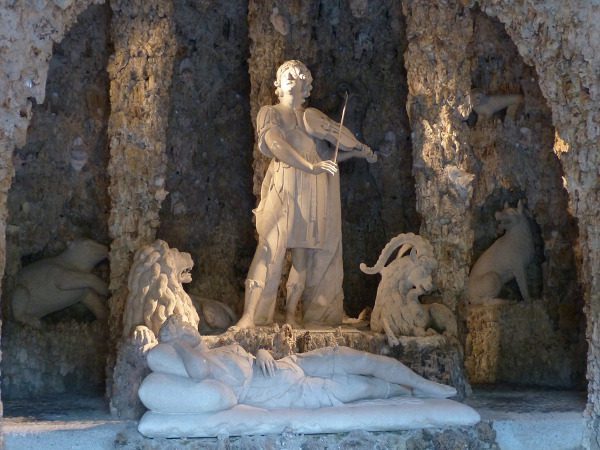
Image from Pixabay
There is a new project underway which is retranslating the Orphic Hymns for better understanding and use by modern Greek polytheists. The translator, Sara Mastros, is currently working on each Orphic Hymn and has been posting samples to her Facebook page.
An explanation of the Orphic Hymns from the author:
The Orphic Hymns are some of the most beautiful and important sacred texts of classical antiquity. They were, in their present form, probably written in what is now Western Turkey sometime between 200 BCE and 200 CE, although they undoubtedly arose out of an older oral tradition. Many scholars believe they originated in ancient Pergamum (modern Bodrum) as part of the cult of the Great Earth Goddess, in her form as Demeter. Recalling as they do ancient middle eastern myth, the hymns provide an important window into the religious traditions of the eastern Greek world, including several deities quite obscure in mainland Greece. In particular, three hymns, those to Mise, Hipta, and Melinoe, were completely unattested to outside the hymns until their names were found inscribed on tombs excavated in Anatolia.
Modern day practitioners frequently use these hymns during ritual for festivals, prayer offerings, and any occasion where it moves one to provide a thorough invocation or paean to a particular deity. Sara Mastros is not the first to do this, but is among the very few who are doing this in a way that is both modern and geared towards current worshippers of the Greek gods.
To quote Mastros:
Like any translator, I have made choices that put my own spin on the ancient work. My point of view is that of a devotee and “insider” with these gods, whom I grew up with and have adored as long as I can remember. However, I am not reconstructing old forms, I have kept the language and tone modern. At this time, particularly with gods to whom I have a strong connection, I have been moved to write “inspired versions” of the hymns in addition to more literal ones.
Here is an example of a literal version vs an inspired version of the Hymn to Hermes.
Literal:
I call the envoy of Zeus, the son of Queen May
Almighty heart-bearer, Lord of mortal Games.
Wise and wiley messenger, killer of Argos,
Winged footed philanthropist, lover of logos,
Prophet of athletes who rejoices in fraud,
Rearing up lies, you’re the tricksters’ own god.
Spinning[1] propaganda, like advertisers’ dreams
Selling ataraxia and get bliss-quick-schemes.
But those same hands offer genuine peace,
Blameless, irreproachable machines of surcease.
Corcian luckbringer, blessed loquacious one,
Comrade of the worker and those under the gun,
Employing clever rhetoric, venerable friend,
Pray for your initiates when our lifetimes end:
Boast about our work and our charismatic rhymes
Memorialize our memories for future lifetimes.
[1] The greek here is ἑρμηνεῦ, closely related to the English “hermeneutics”, and is wordplay on Hermes name.
Inspired:
I sing of High Hermes, beloved worker of wonder,
First Pleiades conceived while she dreamed of bright Thunder.
All-powerful game-master, lord of the dead,
true-thinking forteller of what lies ahead,
Code-cracking con-artist, jail-breaking the shibboleth,
killed peacock eyed Argos when you bored him to death,
Winged-sandaled homosexual, fast philanthropic prophet,
rejoicing in racers and instructing pick-pockets,
Spinning hermeneutics like you’re spitting hot rhymes,
Giving voice to rife futures from polyhistorical times,
Many named, many storied, clever and brave.
Many faced lord of the Corycian cave,
Set Typhon the serpent scion of sierra Cyllene.
holding keys to machines that bring impeccable peace,
Polymythic weaver of wondrous tales,
comrade of the worker, trimmer of travails,
Wielding words as wyrd weapons of dramatic unsheathing
Weaving wonder and worship into fervent believing.
Get ready to make merry for the immortal emcee:
Hermes drops thoughts that stop loss from the flow of Mnemosyne.
There is a Kickstarter underway to help fund the project, which you can read more about and/or pre-order at www.OrphicHymns.com. You can also find more translations and samples on the Facebook page.
Previous Post

May 18, 2018
Your Hellenism Is Not My Hellenism, And This Is Okay
Next Post

May 30, 2018 Practical Gnosis: How to Discern Experience vs Ego
Browse Our Archives
Select a Category Book Reviews Class reviews Events Greek Polytheism Initiation and Traditions Magic and witchcraft Paganism and Polytheism Spiritual and Personal Development Tv Show Reviews Uncategorized
Select a Month July 2021 December 2020 November 2020 October 2020 September 2020 August 2020 July 2020 June 2020 April 2020 March 2020 February 2020 January 2020 December 2019 November 2019 October 2019 September 2019 August 2019 July 2019 May 2019 April 2019 March 2019 January 2019 December 2018 November 2018 October 2018 September 2018 August 2018 July 2018 June 2018 May 2018 April 2018 March 2018 February 2018 January 2018
Follow Us!
TAKE THE
Religious Wisdom Quiz
What does "Rabboni" mean, as Mary Magdalene called Jesus after the resurrection?
Select your answer to see how you score.
Messenger Teacher Shepherd Savior
Related posts from Tea Addicted Witch

Autumn Is Coming, And Too Many Are Not...

Yule 2020: After The Darkness Comes The Light...

Honoring Trans Day of Remembrance As A Pagan...

Responsible Magic: The Importance About Caring About Other...
TRENDING AT PATHEOS Pagan

I was recently chatting with someone on Instagram. She asked me what...

While there are many people who share their results, the end of...

On July 23, I saw Christopher Nolan's The Odyssey which is Homer’s...

As I write this two big events have just finished up. One...

Restoring the Watershed of Divine Love
Perhaps cooperation is not something we manufacture through legislation, ideology, or moral...

Many UUs don’t pray because of bad experiences in a previous religion,...
view all Pagan blogs
Ad-Free & Subscriber Log-In Subscription Support
- About Us
- 2026 Calendar
- Videos
- Podcasts
- Library of World Religions
- Faith In Media Tracker
- Advertise With Us
- Write for Us
- Privacy Policy
- Terms of Service
- Do Not Sell My Data
- Contact Us
- Radiant Digital
- Manage Newsletter Subscriptions
- Unsubscribe From Notifications
- Sitemap
Copyright 2008-2026, Patheos. All rights reserved.
Subscription Support Ad-Free & Subscriber Log-In
Follow Patheos