
BuddhistCatholicContemplativeEvangelicalGeneral ChristianHinduJewishLatter-day SaintMuslimNew VisionsProgressive Christian
Beliefs
- Buddhist
- Catholic
- Contemplative
- Evangelical
- General Christian
- Hindu
- Jewish
- Latter-day Saint
- More Voices
- Muslim
- New Visions
- Pagan
- Progressive Christian
Topics
- Religion News
- Food and Religion
- Sports and Religion
- Religious Art
- Religious Music and Entertainment
- Religious Events
- History and Religion
- Style and Religion
- Politics and Religion
- Women in Religion
- Recreation Outdoors and Religion
- Business Finance and Religion
- Careers Workplace and Religion
- Education and Religion
- Family Parenting and Religion
- Health Fitness and Religion
- Home and Religion
- Relationships and Religion
- Technology and Religion
- Travel and Religion
Columnists
- Buddhist Columnists
- Business Finance and Religion Columnists
- Careers Workplace and Religion Columnists
- Catholic Columnists
- Contemplative Columnists
- Education and Religion Columnists
- Evangelists Columnists
- Family Parenting and Religion Columnists
- General Christian Columnists
- Health Fitness and Religion Columnists
- Hindu Columnists
- History and Religion Columnists
- Home and Religion Columnists
- Jewish Columnists
- More Voices Columnists
- Latter Day Columnists
- Muslim Columnists
- New Visions Columnists
- Nonreligious Columnists
- Pagan Columnists
- Politics and Religion Columnists
- Progressive Columnists
- Recreation Outdoors and Religion Columnists
- Relationships and Religion Columnists
- Religion News Columnists
- Religious Art Columnists
- Religious Events Columnists
- Religious Music and Entertainment Columnists
- Sports and Religion Columnists
- Style and Religion Columnists
- Technology and Religion Columnists
- Travel and Religion Columnists
- Women in Religion Columnists
Resource Library
- 2026 Calendar
- Library of World Religions
- The 100 Most Holy Places on Earth
- Patheos Answers
- Podcasts
- Videos
- Faith Leaders Database
- Anglican Episcopalian
- Bahai
- Baptist
- Buddhism
- Christianity
- Confucianism
- Eastern Orthodoxy
- Hinduism
- Holiness and Pentecostal
- ISKCON
- Islam
- Judaism
- Lutheran
- Methodist
- The Church of Jesus Christ of Latter-day Saints
- New Age
- Paganism
- Presbytarian and Reformed
- Protestantism
- Religion Behind the Scenes
- Roman Catholic
- Scientology
- Shia Islam
- Sikhism
- Sufism
- Sunni Islam
- Taoism
- Zen
- See all religions
Research Tools
 Ad-Free & Subscriber Log-In Subscription Support
Ad-Free & Subscriber Log-In Subscription Support
Follow Patheos 

- Trending:
- Forgiveness
- |
- Marriage
- |
- Consciousness
- |
- Death Penalty
- |
- Election
- |
- Halloween
 Talk with the Preacher
- Home
- Progressive Christian
- The Posture of a Pilgrim
The Posture of a Pilgrim
Last updated on: October 9, 2017 at 10:08 am by Amy Butler
The Posture of a Pilgrim 2017-10-09T10:08:54-04:00 Amy Butler
Patheos Explore the world's faith through different perspectives on religion and spirituality! Patheos has the views of the prevalent religions and spiritualities of the world.
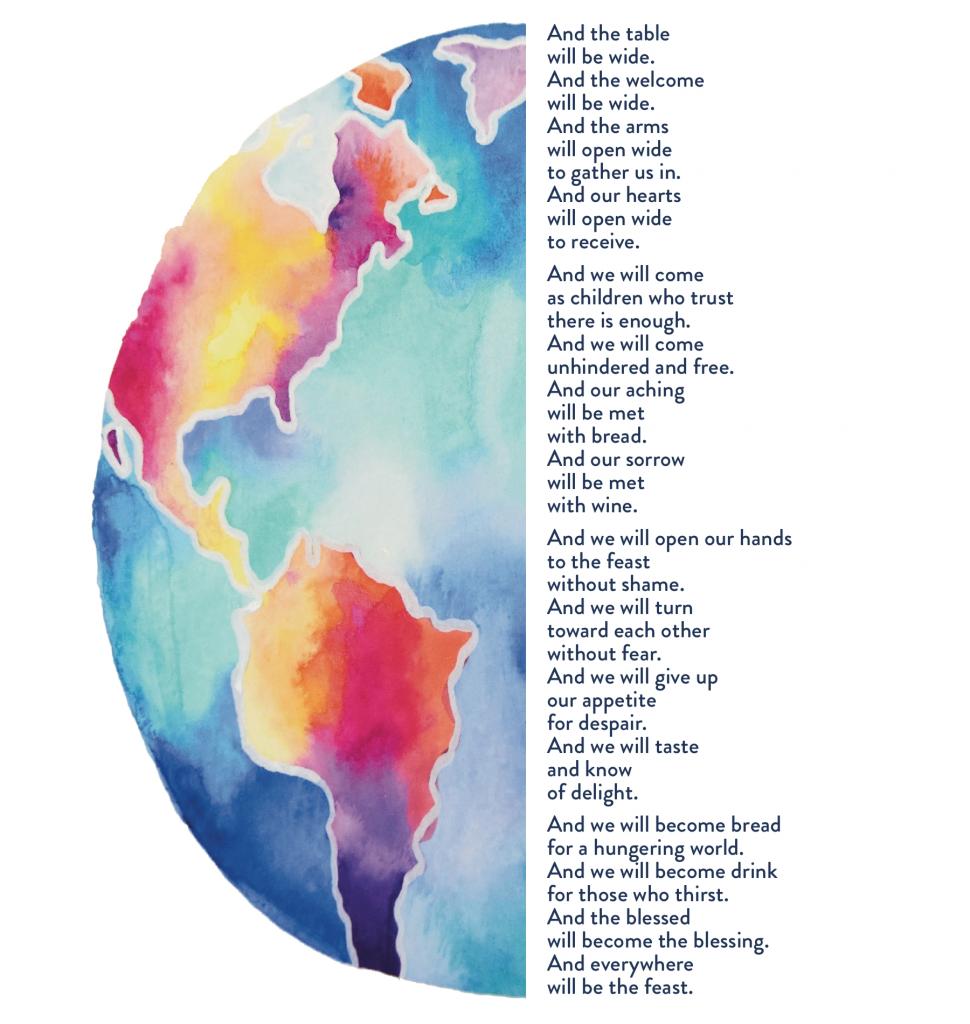
Image: Courtney Pomeroy
Poem: Jan Richardson
Philippians 2:1-11
When I turned 40 I finished my doctorate and decided I was done with classrooms and textbooks and theology and biblical studies. You’re never really done with learning, though, so I thought that I should probably look for something new to learn, something totally foreign from everything I’d spent all my life studying. So I decided I would set out to obtain a license to operate a motorcycle.
I called this a different expression of my thirst for learning.
My children called this a midlife crisis.
Nevertheless, I pressed on. I signed up to take a class at the local community college which, upon successful completion, would result in a motorcycle license with my name on it.
And every Thursday afternoon for six weeks I dutifully showed up for class, where we watched safety videos, scoured the Department of Motor Vehicles’ safety regulations for the operation of motorcycles, and learned about the different parts of a motorcycle. The last two Thursdays class was held out in the parking lot, where we had to actually get on a bike and learn to shift the gears and try to balance. Finally, we had our exam, where we completed a written test and then had to show the instructor that we could drive a motorcycle safely through an obstacle course.
Every single step of learning that new skill was hard for me. I’d become so comfortable in a classroom studying Christology or preaching or the history of the book of Ephesians that I found things like a braking system or a gear shift or a swing arm totally, completely foreign. I couldn’t balance on a motorcycle without using muscles I wasn’t accustomed to using. It felt strange to shift the gears on the handlebars. It was hard.
But at the end of the six weeks I am proud to report that I passed the class, went to the DMV, and received my license to operate a motorcycle.
And I got my motorcycle license in 2010.
And I have not been on a motorcycle since.
For the last few weeks we have been “On the Way With Jesus,” following him around like his first disciples did, listening intently to the lessons he was trying to teach them…and us.
Jesus’ lessons were completely foreign to disciples who’d spent all their lives mending nets and tending boats and collecting taxes. They had to stretch the muscles of their minds and their hearts to try to learn what Jesus was teaching them.
Let’s be honest: it’s the same with us.
Just recall what we’ve heard on the way with Jesus these past few weeks: lessons on how to resolve conflict and build healthy community; a direction to take up a cross and lose your life; instruction on how many times to forgive (as many as it takes); and last week, a reminder that nothing we have belongs to us—the only thing that belongs to us is our neighbor.
These are hard, counter-intuitive lessons to digest. They’re not familiar, like the standards of the world that tell us to cut people off, and hoard what we have, and hold our secrets hard and our bitterness close, and do whatever it takes to make sure we’re first.
But now that we’re at the end of this series and here on World Communion Sunday, we need to ask ourselves if we’re going to brush our hands off, pat ourselves on the back for making it through those tough lessons, assure ourselves that we’ve obtained a suitable Christian certification.
And then never go out and try to live like Jesus told us to live again.
Today’s scripture readings offer us a beautiful little piece of Paul’s letter to the Philippians. What you heard today is probably one of the most famous and familiar passages from Paul’s letters, part of it called the Philippian hymn.
Some of you know that the Apostle Paul was a good Jew and a Roman citizen who became a Christian after a long career of persecuting Christians. Paul was an activist and a zealot, a prophet who, once he believed something, was going to do everything he could to spread the news. So Paul traveled all over Asia Minor and planted little churches in port cities and towns where much of the population converged. To keep up with the little churches he planted, Paul wrote them letters—many of which are part of our Bibles.
And Paul’s missionary activities got him into a lot of trouble, too. The Roman government saw Paul as a serious troublemaker because he kept preaching and teaching the ideas of Jesus, ideas that were disrupting systemic norms and threatening those in power, which—as we all know—have a tendency to bring out the tiki torches. Though he was a good Roman citizen, Paul was insistent that Christ was first, that the teachings of Jesus supersede any human government, that Christians should be willing to speak up to power and empire when it violated the law of Christ.
You might say he kept choosing his faith over the flag, adopting the posture of a pilgrim—someone still on the way with Jesus, still learning and living the hard lessons of the gospel.
And so, Paul wrote the letter to the Philippians from jail while he was awaiting trial, historians think, the direct result of what Rome saw as a violation of his duties as a citizen. And, as a side note, it’s pretty clear that the Philippian church was Paul’s favorite—we can tell because this is the letter in which he uses the most familiar language, and in which he is effusive in his love and concern for them.
No one knows if Paul wrote the hymn we heard this morning, or if he was quoting a common song the early Christians sang, but they would have sung these words together in their homes, gathered in secret to worship because the Roman empire was increasingly threatened by the idea that Christ came before country, that love is always the law in the end, and that their gathering was a posture of protest—resistance.
And when they got together and sang this hymn that reminded them to put themselves last, to nurture unity in their community, to take up the cross and follow Christ, the first Christians always gathered around…a meal. A table. Eating and singing and remembering that they were followers of Jesus, not devotees of the government.
Two thousand years later, we are the ones who call ourselves followers of Jesus, and like the first Christians, we still gather around a table, a meal. But it’s obvious most days that we’ve forgotten what it means to be on the way with Jesus, to assume the posture of a pilgrim, because beginning with the reign of Constantine, Christianity grew into the religion of the state, and ever since then we’ve forgotten that our faith is a faith of resistance, and the table a place of protest.
Back then and even now, this watered down Christian faith became a tool of the state to create fear and division, to elevate false idols of nationalism and imperial domination, and to make us forget the hard, hard lessons we learned at the feet of Jesus and the courage it’s going to take to keep on living them.
Today there are communities coming together in every country in the world to gather around a table and share in a meal that calls us to keep doing Jesus’ work of revolutionary love—World Communion Sunday. So it seems like just the time to remember the truly radical action we take as we come to the table today. Here’s a little church history.
There was a young man named Alexander Campbell who was a student at the University of Glasgow in Scotland in 1809. He was a good Presbyterian, perhaps not unlike Rev. Livingston…. In the Presbyterian church in Scotland back then, communion was only observed twice a year, and Campbell’s church awarded “communion tokens,” a common custom.
You had to have one of these tokens to take communion, so prior to the big communion Sundays everyone would have to present themselves to the minister to be examined. If the minister believed that you were worthy to take communion, he would give you a token—and that was your ticket to get to the table. When you arrived to take communion, you would hand over your token to the minister and then you could take communion. If the minister examined you and didn’t think you were fit to take communion, you wouldn’t get a token and you wouldn’t get communion.
As you can imagine, this gave an inordinate level of power to the ministers. It also created systems in which people were excluded and power was abused and the hard lessons of the gospel were forgotten—and all of this around the table that was originally intended as an act of radical welcome to all and strident protest to the power of the empire.
Even though he had a communion token himself, Alexander Campbell thought long and hard about this…and he didn’t like it. He didn’t like the abuse of power, and he definitely didn’t like the system that excluded people from the table, a ritual of community that invited everyone to enter the presence of Christ and gather sustenance for the work of discipleship.
So the day of communion, Campbell approached the table. When he came to the table to turn in his token, he threw the coin onto the table then walked out, refusing the bread and the wine as a sign of protest.
Later, of course Campbell would come to America and become part of a movement that started the denomination we know as the Disciples of Christ, a denomination that practices communion every week, that keeps the table the center of their worship, and that radically welcomes everyone. Like a protest.
This is our history, this is our heritage, and if we call ourselves Christians, this is the way in which we’re called to live.
Today as we gather around the table along with brothers and sisters all over the world, we must never forget the posture of a pilgrim who is determined to stay on the way with Jesus—it’s a posture of protest, nourished by the community that comes to the table and sings the songs and loves one another and remembers what they learned kneeling at the feet of Jesus, ready to keep doing whatever it takes to keep the lessons Jesus taught them front and center.
Shall we?
Amen.
Previous Post

September 24, 2017
What Belongs to Me
Next Post

October 15, 2017 Wedding Crashers
Browse Our Archives
Select a Category Answering the Call Being the Church Curating Wisdom Laughing Out Loud Living in Relationship Practicing Discipleship Reclaiming Baptist Speaking from the Pulpit Uncategorized
Select a Month July 2018 June 2018 May 2018 April 2018 March 2018 January 2018 December 2017 November 2017 October 2017 September 2017 June 2017 May 2017 April 2017 March 2017 February 2017 January 2017 December 2016 November 2016 October 2016 September 2016 August 2016 July 2016 June 2016 May 2016 April 2016 March 2016 February 2016 January 2016 December 2015 November 2015 October 2015 September 2015 August 2015 July 2015 June 2015 May 2015 April 2015 March 2015 February 2015 January 2015 December 2014 November 2014 October 2014 September 2014 August 2014 July 2014 June 2014 May 2014 April 2014 March 2014 February 2014 January 2014 December 2013 November 2013 October 2013 September 2013 August 2013 July 2013 June 2013 May 2013 April 2013 March 2013 February 2013 January 2013 December 2012 November 2012 October 2012 September 2012 August 2012 July 2012 June 2012 May 2012 April 2012 March 2012 February 2012 January 2012 December 2011 October 2011 September 2011 August 2011 July 2011 June 2011 May 2011 April 2011 March 2011 February 2011 January 2011 December 2010 November 2010 October 2010 September 2010 August 2010 July 2010 June 2010 May 2010 April 2010 March 2010 February 2010 January 2010 December 2009 November 2009 October 2009 September 2009 August 2009 July 2009 June 2009 May 2009 April 2009 March 2009 February 2009 January 2009 December 2008 November 2008 October 2008 September 2008 August 2008 July 2008 June 2008 May 2008 April 2008 March 2008 February 2008 January 2008 December 2007 November 2007 October 2007 September 2007 August 2007 July 2007 June 2007 May 2007 April 2007 March 2007 February 2007 January 2007 December 2006 November 2006 October 2006 September 2006 August 2006 July 2006 June 2006 May 2006 April 2006 March 2006 February 2006 January 2006 December 2005
Search for:
Recent Posts
- Sabbath as Radical Witness
- Learning Leadership: A Pilgrimage to Hawaii
- A Prayer for the Living of These Days
- Sabbath as Relationship
- Dressing Up Faith
Recent Comments
Archives
- July 2018
- June 2018
- May 2018
- April 2018
- March 2018
- January 2018
- December 2017
- November 2017
- October 2017
- September 2017
- June 2017
- May 2017
- April 2017
- March 2017
- February 2017
- January 2017
- December 2016
- November 2016
- October 2016
- September 2016
- August 2016
- July 2016
- June 2016
- May 2016
- April 2016
- March 2016
- February 2016
- January 2016
- December 2015
- November 2015
- October 2015
- September 2015
- August 2015
- July 2015
- June 2015
- May 2015
- April 2015
- March 2015
- February 2015
- January 2015
- December 2014
- November 2014
- October 2014
- September 2014
- August 2014
- July 2014
- June 2014
- May 2014
- April 2014
- March 2014
- February 2014
- January 2014
- December 2013
- November 2013
- October 2013
- September 2013
- August 2013
- July 2013
- June 2013
- May 2013
- April 2013
- March 2013
- February 2013
- January 2013
- December 2012
- November 2012
- October 2012
- September 2012
- August 2012
- July 2012
- June 2012
- May 2012
- April 2012
- March 2012
- February 2012
- January 2012
- December 2011
- October 2011
- September 2011
- August 2011
- July 2011
- June 2011
- May 2011
- April 2011
- March 2011
- February 2011
- January 2011
- December 2010
- November 2010
- October 2010
- September 2010
- August 2010
- July 2010
- June 2010
- May 2010
- April 2010
- March 2010
- February 2010
- January 2010
- December 2009
- November 2009
- October 2009
- September 2009
- August 2009
- July 2009
- June 2009
- May 2009
- April 2009
- March 2009
- February 2009
- January 2009
- December 2008
- November 2008
- October 2008
- September 2008
- August 2008
- July 2008
- June 2008
- May 2008
- April 2008
- March 2008
- February 2008
- January 2008
- December 2007
- November 2007
- October 2007
- September 2007
- August 2007
- July 2007
- June 2007
- May 2007
- April 2007
- March 2007
- February 2007
- January 2007
- December 2006
- November 2006
- October 2006
- September 2006
- August 2006
- July 2006
- June 2006
- May 2006
- April 2006
- March 2006
- February 2006
- January 2006
- December 2005
Categories
- Answering the Call
- Being the Church
- Curating Wisdom
- Laughing Out Loud
- Living in Relationship
- Practicing Discipleship
- Reclaiming Baptist
- Speaking from the Pulpit
- Uncategorized
Meta
Follow Us!
TAKE THE
Religious Wisdom Quiz
Who wrote the most letters in the New Testament?
Select your answer to see how you score.
John James Peter Paul
Related posts from Talk with the Preacher


Learning Leadership: A Pilgrimage to Hawaii

A Prayer for the Living of These Days

TRENDING AT PATHEOS Progressive Christian

Why Christians Have a Sacred Duty to Vote:...
The Bible offers strong support for the sacred duty to vote. Here...

What Being a Modern-Day Apostle Means to Me
In my last column, I discussed the ins and outs of modern-day...

Did Ancient China Once Worship the God of...
Across human history, a common thread weaves through the origins of the...

Love Your Neighbor – Including Earth-Kin: Lev. 19,...
God’s command to love your neighbor means acting in an ethical and...

Lead a Church Study of “Jesus and Lao...
Guest writer Jack Thomas (The Irreverent Reverend) reflects on leading his church...

Principles for Understanding the Apostolic Ministry Today
Whenever people discover that my formal ministry title is "apostle," as in...
view all Progressive Christian blogs
Ad-Free & Subscriber Log-In Subscription Support
- About Us
- 2026 Calendar
- Videos
- Podcasts
- Library of World Religions
- Faith In Media Tracker
- Advertise With Us
- Write for Us
- Privacy Policy
- Terms of Service
- Do Not Sell My Data
- Contact Us
- Radiant Digital
- Manage Newsletter Subscriptions
- Unsubscribe From Notifications
- Sitemap
Copyright 2008-2026, Patheos. All rights reserved.
Subscription Support Ad-Free & Subscriber Log-In
Follow Patheos