
BuddhistCatholicContemplativeEvangelicalGeneral ChristianHinduJewishLatter-day SaintMuslimNew VisionsProgressive Christian
Beliefs
- Buddhist
- Catholic
- Contemplative
- Evangelical
- General Christian
- Hindu
- Jewish
- Latter-day Saint
- More Voices
- Muslim
- New Visions
- Pagan
- Progressive Christian
Topics
- Religion News
- Food and Religion
- Sports and Religion
- Religious Art
- Religious Music and Entertainment
- Religious Events
- History and Religion
- Style and Religion
- Politics and Religion
- Women in Religion
- Recreation Outdoors and Religion
- Business Finance and Religion
- Careers Workplace and Religion
- Education and Religion
- Family Parenting and Religion
- Health Fitness and Religion
- Home and Religion
- Relationships and Religion
- Technology and Religion
- Travel and Religion
Columnists
- Buddhist Columnists
- Business Finance and Religion Columnists
- Careers Workplace and Religion Columnists
- Catholic Columnists
- Contemplative Columnists
- Education and Religion Columnists
- Evangelists Columnists
- Family Parenting and Religion Columnists
- General Christian Columnists
- Health Fitness and Religion Columnists
- Hindu Columnists
- History and Religion Columnists
- Home and Religion Columnists
- Jewish Columnists
- More Voices Columnists
- Latter Day Columnists
- Muslim Columnists
- New Visions Columnists
- Nonreligious Columnists
- Pagan Columnists
- Politics and Religion Columnists
- Progressive Columnists
- Recreation Outdoors and Religion Columnists
- Relationships and Religion Columnists
- Religion News Columnists
- Religious Art Columnists
- Religious Events Columnists
- Religious Music and Entertainment Columnists
- Sports and Religion Columnists
- Style and Religion Columnists
- Technology and Religion Columnists
- Travel and Religion Columnists
- Women in Religion Columnists
Resource Library
- 2026 Calendar
- Library of World Religions
- The 100 Most Holy Places on Earth
- Patheos Answers
- Podcasts
- Videos
- Faith Leaders Database
- Anglican Episcopalian
- Bahai
- Baptist
- Buddhism
- Christianity
- Confucianism
- Eastern Orthodoxy
- Hinduism
- Holiness and Pentecostal
- ISKCON
- Islam
- Judaism
- Lutheran
- Methodist
- The Church of Jesus Christ of Latter-day Saints
- New Age
- Paganism
- Presbytarian and Reformed
- Protestantism
- Religion Behind the Scenes
- Roman Catholic
- Scientology
- Shia Islam
- Sikhism
- Sufism
- Sunni Islam
- Taoism
- Zen
- See all religions
Research Tools
 Ad-Free & Subscriber Log-In Subscription Support
Ad-Free & Subscriber Log-In Subscription Support
Follow Patheos 

- Trending:
- Forgiveness
- |
- Marriage
- |
- Consciousness
- |
- Death Penalty
- |
- Election
- |
- Halloween
 Talk with the Preacher
- Home
- Progressive Christian
- Lessons from St. Patrick’s Day
Lessons from St. Patrick’s Day
Last updated on: March 21, 2017 at 11:10 am by Amy Butler
Lessons from St. Patrick’s Day 2017-03-21T11:10:02-04:00 Amy Butler
Patheos Explore the world's faith through different perspectives on religion and spirituality! Patheos has the views of the prevalent religions and spiritualities of the world.
“Our people know about coffin ships — boats that sink to the bottom of the sea with everyone on board.”
Close your eyes and imagine the voice who said those words. Who do you a picture? An African-American describing slave ships on the Middle Passage? A Cuban refugee who knows what it is to cling to anything that will float 90 miles to a different world? A descendant of the countless Jews who fled Europe in the 1930s? A Syrian father remembering desperate attempts to keep his children afloat?
It’s likely you didn’t imagine the Irish brogue in which these words were uttered at the end of worship in my church a few Sundays ago. It was an Irish senator who said those words, and Senator Aodhán O’Riordáin said them as he invited the congregation to a Saint Patrick’s Day celebration — in our sanctuary.
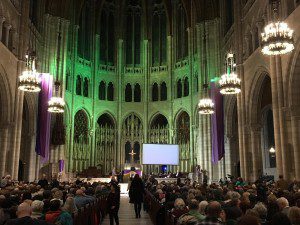 Less than a week after Senator O’Riordáin delivered his impassioned invitation, the sanctuary was aglow in green. The purple Lenten banners were still up, of course, but the lights bathing the front chancel had been changed to green for the holiday. And the nave, bursting at the seams with folks who had waited in long sidewalk lines in the cold and snow, was like a sea of green coats and sweaters, hats and “Irish Stand” buttons. The sounds of the bodhrán and the fiddle and excited conversation filled the air.
It was Saint Patrick’s Day, and in my hometown of New York Saint Patrick’s Day is quite a big deal. This big, city-wide party makes sense, as New York City claims the largest population of Irish Americans anywhere in the United States. Huge parades and elaborate festivals celebrating Irish music, culture and food happened all over the city, and you could feel the festive spirit just walking down the sidewalk.
With all the Irish bars filled to overflowing with tipsy revelers, it might seem strange at first glance to use the sanctuary of a church to join the celebration of this Irish holiday. But a closer look reveals that the story of the Irish people landing on America’s shores is something all people of faith and good conscience should take a moment to remember. All throughout Christian scripture we read instruction to both recall our own status as wandering strangers and to live our lives in a constant posture of welcoming those who are longing for home.
It wasn’t too long ago that no one in New York could have imagined a holiday celebrating Ireland and the Irish people. The forefathers and foremothers of the last week’s celebrating Irish Americans were largely immigrants who fled Ireland in the mid 1800s because of oppressive government rule and devastating famine. Back then, most natives of Ireland were small farmers who managed to eke out a living on tiny farms British landowners allowed them. Irish fed their families principally with potatoes, so when a great blight destroyed every potato crop in the land the people became desperate. The devastating effects of that famine resulted in Ireland losing almost half its population to death and emigration.
Of the almost two million Irish set out for the hope of a better life in the United States, almost a quarter of those who desperately boarded stinking, over-crowded ships did not survive the trip across the Atlantic. As Irish Prime Minister Enda Kenny said at the White House last week when he referenced Emma Lazarus’ poem on the Statue of Liberty, “We were the wretched refuse on the teeming shore.”
When the Irish landed on American soil, they threatened to take jobs away from Americans and strain welfare budgets, as many had spent every last cent they had on their passage and the conditions of the passage left many of them disease-ridden. Desperate for work, Irish took the most menial and dangerous jobs, often at low pay, jobs like construction, hourly labor, cleaning houses, working in textile mills. And to add to societal tension, most Irish were devoutly Catholic, not Protestant; they had different cultural traditions, and they spoke with strange accents.
Angry Americans, who were ironically just a few generations away from immigrant status themselves, accused the Irish of being criminals and rapists, called them names, and posted signed that read, “Help Wanted: No Irish Need Apply.”
Sound familiar? It should. Many of the same insults and accusations are leveled at our immigrant neighbors today. Our leaders don’t hesitate to vilify immigrants from Mexico, detain American citizens of Middle Eastern descent, and brush off the frightening increase in threats of violence toward Jewish communities. How quickly we forget that the story of the Irish is the story of us all.
Saint Patrick’s Day was yet another reminder that Christians in America are going to have to decide at some point whether or not the teachings of scripture will have an authoritative place in our lives or not, because the command to welcome the stranger is clear and unwavering through our entire holy text. But even if it weren’t, even if we could use clever hermeneutical tricks to side step God’s command, even if the loss of innocent life in the greatest humanitarian crisis of our generation didn’t compel us to open our hearts and homes, there’s one other consideration that should: we find God with the most vulnerable among us. Time and again God’s work is done through the one sold into slavery (Joseph), or exiled by war (Jeremiah), or the refugee fleeing genocide (Jesus). Those of us who turn our backs on the immigrant are turning our backs on God.
Last Friday in the nave everyone was wearing green, celebrating. It was a celebration of the triumph of the human spirit, the power of community, and the transformational possibility of hope. Through the painful story of Irish immigration to America we lived the truth that there’s always enough to go around and that our differences make us better. As we imagine a future America and yearn to find God in the world around us, we need only look around us, right here, to see a beautiful diversity and the holy struggle of God’s justice unfolding in the stories of our neighbors.
“Those who cannot remember the past are doomed to repeat it,” the saying goes. Take it from my Irish American friends: we cannot afford to forget the past.
Originally Posted on Baptist News Global.
Previous Post
March 19, 2017
Everything Must Change: The Past
Next Post

April 4, 2017 50 years after ‘Beyond Vietnam’: What’s changed?
Browse Our Archives
Select a Category Answering the Call Being the Church Curating Wisdom Laughing Out Loud Living in Relationship Practicing Discipleship Reclaiming Baptist Speaking from the Pulpit Uncategorized
Select a Month July 2018 June 2018 May 2018 April 2018 March 2018 January 2018 December 2017 November 2017 October 2017 September 2017 June 2017 May 2017 April 2017 March 2017 February 2017 January 2017 December 2016 November 2016 October 2016 September 2016 August 2016 July 2016 June 2016 May 2016 April 2016 March 2016 February 2016 January 2016 December 2015 November 2015 October 2015 September 2015 August 2015 July 2015 June 2015 May 2015 April 2015 March 2015 February 2015 January 2015 December 2014 November 2014 October 2014 September 2014 August 2014 July 2014 June 2014 May 2014 April 2014 March 2014 February 2014 January 2014 December 2013 November 2013 October 2013 September 2013 August 2013 July 2013 June 2013 May 2013 April 2013 March 2013 February 2013 January 2013 December 2012 November 2012 October 2012 September 2012 August 2012 July 2012 June 2012 May 2012 April 2012 March 2012 February 2012 January 2012 December 2011 October 2011 September 2011 August 2011 July 2011 June 2011 May 2011 April 2011 March 2011 February 2011 January 2011 December 2010 November 2010 October 2010 September 2010 August 2010 July 2010 June 2010 May 2010 April 2010 March 2010 February 2010 January 2010 December 2009 November 2009 October 2009 September 2009 August 2009 July 2009 June 2009 May 2009 April 2009 March 2009 February 2009 January 2009 December 2008 November 2008 October 2008 September 2008 August 2008 July 2008 June 2008 May 2008 April 2008 March 2008 February 2008 January 2008 December 2007 November 2007 October 2007 September 2007 August 2007 July 2007 June 2007 May 2007 April 2007 March 2007 February 2007 January 2007 December 2006 November 2006 October 2006 September 2006 August 2006 July 2006 June 2006 May 2006 April 2006 March 2006 February 2006 January 2006 December 2005
Search for:
Recent Posts
- Sabbath as Radical Witness
- Learning Leadership: A Pilgrimage to Hawaii
- A Prayer for the Living of These Days
- Sabbath as Relationship
- Dressing Up Faith
Recent Comments
Archives
- July 2018
- June 2018
- May 2018
- April 2018
- March 2018
- January 2018
- December 2017
- November 2017
- October 2017
- September 2017
- June 2017
- May 2017
- April 2017
- March 2017
- February 2017
- January 2017
- December 2016
- November 2016
- October 2016
- September 2016
- August 2016
- July 2016
- June 2016
- May 2016
- April 2016
- March 2016
- February 2016
- January 2016
- December 2015
- November 2015
- October 2015
- September 2015
- August 2015
- July 2015
- June 2015
- May 2015
- April 2015
- March 2015
- February 2015
- January 2015
- December 2014
- November 2014
- October 2014
- September 2014
- August 2014
- July 2014
- June 2014
- May 2014
- April 2014
- March 2014
- February 2014
- January 2014
- December 2013
- November 2013
- October 2013
- September 2013
- August 2013
- July 2013
- June 2013
- May 2013
- April 2013
- March 2013
- February 2013
- January 2013
- December 2012
- November 2012
- October 2012
- September 2012
- August 2012
- July 2012
- June 2012
- May 2012
- April 2012
- March 2012
- February 2012
- January 2012
- December 2011
- October 2011
- September 2011
- August 2011
- July 2011
- June 2011
- May 2011
- April 2011
- March 2011
- February 2011
- January 2011
- December 2010
- November 2010
- October 2010
- September 2010
- August 2010
- July 2010
- June 2010
- May 2010
- April 2010
- March 2010
- February 2010
- January 2010
- December 2009
- November 2009
- October 2009
- September 2009
- August 2009
- July 2009
- June 2009
- May 2009
- April 2009
- March 2009
- February 2009
- January 2009
- December 2008
- November 2008
- October 2008
- September 2008
- August 2008
- July 2008
- June 2008
- May 2008
- April 2008
- March 2008
- February 2008
- January 2008
- December 2007
- November 2007
- October 2007
- September 2007
- August 2007
- July 2007
- June 2007
- May 2007
- April 2007
- March 2007
- February 2007
- January 2007
- December 2006
- November 2006
- October 2006
- September 2006
- August 2006
- July 2006
- June 2006
- May 2006
- April 2006
- March 2006
- February 2006
- January 2006
- December 2005
Categories
- Answering the Call
- Being the Church
- Curating Wisdom
- Laughing Out Loud
- Living in Relationship
- Practicing Discipleship
- Reclaiming Baptist
- Speaking from the Pulpit
- Uncategorized
Meta
Follow Us!
TAKE THE
Religious Wisdom Quiz
Who wrote many of the Psalms?
Select your answer to see how you score.
Peter Solomon Paul David
Related posts from Talk with the Preacher


Learning Leadership: A Pilgrimage to Hawaii

A Prayer for the Living of These Days

TRENDING AT PATHEOS Progressive Christian

Why Christians Have a Sacred Duty to Vote:...
The Bible offers strong support for the sacred duty to vote. Here...

What Being a Modern-Day Apostle Means to Me
In my last column, I discussed the ins and outs of modern-day...

Did Ancient China Once Worship the God of...
Across human history, a common thread weaves through the origins of the...

Love Your Neighbor – Including Earth-Kin: Lev. 19,...
God’s command to love your neighbor means acting in an ethical and...

Lead a Church Study of “Jesus and Lao...
Guest writer Jack Thomas (The Irreverent Reverend) reflects on leading his church...

Principles for Understanding the Apostolic Ministry Today
Whenever people discover that my formal ministry title is "apostle," as in...
view all Progressive Christian blogs
Ad-Free & Subscriber Log-In Subscription Support
- About Us
- 2026 Calendar
- Videos
- Podcasts
- Library of World Religions
- Faith In Media Tracker
- Advertise With Us
- Write for Us
- Privacy Policy
- Terms of Service
- Do Not Sell My Data
- Contact Us
- Radiant Digital
- Manage Newsletter Subscriptions
- Unsubscribe From Notifications
- Sitemap
Copyright 2008-2026, Patheos. All rights reserved.
Subscription Support Ad-Free & Subscriber Log-In
Follow Patheos