
BuddhistCatholicContemplativeEvangelicalGeneral ChristianHinduJewishLatter-day SaintMuslimNew VisionsProgressive Christian
Beliefs
- Buddhist
- Catholic
- Contemplative
- Evangelical
- General Christian
- Hindu
- Jewish
- Latter-day Saint
- More Voices
- Muslim
- New Visions
- Pagan
- Progressive Christian
Topics
- Religion News
- Food and Religion
- Sports and Religion
- Religious Art
- Religious Music and Entertainment
- Religious Events
- History and Religion
- Style and Religion
- Politics and Religion
- Women in Religion
- Recreation Outdoors and Religion
- Business Finance and Religion
- Careers Workplace and Religion
- Education and Religion
- Family Parenting and Religion
- Health Fitness and Religion
- Home and Religion
- Relationships and Religion
- Technology and Religion
- Travel and Religion
Columnists
- Buddhist Columnists
- Business Finance and Religion Columnists
- Careers Workplace and Religion Columnists
- Catholic Columnists
- Contemplative Columnists
- Education and Religion Columnists
- Evangelists Columnists
- Family Parenting and Religion Columnists
- General Christian Columnists
- Health Fitness and Religion Columnists
- Hindu Columnists
- History and Religion Columnists
- Home and Religion Columnists
- Jewish Columnists
- More Voices Columnists
- Latter Day Columnists
- Muslim Columnists
- New Visions Columnists
- Nonreligious Columnists
- Pagan Columnists
- Politics and Religion Columnists
- Progressive Columnists
- Recreation Outdoors and Religion Columnists
- Relationships and Religion Columnists
- Religion News Columnists
- Religious Art Columnists
- Religious Events Columnists
- Religious Music and Entertainment Columnists
- Sports and Religion Columnists
- Style and Religion Columnists
- Technology and Religion Columnists
- Travel and Religion Columnists
- Women in Religion Columnists
Resource Library
- 2026 Calendar
- Library of World Religions
- The 100 Most Holy Places on Earth
- Patheos Answers
- Podcasts
- Videos
- Faith Leaders Database
- Anglican Episcopalian
- Bahai
- Baptist
- Buddhism
- Christianity
- Confucianism
- Eastern Orthodoxy
- Hinduism
- Holiness and Pentecostal
- ISKCON
- Islam
- Judaism
- Lutheran
- Methodist
- The Church of Jesus Christ of Latter-day Saints
- New Age
- Paganism
- Presbytarian and Reformed
- Protestantism
- Religion Behind the Scenes
- Roman Catholic
- Scientology
- Shia Islam
- Sikhism
- Sufism
- Sunni Islam
- Taoism
- Zen
- See all religions
Research Tools
 Ad-Free & Subscriber Log-In Subscription Support
Ad-Free & Subscriber Log-In Subscription Support
Follow Patheos 

- Trending:
- Forgiveness
- |
- Marriage
- |
- Consciousness
- |
- Death Penalty
- |
- Election
- |
- Halloween
 Talk with the Preacher
- Home
- Progressive Christian
- Everything Must Change: The Past
Everything Must Change: The Past
Last updated on: March 19, 2017 at 11:28 am by Amy Butler
Everything Must Change: The Past 2017-03-19T11:28:24-04:00 Amy Butler
Patheos Explore the world's faith through different perspectives on religion and spirituality! Patheos has the views of the prevalent religions and spiritualities of the world.
Exodus 17:1-7
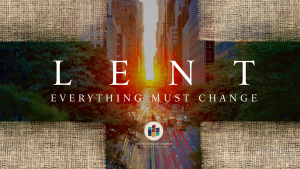 You cannot have grown up in the 1980s without having had your childhood shaped, at least in part, by Michael J. Fox’s hit 1985 film Back to the Future. The film is the story of teenager Marty McFly, who is sent back in time to 1955. While there he figures out pretty quickly that it’s probably not a great idea to try to change the past, even if you could. Remember what happened to Marty? Awkward things like: Marty meets his future parents in high school and accidentally becomes his mother’s romantic interest. Realizing the impact his actions to change the past could have had, Marty can’t wait to get back to the future.
You and I can’t actually go back in time and change things like Marty McFly could, but we constantly try to rewrite the past. We do it ourselves, and we see it being done all around us. Just last week, in fact, Ben Carson, Secretary of Housing and Urban Development, tried to recast the history of slavery in America by naming slaves immigrants.
Rewriting the past—it’s what we do to avoid the fear-filled prospect of facing the future.
As you know, we’re currently in the third week of Lent, these forty days leading up to Easter, and we’re following along with our lectionary passages, stories of times in which God has intervened in the lives of people and invited them—invited us—to change.
Today our holy scripture invites us into two powerful stories about God’s invitation to change. The first is a story from Exodus, one of the many stories of the Hebrew people following their escape from slavery in Egypt. Today’s story took place while the little band of Hebrews is wandering around in the desert. They wandered, the text says, for forty years. Forty years!
A quick glimpse at a map of the Sinai desert—a small piece of land that connects what today is Egypt and Israel, will show that it’s not all that big. In fact, if you were traveling across the Sinai today in a car, it would take you about 3-4 hours to make the 200-mile trip. It’s true that the Hebrews were not driving air conditioned cars across the desert, but I would think that they could have made the trip in a little less than 40 years, wouldn’t you?
Besides faulty—way faulty—navigation techniques, there must have been something going on to keep them out there in the desert for 40 years. Whether intended or not, what ended up happening was that the people spent all that time learning what it meant to follow Yahweh, opportunities where over and over again God invited the people to live into the spiritual work of realizing that everything must change.
Today’s story is part of a collection of stories about this 40-year road trip known by scholars as “the murmuring stories.” Don’t think of the word “murmuring” here as, say, whispering sweet nothings in your sweetheart’s ear. No, “murmuring” as in the “murmuring stories of the wandering Israelites” means “grumbling” or “complaining.” And that should give us some framework for what’s going on in the people’s life together.
You recall the dramatic crossing of the Red Sea. Well, they’d barely even made it ashore before they started to worry about water. It’s not a small bit of irony that they just spent some of the most dramatic and trauma-filled time of their life together AVOIDING the water…now they are desperately worried because they aren’t sure they have enough.
Moses asked for help and God intervened, and God then sat the Israelites down for a serious—I guess it wouldn’t be a “Come to Jesus Meeting”—I think my Jewish friends call it a “Holy Moses Conversation.” The Lord laid out his covenant with the people—God made his expectations for their behavior clear, and he let them know right up front what he would promise them. God said: “If you listen carefully to the voice of the Lord your God and do what is right in God’s eyes, if you pay attention to God’s commands and keep all God’s decrees, I will not bring on you any of the diseases I brought on the Egyptians, for I am the Lord, who heals you.”
There it is: God’s promise to the wandering Hebrews, set out right at the beginning of their trip.
You would have thought they would have remembered.
But then the murmuring started. Again.
Even after God made the water sweet at Marah, the people started getting worried about food. Their empty stomachs made them forget God’s promise and EVEN AFTER God responded to their complaining and provided them with quail and manna, they decided to take things into their own hands and make up their own rules for hoarding food.
In today’s story the people get back on track, following God’s directions that took them into another part of the desert. When they made camp they found there was not enough water for the needs of their community, so they started to panic again. And that’s when the rewriting of the past raised to a fever pitch: “Why did you bring us out of Egypt only to make us and our children and all of our animals die of thirst??!?” Why, God?
The Israelites could try as hard as they knew how to rewrite the past, but no matter how loudly they complained or how bitterly they protested, they could not change the fact that their history in Egypt was a history of slavery: owned as possessions—not people; subject to torture and abuse; their bodies and the bodies of their children used for the economic advantage of their masters.
But wandering around the desert they kept saying things like, “If only we had died by the LORD’s hand in Egypt! There we sat around pots of meat and ate all the food we wanted, but you have brought us out into this desert to starve this entire assembly to death.”
Just like you and I do, the Israelites resisted God’s invitation to change by spending their time rewriting the past. But here’s what the Israelites had to learn, and so do we: we can’t go back and change the past, no matter how hard we try.
If we want to step into God’s constant invitation to new life, we will have to change the future instead.
Our assigned scripture readings also introduced us this morning to the story of Jesus and a Samaritan woman. Jesus finds himself in the region of Samaria, near Jacob’s well in the middle of the day, looking for a drink of water. And, seeing a Samaritan woman—an outcast—drawing water, Jesus initiates conversation with her. In this, the longest recorded conversation of Jesus with anyone, Jesus is, per usual, breaking the rules, behaving in radical ways that cross boundaries and invite relationship.
You may have learned in Sunday School that the woman at the well that day had a bit of a tarnished character. It’s clear her past was painful, but honestly, it’s probably thousands of years of cultural projection that lead us to assume this woman is morally corrupt—that may not have been the case. At the well that day, Jesus told her the truth about her life—that she’s had five husbands and the man she’s living with now is not her husband. But in the Middle Eastern culture of the time, a woman couldn’t survive without the protection of a man. It’s plausible that this woman could have been a widow several times over; or she could have been traded or sold as one would a piece of property; and, if she wasn’t fit for marriage, she could have been acquired by a brother in law, kept as a servant, not as a wife.
There are so many possible scenarios, enough to make us step back and look again at our assumptions. But whatever the specifics of her life experience, this we know for sure: the Samaritan woman had a past that she wished she could change. Just like you and me.
The acceptable cultural constructs for life just hadn’t worked out for her; she carried regret and pain that left her excluded from her community. She bore guilt and fear that shackled her. She couldn’t appear at the well with the other women, or maybe even raise her eyes to engage a friend, because her past kept her enslaved.
And Jesus told her everything, the text says.
Jesus told her everything she’d ever done. He saw her. He named the shame she carried, clutched tight to her chest, the past that weighed her down. He just laid it out there on the table, he didn’t sugar coat the past or try to rewrite it. He just offered her a new future, instead.
And what did the woman do? She laid her water jar down, turned and went another way—literally and figuratively. She ran into town saying to the people who had reinforced her shame and exclusion all these years: “He told me everything I have ever done! He told me everything I have ever done! He said it out loud.”
And then, she changed course and set out to live her life in a new way. One conversation with Jesus and the past didn’t matter anymore; she realized that everything about her future had to change.
It seems to me that you and I spend a lot of our time deeply engaged in rewriting the past because we’re scared to try to change the future. What if we’re not good enough to change? What if we fail? What if our lives will always be defined by the mistakes of our past? It’s so much easier to just keep trying to block out the memory of the past, to rewrite it into something more palatable.
But this is the gift of the season of Lent, when we confront the reality that everything must change. God invites us into the adventure of creating a world and a future that is filled with grace and justice and peace and healing and love. We can embrace that journey and live that change when we are fully known and fully loved, in all of our broken humanity, even with the pasts we try so hard to change.
In this season of confronting your humanity, do not forget that God created you a precious child, planting in you and me and each one of us, a spark of the divine. The potential for change is right there in each of us, and Lent is God’s invitation to make that change.
As exciting as the movie Back to the Future felt to my 15-year-old self, it isn’t real. There’s no machine that will take us back and allow us to change what has already happened. But this Lent we’re trying to live as if everything must change, so what about the past? Well, here’s how we can change the past: not by rewriting the story of our lives, by covering up our shame and disappointment with a narrative that we’ve invented. No, we do it by accepting the truth that no matter what our past is like, we are fully loved and forgiven, and now we can step out into the future to go a new way.
In fact, when we accept God’s invitation to change, we will live our lives in such a way so that this time next year, we will look back at the ways in which our lives more deeply reflect God’s goodness and grace and we will see that we did in fact, with the help of God, change the past.
Amen.
Previous Post
March 12, 2017
Everything Must Change: Home
Next Post

March 21, 2017 Lessons from St. Patrick's Day
Browse Our Archives
Select a Category Answering the Call Being the Church Curating Wisdom Laughing Out Loud Living in Relationship Practicing Discipleship Reclaiming Baptist Speaking from the Pulpit Uncategorized
Select a Month July 2018 June 2018 May 2018 April 2018 March 2018 January 2018 December 2017 November 2017 October 2017 September 2017 June 2017 May 2017 April 2017 March 2017 February 2017 January 2017 December 2016 November 2016 October 2016 September 2016 August 2016 July 2016 June 2016 May 2016 April 2016 March 2016 February 2016 January 2016 December 2015 November 2015 October 2015 September 2015 August 2015 July 2015 June 2015 May 2015 April 2015 March 2015 February 2015 January 2015 December 2014 November 2014 October 2014 September 2014 August 2014 July 2014 June 2014 May 2014 April 2014 March 2014 February 2014 January 2014 December 2013 November 2013 October 2013 September 2013 August 2013 July 2013 June 2013 May 2013 April 2013 March 2013 February 2013 January 2013 December 2012 November 2012 October 2012 September 2012 August 2012 July 2012 June 2012 May 2012 April 2012 March 2012 February 2012 January 2012 December 2011 October 2011 September 2011 August 2011 July 2011 June 2011 May 2011 April 2011 March 2011 February 2011 January 2011 December 2010 November 2010 October 2010 September 2010 August 2010 July 2010 June 2010 May 2010 April 2010 March 2010 February 2010 January 2010 December 2009 November 2009 October 2009 September 2009 August 2009 July 2009 June 2009 May 2009 April 2009 March 2009 February 2009 January 2009 December 2008 November 2008 October 2008 September 2008 August 2008 July 2008 June 2008 May 2008 April 2008 March 2008 February 2008 January 2008 December 2007 November 2007 October 2007 September 2007 August 2007 July 2007 June 2007 May 2007 April 2007 March 2007 February 2007 January 2007 December 2006 November 2006 October 2006 September 2006 August 2006 July 2006 June 2006 May 2006 April 2006 March 2006 February 2006 January 2006 December 2005
Search for:
Recent Posts
- Sabbath as Radical Witness
- Learning Leadership: A Pilgrimage to Hawaii
- A Prayer for the Living of These Days
- Sabbath as Relationship
- Dressing Up Faith
Recent Comments
Archives
- July 2018
- June 2018
- May 2018
- April 2018
- March 2018
- January 2018
- December 2017
- November 2017
- October 2017
- September 2017
- June 2017
- May 2017
- April 2017
- March 2017
- February 2017
- January 2017
- December 2016
- November 2016
- October 2016
- September 2016
- August 2016
- July 2016
- June 2016
- May 2016
- April 2016
- March 2016
- February 2016
- January 2016
- December 2015
- November 2015
- October 2015
- September 2015
- August 2015
- July 2015
- June 2015
- May 2015
- April 2015
- March 2015
- February 2015
- January 2015
- December 2014
- November 2014
- October 2014
- September 2014
- August 2014
- July 2014
- June 2014
- May 2014
- April 2014
- March 2014
- February 2014
- January 2014
- December 2013
- November 2013
- October 2013
- September 2013
- August 2013
- July 2013
- June 2013
- May 2013
- April 2013
- March 2013
- February 2013
- January 2013
- December 2012
- November 2012
- October 2012
- September 2012
- August 2012
- July 2012
- June 2012
- May 2012
- April 2012
- March 2012
- February 2012
- January 2012
- December 2011
- October 2011
- September 2011
- August 2011
- July 2011
- June 2011
- May 2011
- April 2011
- March 2011
- February 2011
- January 2011
- December 2010
- November 2010
- October 2010
- September 2010
- August 2010
- July 2010
- June 2010
- May 2010
- April 2010
- March 2010
- February 2010
- January 2010
- December 2009
- November 2009
- October 2009
- September 2009
- August 2009
- July 2009
- June 2009
- May 2009
- April 2009
- March 2009
- February 2009
- January 2009
- December 2008
- November 2008
- October 2008
- September 2008
- August 2008
- July 2008
- June 2008
- May 2008
- April 2008
- March 2008
- February 2008
- January 2008
- December 2007
- November 2007
- October 2007
- September 2007
- August 2007
- July 2007
- June 2007
- May 2007
- April 2007
- March 2007
- February 2007
- January 2007
- December 2006
- November 2006
- October 2006
- September 2006
- August 2006
- July 2006
- June 2006
- May 2006
- April 2006
- March 2006
- February 2006
- January 2006
- December 2005
Categories
- Answering the Call
- Being the Church
- Curating Wisdom
- Laughing Out Loud
- Living in Relationship
- Practicing Discipleship
- Reclaiming Baptist
- Speaking from the Pulpit
- Uncategorized
Meta
Follow Us!
TAKE THE
Religious Wisdom Quiz
What city did David capture and make the capital of Israel?
Select your answer to see how you score.
Bethlehem Hebron Jerusalem Samaria
Related posts from Talk with the Preacher



TRENDING AT PATHEOS Progressive Christian

Why Christians Have a Sacred Duty to Vote:...
The Bible offers strong support for the sacred duty to vote. Here...

What Being a Modern-Day Apostle Means to Me
In my last column, I discussed the ins and outs of modern-day...

Did Ancient China Once Worship the God of...
Across human history, a common thread weaves through the origins of the...

Love Your Neighbor – Including Earth-Kin: Lev. 19,...
God’s command to love your neighbor means acting in an ethical and...

Lead a Church Study of “Jesus and Lao...
Guest writer Jack Thomas (The Irreverent Reverend) reflects on leading his church...

Principles for Understanding the Apostolic Ministry Today
Whenever people discover that my formal ministry title is "apostle," as in...
view all Progressive Christian blogs
Ad-Free & Subscriber Log-In Subscription Support
- About Us
- 2026 Calendar
- Videos
- Podcasts
- Library of World Religions
- Faith In Media Tracker
- Advertise With Us
- Write for Us
- Privacy Policy
- Terms of Service
- Do Not Sell My Data
- Contact Us
- Radiant Digital
- Manage Newsletter Subscriptions
- Unsubscribe From Notifications
- Sitemap
Copyright 2008-2026, Patheos. All rights reserved.
Subscription Support Ad-Free & Subscriber Log-In
Follow Patheos