
BuddhistCatholicContemplativeEvangelicalGeneral ChristianHinduJewishLatter-day SaintMuslimNew VisionsProgressive Christian
Beliefs
- Buddhist
- Catholic
- Contemplative
- Evangelical
- General Christian
- Hindu
- Jewish
- Latter-day Saint
- More Voices
- Muslim
- New Visions
- Pagan
- Progressive Christian
Topics
- Religion News
- Food and Religion
- Sports and Religion
- Religious Art
- Religious Music and Entertainment
- Religious Events
- History and Religion
- Style and Religion
- Politics and Religion
- Women in Religion
- Recreation Outdoors and Religion
- Business Finance and Religion
- Careers Workplace and Religion
- Education and Religion
- Family Parenting and Religion
- Health Fitness and Religion
- Home and Religion
- Relationships and Religion
- Technology and Religion
- Travel and Religion
Columnists
- Buddhist Columnists
- Business Finance and Religion Columnists
- Careers Workplace and Religion Columnists
- Catholic Columnists
- Contemplative Columnists
- Education and Religion Columnists
- Evangelists Columnists
- Family Parenting and Religion Columnists
- General Christian Columnists
- Health Fitness and Religion Columnists
- Hindu Columnists
- History and Religion Columnists
- Home and Religion Columnists
- Jewish Columnists
- More Voices Columnists
- Latter Day Columnists
- Muslim Columnists
- New Visions Columnists
- Nonreligious Columnists
- Pagan Columnists
- Politics and Religion Columnists
- Progressive Columnists
- Recreation Outdoors and Religion Columnists
- Relationships and Religion Columnists
- Religion News Columnists
- Religious Art Columnists
- Religious Events Columnists
- Religious Music and Entertainment Columnists
- Sports and Religion Columnists
- Style and Religion Columnists
- Technology and Religion Columnists
- Travel and Religion Columnists
- Women in Religion Columnists
Resource Library
- 2026 Calendar
- Library of World Religions
- The 100 Most Holy Places on Earth
- Patheos Answers
- Podcasts
- Videos
- Faith Leaders Database
- Anglican Episcopalian
- Bahai
- Baptist
- Buddhism
- Christianity
- Confucianism
- Eastern Orthodoxy
- Hinduism
- Holiness and Pentecostal
- ISKCON
- Islam
- Judaism
- Lutheran
- Methodist
- The Church of Jesus Christ of Latter-day Saints
- New Age
- Paganism
- Presbytarian and Reformed
- Protestantism
- Religion Behind the Scenes
- Roman Catholic
- Scientology
- Shia Islam
- Sikhism
- Sufism
- Sunni Islam
- Taoism
- Zen
- See all religions
Research Tools
 Ad-Free & Subscriber Log-In Subscription Support
Ad-Free & Subscriber Log-In Subscription Support
Follow Patheos 

- Trending:
- Forgiveness
- |
- Marriage
- |
- Consciousness
- |
- Death Penalty
- |
- Election
- |
- Halloween
 Talk with the Preacher
- Home
- Progressive Christian
- As If…We Had the Courage to Go Somewhere New
As If…We Had the Courage to Go Somewhere New
Last updated on: December 18, 2016 at 10:10 pm by Amy Butler
As If…We Had the Courage to Go Somewhere New 2016-12-18T22:10:42-04:00 Amy Butler
Patheos Explore the world's faith through different perspectives on religion and spirituality! Patheos has the views of the prevalent religions and spiritualities of the world.
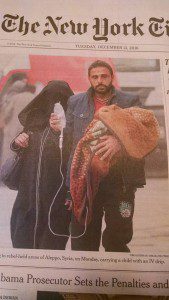
Courtesy of the New York Times, December 13, 2016
On December 8, just 10 days ago, Senator John Glenn died and 2016 further cemented itself in our minds as a really terrible year.
It’s tremendous, the list of things that John Glenn accomplished in his life. But if anybody asked you what he was most famous for, you’d know the answer. John Glenn was the first American to orbit the earth in space; curiously, he was also the oldest American to go there—he traveled to space again in 1998, at age 77.
After a distinguished career in the Marines during World War 2, John Glenn joined the newly formed National Aeronautics and Space Administration in 1958 and was assigned to work with Project Mercury, America’s effort to send people into space. Nobody in America had been in space before, and nobody really knew what would happen to human beings if they were able to actually get there. I mean, the Russians had done it, but back then they weren’t releasing confidential information like they are now….
Doctors didn’t know if humans would be able to even swallow in space, much less breathe in space—even with systems to provide life support. So before his rocket even launched, John Glenn had to come to grips with the great unknown: did he have the courage to go somewhere new?
I’d guess that John Glenn had to ask himself hard questions like that before he decided to go. And all of those questions were being asked while, prior to his rocket’s launch, he witnessed a test rocket with a simulated crew capsule explode at an altitude of 40,000 feet; and another tumbling, unexplained, into the ocean after lift-off; and then, five delayed lift off dates until, on February 20, 1962, the Friendship 7 finally launched.
As the Friendship 7 lifted off and accelerated to 17,500 miles an hour, Glenn’s heart and lungs actually did function. Medical monitoring reported, however, that his pulse registered at 110 beats per minute.
Well, I guess it did.
When asked how he felt in that moment, Glenn answered: “I felt exactly how you would feel if you were getting ready to launch and knew you were sitting on top of 2 million parts—all built by the lowest bidder on a government contract.”[1]
What kind of courage does it take to set off toward somewhere new?
Today is the fourth Sunday of Advent, the Sunday of love, and our sermon today is part of our Advent series called “As If…” based on a theory proposed by William James in the nineteenth century and confirmed by Richard Wiseman in a recent bestseller called, The As If Principle. Apparently there is some truth to the idea that if you want to be happy you should act as if you already are—and the feeling will soon follow.
And I’m all for feeling happy, but all I see when I turn on the news these days are images of corrupt politicians scheming to take over the North Carolina legislature and proposed presidential cabinet members denying climate change and babies…little babies lying in the rubble, covered with the dust of Aleppo, begging us to ask ourselves what kind of humans we really are.
Sure, I’d love a self-help strategy for personal happiness—who wouldn’t? But on this fourth Sunday of Advent, what about love?
What about believing that we don’t have to live this way? What about living as if the world God intended for us could actually come to be: where justice is the order of the day, and peace prevails among all people, and nobody has to leave their home in the middle of the night running away from bombs?
What if we lived as if something like that could actually happen?
Christmas is almost upon us, it’s true. But today we’re still doing the work of Advent. And as we wait in the darkness for the light to come, we’re asking ourselves what would happen if we lived as if…? As if we were paying attention. As if we believed the prophets. As if we were healed. Today: as if we had the courage to go somewhere new.
Offering us reflection this morning is Matthew’s account of Jesus’ birth recorded in the first chapter of his gospel, usually framed in our Bibles with the brief subtitle: The Birth of Jesus the Messiah.
You’ll notice that Matthew doesn’t embellish his story with sweet details like Luke does; we’ll have to wait until Saturday for the angels and the shepherds and the stars. For Matthew, this is a cut and dried piece of reporting. And while it could be argued that we’re the last folks to distinguish between what is real news and what isn’t, we can surely recognize that Matthew included this account for specific reasons.
The first is that it was very important to Matthew to establish Jesus’ credentials at the beginning of the story of Jesus’ ministry on earth—in fact, Matthew begins this chapter a little earlier with a genealogy, showing Jesus’ ancestry. But Matthew’s account of Jesus’ birth is even more nuanced than that. Matthew sounds suspiciously similar to our Hebrew text today from the prophet Isaiah, which is part of a longer passage in which the eighth century prophet Isaiah is telling King Ahaz of Judah not to worry about the two kings who have aligned themselves against him. In a few years’ time they will no longer be a threat, the prophet is telling him.
Stick with me here for a little bit of detailed biblical scholarship, offered me this week in conversation with a colleague:
At least one scholar believes that this prophecy of Isaiah may have been something like the prophet pointing to a pregnant woman walking by and saying something like, “You see that woman? By the time her baby is three years’ old he’ll be eating butter and honey.” In other words, “Relax, Ahaz. Happy days will be here again. God will be with us.”
But that’s not how we hear it. We hear, “Behold a virgin shall conceive, and bear a son, and shall call his name Immanuel.” How did we get from a young woman giving birth to a virgin conceiving? Here’s how my biblical scholar friend Jim explains it: “I blame it on the Septuagint,” he says, “the Greek version of the Old Testament that was circulating at the time Matthew wrote his Gospel.”
“The critical word in Isaiah’s prophecy is the Hebrew word almah, which can be translated as ‘virgin’ or simply as ‘young woman.’ But in the Greek translation, the Septuagint, the Greek word parthenos is used, a word that is almost always translated as ‘virgin.’ And the Septuagint is the version of the Old Testament a lot of people were reading when Matthew was writing his account of Jesus’ birth. But Matthew had come to believe that Jesus of Nazareth was, in fact, the Son of God, and so I picture him putting on his ‘Jesus glasses’ and reading through the Old Testament to see if he could find any evidence there that this was what God had been working toward all along. And, sure enough he found some evidence—lots of evidence. Read through the gospel of Matthew and you will hear Matthew saying again and again, ‘Now, this took place to fulfill what was written by the prophet,’ that the Messiah would come from the line of Abraham, that he would be a descendant of David, that he would be born in Bethlehem.”
“And can’t you imagine Matthew’s excitement when he found this verse in Isaiah 7: ‘Behold, a virgin shall conceive, and bear a son, and shall call his name Immanuel’? Matthew must have gasped and said, ‘That’s Jesus! That’s Jesus!’”
Matthew told the story this way to make sure we know that Jesus’ coming and his message were representations of God’s best hopes for our world.
And Matthew also told the story this way so we’d know that all of this—God’s message of hope and peace for the world—began in a situation of total turmoil and crisis. Writing as he was to the first church, which was also in crisis, I think Matthew wanted to tell the story of God grounded in the historical and present framework of pain, discouragement, disappointment, hopelessness…to say: this is where it begins. This is where hope begins. When we look around us and see disaster, but we choose instead to live as if we have the courage to go somewhere new.
Consider how tumultuous this story actually is. Back in the time when Jesus was born, marriage was the fundamental underpinning of society, and it happened in two important steps. The first was contractual: families betrothed their sons and daughters to each other, like legal marriage. And then there was step two: the wedding, where there was a big party and the marriage was consummated and the bride and groom moved in together and set up housekeeping.
Mary and Joseph were contractually married, but they hadn’t started living together yet. So, when Mary turned up pregnant, not only had the legal contract of marriage been broken, but the circumstances were scandalous and embarrassing for everybody involved.
Joseph, being the man, had two options: having Mary stoned to death or divorcing her, of which he’d planned to choose the merciful second choice, the text tells us. Mary would have her life spared, but for all intents and purposes her standing in society would be destroyed: she wouldn’t be able to support herself and her baby; she’d be damaged goods and unable to marry again; she’d bear the shame of her situation for her whole life long.
See what I mean? Turmoil, crisis, despair, darkness.
And here’s what happened. Trusting the promise of God that hope could be born out of despair, Joseph and Mary went a different direction, set off toward a choice that was unfamiliar and totally new.
I wonder what it would look like if you and I took a cue from Matthew’s story of Jesus’ birth? What if we had the courage to go somewhere new?
I couldn’t think about the holy text introducing us to Joseph and Mary this week, regular people who risked everything to welcome a fragile baby to the world, a baby whose birth would threaten a powerful government so much that that little family would have to pack everything up in the middle of the night and flee as refugees for their very lives…yes, I couldn’t think about this story without calling to mind a picture I saw on the front page of the New York Times just this week.
On December 13 the New York Times printed an article entitled, “Aleppo Close to Falling Under the Complete Control of the Syrian Government.”
The story began like this: “Advances by Syrian government forces and their allies have squeezed the fighters and civilians remaining in rebel-held parts of [Aleppo] into a sliver of territory, spokesmen for the government and the opposition forces said on Monday. The last civilians caught in the shrinking antigovernment enclave issued panicked calls for help.”[2]
Accompanying this story was the haunting picture of a family: a mother, her head covered by a veil, head tilted toward the rubble-marked road she was navigating. She’s holding on tight to the man on her left, and clutching a bag on her right.
And the man with her has his eyes trained on the road in front of him, pulling his family along while cradling a blanket-wrapped baby in his left arm.
His right hand, entangled in all of that, holds an IV, attached to the baby, injured in the bombing, and they’re hurrying to escape the tragedy around them and keep everyone alive.
Sit with that for just a minute.
How can we be here in this warm, peaceful, beautiful place with that picture in our heads, and not think of Mary? And Joseph?
In all the chaos around them, they had the courage to live as if they would go somewhere new.
What would happen if we lived as if we had the courage to go somewhere new?
Well, we’d hear the words of the prophet and the story of the holy family ringing in our ears, and we would live as if were moving: toward the light, toward hope, toward community that nurtures and welcomes all people, toward a future in which we will raise our voices to combat unjust policies and laws, toward communities and actions of resistance, toward the conviction that we will protect our fragile planet…toward a world in which babies don’t lie dust covered, casualties of our greed or indifference, toward hope, peace, joy, and this fourth Sunday of Advent, yes: love.
We will; we must.
The light shines in the darkness of Advent, and the darkness around us will not overcome it.
Instead, we will live as if we have the courage to go somewhere new, to step out of the darkness, and to walk, hand in hand, toward the light.
Amen.
[2] http://www.nytimes.com/2016/12/12/world/aleppo-syrian-government.html
Previous Post

December 13, 2016
Welcoming an Atheist at Church
Next Post
December 24, 2016 Again, A Meditation for Christmas Eve
Browse Our Archives
Select a Category Answering the Call Being the Church Curating Wisdom Laughing Out Loud Living in Relationship Practicing Discipleship Reclaiming Baptist Speaking from the Pulpit Uncategorized
Select a Month July 2018 June 2018 May 2018 April 2018 March 2018 January 2018 December 2017 November 2017 October 2017 September 2017 June 2017 May 2017 April 2017 March 2017 February 2017 January 2017 December 2016 November 2016 October 2016 September 2016 August 2016 July 2016 June 2016 May 2016 April 2016 March 2016 February 2016 January 2016 December 2015 November 2015 October 2015 September 2015 August 2015 July 2015 June 2015 May 2015 April 2015 March 2015 February 2015 January 2015 December 2014 November 2014 October 2014 September 2014 August 2014 July 2014 June 2014 May 2014 April 2014 March 2014 February 2014 January 2014 December 2013 November 2013 October 2013 September 2013 August 2013 July 2013 June 2013 May 2013 April 2013 March 2013 February 2013 January 2013 December 2012 November 2012 October 2012 September 2012 August 2012 July 2012 June 2012 May 2012 April 2012 March 2012 February 2012 January 2012 December 2011 October 2011 September 2011 August 2011 July 2011 June 2011 May 2011 April 2011 March 2011 February 2011 January 2011 December 2010 November 2010 October 2010 September 2010 August 2010 July 2010 June 2010 May 2010 April 2010 March 2010 February 2010 January 2010 December 2009 November 2009 October 2009 September 2009 August 2009 July 2009 June 2009 May 2009 April 2009 March 2009 February 2009 January 2009 December 2008 November 2008 October 2008 September 2008 August 2008 July 2008 June 2008 May 2008 April 2008 March 2008 February 2008 January 2008 December 2007 November 2007 October 2007 September 2007 August 2007 July 2007 June 2007 May 2007 April 2007 March 2007 February 2007 January 2007 December 2006 November 2006 October 2006 September 2006 August 2006 July 2006 June 2006 May 2006 April 2006 March 2006 February 2006 January 2006 December 2005
Search for:
Recent Posts
- Sabbath as Radical Witness
- Learning Leadership: A Pilgrimage to Hawaii
- A Prayer for the Living of These Days
- Sabbath as Relationship
- Dressing Up Faith
Recent Comments
Archives
- July 2018
- June 2018
- May 2018
- April 2018
- March 2018
- January 2018
- December 2017
- November 2017
- October 2017
- September 2017
- June 2017
- May 2017
- April 2017
- March 2017
- February 2017
- January 2017
- December 2016
- November 2016
- October 2016
- September 2016
- August 2016
- July 2016
- June 2016
- May 2016
- April 2016
- March 2016
- February 2016
- January 2016
- December 2015
- November 2015
- October 2015
- September 2015
- August 2015
- July 2015
- June 2015
- May 2015
- April 2015
- March 2015
- February 2015
- January 2015
- December 2014
- November 2014
- October 2014
- September 2014
- August 2014
- July 2014
- June 2014
- May 2014
- April 2014
- March 2014
- February 2014
- January 2014
- December 2013
- November 2013
- October 2013
- September 2013
- August 2013
- July 2013
- June 2013
- May 2013
- April 2013
- March 2013
- February 2013
- January 2013
- December 2012
- November 2012
- October 2012
- September 2012
- August 2012
- July 2012
- June 2012
- May 2012
- April 2012
- March 2012
- February 2012
- January 2012
- December 2011
- October 2011
- September 2011
- August 2011
- July 2011
- June 2011
- May 2011
- April 2011
- March 2011
- February 2011
- January 2011
- December 2010
- November 2010
- October 2010
- September 2010
- August 2010
- July 2010
- June 2010
- May 2010
- April 2010
- March 2010
- February 2010
- January 2010
- December 2009
- November 2009
- October 2009
- September 2009
- August 2009
- July 2009
- June 2009
- May 2009
- April 2009
- March 2009
- February 2009
- January 2009
- December 2008
- November 2008
- October 2008
- September 2008
- August 2008
- July 2008
- June 2008
- May 2008
- April 2008
- March 2008
- February 2008
- January 2008
- December 2007
- November 2007
- October 2007
- September 2007
- August 2007
- July 2007
- June 2007
- May 2007
- April 2007
- March 2007
- February 2007
- January 2007
- December 2006
- November 2006
- October 2006
- September 2006
- August 2006
- July 2006
- June 2006
- May 2006
- April 2006
- March 2006
- February 2006
- January 2006
- December 2005
Categories
- Answering the Call
- Being the Church
- Curating Wisdom
- Laughing Out Loud
- Living in Relationship
- Practicing Discipleship
- Reclaiming Baptist
- Speaking from the Pulpit
- Uncategorized
Meta
Follow Us!
TAKE THE
Religious Wisdom Quiz
Who is the "friend at midnight" in one of Jesus' parables?
Select your answer to see how you score.
A fisherman A neighbor seeking bread A soldier An angel
Related posts from Talk with the Preacher


Learning Leadership: A Pilgrimage to Hawaii

A Prayer for the Living of These Days

TRENDING AT PATHEOS Progressive Christian

Why Christians Have a Sacred Duty to Vote:...
The Bible offers strong support for the sacred duty to vote. Here...

What Being a Modern-Day Apostle Means to Me
In my last column, I discussed the ins and outs of modern-day...

Did Ancient China Once Worship the God of...
Across human history, a common thread weaves through the origins of the...

Love Your Neighbor – Including Earth-Kin: Lev. 19,...
God’s command to love your neighbor means acting in an ethical and...

Lead a Church Study of “Jesus and Lao...
Guest writer Jack Thomas (The Irreverent Reverend) reflects on leading his church...

Principles for Understanding the Apostolic Ministry Today
Whenever people discover that my formal ministry title is "apostle," as in...
view all Progressive Christian blogs
Ad-Free & Subscriber Log-In Subscription Support
- About Us
- 2026 Calendar
- Videos
- Podcasts
- Library of World Religions
- Faith In Media Tracker
- Advertise With Us
- Write for Us
- Privacy Policy
- Terms of Service
- Do Not Sell My Data
- Contact Us
- Radiant Digital
- Manage Newsletter Subscriptions
- Unsubscribe From Notifications
- Sitemap
Copyright 2008-2026, Patheos. All rights reserved.
Subscription Support Ad-Free & Subscriber Log-In
Follow Patheos