
BuddhistCatholicContemplativeEvangelicalGeneral ChristianHinduJewishLatter-day SaintMuslimNew VisionsProgressive Christian
Beliefs
- Buddhist
- Catholic
- Contemplative
- Evangelical
- General Christian
- Hindu
- Jewish
- Latter-day Saint
- More Voices
- Muslim
- New Visions
- Pagan
- Progressive Christian
Topics
- Religion News
- Food and Religion
- Sports and Religion
- Religious Art
- Religious Music and Entertainment
- Religious Events
- History and Religion
- Style and Religion
- Politics and Religion
- Women in Religion
- Recreation Outdoors and Religion
- Business Finance and Religion
- Careers Workplace and Religion
- Education and Religion
- Family Parenting and Religion
- Health Fitness and Religion
- Home and Religion
- Relationships and Religion
- Technology and Religion
- Travel and Religion
Columnists
- Buddhist Columnists
- Business Finance and Religion Columnists
- Careers Workplace and Religion Columnists
- Catholic Columnists
- Contemplative Columnists
- Education and Religion Columnists
- Evangelists Columnists
- Family Parenting and Religion Columnists
- General Christian Columnists
- Health Fitness and Religion Columnists
- Hindu Columnists
- History and Religion Columnists
- Home and Religion Columnists
- Jewish Columnists
- More Voices Columnists
- Latter Day Columnists
- Muslim Columnists
- New Visions Columnists
- Nonreligious Columnists
- Pagan Columnists
- Politics and Religion Columnists
- Progressive Columnists
- Recreation Outdoors and Religion Columnists
- Relationships and Religion Columnists
- Religion News Columnists
- Religious Art Columnists
- Religious Events Columnists
- Religious Music and Entertainment Columnists
- Sports and Religion Columnists
- Style and Religion Columnists
- Technology and Religion Columnists
- Travel and Religion Columnists
- Women in Religion Columnists
Resource Library
- 2026 Calendar
- Library of World Religions
- The 100 Most Holy Places on Earth
- Patheos Answers
- Podcasts
- Videos
- Faith Leaders Database
- Anglican Episcopalian
- Bahai
- Baptist
- Buddhism
- Christianity
- Confucianism
- Eastern Orthodoxy
- Hinduism
- Holiness and Pentecostal
- ISKCON
- Islam
- Judaism
- Lutheran
- Methodist
- The Church of Jesus Christ of Latter-day Saints
- New Age
- Paganism
- Presbytarian and Reformed
- Protestantism
- Religion Behind the Scenes
- Roman Catholic
- Scientology
- Shia Islam
- Sikhism
- Sufism
- Sunni Islam
- Taoism
- Zen
- See all religions
Research Tools
 Ad-Free & Subscriber Log-In Subscription Support
Ad-Free & Subscriber Log-In Subscription Support
Follow Patheos 

- Trending:
- Forgiveness
- |
- Marriage
- |
- Consciousness
- |
- Death Penalty
- |
- Election
- |
- Halloween
 Talk with the Preacher
- Home
- Progressive Christian
- As If…We Believed the Prophets
As If…We Believed the Prophets
Last updated on: December 4, 2016 at 1:30 pm by Amy Butler
As If…We Believed the Prophets 2016-12-04T13:06:51-04:00 Amy Butler
Patheos Explore the world's faith through different perspectives on religion and spirituality! Patheos has the views of the prevalent religions and spiritualities of the world.
Matthew 3:1-12
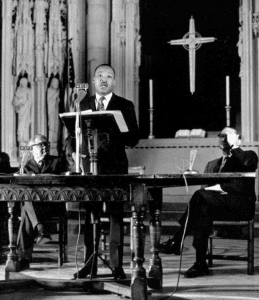
© 1967 John C. Goodwin
Every year during the third week of January, I like to repost on my blog a little essay I wrote in 2006. That year, my kids were 7, 8, and 11, and we lived in Washington, D.C.
They were all enrolled in school, but they had the Martin Luther King Day as a holiday.
True parenting confession: I was always a little bitter anytime a school holiday came around. Especially when the days were marked with no appreciation for the event or person they were meant to commemorate—just another day to sleep late, watch TV all day, and generally annoy your mother.
So that year I opened conversation the Friday before MLK day, at dinner, by taking a poll of how the kids wanted to spend Monday. To be honest, the remake of Cheaper By the Dozen had just come out, so I was steeling myself for an urgent request to go see that or some other cinematic expression of hell.
Right then Sam, my youngest, who was then in second grade, looked thoughtful for a minute and said, “You know, I think it would be so cool to go to the Lincoln Memorial. Then, we could park the car and climb up all those big steps. Then, when we get to the top, we could go over right to the very place where Martin Luther King, Jr. said his speech about having a dream. And we could remember that he thought everybody should be treated the same.”
I remember looking up in surprise, tears springing to my eyes as I listened to him, and then thinking immediately: “I’m a terrible person.”
I’m so glad my kids have grown up in an America where we mark the life of a prophet. And I’m so glad they know that Dr. King had a dream. That’s definitely a good place to start.
What they didn’t know then, and what many of us probably don’t know is that Dr. King didn’t stop speaking after his rallying cry from the steps of the Lincoln Memorial in 1963. He kept speaking, calling for racial justice. And economic relief for the poor. And peace. And his words began to make people mad. And his relentless insistence on preaching that offensive message came to a head on April 4, 1967, when Dr. King came here, to The Riverside Church, and delivered a speech he called, “A Time to Break Silence.”
You may know about what is sometimes called Dr. King’s Beyond Vietnam address, where he sharply called America out on the three evils of militarism, racism, and materialism. But did you know that he delivered that speech against the strong advice of close friends and advisors? The objections folks had to his giving the speech were varied: you’re diluting the civil rights message; you shouldn’t be talking about foreign policy; what does Vietnam have to do with voting rights? Too controversial! And after the speech, criticism was sharp. Witness these newspaper headlines: “A Tragedy,” “Dr. King’s Error,” “Martin Luther King Crosses the Line,” “King Loses Position in Rights Movement,” “Dr. King’s Disservice to His Cause,” “Martin Luther King’s Tragic Decision.”
Everybody hated what he had to say, because, well…nobody believes the prophets!
And then, President Johnson made Dr. King persona non grata at the White House. Donations to his organization, the Southern Christian Leadership Conference, all but dried up. The Democratic party almost en masse turned against him. Churches refused to allow him to speak. By April 4, 1968, just one year after he delivered “A Time to Break Silence,” King had a disapproval rating of 72% among Americans and 55% of Black Americans.
And on that very day standing on a balcony in Memphis, Tennessee, Dr. King was shot and killed.
Nobody believes the prophets.
Today is the second Sunday of Advent, the Sunday of peace. This year during Advent we’re reading the words of biblical prophets and trying to apply the “As If” principle. I mentioned last week a popular self-help book by that title that builds on the idea that rather than our feelings determining our actions, our actions can in fact change the way we feel. In other words, if you want to feel happy, act like you’re happy and the feelings will follow. I wondered last week if that strategy might be applied to something other than one’s personal happiness, though. What if we tried to live as if the world God dreams for us is actually coming to be?
In these weeks of Advent we sit in the dark, waiting for the light. The words of the prophets paint a picture of a world we can’t yet see and push us to work for that world, to believe it can happen, to give it everything we’ve got and to hang on until the light comes.
What would happen if we lived this Advent…as if we believed the prophets?
We’re introduced this morning to the words of John the Baptist, a New Testament prophet who appears at the beginning of Matthew’s gospel. Unlike the writer of Luke’s gospel who takes great pains to give us all the dreamy details of a harrowing delivery, a sweet baby, angels and wise men and shepherds, Matthew begins his gospel with a tedious genealogy, then moves quickly to the work at hand: ushering in the Kingdom of God. And that begins, as Matthew sees it, with some fiery words from Jesus’ cousin, John the Baptist.
I don’t mean to be too critical of Matthew’s editing, but I have to wonder what he was thinking to start things off with John. You know that every family has at least one strange bird, right? Well, you could say that John the Baptist was that person in Jesus’ family.
But this crazy cousin of Jesus’ who spent his days wandering the wilderness dressed in a camel hide, eating bugs, and shouting about repentance, had become like a sideshow in Galilee. Matthew tells us that crowds of people traveled from all over the Judean countryside and the city of Jerusalem, out to the muddy banks of the Jordan River because they were intrigued by the words of a prophet describing a better life.
But here’s the thing. When he preached, the prophet John was calling the people names, and calling the people out. He was preaching difficult words about their need to repent. For too long they’d been cresting on their laurels, wringing their hands about the situation all around them, invoking memories of Abraham as their ancestor, and looking backward instead of forward. You know why they were doing that, of course: looking forward was too scary. Speaking truth to power made them afraid. Changing their community to reflect justice and love was a terrifying prospect. “Repent!,” the prophet told them in no uncertain terms. “Repent or there’s disaster ahead!”
The word translated “repent” used by John the Baptist three times in these twelve verses is a Greek word that means to have a change of mind and, more importantly, a change of action. It goes far beyond just a sense of remorse; it entails a whole shifting of a life. It could be described as turning around—turning all the way around and starting off in a completely different direction.
When John the Baptist was telling the people to repent, he was saying that there’s no more time to look back wistfully or to sit immobile in a present that isn’t as bad as it could be. No, if we’re anticipating the arrival of Messiah, the coming of God’s dream for the world, we have to turn all the way around. Say goodbye to the past. Do not languish in the present. Go ahead into an unknown future …and work with all we have to create the kingdom of God right here, a reign of peace and justice for all God’s children.
That’s what John said.
But, nobody believes the prophets.
Prophets speak truths that draw us forward toward a world we can’t yet see but so very desperately need, and very often those messages are challenging and uncomfortable.
So we choose not to listen. Our backs are turned to the future and we stubbornly refuse to believe the prophets among us. It’s just easier that way.
But…if we were to live this Advent as if we believed the prophets, we would turn around. We would shift direction. We would, with our hands and feet and hearts and lives, attend to the work of righting the world. We would repent.
All around us the voices of prophets are calling out.
There are prophets sounding alarm about the state of our planet—a crisis that has set us on course to sure destruction. If we don’t repent, turn around, we destroy a future for our children and grandchildren.
And prophetic voices are calling us to dismantle institutional racism that funnels our Black and Brown boys into the cradle to prison pipeline. If we don’t repent, turn around, we will have crippled even more generations of Americans, stealing the opportunity and possibility we all long for.
Can you hear the prophets calling us to look deeply into the state of women—2/3 of the world’s illiterate, enslaved, and impoverished? If we don’t repent and begin teaching, freeing, and empowering women, we lose over half of the world’s possibility.
We live in dark times; we remember this especially during Advent. And in the darkness as we scan the horizon for light we hear ringing in our ears the voices of the prophets. They are calling us to be better, to try harder, to walk into a future we can only imagine. Will we live as if we believe them?
That takes tremendous courage. But what if this Advent we changed things? What if we lived as if things could be different? What if we lived as if we believed the prophets?
My friend Kyle Childress, a pastor in Texas, recently told me a story about a trip he took to visit Wendell Berry, a modern poet and prophet. What Kyle experienced was a powerful example of how we might repent and start living as if we believe that how we act here and now can shift the future in ways we might not even be able to imagine. Kyle writes,
“I visited Wendell Berry during a drought in Kentucky and during the drive up to his farm I noticed that the fields and gardens were all brown and dry. From Wendell’s porch, though, I could see his large garden (2 acres or more) down below, green and lush. He doesn’t irrigate so I asked him how his garden was in such great shape while everyone else’s was brown.”
“He told me that for 40 years he has worked the soil and tended it. He was careful of how he rotated crops, he mulched, and plowed in compost and organic materials for years and years. As a result, after 4 decades, his topsoil was rich and deep, probably 5 feet and in some places 6 feet deep. Down the road everyone else’s topsoil was no more than 6 inches to a foot deep. His deep soil retained the moisture even through the drought, even through the hard times, because he’d lived all these years preparing for a future he couldn’t see.”
It’s Advent, and we’re in the dark waiting for the light. What would happen if we got to work and started ushering in a new world right now? We could put our hands and our hearts to the work of welcoming a world we wish for. We could begin to live as if we actually believed the prophets.
Amen.
Previous Post
November 29, 2016
The Election is Over. Stop the Silence.
Next Post

December 13, 2016 Welcoming an Atheist at Church
Browse Our Archives
Select a Category Answering the Call Being the Church Curating Wisdom Laughing Out Loud Living in Relationship Practicing Discipleship Reclaiming Baptist Speaking from the Pulpit Uncategorized
Select a Month July 2018 June 2018 May 2018 April 2018 March 2018 January 2018 December 2017 November 2017 October 2017 September 2017 June 2017 May 2017 April 2017 March 2017 February 2017 January 2017 December 2016 November 2016 October 2016 September 2016 August 2016 July 2016 June 2016 May 2016 April 2016 March 2016 February 2016 January 2016 December 2015 November 2015 October 2015 September 2015 August 2015 July 2015 June 2015 May 2015 April 2015 March 2015 February 2015 January 2015 December 2014 November 2014 October 2014 September 2014 August 2014 July 2014 June 2014 May 2014 April 2014 March 2014 February 2014 January 2014 December 2013 November 2013 October 2013 September 2013 August 2013 July 2013 June 2013 May 2013 April 2013 March 2013 February 2013 January 2013 December 2012 November 2012 October 2012 September 2012 August 2012 July 2012 June 2012 May 2012 April 2012 March 2012 February 2012 January 2012 December 2011 October 2011 September 2011 August 2011 July 2011 June 2011 May 2011 April 2011 March 2011 February 2011 January 2011 December 2010 November 2010 October 2010 September 2010 August 2010 July 2010 June 2010 May 2010 April 2010 March 2010 February 2010 January 2010 December 2009 November 2009 October 2009 September 2009 August 2009 July 2009 June 2009 May 2009 April 2009 March 2009 February 2009 January 2009 December 2008 November 2008 October 2008 September 2008 August 2008 July 2008 June 2008 May 2008 April 2008 March 2008 February 2008 January 2008 December 2007 November 2007 October 2007 September 2007 August 2007 July 2007 June 2007 May 2007 April 2007 March 2007 February 2007 January 2007 December 2006 November 2006 October 2006 September 2006 August 2006 July 2006 June 2006 May 2006 April 2006 March 2006 February 2006 January 2006 December 2005
Search for:
Recent Posts
- Sabbath as Radical Witness
- Learning Leadership: A Pilgrimage to Hawaii
- A Prayer for the Living of These Days
- Sabbath as Relationship
- Dressing Up Faith
Recent Comments
Archives
- July 2018
- June 2018
- May 2018
- April 2018
- March 2018
- January 2018
- December 2017
- November 2017
- October 2017
- September 2017
- June 2017
- May 2017
- April 2017
- March 2017
- February 2017
- January 2017
- December 2016
- November 2016
- October 2016
- September 2016
- August 2016
- July 2016
- June 2016
- May 2016
- April 2016
- March 2016
- February 2016
- January 2016
- December 2015
- November 2015
- October 2015
- September 2015
- August 2015
- July 2015
- June 2015
- May 2015
- April 2015
- March 2015
- February 2015
- January 2015
- December 2014
- November 2014
- October 2014
- September 2014
- August 2014
- July 2014
- June 2014
- May 2014
- April 2014
- March 2014
- February 2014
- January 2014
- December 2013
- November 2013
- October 2013
- September 2013
- August 2013
- July 2013
- June 2013
- May 2013
- April 2013
- March 2013
- February 2013
- January 2013
- December 2012
- November 2012
- October 2012
- September 2012
- August 2012
- July 2012
- June 2012
- May 2012
- April 2012
- March 2012
- February 2012
- January 2012
- December 2011
- October 2011
- September 2011
- August 2011
- July 2011
- June 2011
- May 2011
- April 2011
- March 2011
- February 2011
- January 2011
- December 2010
- November 2010
- October 2010
- September 2010
- August 2010
- July 2010
- June 2010
- May 2010
- April 2010
- March 2010
- February 2010
- January 2010
- December 2009
- November 2009
- October 2009
- September 2009
- August 2009
- July 2009
- June 2009
- May 2009
- April 2009
- March 2009
- February 2009
- January 2009
- December 2008
- November 2008
- October 2008
- September 2008
- August 2008
- July 2008
- June 2008
- May 2008
- April 2008
- March 2008
- February 2008
- January 2008
- December 2007
- November 2007
- October 2007
- September 2007
- August 2007
- July 2007
- June 2007
- May 2007
- April 2007
- March 2007
- February 2007
- January 2007
- December 2006
- November 2006
- October 2006
- September 2006
- August 2006
- July 2006
- June 2006
- May 2006
- April 2006
- March 2006
- February 2006
- January 2006
- December 2005
Categories
- Answering the Call
- Being the Church
- Curating Wisdom
- Laughing Out Loud
- Living in Relationship
- Practicing Discipleship
- Reclaiming Baptist
- Speaking from the Pulpit
- Uncategorized
Meta
Follow Us!
TAKE THE
Religious Wisdom Quiz
What does Proverbs say about "a soft answer"?
Select your answer to see how you score.
It brings rain It turns away wrath It brings riches It makes a fool wise
Related posts from Talk with the Preacher


Learning Leadership: A Pilgrimage to Hawaii

A Prayer for the Living of These Days

TRENDING AT PATHEOS Progressive Christian

Why Christians Have a Sacred Duty to Vote:...
The Bible offers strong support for the sacred duty to vote. Here...

What Being a Modern-Day Apostle Means to Me
In my last column, I discussed the ins and outs of modern-day...

Did Ancient China Once Worship the God of...
Across human history, a common thread weaves through the origins of the...

Love Your Neighbor – Including Earth-Kin: Lev. 19,...
God’s command to love your neighbor means acting in an ethical and...

Lead a Church Study of “Jesus and Lao...
Guest writer Jack Thomas (The Irreverent Reverend) reflects on leading his church...

Principles for Understanding the Apostolic Ministry Today
Whenever people discover that my formal ministry title is "apostle," as in...
view all Progressive Christian blogs
Ad-Free & Subscriber Log-In Subscription Support
- About Us
- 2026 Calendar
- Videos
- Podcasts
- Library of World Religions
- Faith In Media Tracker
- Advertise With Us
- Write for Us
- Privacy Policy
- Terms of Service
- Do Not Sell My Data
- Contact Us
- Radiant Digital
- Manage Newsletter Subscriptions
- Unsubscribe From Notifications
- Sitemap
Copyright 2008-2026, Patheos. All rights reserved.
Subscription Support Ad-Free & Subscriber Log-In
Follow Patheos