
BuddhistCatholicContemplativeEvangelicalGeneral ChristianHinduJewishLatter-day SaintMuslimNew VisionsProgressive Christian
Beliefs
- Buddhist
- Catholic
- Contemplative
- Evangelical
- General Christian
- Hindu
- Jewish
- Latter-day Saint
- More Voices
- Muslim
- New Visions
- Pagan
- Progressive Christian
Topics
- Religion News
- Food and Religion
- Sports and Religion
- Religious Art
- Religious Music and Entertainment
- Religious Events
- History and Religion
- Style and Religion
- Politics and Religion
- Women in Religion
- Recreation Outdoors and Religion
- Business Finance and Religion
- Careers Workplace and Religion
- Education and Religion
- Family Parenting and Religion
- Health Fitness and Religion
- Home and Religion
- Relationships and Religion
- Technology and Religion
- Travel and Religion
Columnists
- Buddhist Columnists
- Business Finance and Religion Columnists
- Careers Workplace and Religion Columnists
- Catholic Columnists
- Contemplative Columnists
- Education and Religion Columnists
- Evangelists Columnists
- Family Parenting and Religion Columnists
- General Christian Columnists
- Health Fitness and Religion Columnists
- Hindu Columnists
- History and Religion Columnists
- Home and Religion Columnists
- Jewish Columnists
- More Voices Columnists
- Latter Day Columnists
- Muslim Columnists
- New Visions Columnists
- Nonreligious Columnists
- Pagan Columnists
- Politics and Religion Columnists
- Progressive Columnists
- Recreation Outdoors and Religion Columnists
- Relationships and Religion Columnists
- Religion News Columnists
- Religious Art Columnists
- Religious Events Columnists
- Religious Music and Entertainment Columnists
- Sports and Religion Columnists
- Style and Religion Columnists
- Technology and Religion Columnists
- Travel and Religion Columnists
- Women in Religion Columnists
Resource Library
- 2026 Calendar
- Library of World Religions
- The 100 Most Holy Places on Earth
- Patheos Answers
- Podcasts
- Videos
- Faith Leaders Database
- Anglican Episcopalian
- Bahai
- Baptist
- Buddhism
- Christianity
- Confucianism
- Eastern Orthodoxy
- Hinduism
- Holiness and Pentecostal
- ISKCON
- Islam
- Judaism
- Lutheran
- Methodist
- The Church of Jesus Christ of Latter-day Saints
- New Age
- Paganism
- Presbytarian and Reformed
- Protestantism
- Religion Behind the Scenes
- Roman Catholic
- Scientology
- Shia Islam
- Sikhism
- Sufism
- Sunni Islam
- Taoism
- Zen
- See all religions
Research Tools
 Ad-Free & Subscriber Log-In Subscription Support
Ad-Free & Subscriber Log-In Subscription Support
Follow Patheos 

- Trending:
- Forgiveness
- |
- Marriage
- |
- Consciousness
- |
- Death Penalty
- |
- Election
- |
- Halloween
 Talk with the Preacher
- Home
- Progressive Christian
- Chosen
Chosen
Last updated on: June 20, 2016 at 3:02 pm by Amy Butler
Chosen 2016-06-20T15:02:00-04:00 Amy Butler
Patheos Explore the world's faith through different perspectives on religion and spirituality! Patheos has the views of the prevalent religions and spiritualities of the world.
1 Peter 2:1-9; 16
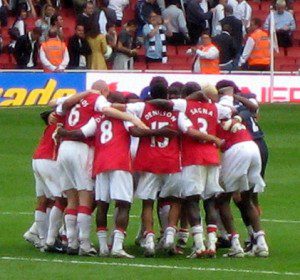 Just a few weeks ago during lunch on a senior staff retreat, I overheard my colleagues talking about how they intended to spend a few free afternoon hours. Some planned to nap, a few mentioned taking a walk along the nearby river. Fairly soon, inevitably, the conversation turned to sports; basketball in particular. Folks started mentioning their various sports pedigrees. Tales of conquests and bravado (in some cases, ancient history) got louder as they began to choose sides and throw down challenges. Immediately upon that turn in conversation, I began plotting my escape. And as conversation grew more heated, I slunk out the side door, determined not to get sucked into challenges of greatness, all the while managing my post traumatic stress-filled memories of junior high gym class.
I may be the only one among us who has terrible memories of junior high gym class, but…probably not. While some of us still bask in the glory days of sports greatness, the rest of us, I’m thinking, remember: awkward locker room races to change into gym uniforms before the bell rang; thick polyester blend gym shorts that, for some baffling reason, never seemed especially flattering on me; sitting on the bleachers in the stifling heat of the gym, smells of floor wax and old egg salad sandwiches left over from lunchtime; and the gym teacher, standing on the floor at the bottom of the bleachers, whistle around her neck, poised to utter the most terrifying words in the life of any seventh grader: “Okay, kids! It’s time to choose teams!”
Chosen…or not chosen, as the case may be. It’s a circumstance of life that starts even before junior high gym class and follows us through experience after life experience, so much so that we’ve come to understand the word “chosen,” the experience of being chosen, as a direct commentary on our worth. When we’re chosen, we’re better: faster, smarter, cooler, more worthy, right?
You can perhaps appreciate why I could not wait to get away from that staff conversation about basketball.
Today our passage today from 1 Peter talks about being “chosen,” and it’s a passage, like others in this letter, that has been grossly misinterpreted and used to terrible ends since it was first written. “You are a chosen race,” the text reads, and you can see how this could, with our modern understanding of the word, contribute to a corporate identity that could get dangerous when applied in community. In fact, it has been used and is used to this day, to exclude people from the church, to declare our superiority to the outside world, and even to hurt groups of people different from us. But it also has been used to tragic ends within the church, as license to behave badly among ourselves. And all of these, misuses of the concept of being chosen, have damaged the transformational work and witness of the gospel in the world.
Today we’re in the second of a three-week sermon series on the little epistle of 1 Peter, a letter toward the very end of the New Testament in which an early Christian leader wrote to several growing communities of new Christians in Asia Minor with instructions about how to order their lives in relationship to the world around them; instructions about how to order their lives within their community of believers; and instructions about how to order their lives in the intimate circle of relationships that made up their individual families. And while the lives and circumstances of the early Christians were very different from our own, this letter, we presume, was included in the canon of our holy text because there is something for us modern Christians to learn here, practical reminders that are universal to the Christian experience.
Last week we focused on what 1 Peter might have to say for the church in the world. Today we turn inward to try to understand the writer’s message for work of ordering our lives together as the community of Christ, the church.
You’ll recall if you were here last week that, as far as we know, the letter making up the book of 1 Peter was written to a group of Gentile Christians who were beginning to experience persecution for the decisions they’d made to become followers of Jesus. The culture around them didn’t quite know what to make of this little sect that had been birthed with the message of a radical Jewish rabbi, but now seemed to be attracting more and more adherents who were Gentiles. And the teachings these first Christians were learning and preaching, ideas about love and justice and peace, were beginning to rankle authorities of every expression: religious and civil authorities alike.
Early Christian leaders must have known that there would soon be a crisis in the churches if they didn’t help these new Christians develop a shared identity, some concept of who they were together. For sure, facing the risk of persecution without a clear understanding of what held them together would certainly result in church members abandoning ship. And so the writer of 1 Peter writes to remind them of who they are, in the words of the text, “a chosen race, a royal priesthood, a holy nation, God’s own people…”.
Wow. Talk about special! Hearing a description like that, it’s easy to see why we’d sit up a little straighter, fix our collars, and adopt expressions of superiority. Unfortunately, I think it’s probably not accurate to say the writer of 1 Peter wrote these words to puff up the early Christians, or us, with self-important arrogance.
Instead, it’s likely the writer of the letter chose these lofty words for two reasons. First, remember, most of the early Christians reading this letter were Gentiles. If you were a Jewish convert to Christianity, it was easy to reach back into the history and tradition of your Jewish roots and fully understand this concept of being chosen: God’s people through the lineage of Abraham, a corporate identity that reflected generations of shared understanding about who they were.
But Gentiles did not have that reference point. In fact, there was much dissention in the early church about these identities—did you have to become a Jew first, before you could become a Christian? Of, if not, were the Jewish converts to Christianity somehow extra special because Jesus was Jewish?
The writer of 1 Peter was addressing these tensions when he wrote what he did, and you can imagine how the Gentile audience needed to hear them: “You are a chosen race, a royal priesthood, a holy nation, God’s own people…”, meaning: you belong here. Don’t let anybody tell you you’re not good enough to be part of this revolution of love.
In using this “chosen language” to describe the first communities of Christians, in effect the writer of 1 Peter is flinging wide the doors to say that everyone is welcome, and all of us together make up the community for which we are responsible to tend and nurture. He wasn’t, then, stroking their egos…he was critiquing the early church for its infighting and divisions.
A second reason 1 Peter’s writer may have used the language of being chosen is because he was trying to narrate a community identity—to remind the first Christians that they had before them a holy mandate: to walk in the way of Jesus. That is, the task they’d taken on was the same task as the one Jesus took on—not exactly a life of ease and popularity, a perch from which to declare one’s superiority, he reminded them. Jesus was chosen too, but he was chosen to suffer, to preach a message that made people in power stumble and fall, that challenged the status quo, that was very, deeply unpopular. “You’re part of this revolution of love,” 1 Peter was reminding the early church, “chosen people tasked with the risky challenge of living the gospel message for the whole world to see.”
I hate to admit it, but after studying this passage rather deeply this week, I came right back around to the metaphor I’d wanted to escape: junior high gym class. Return with me one more time to the memory I described. Right after the gym teacher blows her whistle and says it’s time to pick teams, then the dreaded choosing begins. At my school, all the best athletes got chosen first, one by one. After all of them were chosen, the popular kids got picked. Then the funny ones, and so on and so forth down the totem pole of seventh grade society, until all the rest of us eventually got chosen for a team, too.
That whole process was a gut-wrenching blow to fragile egos like mine. But once the choosing was over, it was time for the game to begin. And no matter who you were or what team you were chosen for, whether you were chosen first or you were the very last person left on the bench, the attention then shifted to the task of working together so we could beat the other team.
The point of this exercise wasn’t really to see who got chosen, in other words. Everybody was chosen eventually. The point was to work together with your team, so that the whole team could accomplish its mission. If people on the team sat around on the bleachers bragging about who got chosen first and why that made them better, there would never be anybody on the court actually playing the game.
The writer of 1 Peter wanted the first Christians to remember that they were all on the same team, they were all chosen. And now that they were there together, it was time to remember the gravity of their task. The gospel is so important, he wrote, it’s critical that you, the community of Christ, set aside all malice, guile, insincerity, envy, slander. For goodness sake, don’t let the evil that characterizes communities of this world come anywhere near this beloved community. You are chosen, and because you’re chosen, you have a job to do: be a corporate witness to the world.
David Brooks wrote a column in the New York Times this week, advocating for what he called, “A New Culture War.” He made the case that we don’t spend enough time cultivating communities in which true character can be formed in each of us, and in our children. Our society, he argues, requires individuals who can navigate their own freedom to contribute to a shared culture of character formation: “a common moral ecosystem.”[1] Using recent legislation regarding transgender bathroom laws as an example, Brooks writes, “[Those laws] are about legislating a group, not about what constitutes good behavior. They are an attempt to erect crude barriers when a little local consideration and accommodation could get the job done.”
It struck me as I read his words: this is so often the church! We erect our own crude barriers that render us also “addicted to sideshows that end with the whiff of intolerance,” instead of remembering to live as if we all belong, and the task to which we have been called is more important than the petty divisions we constantly create. “You are a chosen race, a royal priesthood, a holy nation, God’s own people…”. And listen to what the text says next: “…in order that you may proclaim the mighty acts of him who called you out of darkness and into his marvelous light.”
We’re here together for a reason, all of us chosen to be in this place in this time. Why? It surely isn’t because we’re more special than everybody else. No, it’s because we have a job to do. The culture in which our community exists desperately needs us to live fully into who we are as the community of Christ, a witness that informs the larger culture. Why? Because “love is the elemental desire of the spirit,” Brooks writes. “People are desperately motivated to love something well, and be loved. A core task of communities is to arouse and educate the loves, to widen and deepen opportunities for love and to appraise people by how well and what they love.”
What if our community modeled for the world the kind of love and hope and promise that Jesus came to teach us? “Do not use your freedom as a pretext for evil,” the writer of 1 Peter reminds us. “You are a chosen race, a royal priesthood, a holy nation, God’s own people…”, chosen to live the gospel in community for the world to see how love can change us.
I’m not exactly sure how each one of us got to be on this team; surely we were each chosen to be here, somehow. And now that we’re here, the holy mandate of that choosing is set before us with a challenge. Behave then with care, church. Every interaction we have with each other either advances the gospel in the world or puts up roadblocks to its transformational work.
We decide.
All of us awoke this morning to news of yet another mass shooting, this time in Orlando, with possibly over twenty people dead. You don’t need me to tell you that the world around us so desperately needs us to build and model gospel community–you need only turn on your televisions. Our mandate as the community of Christ is pressing and clear. To spend our time jockeying among ourselves for position or engaging in behavior that tears each other down, to use any bit of this community’s energy on behavior tinged even just a little with malice, guile, insincerity, envy, slander is more than a distraction. It is a sin.
Bill Coffin famously said: “The world is too dangerous for anything but truth and too small for anything but love,” and he was, quite literally, talking to us. Church, you are indeed “a chosen race, a royal priesthood, a holy nation;” now, choose to act like it.
Amen.
[1] http://www.nytimes.com/2016/06/07/opinion/lets-have-a-better-culture-war.html?_r=0
Previous Post

June 5, 2016
A Matter of Life and Death
Next Post

June 14, 2016 After Orlando, Our Silence is Sin
Browse Our Archives
Select a Category Answering the Call Being the Church Curating Wisdom Laughing Out Loud Living in Relationship Practicing Discipleship Reclaiming Baptist Speaking from the Pulpit Uncategorized
Select a Month July 2018 June 2018 May 2018 April 2018 March 2018 January 2018 December 2017 November 2017 October 2017 September 2017 June 2017 May 2017 April 2017 March 2017 February 2017 January 2017 December 2016 November 2016 October 2016 September 2016 August 2016 July 2016 June 2016 May 2016 April 2016 March 2016 February 2016 January 2016 December 2015 November 2015 October 2015 September 2015 August 2015 July 2015 June 2015 May 2015 April 2015 March 2015 February 2015 January 2015 December 2014 November 2014 October 2014 September 2014 August 2014 July 2014 June 2014 May 2014 April 2014 March 2014 February 2014 January 2014 December 2013 November 2013 October 2013 September 2013 August 2013 July 2013 June 2013 May 2013 April 2013 March 2013 February 2013 January 2013 December 2012 November 2012 October 2012 September 2012 August 2012 July 2012 June 2012 May 2012 April 2012 March 2012 February 2012 January 2012 December 2011 October 2011 September 2011 August 2011 July 2011 June 2011 May 2011 April 2011 March 2011 February 2011 January 2011 December 2010 November 2010 October 2010 September 2010 August 2010 July 2010 June 2010 May 2010 April 2010 March 2010 February 2010 January 2010 December 2009 November 2009 October 2009 September 2009 August 2009 July 2009 June 2009 May 2009 April 2009 March 2009 February 2009 January 2009 December 2008 November 2008 October 2008 September 2008 August 2008 July 2008 June 2008 May 2008 April 2008 March 2008 February 2008 January 2008 December 2007 November 2007 October 2007 September 2007 August 2007 July 2007 June 2007 May 2007 April 2007 March 2007 February 2007 January 2007 December 2006 November 2006 October 2006 September 2006 August 2006 July 2006 June 2006 May 2006 April 2006 March 2006 February 2006 January 2006 December 2005
Search for:
Recent Posts
- Sabbath as Radical Witness
- Learning Leadership: A Pilgrimage to Hawaii
- A Prayer for the Living of These Days
- Sabbath as Relationship
- Dressing Up Faith
Recent Comments
Archives
- July 2018
- June 2018
- May 2018
- April 2018
- March 2018
- January 2018
- December 2017
- November 2017
- October 2017
- September 2017
- June 2017
- May 2017
- April 2017
- March 2017
- February 2017
- January 2017
- December 2016
- November 2016
- October 2016
- September 2016
- August 2016
- July 2016
- June 2016
- May 2016
- April 2016
- March 2016
- February 2016
- January 2016
- December 2015
- November 2015
- October 2015
- September 2015
- August 2015
- July 2015
- June 2015
- May 2015
- April 2015
- March 2015
- February 2015
- January 2015
- December 2014
- November 2014
- October 2014
- September 2014
- August 2014
- July 2014
- June 2014
- May 2014
- April 2014
- March 2014
- February 2014
- January 2014
- December 2013
- November 2013
- October 2013
- September 2013
- August 2013
- July 2013
- June 2013
- May 2013
- April 2013
- March 2013
- February 2013
- January 2013
- December 2012
- November 2012
- October 2012
- September 2012
- August 2012
- July 2012
- June 2012
- May 2012
- April 2012
- March 2012
- February 2012
- January 2012
- December 2011
- October 2011
- September 2011
- August 2011
- July 2011
- June 2011
- May 2011
- April 2011
- March 2011
- February 2011
- January 2011
- December 2010
- November 2010
- October 2010
- September 2010
- August 2010
- July 2010
- June 2010
- May 2010
- April 2010
- March 2010
- February 2010
- January 2010
- December 2009
- November 2009
- October 2009
- September 2009
- August 2009
- July 2009
- June 2009
- May 2009
- April 2009
- March 2009
- February 2009
- January 2009
- December 2008
- November 2008
- October 2008
- September 2008
- August 2008
- July 2008
- June 2008
- May 2008
- April 2008
- March 2008
- February 2008
- January 2008
- December 2007
- November 2007
- October 2007
- September 2007
- August 2007
- July 2007
- June 2007
- May 2007
- April 2007
- March 2007
- February 2007
- January 2007
- December 2006
- November 2006
- October 2006
- September 2006
- August 2006
- July 2006
- June 2006
- May 2006
- April 2006
- March 2006
- February 2006
- January 2006
- December 2005
Categories
- Answering the Call
- Being the Church
- Curating Wisdom
- Laughing Out Loud
- Living in Relationship
- Practicing Discipleship
- Reclaiming Baptist
- Speaking from the Pulpit
- Uncategorized
Meta
Follow Us!
TAKE THE
Religious Wisdom Quiz
Who wrote many of the Psalms?
Select your answer to see how you score.
Peter Solomon Paul David
Related posts from Talk with the Preacher

Learning Leadership: A Pilgrimage to Hawaii

A Prayer for the Living of These Days


Invitation, a Meditation for Maundy Thursday
TRENDING AT PATHEOS Progressive Christian

Why Christians Have a Sacred Duty to Vote:...
The Bible offers strong support for the sacred duty to vote. Here...

What Being a Modern-Day Apostle Means to Me
In my last column, I discussed the ins and outs of modern-day...

Did Ancient China Once Worship the God of...
Across human history, a common thread weaves through the origins of the...

Love Your Neighbor – Including Earth-Kin: Lev. 19,...
God’s command to love your neighbor means acting in an ethical and...

Lead a Church Study of “Jesus and Lao...
Guest writer Jack Thomas (The Irreverent Reverend) reflects on leading his church...

Principles for Understanding the Apostolic Ministry Today
Whenever people discover that my formal ministry title is "apostle," as in...
view all Progressive Christian blogs
Ad-Free & Subscriber Log-In Subscription Support
- About Us
- 2026 Calendar
- Videos
- Podcasts
- Library of World Religions
- Faith In Media Tracker
- Advertise With Us
- Write for Us
- Privacy Policy
- Terms of Service
- Do Not Sell My Data
- Contact Us
- Radiant Digital
- Manage Newsletter Subscriptions
- Unsubscribe From Notifications
- Sitemap
Copyright 2008-2026, Patheos. All rights reserved.
Subscription Support Ad-Free & Subscriber Log-In
Follow Patheos