
BuddhistCatholicContemplativeEvangelicalGeneral ChristianHinduJewishLatter-day SaintMuslimNew VisionsProgressive Christian
Beliefs
- Buddhist
- Catholic
- Contemplative
- Evangelical
- General Christian
- Hindu
- Jewish
- Latter-day Saint
- More Voices
- Muslim
- New Visions
- Pagan
- Progressive Christian
Topics
- Religion News
- Food and Religion
- Sports and Religion
- Religious Art
- Religious Music and Entertainment
- Religious Events
- History and Religion
- Style and Religion
- Politics and Religion
- Women in Religion
- Recreation Outdoors and Religion
- Business Finance and Religion
- Careers Workplace and Religion
- Education and Religion
- Family Parenting and Religion
- Health Fitness and Religion
- Home and Religion
- Relationships and Religion
- Technology and Religion
- Travel and Religion
Columnists
- Buddhist Columnists
- Business Finance and Religion Columnists
- Careers Workplace and Religion Columnists
- Catholic Columnists
- Contemplative Columnists
- Education and Religion Columnists
- Evangelists Columnists
- Family Parenting and Religion Columnists
- General Christian Columnists
- Health Fitness and Religion Columnists
- Hindu Columnists
- History and Religion Columnists
- Home and Religion Columnists
- Jewish Columnists
- More Voices Columnists
- Latter Day Columnists
- Muslim Columnists
- New Visions Columnists
- Nonreligious Columnists
- Pagan Columnists
- Politics and Religion Columnists
- Progressive Columnists
- Recreation Outdoors and Religion Columnists
- Relationships and Religion Columnists
- Religion News Columnists
- Religious Art Columnists
- Religious Events Columnists
- Religious Music and Entertainment Columnists
- Sports and Religion Columnists
- Style and Religion Columnists
- Technology and Religion Columnists
- Travel and Religion Columnists
- Women in Religion Columnists
Resource Library
- 2026 Calendar
- Library of World Religions
- The 100 Most Holy Places on Earth
- Patheos Answers
- Podcasts
- Videos
- Faith Leaders Database
- Anglican Episcopalian
- Bahai
- Baptist
- Buddhism
- Christianity
- Confucianism
- Eastern Orthodoxy
- Hinduism
- Holiness and Pentecostal
- ISKCON
- Islam
- Judaism
- Lutheran
- Methodist
- The Church of Jesus Christ of Latter-day Saints
- New Age
- Paganism
- Presbytarian and Reformed
- Protestantism
- Religion Behind the Scenes
- Roman Catholic
- Scientology
- Shia Islam
- Sikhism
- Sufism
- Sunni Islam
- Taoism
- Zen
- See all religions
Research Tools
 Ad-Free & Subscriber Log-In Subscription Support
Ad-Free & Subscriber Log-In Subscription Support
Follow Patheos 

- Trending:
- Forgiveness
- |
- Marriage
- |
- Consciousness
- |
- Death Penalty
- |
- Election
- |
- Halloween
 Talk with the Preacher
- Home
- Progressive Christian
- What Can I Bring Him?
What Can I Bring Him?
Last updated on: December 20, 2015 at 12:51 pm by Amy Butler
What Can I Bring Him? 2015-12-20T12:51:15-04:00 Amy Butler
Patheos Explore the world's faith through different perspectives on religion and spirituality! Patheos has the views of the prevalent religions and spiritualities of the world.
What Can I Bring Him?
Hebrews 10:5-10
 Welcome to the fourth Sunday of Advent, the Sunday of love. These past weeks we have been living in the darkness and waiting for the light, working to make room in our hearts and in our community for Christ to be born even in us…for the promises of hope, peace, joy, and, yes, love, to take root in our very lives and offer the possibility of light and transformation to our dark and hurting world.
Perhaps you are one of those people who relishes this season, who walks down the sidewalk wearing a Santa hat with jingle bells, who sits every evening in the glow of the Christmas tree reflecting on the blessings of your life and the signs of promise you see in the world everywhere you turn. And maybe on this last Sunday of Advent, just five days before Christmas, you’re a bit like me: feeling overwhelmed by the expectations of the season pushing up against those promises of hope, peace, joy and love, and just about snuffing them out…things like church Christmas parties in which people expect you to do the Electric Slide, but you know you should never be dancing in public; endless to-do lists you’ll never finish; blaring Christmas songs with lyrics promising love and joy, and painful situations all around you making you wonder if you’re the only one who’s struggling this season.
Whether you’re shaking jingle bells or rushing around in a last minute panic, this Sunday is a good day to ask: how can love be born in us?
And this question doesn’t just come up in a personal, individual way, does it? This Advent has seemed especially dark, with reports of violence all over the world and especially in our own backyards dominating our airwaves, with memories of anniversaries like Sandy Hook, and with vitriol coming from our political leaders and presidential candidates, making us shake our heads with despair over the prospect of hope, peace, joy, love coming to be born in us and in our world.
It just doesn’t seem possible. The darkness of Advent falls with increasing heaviness as we struggle to be people who can welcome the promise of a Savior to a world in desperate need of help.
These weeks of Advent the lectionary texts have been leading us through passages in the Epistles, part of the New Testament after the gospel accounts of Jesus’ life, death, and resurrection, and filled with letters to the early church. They were written by leaders of those little communities, often the Apostle Paul, and they addressed the challenges the first Christians encountered as they tried to build lives and communities that reflected the gospel Jesus preached, a radical message of love for God and love for each other.
Today our text comes from the book of Hebrews, a book in the New Testament about which we know neither author or audience. It’s a pretty dense read, full of complicated phrases and difficult theological ideas. And while we don’t know why the author of Hebrews thought such a tome was called for, we can tell from the text that the readers were having trouble integrating the gospel message because they were struggling to understand it for their own lives…and because the world around them was exerting pressure on their community—finding their ideas threatening to the status quo. For many in this little church, conversion had divided them from the society around them so much that their property was being confiscated, and some were even being thrown into prison. The audience of the book of Hebrews was in danger of drifting away from the community, of throwing in the towel, because the darkness around them was so very dark.
The writer of Hebrews is writing to remind those early Christians of the hope of their initial conviction—that even in the face of such suffering, the message of Christ could surely continue to be transformational.
In that context, the little passage we heard today touches on a constant theme in the book of Hebrews, a theology the church has twisted into something called “atonement theology.” Certainly in today’s scripture the writer quotes a passage from the Psalms in which he says again that Jesus’ coming abolished the old way of doing things, and that we have “been sanctified through the offering of the body of Jesus Christ once and for all.”
Though I, perhaps like many of you, learned this sort of atonement theology very early on, I can’t imagine why someone thought it was a good idea to talk about Christ’s life, death, and resurrection in terms of a baby born to live a life ending in violence and death that somehow paid for our sins. Instead, on this Sunday of love—just a few days before we celebrate the birth of a baby who came to change the world—it seems appropriate to look a little harder at the message of this passage of Hebrews and realize that when the author talks about Jesus offering his body for the world, how much more profound and powerful would it be to understand that offering as Jesus, coming to embody the entirety of love for humankind through the offering of himself in every breath and word and touch and interaction he had on earth?
And what if we, like the readers of Hebrews, dubious about the possibility of love taking root in our lives and in our world, were to set our eyes and our hearts on this one who offered his whole self to the work of love…and tried to live like him?
In just a few days, God will offer us a chance to peek again over the side of a manger, to remember a tiny baby born into a world of hopelessness and pain. When we do, when we will see the offering of a life to the work of love…and we will have before us the question of how we are offering our own lives to the work of God in this world…indeed, how love is really being born in us…or not?
I wouldn’t have believed it if it hadn’t happened to me.
My first Christmas out of seminary I was working as the director of a homeless shelter for women in the city of New Orleans. The women’s shelter was part of a very large and gritty gospel mission in one of the more derelict and dangerous neighborhoods in the city—the kind you see on the news every Thanksgiving when they run stories about celebrities serving the homeless and show footage of important folks wearing aprons and spooning mashed potatoes onto plates. Indeed, that first holiday season on the mission staff was teaching me a lot, namely that the intensity of the work ramps up exponentially during this time of the year. Not only do donations flood in and volunteers clamor to be assigned meaningful experiences helping out, usually the weather is cold and family conflicts intensify, and more people than ever find themselves out on the streets with nowhere to go.
Such was the situation in our mission that Christmas Eve morning. All the staff was stretched thinner than ever, and I was called on to come sit at the front desk, direct folks coming in the front door, and answer the telephone that was ringing off the hook. A few hours in, I was as frazzled as everyone else when a young woman, maybe in her early thirties, came in the front door of the mission with two kids who appeared to be around 8 and 10 or so—one boy and one girl. The family was well dressed and polite; I thought they were dropping off presents or volunteering in the kitchen, but I was wrong. The young woman came up to me and, crying, explained that she and her kids had to leave an abusive situation late the night before. They were new to town and didn’t have any friends they could call on. They’d spent the night on a bench in the bus station. She was trying to get to her sister’s in Mississippi, but her sister was gone for the holiday and she didn’t have enough money to get there. Right now she and the kids just needed a place to sleep for Christmas.
I was surprised to see her at the mission, as I would have expected her to find a place to stay in a domestic abuse shelter, and—let’s be honest—the mission was no place to be unless you were really, really desperate. It certainly wasn’t a place you’d want to bring your kids. In between the phone ringing and directing people to various parts of the mission, accepting deliveries and the sound of the loud speaker blaring announcements, I tried to listen as she told me she knew all of that, but that all of the other shelters were full—no room—and she’d tried everything. Crying, she told me she knew the mission wasn’t a good place for kids, but she didn’t have any choice. This was the last stop on her list and she was begging me please to let her stay.
The phone was still ringing, and people kept interrupting our conversation as I explained to her that we were in the same situation as all of those other shelters. We didn’t have family space, anyway—we only had bunks for single women, and all of our bunks were full. We’d even put two people on cots in the hallway already (violating fire code, I’m sure), because, well, it was Christmas and you just couldn’t turn people away.
But I had to say no, I told her. I’m very sorry. There’s no room.
She begged—I’ll do anything, but I kept saying I was so sorry we couldn’t help. The phone started ringing again and as I turned away from her to answer the telephone I saw her go to her children, kneeling in front of them crying, trying to explain.
“Thank you for calling the New Orleans Mission,” I answered, distracted as I was watching the woman help her children get their coats back on before they headed out into the cold to…I didn’t know where.
The voice on the other end was a woman’s voice, hesitant. She said, “I’m looking for a family.” “Excuse me?,” I asked. She said, “I know this sounds weird, but just bear with me. I had the most vivid dream last night that there was a family who needed to spend Christmas with me.” I didn’t know what this woman was talking about, and there was so much crazy swirling around me, I must have said something like, “I’m sorry I can’t help you,” or something similar. But she asked me again to listen. She explained that she was a member at Greater New Hope Full Gospel Church down the street. She’d had this dream about a family who needed to stay with her for Christmas. She’d called her pastor, who told her a Sunday School class would help with presents and food, and she should call all the homeless shelters in town to try to find the family who needed to spend Christmas with her.
“I’ve called the whole list,” she said. “You are the last one. I have a big house with a lot of room, and there’s a family who needs to come have Christmas with me. I saw them in my dream—a mom with two kids, a boy and a girl about 8 and 10.”
As I struggled to try to understand what kind of crazy conversation I was engaged in, I looked up from the desk, phone pressed against my ear, and saw the woman I’d just been talking with, walking toward the door, arms around her two kids, tears streaming down her face.
For me, it was a moment where time was suspended, where it felt like the world stopped. “Just a moment, please,” I said, put the woman on hold, and ran to the door to stop the woman leaving with her kids.
What happened in the end was beautiful—there’s no other word for it. The woman on the telephone came to pick up the family at the shelter. They went home and celebrated Christmas. The family stayed with the woman for three days, until her sister in Mississippi was back and able to send for them. When I spoke to the woman who’d called later to check in on the situation, I asked her why she would do such a crazy thing. She said she knew it was crazy, but she just felt like she was being invited to show love to someone who needed it; she just had to respond.
I’ll never forget that experience. In a world full of hatred and violence and hopelessness and pain, the invitation to let love be born in us can surely seem unbelievable, far-fetched, crazy, even. And those are the very responses that cause us to harden our hearts, to turn away, to give up on the possibility that love can change anything much at all. It’s what was happening to the readers of the book of Hebrews, and it’s what happens to us when the darkness of this world threatens to overcome us.
But when we have the courage to respond, to allow love to be born in us, then we are living in the way of Jesus, offering our very lives to embodiment of love in the world.
Remember: in just a few days, God will offer us a chance to peek again over the side of a manger, to see a tiny baby born into a world of hopelessness and pain. He was born, not to die in our place, but to live with a radical love for the whole world. What can we bring our newborn Savior when he comes? On this, the Sunday of love, we can bring him nothing less than our whole lives.
Amen.
Previous Post

December 16, 2015
We Are Better Than This
Next Post

December 29, 2015 When the Ordinary is Suspended
Browse Our Archives
Select a Category Answering the Call Being the Church Curating Wisdom Laughing Out Loud Living in Relationship Practicing Discipleship Reclaiming Baptist Speaking from the Pulpit Uncategorized
Select a Month July 2018 June 2018 May 2018 April 2018 March 2018 January 2018 December 2017 November 2017 October 2017 September 2017 June 2017 May 2017 April 2017 March 2017 February 2017 January 2017 December 2016 November 2016 October 2016 September 2016 August 2016 July 2016 June 2016 May 2016 April 2016 March 2016 February 2016 January 2016 December 2015 November 2015 October 2015 September 2015 August 2015 July 2015 June 2015 May 2015 April 2015 March 2015 February 2015 January 2015 December 2014 November 2014 October 2014 September 2014 August 2014 July 2014 June 2014 May 2014 April 2014 March 2014 February 2014 January 2014 December 2013 November 2013 October 2013 September 2013 August 2013 July 2013 June 2013 May 2013 April 2013 March 2013 February 2013 January 2013 December 2012 November 2012 October 2012 September 2012 August 2012 July 2012 June 2012 May 2012 April 2012 March 2012 February 2012 January 2012 December 2011 October 2011 September 2011 August 2011 July 2011 June 2011 May 2011 April 2011 March 2011 February 2011 January 2011 December 2010 November 2010 October 2010 September 2010 August 2010 July 2010 June 2010 May 2010 April 2010 March 2010 February 2010 January 2010 December 2009 November 2009 October 2009 September 2009 August 2009 July 2009 June 2009 May 2009 April 2009 March 2009 February 2009 January 2009 December 2008 November 2008 October 2008 September 2008 August 2008 July 2008 June 2008 May 2008 April 2008 March 2008 February 2008 January 2008 December 2007 November 2007 October 2007 September 2007 August 2007 July 2007 June 2007 May 2007 April 2007 March 2007 February 2007 January 2007 December 2006 November 2006 October 2006 September 2006 August 2006 July 2006 June 2006 May 2006 April 2006 March 2006 February 2006 January 2006 December 2005
Search for:
Recent Posts
- Sabbath as Radical Witness
- Learning Leadership: A Pilgrimage to Hawaii
- A Prayer for the Living of These Days
- Sabbath as Relationship
- Dressing Up Faith
Recent Comments
Archives
- July 2018
- June 2018
- May 2018
- April 2018
- March 2018
- January 2018
- December 2017
- November 2017
- October 2017
- September 2017
- June 2017
- May 2017
- April 2017
- March 2017
- February 2017
- January 2017
- December 2016
- November 2016
- October 2016
- September 2016
- August 2016
- July 2016
- June 2016
- May 2016
- April 2016
- March 2016
- February 2016
- January 2016
- December 2015
- November 2015
- October 2015
- September 2015
- August 2015
- July 2015
- June 2015
- May 2015
- April 2015
- March 2015
- February 2015
- January 2015
- December 2014
- November 2014
- October 2014
- September 2014
- August 2014
- July 2014
- June 2014
- May 2014
- April 2014
- March 2014
- February 2014
- January 2014
- December 2013
- November 2013
- October 2013
- September 2013
- August 2013
- July 2013
- June 2013
- May 2013
- April 2013
- March 2013
- February 2013
- January 2013
- December 2012
- November 2012
- October 2012
- September 2012
- August 2012
- July 2012
- June 2012
- May 2012
- April 2012
- March 2012
- February 2012
- January 2012
- December 2011
- October 2011
- September 2011
- August 2011
- July 2011
- June 2011
- May 2011
- April 2011
- March 2011
- February 2011
- January 2011
- December 2010
- November 2010
- October 2010
- September 2010
- August 2010
- July 2010
- June 2010
- May 2010
- April 2010
- March 2010
- February 2010
- January 2010
- December 2009
- November 2009
- October 2009
- September 2009
- August 2009
- July 2009
- June 2009
- May 2009
- April 2009
- March 2009
- February 2009
- January 2009
- December 2008
- November 2008
- October 2008
- September 2008
- August 2008
- July 2008
- June 2008
- May 2008
- April 2008
- March 2008
- February 2008
- January 2008
- December 2007
- November 2007
- October 2007
- September 2007
- August 2007
- July 2007
- June 2007
- May 2007
- April 2007
- March 2007
- February 2007
- January 2007
- December 2006
- November 2006
- October 2006
- September 2006
- August 2006
- July 2006
- June 2006
- May 2006
- April 2006
- March 2006
- February 2006
- January 2006
- December 2005
Categories
- Answering the Call
- Being the Church
- Curating Wisdom
- Laughing Out Loud
- Living in Relationship
- Practicing Discipleship
- Reclaiming Baptist
- Speaking from the Pulpit
- Uncategorized
Meta
Follow Us!
TAKE THE
Religious Wisdom Quiz
I appeared to Paul on the Damascus road as a blinding light. I spoke to him and changed his life forever. Who am I?
Select your answer to see how you score.
The Holy Spirit An angel Jesus God the Father
Related posts from Talk with the Preacher

A Prayer for the Living of These Days


Invitation, a Meditation for Maundy Thursday
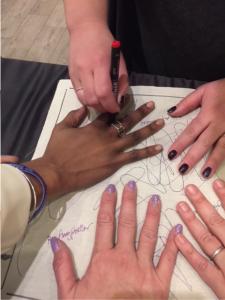
#HolyWomenHolyLand: Women Wage Peace
TRENDING AT PATHEOS Progressive Christian

Why Christians Have a Sacred Duty to Vote:...
The Bible offers strong support for the sacred duty to vote. Here...

What Being a Modern-Day Apostle Means to Me
In my last column, I discussed the ins and outs of modern-day...

Did Ancient China Once Worship the God of...
Across human history, a common thread weaves through the origins of the...

Love Your Neighbor – Including Earth-Kin: Lev. 19,...
God’s command to love your neighbor means acting in an ethical and...

Lead a Church Study of “Jesus and Lao...
Guest writer Jack Thomas (The Irreverent Reverend) reflects on leading his church...

Principles for Understanding the Apostolic Ministry Today
Whenever people discover that my formal ministry title is "apostle," as in...
view all Progressive Christian blogs
Ad-Free & Subscriber Log-In Subscription Support
- About Us
- 2026 Calendar
- Videos
- Podcasts
- Library of World Religions
- Faith In Media Tracker
- Advertise With Us
- Write for Us
- Privacy Policy
- Terms of Service
- Do Not Sell My Data
- Contact Us
- Radiant Digital
- Manage Newsletter Subscriptions
- Unsubscribe From Notifications
- Sitemap
Copyright 2008-2026, Patheos. All rights reserved.
Subscription Support Ad-Free & Subscriber Log-In
Follow Patheos