
BuddhistCatholicContemplativeEvangelicalGeneral ChristianHinduJewishLatter-day SaintMuslimNew VisionsProgressive Christian
Beliefs
- Buddhist
- Catholic
- Contemplative
- Evangelical
- General Christian
- Hindu
- Jewish
- Latter-day Saint
- More Voices
- Muslim
- New Visions
- Pagan
- Progressive Christian
Topics
- Religion News
- Food and Religion
- Sports and Religion
- Religious Art
- Religious Music and Entertainment
- Religious Events
- History and Religion
- Style and Religion
- Politics and Religion
- Women in Religion
- Recreation Outdoors and Religion
- Business Finance and Religion
- Careers Workplace and Religion
- Education and Religion
- Family Parenting and Religion
- Health Fitness and Religion
- Home and Religion
- Relationships and Religion
- Technology and Religion
- Travel and Religion
Columnists
- Buddhist Columnists
- Business Finance and Religion Columnists
- Careers Workplace and Religion Columnists
- Catholic Columnists
- Contemplative Columnists
- Education and Religion Columnists
- Evangelists Columnists
- Family Parenting and Religion Columnists
- General Christian Columnists
- Health Fitness and Religion Columnists
- Hindu Columnists
- History and Religion Columnists
- Home and Religion Columnists
- Jewish Columnists
- More Voices Columnists
- Latter Day Columnists
- Muslim Columnists
- New Visions Columnists
- Nonreligious Columnists
- Pagan Columnists
- Politics and Religion Columnists
- Progressive Columnists
- Recreation Outdoors and Religion Columnists
- Relationships and Religion Columnists
- Religion News Columnists
- Religious Art Columnists
- Religious Events Columnists
- Religious Music and Entertainment Columnists
- Sports and Religion Columnists
- Style and Religion Columnists
- Technology and Religion Columnists
- Travel and Religion Columnists
- Women in Religion Columnists
Resource Library
- 2026 Calendar
- Library of World Religions
- The 100 Most Holy Places on Earth
- Patheos Answers
- Podcasts
- Videos
- Faith Leaders Database
- Anglican Episcopalian
- Bahai
- Baptist
- Buddhism
- Christianity
- Confucianism
- Eastern Orthodoxy
- Hinduism
- Holiness and Pentecostal
- ISKCON
- Islam
- Judaism
- Lutheran
- Methodist
- The Church of Jesus Christ of Latter-day Saints
- New Age
- Paganism
- Presbytarian and Reformed
- Protestantism
- Religion Behind the Scenes
- Roman Catholic
- Scientology
- Shia Islam
- Sikhism
- Sufism
- Sunni Islam
- Taoism
- Zen
- See all religions
Research Tools
 Ad-Free & Subscriber Log-In Subscription Support
Ad-Free & Subscriber Log-In Subscription Support
Follow Patheos 

- Trending:
- Forgiveness
- |
- Marriage
- |
- Consciousness
- |
- Death Penalty
- |
- Election
- |
- Halloween
 Talk with the Preacher
- Home
- Progressive Christian
- The Hardest Question
The Hardest Question
Last updated on: October 14, 2015 at 7:59 pm by Amy Butler
The Hardest Question 2015-10-14T19:59:24-04:00 Amy Butler
Patheos Explore the world's faith through different perspectives on religion and spirituality! Patheos has the views of the prevalent religions and spiritualities of the world.
The Hardest Question
Mark 4:35-41
Anybody who has spent any amount of time around an inquisitive five year old will know that kids ask the funniest questions to try to figure out the world. Some great ones that I remember from life with my own five year olds are questions like: Why am I right handed? How many stars are in the sky? Why do lions roar? Where does outer space begin? How do birds fly? Who invented the alphabet? Why do you cry when you cut an onion?
Questions punctuate our lives; they’re how we work to make sense of the world around us. I smile when I remember some of the questions my kids asked but, especially in a week like this one, the memory of their innocent voices wondering out loud about the world makes me tear up.
How we’d wish for all of our children lives full of asking questions like, “Where does the light go when you turn it off?” instead of the questions we’re asking—again—this week: How have we allowed white supremacy and a shameful legacy of racism in this country to root itself into the psyche of our nation and continue to thrive? Why are Christians, people of faith, complicit in the ongoing destruction of our planet? Will yet another act of terrorism give us, finally, the impetus to stand up and demand we limit availability to deadly weapons in our country? Will love really win in the end? Really?
This week our questions become so much less theoretical as we added nine precious lives to the list of martyrs. I think it’s important to say their names: Cynthia Hurd, Susie Jackson, Ethel Lance, DePayne Middleton-Doctor, Clementa Pinckney, Tywanza Sanders, Daniel Simmons Sr., Sharonda Singleton, Myra Thompson.
I, for one, am furious that my own precious children, and yours, are inheriting a world where their innocent curiosity has necessarily become coopted by questions like: Why is the confederate flag still flying over the capitol of South Carolina?
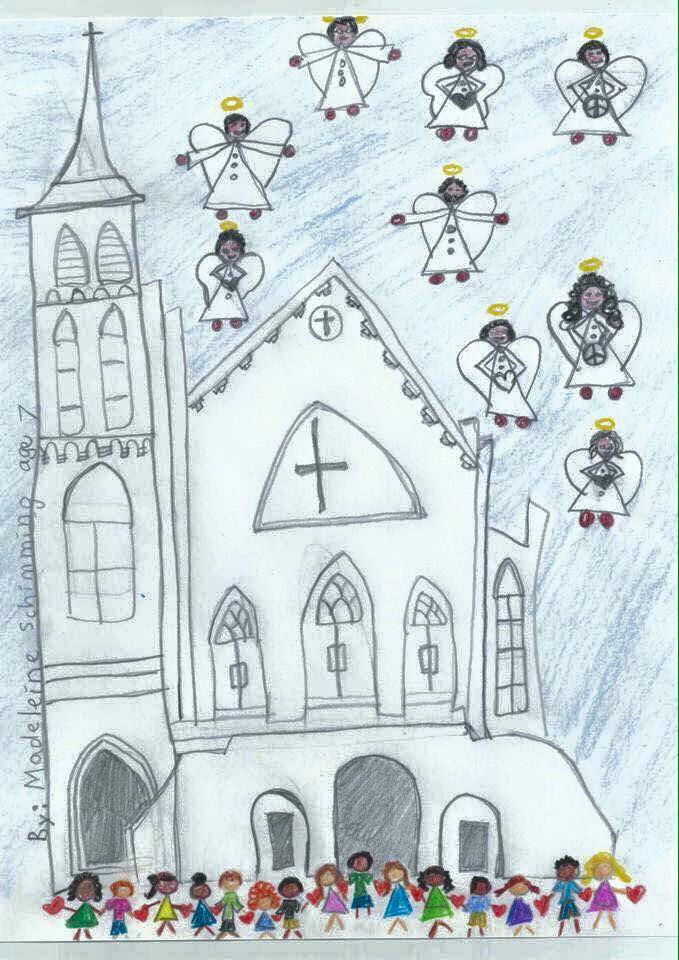 So it’s in the shadow of such heaviness, a storm, really, carrying the weight of our own heartbreaking questions, that we’re given a story from Mark’s gospel, chapter four. It’s a familiar narrative to many of us, Jesus stilling a storm on the Sea of Galilee. And it’s quite a dramatic story, a great one for felt board Sunday School lessons. But as I was rereading this week, I noticed the questions—the questions that punctuate this passage.
In Mark’s account of events, this nautical adventure occurs pretty early on in Jesus’ ministry. He’s called his disciples, former fishermen, to come and follow, and they’ve been busy traipsing around the countryside, watching and listening as Jesus teaches and heals people. Jesus had begun to be very popular, in fact, and immediately preceding the story we heard today, Jesus was teaching a large crowd on the seashore. The crowd was so large that it was pressing in on him, so Jesus got into a boat on the water to teach from there.
It must have been an exhausting day, and at the end of it Jesus said to the disciples, “Let’s get away from the crowd for a bit—we’ll take the boat to the other side of the lake and get a little bit of peace!”
So they all climbed into the boat and set out to the other side of the lake.
The text says that a great storm arose suddenly; the wind was whipping, the waves were beating the boat, the water was pouring onto the deck. The disciples were terrified. But Jesus, exhausted as he was, had fallen asleep on a cushion, the text says, in the very back of the boat.
And that’s when the questions started.
Question number one was this: shaking Jesus awake the disciples asked him: “Don’t you care that we’re about to sink here?”
I myself have always found this first question a bit puzzling. The disciples, who were fishermen, are so panicked by a storm on the sea, that they wake up Jesus—the carpenter? They must have had their suspicions by then that there was something special about this man, that he represented hope and help, on the waves of a churning sea and for their adrift lives, too. So they wanted to know: why are you sleeping? Don’t you care that we’re in crisis here?
I have to say that this has been one of those weeks when I have felt a bit like one of those the disciples, hanging onto the railing of the boat for dear life and wondering if God is asleep. We sophisticated humans, Americans, no less, have been confronted again with our own failure to build a society of justice, peace, equality. We’ve failed, and our boat is sinking—fast. Where are you, God, when innocent people are murdered at Bible Study? Where are you when the shameful reality of the destruction of our planet hits us right between the eyes? Don’t you care that we’re in crisis here? Why are you sleeping?
So many hard, hard questions.
And you know what happens next. Jesus wakes up, walks to the side of the boat, and tells the wind to be still.
And it was.
You’d think he’d get back to napping, tell the disciples to leave him alone, but he didn’t go back to sleep. Instead, Jesus asks them a question. He asks them: why are you afraid? Where is your faith??
These are sharp, very direct words from Jesus. One commentator says you could translate Jesus’ question to read, “Why are you so chicken hearted?” Jesus is impatient with the disciples here. He’d demonstrated for them repeatedly that the power of God is real and working in their lives, but confronted with crisis they revert to what they know from painful experience—their own inability to rescue themselves. They panic; they allow fear and hopelessness and despair to overwhelm them. They forget, just like that, the power of God that drew them into the adventure of discipleship, that gave them a whole new framework for seeing the world.
Where is your faith? Also a very hard question.
Do you think this week that maybe we’re being asked this hard question, just like the disciples? When you took on the task of discipleship, of living your life and building this community in the way of God’s revolutionary message of love for the whole world, you knew it wasn’t going to be popular—right? You knew it didn’t make sense to a world motivated by greed and violence, oppression and injustice, hatred and fear. We knew that! So why am I panicked when the worst happens? Why am I so chicken hearted? Where is my faith?
They saw the storm stilled. And they heard Jesus’ rebuke. And that’s when the third question gets asked—the hardest question of all. They asked it to each other: “Who is this, that even the wind and the sea obey him?”
There it is. And it’s the hardest question, one with which we are going to have to grapple and grapple hard if we want to live as people of courage and conviction in a world filled with so many things that make us so very afraid. Who is this Jesus and what does his message of love for God and love for neighbor mean for me, for you, for us? We must know who he is and what he came to teach us if we’re ever going to live boldly into the audacious claim that love can heal us and heal our world.
It’s a matter of life and death, in fact, to know who Jesus is and how he calls us to be in this world. Indeed Pope Francis spoke to the very heart of Jesus’ message directly this week in his papal encyclical addressing the care of our planet. He wrote, “Disregard for the duty to cultivate and maintain a proper relationship with my neighbor, for whose care and custody I am responsible, ruins my relationship with my own self, with others, with God and with the earth. When all these relationships are neglected, when justice no longer dwells in the land, … life itself is endangered.”
We have to know who Jesus is and what he came to teach us if we’re going to survive this storm, because these are scary times. We are tempted to raise our fists in grief and despair and fear, to yell toward the sky, “Where are you, God? We’re dying down here!” But God will challenge us, we who call ourselves disciples of Jesus Christ: why are you afraid? Don’t you know who I am?
We have to answer the question, for ourselves, for our community, for our world. Because when we know the answer—when we know who he is and whose we are—we will not be afraid.
When we know that God created all of us in God’s image, each of us a person of worth—precious and worthy of protection and justice, we will not be afraid.
When the care of our planet becomes a non-negotiable matter of faith and conscience, we will not be afraid.
When we adopt as a matter of urgency our work, with the grace of God’s Spirit, to fix broken systems and heal broken hearts, we will not be afraid.
When we confront evil with love, we will not be afraid.
When we act as Jesus would, to speak life into a culture of death, to call strenuously and continuously for a peace and justice-filled city, nation, we will not be afraid.
When we be the church in its best expression, modeling to the world that nothing will keep us from preaching and living a radical gospel of love—nothing—we will not be afraid.
When we know that God’s love is stronger than death, we will not be afraid.
We have so many questions as we make our way through this broken, broken world. So many questions.
I wonder if we can summon the courage to look up from the terror surrounding us, from the storm of death and destruction and desolation ever in our sights, to ask the hardest question: who is this, that even the wind and the sea obey him?
When we do, when we ask the hardest question, we will find the ancient answer, the one that will sustain us in our conviction that love will have the final word:
I lift up my eyes to the hills: where does my help come from?
My help comes from the Lord,
the Maker of heaven and earth.
He will not let your foot slip—
he who watches over you will not slumber;
indeed, he who watches over Israel
will neither slumber nor sleep.
The Lord watches over you—
the Lord is your shade at your right hand;
the sun will not harm you by day,
nor the moon by night.
The Lord will keep you from all harm—
he will watch over your life;
the Lord will watch over your coming and going
both now and forevermore.
Amen.
Previous Post

June 7, 2015
Transformed by the Spirit
Next Post
June 23, 2015 Poetry Corner
Browse Our Archives
Select a Category Answering the Call Being the Church Curating Wisdom Laughing Out Loud Living in Relationship Practicing Discipleship Reclaiming Baptist Speaking from the Pulpit Uncategorized
Select a Month July 2018 June 2018 May 2018 April 2018 March 2018 January 2018 December 2017 November 2017 October 2017 September 2017 June 2017 May 2017 April 2017 March 2017 February 2017 January 2017 December 2016 November 2016 October 2016 September 2016 August 2016 July 2016 June 2016 May 2016 April 2016 March 2016 February 2016 January 2016 December 2015 November 2015 October 2015 September 2015 August 2015 July 2015 June 2015 May 2015 April 2015 March 2015 February 2015 January 2015 December 2014 November 2014 October 2014 September 2014 August 2014 July 2014 June 2014 May 2014 April 2014 March 2014 February 2014 January 2014 December 2013 November 2013 October 2013 September 2013 August 2013 July 2013 June 2013 May 2013 April 2013 March 2013 February 2013 January 2013 December 2012 November 2012 October 2012 September 2012 August 2012 July 2012 June 2012 May 2012 April 2012 March 2012 February 2012 January 2012 December 2011 October 2011 September 2011 August 2011 July 2011 June 2011 May 2011 April 2011 March 2011 February 2011 January 2011 December 2010 November 2010 October 2010 September 2010 August 2010 July 2010 June 2010 May 2010 April 2010 March 2010 February 2010 January 2010 December 2009 November 2009 October 2009 September 2009 August 2009 July 2009 June 2009 May 2009 April 2009 March 2009 February 2009 January 2009 December 2008 November 2008 October 2008 September 2008 August 2008 July 2008 June 2008 May 2008 April 2008 March 2008 February 2008 January 2008 December 2007 November 2007 October 2007 September 2007 August 2007 July 2007 June 2007 May 2007 April 2007 March 2007 February 2007 January 2007 December 2006 November 2006 October 2006 September 2006 August 2006 July 2006 June 2006 May 2006 April 2006 March 2006 February 2006 January 2006 December 2005
Search for:
Recent Posts
- Sabbath as Radical Witness
- Learning Leadership: A Pilgrimage to Hawaii
- A Prayer for the Living of These Days
- Sabbath as Relationship
- Dressing Up Faith
Recent Comments
Archives
- July 2018
- June 2018
- May 2018
- April 2018
- March 2018
- January 2018
- December 2017
- November 2017
- October 2017
- September 2017
- June 2017
- May 2017
- April 2017
- March 2017
- February 2017
- January 2017
- December 2016
- November 2016
- October 2016
- September 2016
- August 2016
- July 2016
- June 2016
- May 2016
- April 2016
- March 2016
- February 2016
- January 2016
- December 2015
- November 2015
- October 2015
- September 2015
- August 2015
- July 2015
- June 2015
- May 2015
- April 2015
- March 2015
- February 2015
- January 2015
- December 2014
- November 2014
- October 2014
- September 2014
- August 2014
- July 2014
- June 2014
- May 2014
- April 2014
- March 2014
- February 2014
- January 2014
- December 2013
- November 2013
- October 2013
- September 2013
- August 2013
- July 2013
- June 2013
- May 2013
- April 2013
- March 2013
- February 2013
- January 2013
- December 2012
- November 2012
- October 2012
- September 2012
- August 2012
- July 2012
- June 2012
- May 2012
- April 2012
- March 2012
- February 2012
- January 2012
- December 2011
- October 2011
- September 2011
- August 2011
- July 2011
- June 2011
- May 2011
- April 2011
- March 2011
- February 2011
- January 2011
- December 2010
- November 2010
- October 2010
- September 2010
- August 2010
- July 2010
- June 2010
- May 2010
- April 2010
- March 2010
- February 2010
- January 2010
- December 2009
- November 2009
- October 2009
- September 2009
- August 2009
- July 2009
- June 2009
- May 2009
- April 2009
- March 2009
- February 2009
- January 2009
- December 2008
- November 2008
- October 2008
- September 2008
- August 2008
- July 2008
- June 2008
- May 2008
- April 2008
- March 2008
- February 2008
- January 2008
- December 2007
- November 2007
- October 2007
- September 2007
- August 2007
- July 2007
- June 2007
- May 2007
- April 2007
- March 2007
- February 2007
- January 2007
- December 2006
- November 2006
- October 2006
- September 2006
- August 2006
- July 2006
- June 2006
- May 2006
- April 2006
- March 2006
- February 2006
- January 2006
- December 2005
Categories
- Answering the Call
- Being the Church
- Curating Wisdom
- Laughing Out Loud
- Living in Relationship
- Practicing Discipleship
- Reclaiming Baptist
- Speaking from the Pulpit
- Uncategorized
Meta
Follow Us!
TAKE THE
Religious Wisdom Quiz
What does "Abaddon" mean in Hebrew?
Select your answer to see how you score.
Destruction The Deceiver The Lord’s Wrath The Evil One
Related posts from Talk with the Preacher

Learning Leadership: A Pilgrimage to Hawaii

A Prayer for the Living of These Days


TRENDING AT PATHEOS Progressive Christian

Why Christians Have a Sacred Duty to Vote:...
The Bible offers strong support for the sacred duty to vote. Here...

What Being a Modern-Day Apostle Means to Me
In my last column, I discussed the ins and outs of modern-day...

Did Ancient China Once Worship the God of...
Across human history, a common thread weaves through the origins of the...

Love Your Neighbor – Including Earth-Kin: Lev. 19,...
God’s command to love your neighbor means acting in an ethical and...

Lead a Church Study of “Jesus and Lao...
Guest writer Jack Thomas (The Irreverent Reverend) reflects on leading his church...

Principles for Understanding the Apostolic Ministry Today
Whenever people discover that my formal ministry title is "apostle," as in...
view all Progressive Christian blogs
Ad-Free & Subscriber Log-In Subscription Support
- About Us
- 2026 Calendar
- Videos
- Podcasts
- Library of World Religions
- Faith In Media Tracker
- Advertise With Us
- Write for Us
- Privacy Policy
- Terms of Service
- Do Not Sell My Data
- Contact Us
- Radiant Digital
- Manage Newsletter Subscriptions
- Unsubscribe From Notifications
- Sitemap
Copyright 2008-2026, Patheos. All rights reserved.
Subscription Support Ad-Free & Subscriber Log-In
Follow Patheos