
BuddhistCatholicContemplativeEvangelicalGeneral ChristianHinduJewishLatter-day SaintMuslimNew VisionsProgressive Christian
Beliefs
- Buddhist
- Catholic
- Contemplative
- Evangelical
- General Christian
- Hindu
- Jewish
- Latter-day Saint
- More Voices
- Muslim
- New Visions
- Pagan
- Progressive Christian
Topics
- Religion News
- Food and Religion
- Sports and Religion
- Religious Art
- Religious Music and Entertainment
- Religious Events
- History and Religion
- Style and Religion
- Politics and Religion
- Women in Religion
- Recreation Outdoors and Religion
- Business Finance and Religion
- Careers Workplace and Religion
- Education and Religion
- Family Parenting and Religion
- Health Fitness and Religion
- Home and Religion
- Relationships and Religion
- Technology and Religion
- Travel and Religion
Columnists
- Buddhist Columnists
- Business Finance and Religion Columnists
- Careers Workplace and Religion Columnists
- Catholic Columnists
- Contemplative Columnists
- Education and Religion Columnists
- Evangelists Columnists
- Family Parenting and Religion Columnists
- General Christian Columnists
- Health Fitness and Religion Columnists
- Hindu Columnists
- History and Religion Columnists
- Home and Religion Columnists
- Jewish Columnists
- More Voices Columnists
- Latter Day Columnists
- Muslim Columnists
- New Visions Columnists
- Nonreligious Columnists
- Pagan Columnists
- Politics and Religion Columnists
- Progressive Columnists
- Recreation Outdoors and Religion Columnists
- Relationships and Religion Columnists
- Religion News Columnists
- Religious Art Columnists
- Religious Events Columnists
- Religious Music and Entertainment Columnists
- Sports and Religion Columnists
- Style and Religion Columnists
- Technology and Religion Columnists
- Travel and Religion Columnists
- Women in Religion Columnists
Resource Library
- 2026 Calendar
- Library of World Religions
- The 100 Most Holy Places on Earth
- Patheos Answers
- Podcasts
- Videos
- Faith Leaders Database
- Anglican Episcopalian
- Bahai
- Baptist
- Buddhism
- Christianity
- Confucianism
- Eastern Orthodoxy
- Hinduism
- Holiness and Pentecostal
- ISKCON
- Islam
- Judaism
- Lutheran
- Methodist
- The Church of Jesus Christ of Latter-day Saints
- New Age
- Paganism
- Presbytarian and Reformed
- Protestantism
- Religion Behind the Scenes
- Roman Catholic
- Scientology
- Shia Islam
- Sikhism
- Sufism
- Sunni Islam
- Taoism
- Zen
- See all religions
Research Tools
 Ad-Free & Subscriber Log-In Subscription Support
Ad-Free & Subscriber Log-In Subscription Support
Follow Patheos 

- Trending:
- Forgiveness
- |
- Marriage
- |
- Consciousness
- |
- Death Penalty
- |
- Election
- |
- Halloween
 Talk with the Preacher
- Home
- Progressive Christian
- Changing Our Minds
Changing Our Minds
Last updated on: October 14, 2015 at 7:59 pm by Amy Butler
Changing Our Minds 2015-10-14T19:59:26-04:00 Amy Butler
Patheos Explore the world's faith through different perspectives on religion and spirituality! Patheos has the views of the prevalent religions and spiritualities of the world.
Changing Our Minds
Christ is risen!
Christ is risen, indeed!
Good morning, and welcome to the third Sunday of Easter. Though many of us grew up with the idea that Easter was one day, in truth the calendar of the church year gives us a whole season of Easter…and it’s a good thing, because getting our minds around resurrection is going to take awhile, isn’t it?
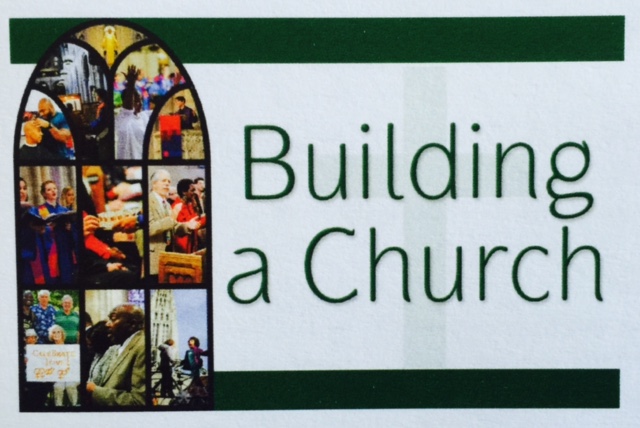
You may have noticed that our theme in worship for these seven weeks of Easter is “Building a Church.” We chose that theme for various reasons, not the least of which is: it’s in these weeks that we have begun the work to restore our beautiful apse windows, and to complete that project we’ll be putting up an elaborate structure of scaffolding right up front here. Today you’ll just see a cleared out chancel, but every week the front of the nave will look different. By the end of the Easter season there will be a whole new extended chancel platform area here in front, including a whole lot of scaffolding. And this new platform is the location from which we’ll celebrate worship.
But in these seven weeks, we’re watching the building process unfold before our eyes.
 And, coincidentally, we’re also reading lectionary passages from the book of Acts, which is a book in the New Testament in which the writer of Luke tells the story of the first disciples of Jesus, who were trying to make sense of their life together in the light of resurrection.
Just imagine how they felt: for most of three years they’d been following Jesus around the countryside, listening to him preach, watching him heal and feed people, trying to understand the gospel message he was teaching them.
Though they could see mounting tension, Jesus’ death and then unlikely resurrection had taken them by surprise; by today’s passage in Acts, Jesus had ascended—gone—and they were left holding the bag: a group of confused, bumbling, unprepared, and traumatized people, suddenly tasked with taking the gospel message and creating a community in which it could take deep root.
They were, all of the sudden, building a church.
So as we read along with their story, it might do us some good to take a look at some of the building blocks, or practices, that those first disciples undertook, practices that allowed them to create community in which the gospel was lived out in ways that were transformational—not just for them, but for anyone who came into contact with their community.
Today’s practice for building a church is a commitment to changing our minds—to seeing possibilities where we only saw problems, to shifting the perspectives by which we evaluate situations, to altering even the way we look at each other.
Today we’re given a tricky passage in the third chapter of the book of Acts (PAGE ##), frankly the kind of passage we preacher types like to avoid. It’s one of several sermons of Peter’s in the book of Acts, and some scholars might say his weakest.
After reading commentaries this week ranking Peter’s sermons, I started to feel a little sorry for him. It reminded me of the first time I became a pastor. In the first eight weeks of that pastorate, six members of the church died.
This was bad for many reasons, including but not limited to the fact that folks had died.
But also there weren’t all that many members to begin with. Six in eight weeks can have a serious impact on the membership rolls of a small church.
But I think the worst thing of all was that I, a pretty green young preacher, had maybe one good funeral sermon in me. And the thing was, pretty much the same audience attended all six funerals. And many in the audience, while grieving the loss of their friends, also—I could tell—were thinking: can this preacher pull off a good funeral, or am I going to have to make arrangements for a visiting preacher to step in for mine?
At the end of every funeral service, I almost felt as if there would be placards raised, like they used to do at the Olympics. The pastor’s score for today’s sermon comes to a 7.8, not enough to keep her in contention for the gold….
Well, scholars do just that to Peter, probably partially because this sermon comes right on the heels of his Pentecost sermon, where 3,000 people were converted after listening to him…a tough act to follow, for sure.
By contrast, this sermon is harsh and scolding, and we modern readers have to be very careful in its interpretation, perhaps even more so this week when we’ve commemorated Yom Hashoah, Holocaust remembrance day, because this Acts passage is one of many scripture passages that has been used as justification for horrific acts of discrimination and violence toward our Jewish brothers and sisters.
I’ve always learned that if a passage of scripture makes you uncomfortable, look a little harder, engage in a dialog with the text. So that’s what we’ll do today as we try to figure out what Peter was thinking, preaching a sermon like that.
First, remember that this passage comes immediately after a rather dramatic event at the Temple in Jerusalem. Peter and John were headed to the Temple for prayer, as was their custom, being devout Jews. A beggar near the gate of the Temple, a lame man, asked them for money. In response, they said they had no money, but they would heal the man in the name of Jesus Christ.
Well, you can imagine the crowd that gathered to see what was going on—this lame man, a fixture at the gate of the Temple for years—was suddenly running around the Temple grounds, in and out of the holy space, jumping and running, the text says, shouting for joy! Everybody wanted to see what was going on, and when they saw the man running and jumping, the whole crowd was filled with wonder and amazement.
And that’s when the sermon begins.
Remember, Peter is a devout Jew, in the Temple with other devout Jews. He has some harsh words for his fellow worshippers, the people who are astounded at what they’ve seen; basically he says this: “Why are all of you acting like this is so amazing? We told you—Jesus told you when he was here—that he had a message of healing and hope from God. But did you listen? No, you did not.
Instead, you were part of the system that ultimately orchestrated his death, complicit! Maybe you missed it then—sheer ignorance or a stubborn refusal to hear his message—but please, please don’t miss it now. Look at this man, healed and whole in the name of Jesus; see the healing gospel message lived out in real time; and repent, would you? Change your minds.”
Now, our Bibles translate the Greek word metanoia as “repent,” which, to you and me and every fire and brimstone preacher around is a word that means feeling really bad and being sorry for something you did. Instead, the Greek word really means something more like: to turn around and go the other way, or to change one’s mind.
The true meaning of this word got lost in translation since the second century, when monks translating the Greek text into Latin began using a phrase for the Greek word metanoia that actually meant something more like: “the confession of sins.”
But Peter was asking the crowd to witness the work of God in the world and to begin to see their lives through the lens of all that Jesus represented: the power of life over death, God’s insistence that the world as we have made it is not the world as it should be.
In the same way that the prophets of old constantly called the Israelites to repentance, Peter was asking the people to change their minds. And by doing this, Peter was exhibiting a building block of the first church, and perhaps of any community of Christ that seeks to be a vital and transforming presence in a world so desperate for hope and healing: Peter insisted that following Christ required a changing of our minds, a reorienting of perspective in light of the resurrection.
At the beginning of worship today, our children reminded us that we are called as followers of Jesus Christ, to care for the earth with which we have been entrusted, and if there’s any modern issue around which Christians must change their minds, care for the earth is it. Scholars point out that while 97% of scientists agree that global warming is happening, in America, the more religious a person is, the more likely they are to deny climate change.[1]
You know what Peter might say about that? Friends, you’re going to have to repent…you’re going to have to change your mind.
Care for the earth is an issue on which the church in many institutional expressions has, in fact, begun to change its mind. This summer it’s widely expected that Pope Francis will issue a Papal Encyclical that will call the Catholic Church and all of us who call ourselves people of faith, to change our minds:
He will call issues of environmental care and climate change critical issues for people of faith.
He will remind us that the world’s most vulnerable bear the greatest environmental burdens, and that the lives of the world’s poorest are severely impacted when we ignore the care of the earth.
And he will insist that we change the nature of the debate—not to whether this issue is real or relevant, but rather to how we can enact sustainable development and care for the earth as a response to what is a critical moral issue.[2]
The Pope is going to ask us to change our minds.
And that’s appropriate, isn’t it? The practice of changing our minds lies at the very heart of living in a community that is being transformed by the work of God’s Spirit. If we’re going to build a church, it had better be a community of people who want to be changed by the constant work of God, which will then galvanize us to act with each other and in the world, in the way of Jesus the Christ.
But here’s the thing: the practice of changing the world by changing our minds doesn’t always begin with major issues of international importance. In fact, we learn to change our minds, to repent, by engaging that practice right here, with each other, at church.
Maybe the way we’ve always done it is not the way we should do it now. Perhaps there are people who have been alienated from our community, our lives, to whom we should extend welcome, reconciliation. It’s likely there are better and more creative ways to exercise the stewardship of our gifts.
In what ways do we need to change our minds? Right here?
One essential element to building a church, one important thing we just don’t want to forget to include as we’re crafting our life together, is an ability to shift with the wind of God’s Spirit, to open our lives and our community to transformation. In doing this we can become, more and more, a community of Christ followers whose life together transforms us individually and transforms our world.
It’s not an easy thing to do, this building a church. But one thing I know: if we’re going to try, we’re going to have to be ready to change our minds.
Amen.
[1] http://www.randalolson.com/2014/09/13/who-are-the-climate-change-deniers/
[2] https://www.youtube.com/watch?v=qtsAAvqavBg
Previous Post

April 8, 2015
Just Shy of Resurrection
Next Post
April 21, 2015 But a Step
Browse Our Archives
Select a Category Answering the Call Being the Church Curating Wisdom Laughing Out Loud Living in Relationship Practicing Discipleship Reclaiming Baptist Speaking from the Pulpit Uncategorized
Select a Month July 2018 June 2018 May 2018 April 2018 March 2018 January 2018 December 2017 November 2017 October 2017 September 2017 June 2017 May 2017 April 2017 March 2017 February 2017 January 2017 December 2016 November 2016 October 2016 September 2016 August 2016 July 2016 June 2016 May 2016 April 2016 March 2016 February 2016 January 2016 December 2015 November 2015 October 2015 September 2015 August 2015 July 2015 June 2015 May 2015 April 2015 March 2015 February 2015 January 2015 December 2014 November 2014 October 2014 September 2014 August 2014 July 2014 June 2014 May 2014 April 2014 March 2014 February 2014 January 2014 December 2013 November 2013 October 2013 September 2013 August 2013 July 2013 June 2013 May 2013 April 2013 March 2013 February 2013 January 2013 December 2012 November 2012 October 2012 September 2012 August 2012 July 2012 June 2012 May 2012 April 2012 March 2012 February 2012 January 2012 December 2011 October 2011 September 2011 August 2011 July 2011 June 2011 May 2011 April 2011 March 2011 February 2011 January 2011 December 2010 November 2010 October 2010 September 2010 August 2010 July 2010 June 2010 May 2010 April 2010 March 2010 February 2010 January 2010 December 2009 November 2009 October 2009 September 2009 August 2009 July 2009 June 2009 May 2009 April 2009 March 2009 February 2009 January 2009 December 2008 November 2008 October 2008 September 2008 August 2008 July 2008 June 2008 May 2008 April 2008 March 2008 February 2008 January 2008 December 2007 November 2007 October 2007 September 2007 August 2007 July 2007 June 2007 May 2007 April 2007 March 2007 February 2007 January 2007 December 2006 November 2006 October 2006 September 2006 August 2006 July 2006 June 2006 May 2006 April 2006 March 2006 February 2006 January 2006 December 2005
Search for:
Recent Posts
- Sabbath as Radical Witness
- Learning Leadership: A Pilgrimage to Hawaii
- A Prayer for the Living of These Days
- Sabbath as Relationship
- Dressing Up Faith
Recent Comments
Archives
- July 2018
- June 2018
- May 2018
- April 2018
- March 2018
- January 2018
- December 2017
- November 2017
- October 2017
- September 2017
- June 2017
- May 2017
- April 2017
- March 2017
- February 2017
- January 2017
- December 2016
- November 2016
- October 2016
- September 2016
- August 2016
- July 2016
- June 2016
- May 2016
- April 2016
- March 2016
- February 2016
- January 2016
- December 2015
- November 2015
- October 2015
- September 2015
- August 2015
- July 2015
- June 2015
- May 2015
- April 2015
- March 2015
- February 2015
- January 2015
- December 2014
- November 2014
- October 2014
- September 2014
- August 2014
- July 2014
- June 2014
- May 2014
- April 2014
- March 2014
- February 2014
- January 2014
- December 2013
- November 2013
- October 2013
- September 2013
- August 2013
- July 2013
- June 2013
- May 2013
- April 2013
- March 2013
- February 2013
- January 2013
- December 2012
- November 2012
- October 2012
- September 2012
- August 2012
- July 2012
- June 2012
- May 2012
- April 2012
- March 2012
- February 2012
- January 2012
- December 2011
- October 2011
- September 2011
- August 2011
- July 2011
- June 2011
- May 2011
- April 2011
- March 2011
- February 2011
- January 2011
- December 2010
- November 2010
- October 2010
- September 2010
- August 2010
- July 2010
- June 2010
- May 2010
- April 2010
- March 2010
- February 2010
- January 2010
- December 2009
- November 2009
- October 2009
- September 2009
- August 2009
- July 2009
- June 2009
- May 2009
- April 2009
- March 2009
- February 2009
- January 2009
- December 2008
- November 2008
- October 2008
- September 2008
- August 2008
- July 2008
- June 2008
- May 2008
- April 2008
- March 2008
- February 2008
- January 2008
- December 2007
- November 2007
- October 2007
- September 2007
- August 2007
- July 2007
- June 2007
- May 2007
- April 2007
- March 2007
- February 2007
- January 2007
- December 2006
- November 2006
- October 2006
- September 2006
- August 2006
- July 2006
- June 2006
- May 2006
- April 2006
- March 2006
- February 2006
- January 2006
- December 2005
Categories
- Answering the Call
- Being the Church
- Curating Wisdom
- Laughing Out Loud
- Living in Relationship
- Practicing Discipleship
- Reclaiming Baptist
- Speaking from the Pulpit
- Uncategorized
Meta
Follow Us!
TAKE THE
Religious Wisdom Quiz
What was a "phylactery," criticized by Jesus in Matthew 23?
Select your answer to see how you score.
A fishing net A robe A small box with Scripture A lamp
Related posts from Talk with the Preacher


Learning Leadership: A Pilgrimage to Hawaii

A Prayer for the Living of These Days

TRENDING AT PATHEOS Progressive Christian

Why Christians Have a Sacred Duty to Vote:...
The Bible offers strong support for the sacred duty to vote. Here...

What Being a Modern-Day Apostle Means to Me
In my last column, I discussed the ins and outs of modern-day...

Did Ancient China Once Worship the God of...
Across human history, a common thread weaves through the origins of the...

Love Your Neighbor – Including Earth-Kin: Lev. 19,...
God’s command to love your neighbor means acting in an ethical and...

Lead a Church Study of “Jesus and Lao...
Guest writer Jack Thomas (The Irreverent Reverend) reflects on leading his church...

Principles for Understanding the Apostolic Ministry Today
Whenever people discover that my formal ministry title is "apostle," as in...
view all Progressive Christian blogs
Ad-Free & Subscriber Log-In Subscription Support
- About Us
- 2026 Calendar
- Videos
- Podcasts
- Library of World Religions
- Faith In Media Tracker
- Advertise With Us
- Write for Us
- Privacy Policy
- Terms of Service
- Do Not Sell My Data
- Contact Us
- Radiant Digital
- Manage Newsletter Subscriptions
- Unsubscribe From Notifications
- Sitemap
Copyright 2008-2026, Patheos. All rights reserved.
Subscription Support Ad-Free & Subscriber Log-In
Follow Patheos