
BuddhistCatholicContemplativeEvangelicalGeneral ChristianHinduJewishLatter-day SaintMuslimNew VisionsProgressive Christian
Beliefs
- Buddhist
- Catholic
- Contemplative
- Evangelical
- General Christian
- Hindu
- Jewish
- Latter-day Saint
- More Voices
- Muslim
- New Visions
- Pagan
- Progressive Christian
Topics
- Religion News
- Food and Religion
- Sports and Religion
- Religious Art
- Religious Music and Entertainment
- Religious Events
- History and Religion
- Style and Religion
- Politics and Religion
- Women in Religion
- Recreation Outdoors and Religion
- Business Finance and Religion
- Careers Workplace and Religion
- Education and Religion
- Family Parenting and Religion
- Health Fitness and Religion
- Home and Religion
- Relationships and Religion
- Technology and Religion
- Travel and Religion
Columnists
- Buddhist Columnists
- Business Finance and Religion Columnists
- Careers Workplace and Religion Columnists
- Catholic Columnists
- Contemplative Columnists
- Education and Religion Columnists
- Evangelists Columnists
- Family Parenting and Religion Columnists
- General Christian Columnists
- Health Fitness and Religion Columnists
- Hindu Columnists
- History and Religion Columnists
- Home and Religion Columnists
- Jewish Columnists
- More Voices Columnists
- Latter Day Columnists
- Muslim Columnists
- New Visions Columnists
- Nonreligious Columnists
- Pagan Columnists
- Politics and Religion Columnists
- Progressive Columnists
- Recreation Outdoors and Religion Columnists
- Relationships and Religion Columnists
- Religion News Columnists
- Religious Art Columnists
- Religious Events Columnists
- Religious Music and Entertainment Columnists
- Sports and Religion Columnists
- Style and Religion Columnists
- Technology and Religion Columnists
- Travel and Religion Columnists
- Women in Religion Columnists
Resource Library
- 2026 Calendar
- Library of World Religions
- The 100 Most Holy Places on Earth
- Patheos Answers
- Podcasts
- Videos
- Faith Leaders Database
- Anglican Episcopalian
- Bahai
- Baptist
- Buddhism
- Christianity
- Confucianism
- Eastern Orthodoxy
- Hinduism
- Holiness and Pentecostal
- ISKCON
- Islam
- Judaism
- Lutheran
- Methodist
- The Church of Jesus Christ of Latter-day Saints
- New Age
- Paganism
- Presbytarian and Reformed
- Protestantism
- Religion Behind the Scenes
- Roman Catholic
- Scientology
- Shia Islam
- Sikhism
- Sufism
- Sunni Islam
- Taoism
- Zen
- See all religions
Research Tools
 Ad-Free & Subscriber Log-In Subscription Support
Ad-Free & Subscriber Log-In Subscription Support
Follow Patheos 

- Trending:
- Forgiveness
- |
- Marriage
- |
- Consciousness
- |
- Death Penalty
- |
- Election
- |
- Halloween
 Talk with the Preacher
- Home
- Progressive Christian
- Conflicted
Conflicted
Last updated on: October 14, 2015 at 7:59 pm by Amy Butler
Conflicted 2015-10-14T19:59:27-04:00 Amy Butler
Patheos Explore the world's faith through different perspectives on religion and spirituality! Patheos has the views of the prevalent religions and spiritualities of the world.
Conflicted
Mark 11:1-11
Today is the final Sunday in the season of Lent, the last time we’ll be together for Sunday worship in this place this year before we celebrate Easter. For weeks now we’ve been engaging in holy conversations about our lives, about our faith, about how our faith is lived out in the world. And part of the practice of Lent has been to confess, repent, reassess our lives for reorientation in the way of Jesus. Today, as that somber time of reflection is poised to get desperately dark in the days ahead, we find ourselves, strangely, at a parade.
I love a parade.
It’s what living in New Orleans for any number of years will do to a person.
Leading up to Mardi Gras day there are weeks of parades, and residents develop strategies for annual parade plans. In the best scenario, the day of the parade dawns bright, sunny and cool; you have a friend who lives on the parade route—with plenty of parking and a restroom; and there’s tons of food to share. Excitement is in the air, the whole family is having a blast, the cares of real life are put on hold for just awhile. I’ve had many experiences like that one, and they’re enough to make you love, love a parade.
Veteran’s Day parade, Fourth of July parade, in my home town Kamehameha Day parade, and even here in the big city: the Macy’s Thanksgiving Day parade, there can’t be many of us who can’t recall memories of a parade. It may, in fact, even be a universal human feeling to love parades.
And this universal love of parades may be just the reason why you, and I, and all of modern Christendom, feel the compulsion to turn this Sunday, Palm Sunday, into a parade unlike any other.
Just think: we’ve built this story up to be one of our Sunday School favorites. All four gospels recount Jesus’ entry into Jerusalem—each one a little differently—but those four renditions plus layers of tradition and years of imagination have illustrated this event in Jesus’ life with waving palms, royal procession, and adoring fans. There was celebration and music, everyone cheering . . . parade!
I’ve always imagined Palm Sunday as the one last hurrah before Jesus gets in big trouble, the story about the people who almost had it right, but then changed their minds over the course of a week and, somehow, traded “hosannas!” for “crucify hims!”
But this is just the problem with trying to reconstruct an ancient story with a modern imagination, because there is a whole lot more going on behind the scenes of Mark’s story today than what I learned in Sunday School. Listen:
Taking all the little details from the different gospel accounts we can piece together, we know that before the events of our passage today Jesus has been in Bethany—a little village outside of Jerusalem, on the Eastern side of the city. Depending on which gospel you read Jesus was coming into the city for various reasons, but we know his trip happened during the Feast of Passover, remember, when Jerusalem was full of travelers. The crowds were thick and keeping the peace was the number one priority of Roman governor Pontius Pilate and his troops.
In fact, as part of the festivities of the week and in an effort to show Roman dominance, there was a planned procession—that’s right, a parade!—into Jerusalem, happening, coincidentally, at the very same time as the events our Gospel passage today. Not Jesus coming into the city, but another procession . . . on the other side of Jerusalem. It was Pilate himself, coming into the city from the Western gate, the big main gate that framed the bustling thoroughfare and set the stage for Pilate’s dramatic entry to garner a big audience and lots of attention.
That morning as families in Jerusalem packed up their water bottles and folding chairs and got ready for a parade, THIS was the one they were thinking of. It was a huge display with Pilate prancing in on a war horse and legions of Roman soldiers with their gleaming armor marching in concert. People lined the streets waving and cheering, families staked out places on the parade route just so they could watch the army make its way in. It would have been like a celebrity sighting—people craned to get a glimpse of the powerful regent who ruled the whole area where the city of Jerusalem was located.
And . . . the message of Pilate and the Roman Emperor was clear: it may be the Feast of the Passover, but this holiday was only being celebrated at the pleasure of the Roman rulers. And no Jew living in Jerusalem or visiting the city for Passover should dare to think of this as anything other than a nice little religious feast day, generously allowed to proceed only with the magnanimous and gracious permission of the Roman government.
The Gospel writers neglect to mention this fact because everyone reading their accounts, of course, would have already known the backdrop against which Jesus’ entry into the city happened.
But we didn’t know.
We didn’t know that when Mark said Jesus came into Jerusalem from Bethany, from the East side of the city, the gate he entered was a little gate in the back. It was not an entrance that was widely used or centrally located in the least. And we had no way of knowing that the little crowd gathered to cheer Jesus would be miniscule in comparison to the huge group watching Pilate’s parade on the other side of the city.
We didn’t know all of those things, but now that we do, we can begin to see that perhaps our Sunday School celebration of Palm Sunday as a cheerful celebration was not really like any parade we’ve ever been to . . . but actually quite a fitting start to what would be a week of the little and least powerful finding the courage to confront the biggest and the most powerful. It was the parade that conflicted with the other parade, a procession that was, in fact, more like a protest.
Pilate rode in through the main gate; Jesus rode in through the back. Pilate was dressed in his finery, riding a huge warhorse; Jesus had no armor with no Roman insignia . . . and his ride was the colt of a donkey. The people at the front gate pledged their loyalty to the Roman government and cheered the military might they saw. The little crowd at the back gate, led by children waving palms, yelled Hosanna—roughly translated “Lord, help us” . . . and followed it with the treasonous “Blessed is the coming kingdom of our ancestor David!” Everything about Jesus’ entry was a parody of the big parade going on right across town, the excessive display of human power led by Pontius Pilate and the powerful leaders of Jerusalem.
You may have learned in Sunday School that the people in Jerusalem got it that day. That’s what I learned, anyway . . . that for that one glorious moment everyone in Jerusalem understood who Jesus was and vowed to follow him, giving him the recognition, devotion and acclaim he deserved as the son of God.
It’s not so. It was a much more conflicted situation, a city divided; loyalties pulled in two directions. And anytime you and I start to think that the life of discipleship is like crowds cheering in the sunshine at a parade, we’d better stop and think again. It’s never been that easy to follow Jesus, even on Palm Sunday.
No, anyone in Jerusalem that day who managed to get through the crowds pressing in around Pilate to get to the other side of town, to the back gat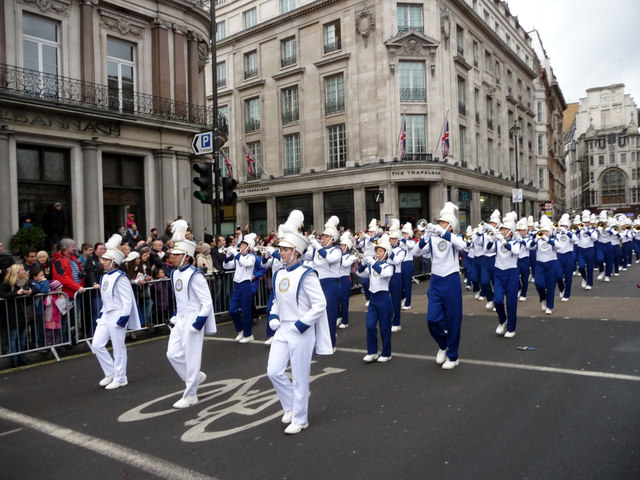 e in time to see Jesus led into the city on a little donkey knew . . . they knew for sure that what they were seeing was not a popular endorsement of God’s kingdom coming to be, but a visual demonstration of how much God’s way of life stands conflicted with the way of this world.
As Jesus entered into Jerusalem and headed toward the temple that day, the folks who fell in behind his parade knew that they were marching in a public protest, a tangible act of opposition to the human power and might parading just on the other side of town. They weren’t insincere in their following—they knew as they yelled “Hosanna!” that their cries were radical expressions of opposition and defiance.
Perhaps they did not know as they fell in behind him that they would march all the way through the city that week, out into the Garden of Gethsemane, into the courtyards of the most powerful men in society, and eventually up . . . up that hill to Golgotha. But they did know that this was the parade they would join. Not the parade of the status quo right across town, but this strange little band of defiant marchers who preferred not to sing the praises of the powerful but to follow the one who dismantled old structures and led them to adopt such defiantly unbelievable values like . . . follow, suffer, protest, believe . . . even die. They held on so tightly to the conviction that hope for the world is not found in human power, but in the radical way of Jesus Christ.
I love a parade. But maybe this parade isn’t quite what we’ve always made it out to be. It’s exciting—for sure. It’s filled with hope and promise . . . it’s filled with God, as a matter of fact. But walking this parade route won’t be fun or easy or exciting. It will be hard. And the week ahead is full of dark moments when we will question our decision to attend this parade instead of the big one right across town. We will feel conflicted. We should feel conflicted.
Because the way of Jesus is defiant . . . and hard. And while we know that calling ourselves disciples of Jesus Christ always leads to deep questions about how we live our lives, this week calling ourselves disciples of Jesus Christ leads to a cross.
It’s a bright sunshiney day. We’ve been invited to a parade.
Today, with such a week ahead of us, we have a decision: will we pick up our palms and join this parade . . . ? For though this is the way of fear-filled suffering for sure, it is also the defiant path . . . to life. And that sounds like my kind of parade. How about you?
Amen.
Previous Post

March 25, 2015
Observing Vocation
Next Post
April 3, 2015 Around the Table: a Maundy Thursday Meditation
Browse Our Archives
Select a Category Answering the Call Being the Church Curating Wisdom Laughing Out Loud Living in Relationship Practicing Discipleship Reclaiming Baptist Speaking from the Pulpit Uncategorized
Select a Month July 2018 June 2018 May 2018 April 2018 March 2018 January 2018 December 2017 November 2017 October 2017 September 2017 June 2017 May 2017 April 2017 March 2017 February 2017 January 2017 December 2016 November 2016 October 2016 September 2016 August 2016 July 2016 June 2016 May 2016 April 2016 March 2016 February 2016 January 2016 December 2015 November 2015 October 2015 September 2015 August 2015 July 2015 June 2015 May 2015 April 2015 March 2015 February 2015 January 2015 December 2014 November 2014 October 2014 September 2014 August 2014 July 2014 June 2014 May 2014 April 2014 March 2014 February 2014 January 2014 December 2013 November 2013 October 2013 September 2013 August 2013 July 2013 June 2013 May 2013 April 2013 March 2013 February 2013 January 2013 December 2012 November 2012 October 2012 September 2012 August 2012 July 2012 June 2012 May 2012 April 2012 March 2012 February 2012 January 2012 December 2011 October 2011 September 2011 August 2011 July 2011 June 2011 May 2011 April 2011 March 2011 February 2011 January 2011 December 2010 November 2010 October 2010 September 2010 August 2010 July 2010 June 2010 May 2010 April 2010 March 2010 February 2010 January 2010 December 2009 November 2009 October 2009 September 2009 August 2009 July 2009 June 2009 May 2009 April 2009 March 2009 February 2009 January 2009 December 2008 November 2008 October 2008 September 2008 August 2008 July 2008 June 2008 May 2008 April 2008 March 2008 February 2008 January 2008 December 2007 November 2007 October 2007 September 2007 August 2007 July 2007 June 2007 May 2007 April 2007 March 2007 February 2007 January 2007 December 2006 November 2006 October 2006 September 2006 August 2006 July 2006 June 2006 May 2006 April 2006 March 2006 February 2006 January 2006 December 2005
Search for:
Recent Posts
- Sabbath as Radical Witness
- Learning Leadership: A Pilgrimage to Hawaii
- A Prayer for the Living of These Days
- Sabbath as Relationship
- Dressing Up Faith
Recent Comments
Archives
- July 2018
- June 2018
- May 2018
- April 2018
- March 2018
- January 2018
- December 2017
- November 2017
- October 2017
- September 2017
- June 2017
- May 2017
- April 2017
- March 2017
- February 2017
- January 2017
- December 2016
- November 2016
- October 2016
- September 2016
- August 2016
- July 2016
- June 2016
- May 2016
- April 2016
- March 2016
- February 2016
- January 2016
- December 2015
- November 2015
- October 2015
- September 2015
- August 2015
- July 2015
- June 2015
- May 2015
- April 2015
- March 2015
- February 2015
- January 2015
- December 2014
- November 2014
- October 2014
- September 2014
- August 2014
- July 2014
- June 2014
- May 2014
- April 2014
- March 2014
- February 2014
- January 2014
- December 2013
- November 2013
- October 2013
- September 2013
- August 2013
- July 2013
- June 2013
- May 2013
- April 2013
- March 2013
- February 2013
- January 2013
- December 2012
- November 2012
- October 2012
- September 2012
- August 2012
- July 2012
- June 2012
- May 2012
- April 2012
- March 2012
- February 2012
- January 2012
- December 2011
- October 2011
- September 2011
- August 2011
- July 2011
- June 2011
- May 2011
- April 2011
- March 2011
- February 2011
- January 2011
- December 2010
- November 2010
- October 2010
- September 2010
- August 2010
- July 2010
- June 2010
- May 2010
- April 2010
- March 2010
- February 2010
- January 2010
- December 2009
- November 2009
- October 2009
- September 2009
- August 2009
- July 2009
- June 2009
- May 2009
- April 2009
- March 2009
- February 2009
- January 2009
- December 2008
- November 2008
- October 2008
- September 2008
- August 2008
- July 2008
- June 2008
- May 2008
- April 2008
- March 2008
- February 2008
- January 2008
- December 2007
- November 2007
- October 2007
- September 2007
- August 2007
- July 2007
- June 2007
- May 2007
- April 2007
- March 2007
- February 2007
- January 2007
- December 2006
- November 2006
- October 2006
- September 2006
- August 2006
- July 2006
- June 2006
- May 2006
- April 2006
- March 2006
- February 2006
- January 2006
- December 2005
Categories
- Answering the Call
- Being the Church
- Curating Wisdom
- Laughing Out Loud
- Living in Relationship
- Practicing Discipleship
- Reclaiming Baptist
- Speaking from the Pulpit
- Uncategorized
Meta
Follow Us!
TAKE THE
Religious Wisdom Quiz
How many books are in the Bible (Protestant version)?
Select your answer to see how you score.
66 73 12 40
Related posts from Talk with the Preacher

A Prayer for the Living of These Days



Invitation, a Meditation for Maundy Thursday
TRENDING AT PATHEOS Progressive Christian

Why Christians Have a Sacred Duty to Vote:...
The Bible offers strong support for the sacred duty to vote. Here...

What Being a Modern-Day Apostle Means to Me
In my last column, I discussed the ins and outs of modern-day...

Did Ancient China Once Worship the God of...
Across human history, a common thread weaves through the origins of the...

Love Your Neighbor – Including Earth-Kin: Lev. 19,...
God’s command to love your neighbor means acting in an ethical and...

Lead a Church Study of “Jesus and Lao...
Guest writer Jack Thomas (The Irreverent Reverend) reflects on leading his church...

Principles for Understanding the Apostolic Ministry Today
Whenever people discover that my formal ministry title is "apostle," as in...
view all Progressive Christian blogs
Ad-Free & Subscriber Log-In Subscription Support
- About Us
- 2026 Calendar
- Videos
- Podcasts
- Library of World Religions
- Faith In Media Tracker
- Advertise With Us
- Write for Us
- Privacy Policy
- Terms of Service
- Do Not Sell My Data
- Contact Us
- Radiant Digital
- Manage Newsletter Subscriptions
- Unsubscribe From Notifications
- Sitemap
Copyright 2008-2026, Patheos. All rights reserved.
Subscription Support Ad-Free & Subscriber Log-In
Follow Patheos