
BuddhistCatholicContemplativeEvangelicalGeneral ChristianHinduJewishLatter-day SaintMuslimNew VisionsProgressive Christian
Beliefs
- Buddhist
- Catholic
- Contemplative
- Evangelical
- General Christian
- Hindu
- Jewish
- Latter-day Saint
- More Voices
- Muslim
- New Visions
- Pagan
- Progressive Christian
Topics
- Religion News
- Food and Religion
- Sports and Religion
- Religious Art
- Religious Music and Entertainment
- Religious Events
- History and Religion
- Style and Religion
- Politics and Religion
- Women in Religion
- Recreation Outdoors and Religion
- Business Finance and Religion
- Careers Workplace and Religion
- Education and Religion
- Family Parenting and Religion
- Health Fitness and Religion
- Home and Religion
- Relationships and Religion
- Technology and Religion
- Travel and Religion
Columnists
- Buddhist Columnists
- Business Finance and Religion Columnists
- Careers Workplace and Religion Columnists
- Catholic Columnists
- Contemplative Columnists
- Education and Religion Columnists
- Evangelists Columnists
- Family Parenting and Religion Columnists
- General Christian Columnists
- Health Fitness and Religion Columnists
- Hindu Columnists
- History and Religion Columnists
- Home and Religion Columnists
- Jewish Columnists
- More Voices Columnists
- Latter Day Columnists
- Muslim Columnists
- New Visions Columnists
- Nonreligious Columnists
- Pagan Columnists
- Politics and Religion Columnists
- Progressive Columnists
- Recreation Outdoors and Religion Columnists
- Relationships and Religion Columnists
- Religion News Columnists
- Religious Art Columnists
- Religious Events Columnists
- Religious Music and Entertainment Columnists
- Sports and Religion Columnists
- Style and Religion Columnists
- Technology and Religion Columnists
- Travel and Religion Columnists
- Women in Religion Columnists
Resource Library
- 2026 Calendar
- Library of World Religions
- The 100 Most Holy Places on Earth
- Patheos Answers
- Podcasts
- Videos
- Faith Leaders Database
- Anglican Episcopalian
- Bahai
- Baptist
- Buddhism
- Christianity
- Confucianism
- Eastern Orthodoxy
- Hinduism
- Holiness and Pentecostal
- ISKCON
- Islam
- Judaism
- Lutheran
- Methodist
- The Church of Jesus Christ of Latter-day Saints
- New Age
- Paganism
- Presbytarian and Reformed
- Protestantism
- Religion Behind the Scenes
- Roman Catholic
- Scientology
- Shia Islam
- Sikhism
- Sufism
- Sunni Islam
- Taoism
- Zen
- See all religions
Research Tools
 Ad-Free & Subscriber Log-In Subscription Support
Ad-Free & Subscriber Log-In Subscription Support
Follow Patheos 

- Trending:
- Forgiveness
- |
- Marriage
- |
- Consciousness
- |
- Death Penalty
- |
- Election
- |
- Halloween
 Talk with the Preacher
- Home
- Progressive Christian
- Dusty and Divine: a Homily for Ash Wednesday
Dusty and Divine: a Homily for Ash Wednesday
Last updated on: October 14, 2015 at 7:59 pm by Amy Butler
Dusty and Divine: a Homily for Ash Wednesday 2015-10-14T19:59:28-04:00 Amy Butler
Patheos Explore the world's faith through different perspectives on religion and spirituality! Patheos has the views of the prevalent religions and spiritualities of the world.
You know, it’s funny. I do this for a living, and it still surprises me. It happened this afternoon in Midtown. People brushing past on the sidewalks, standing in line beside you at the counter, waiting for coffee.
I feel startled when I see their smudgy foreheads. Have you had the same compulsion I have? To lean over and whisper . . . “you know, you’ve got a smudge or something right there, on your forehead . . .” And, yet, here we are, gathered in the quiet, waiting for our smudges to mark our foreheads, too, so we’ll be one of them, too . . . going through the rest of this day, no longer pristinely groomed and, as far as anybody else knows, pretty perfect . . . but instead, marked by dust.
On any other day, we could keep up the façade. We’d just melt into the crowd, one of the many in a swirling mass of humanity, all of us trying desperately to ignore our humanness, or overlook it like it was something bad, or try with our best efforts to appear together, perfect, happy, at peace.
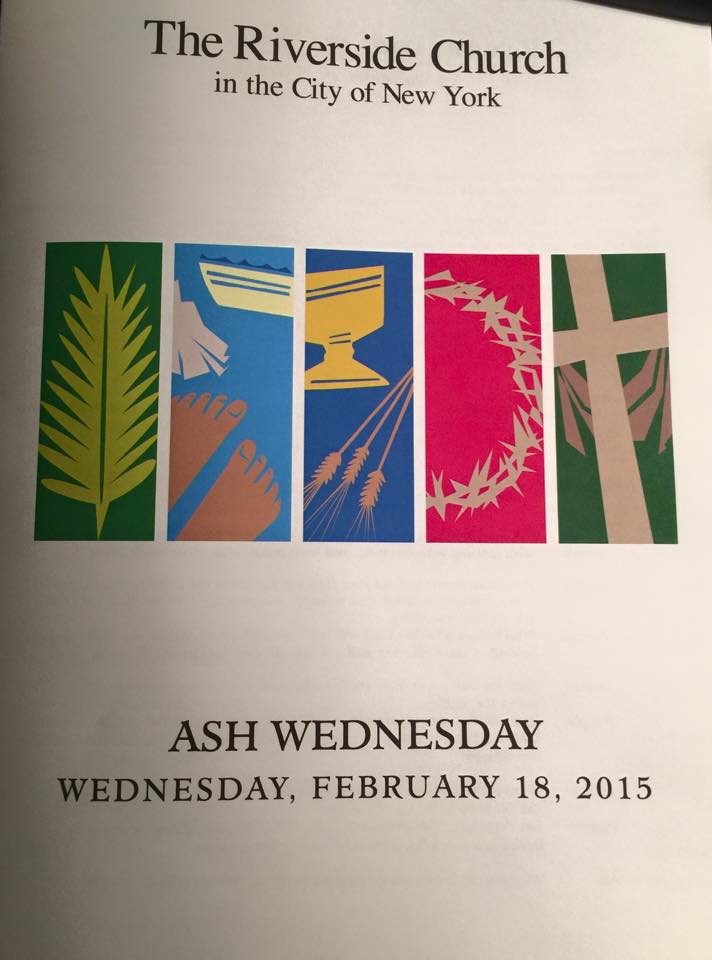 But not today. Today is different. Today we come for the ashes, asking to be marked by the dust, acknowledging that sometimes things break, they crack and fissure, and when they do, there’s bound to be a cloud of dust, a little pile of rubble, some grit that punctuates our carefully preserved, pristine humanness.
Today we remember that we are dust.
Why? (I get asked that a lot.)
Why, Pastor?
There’s already enough pain, despair, disappointment, failure in this world. We can’t avoid it even if we try. What’s the help in going over and over it again? Why add to the messages we already hear loud, loud and clear every single day: missed the mark . . . not good enough . . . failed again . . . can’t seem to get it right no matter how hard she tries . . . so disappointing…not what I had hoped for.
Wouldn’t it be better to skip the dust altogether . . . to focus instead on all the perfection we aspire to? Maybe if we try, instead we can spend our time on positive thinking . . . remembering everything we hope to accomplish, how, if we keep trying hard enough we can rise above all the dustiness of being human and shine, shine with all the good potential we’re sure is in there somewhere?
Or, if we can’t do that, then at least stuff all the pain down and smile for the camera?
Sara Miles writes: “It’s rare in our culture to admit, in public, that you’re not in control–that you, basically, are not God. And given the din of advertising and political polemic and hype and doublespeak surrounding us, it’s rare to escape the fantasy that money or science, fame or violence or shiny objects will somehow save us from death.”
So why do we do it? Why would we gather in this place to remind each other that we’re broken, hurting, dying?
Because it’s true.
And we all desperately need someplace to tell the truth about our lives.
A few years ago on Ash Wednesday I was leading a service of the imposition of ashes. It was a service very similar to this one, somber, quiet, thoughtful. Together we nervously thought about our own dustiness, the places where our humanity forces its way in and things crack open and the dust gets, well, everywhere. Then, I invited the congregation to come up front to receive the ashes, as I will invite you very shortly.
In the line that year was a friend of mine, another minister, who was on maternity leave and not presiding over a service that day. She showed up to sit in the pew, to receive the ashes rather than to impose them.
I could see her out there, drinking in the words of the scripture, closing her eyes to really feel the music, letting the peace and safety of worship wash over her. As it came time for the imposition of the ashes, I could see her get ready to come up to the altar. She hesitated for a minute and then gathered up Graham, her little three week old son, and brought him with her up to the altar.
When she reached me she looked up with a question in her eyes. “I don’t know what to do,” she said. “I didn’t want to leave him in the pew, but he’s so little—do you think he should get ashes too?”
I didn’t know either, to tell you the truth. It seemed somehow a wrong to smear smudgy ashes on this little, perfect baby.
I stared down at Graham’s smooth baby forehead, unmarked by the worries of the world, so surely innocent and bearing of none of the heavy weight you and I drag behind us as we stumble to this altar every year.
I wasn’t sure, but I did it anyway. I smudged the ashes on my finger and touched them to that smooth baby skin; I whispered words he surely couldn’t understand: “remember, Grammy, that you are dust, and to dust you shall return . . . but the steadfast love of the Lord endures forever.”
When I saw his little smudgy baby forehead through my tears, I finally remembered what the dust means—not that we are marked as sin-filled and beyond redemption, dirty, unacceptable failures, because I could gaze at little Graham and know for sure his dustiness didn’t mean that.
No, the dust marked him, and marks us, as human beings who, in our human living, break and hurt and crumble a little from time to time. And, we tend to get a little dusty. And that’s just the truth about being human.
So when we come to the front to take the ashes no matter who we are, not matter how old, we’re really saying to the world outside and to each other . . . pardon our dust. We acknowledge our humanness. Let us be for just a little while, who we really, really are.
But tonight we are also marked with an awareness of the divine miracle: even in our human dust, you and I shine with every bit of hope and promise and potential that God had in mind when God first scooped up the dust of the earth and, spinning his holy imagination, took a little spark of God-ness and fashioned it into you and me and all of us.
So when we take the ashes, we’re telling the truth: we are dust, and to dust we shall return. And we also claim our designation, now more than ever, as people marked by the grace and love of God—not in spite of our dustiness . . . but right along with it and every other dusty and shiny and hurt-filled and wonderful thing about who we are.
Today the smudges foreheads proclaim to the world, “Pardon our dust, would you? God does . . .”.
God does.
Amen.
Previous Post

February 18, 2015
Just a Pile of Dirt
Next Post
February 23, 2015 When God is Silent
Browse Our Archives
Select a Category Answering the Call Being the Church Curating Wisdom Laughing Out Loud Living in Relationship Practicing Discipleship Reclaiming Baptist Speaking from the Pulpit Uncategorized
Select a Month July 2018 June 2018 May 2018 April 2018 March 2018 January 2018 December 2017 November 2017 October 2017 September 2017 June 2017 May 2017 April 2017 March 2017 February 2017 January 2017 December 2016 November 2016 October 2016 September 2016 August 2016 July 2016 June 2016 May 2016 April 2016 March 2016 February 2016 January 2016 December 2015 November 2015 October 2015 September 2015 August 2015 July 2015 June 2015 May 2015 April 2015 March 2015 February 2015 January 2015 December 2014 November 2014 October 2014 September 2014 August 2014 July 2014 June 2014 May 2014 April 2014 March 2014 February 2014 January 2014 December 2013 November 2013 October 2013 September 2013 August 2013 July 2013 June 2013 May 2013 April 2013 March 2013 February 2013 January 2013 December 2012 November 2012 October 2012 September 2012 August 2012 July 2012 June 2012 May 2012 April 2012 March 2012 February 2012 January 2012 December 2011 October 2011 September 2011 August 2011 July 2011 June 2011 May 2011 April 2011 March 2011 February 2011 January 2011 December 2010 November 2010 October 2010 September 2010 August 2010 July 2010 June 2010 May 2010 April 2010 March 2010 February 2010 January 2010 December 2009 November 2009 October 2009 September 2009 August 2009 July 2009 June 2009 May 2009 April 2009 March 2009 February 2009 January 2009 December 2008 November 2008 October 2008 September 2008 August 2008 July 2008 June 2008 May 2008 April 2008 March 2008 February 2008 January 2008 December 2007 November 2007 October 2007 September 2007 August 2007 July 2007 June 2007 May 2007 April 2007 March 2007 February 2007 January 2007 December 2006 November 2006 October 2006 September 2006 August 2006 July 2006 June 2006 May 2006 April 2006 March 2006 February 2006 January 2006 December 2005
Search for:
Recent Posts
- Sabbath as Radical Witness
- Learning Leadership: A Pilgrimage to Hawaii
- A Prayer for the Living of These Days
- Sabbath as Relationship
- Dressing Up Faith
Recent Comments
Archives
- July 2018
- June 2018
- May 2018
- April 2018
- March 2018
- January 2018
- December 2017
- November 2017
- October 2017
- September 2017
- June 2017
- May 2017
- April 2017
- March 2017
- February 2017
- January 2017
- December 2016
- November 2016
- October 2016
- September 2016
- August 2016
- July 2016
- June 2016
- May 2016
- April 2016
- March 2016
- February 2016
- January 2016
- December 2015
- November 2015
- October 2015
- September 2015
- August 2015
- July 2015
- June 2015
- May 2015
- April 2015
- March 2015
- February 2015
- January 2015
- December 2014
- November 2014
- October 2014
- September 2014
- August 2014
- July 2014
- June 2014
- May 2014
- April 2014
- March 2014
- February 2014
- January 2014
- December 2013
- November 2013
- October 2013
- September 2013
- August 2013
- July 2013
- June 2013
- May 2013
- April 2013
- March 2013
- February 2013
- January 2013
- December 2012
- November 2012
- October 2012
- September 2012
- August 2012
- July 2012
- June 2012
- May 2012
- April 2012
- March 2012
- February 2012
- January 2012
- December 2011
- October 2011
- September 2011
- August 2011
- July 2011
- June 2011
- May 2011
- April 2011
- March 2011
- February 2011
- January 2011
- December 2010
- November 2010
- October 2010
- September 2010
- August 2010
- July 2010
- June 2010
- May 2010
- April 2010
- March 2010
- February 2010
- January 2010
- December 2009
- November 2009
- October 2009
- September 2009
- August 2009
- July 2009
- June 2009
- May 2009
- April 2009
- March 2009
- February 2009
- January 2009
- December 2008
- November 2008
- October 2008
- September 2008
- August 2008
- July 2008
- June 2008
- May 2008
- April 2008
- March 2008
- February 2008
- January 2008
- December 2007
- November 2007
- October 2007
- September 2007
- August 2007
- July 2007
- June 2007
- May 2007
- April 2007
- March 2007
- February 2007
- January 2007
- December 2006
- November 2006
- October 2006
- September 2006
- August 2006
- July 2006
- June 2006
- May 2006
- April 2006
- March 2006
- February 2006
- January 2006
- December 2005
Categories
- Answering the Call
- Being the Church
- Curating Wisdom
- Laughing Out Loud
- Living in Relationship
- Practicing Discipleship
- Reclaiming Baptist
- Speaking from the Pulpit
- Uncategorized
Meta
Follow Us!
TAKE THE
Religious Wisdom Quiz
True or False: The Gospel of John records seven miracles (signs) of Jesus.
Select your answer to see how you score.
FALSE TRUE
Related posts from Talk with the Preacher


Learning Leadership: A Pilgrimage to Hawaii

A Prayer for the Living of These Days

TRENDING AT PATHEOS Progressive Christian

Why Christians Have a Sacred Duty to Vote:...
The Bible offers strong support for the sacred duty to vote. Here...

What Being a Modern-Day Apostle Means to Me
In my last column, I discussed the ins and outs of modern-day...

Did Ancient China Once Worship the God of...
Across human history, a common thread weaves through the origins of the...

Love Your Neighbor – Including Earth-Kin: Lev. 19,...
God’s command to love your neighbor means acting in an ethical and...

Lead a Church Study of “Jesus and Lao...
Guest writer Jack Thomas (The Irreverent Reverend) reflects on leading his church...

Principles for Understanding the Apostolic Ministry Today
Whenever people discover that my formal ministry title is "apostle," as in...
view all Progressive Christian blogs
Ad-Free & Subscriber Log-In Subscription Support
- About Us
- 2026 Calendar
- Videos
- Podcasts
- Library of World Religions
- Faith In Media Tracker
- Advertise With Us
- Write for Us
- Privacy Policy
- Terms of Service
- Do Not Sell My Data
- Contact Us
- Radiant Digital
- Manage Newsletter Subscriptions
- Unsubscribe From Notifications
- Sitemap
Copyright 2008-2026, Patheos. All rights reserved.
Subscription Support Ad-Free & Subscriber Log-In
Follow Patheos